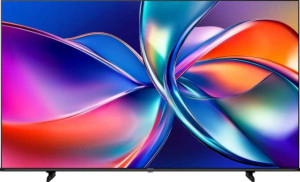
Hisense 43E7Q 43"
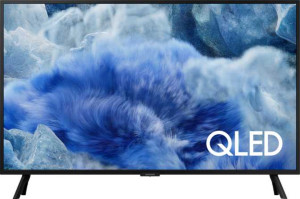
Samsung QN43Q8FAAF 43"

Hisense 43E7Q 43" Samsung QN43Q8FAAF 43"

Overview

Choosing between two 43-inch QLED televisions is rarely simple, especially when both share a strong foundation of 4K UHD resolution and broad HDR format support. This comparison pits the Hisense 43E7Q 43″ against the Samsung QN43Q8FAAF 43″, examining the key battlegrounds where they diverge — including refresh rate, Dolby Vision compatibility, design profile, and long-term ownership value — to help you decide which one truly fits your needs.

Common Features

  • Both TVs have a 4K (UHD) display resolution of 3840 x 2160 px.
  • Both use a QLED, LED-backlit, LCD display type.
  • Both support 1070 million display colors at 10-bit depth.
  • HDR10 support is available on both products.
  • HDR10+ support is available on both products.
  • HLG support is available on both products.
  • Bluetooth is present on both products.
  • Both TVs use HDMI 2.1 ports.
  • Wi-Fi is supported on both products, with Wi-Fi 4 (802.11n) and Wi-Fi 5 (802.11ac).
  • Both TVs have 2 USB ports and 1 RJ45 port.
  • Miracast support is available on both products.
  • Neither product has an external memory slot.
  • Dolby Digital support is available on both products.
  • Dolby Digital Plus support is available on both products.
  • Digital Out support is available on both products.
  • Dolby Atmos and Dolby Audio are present on both products.
  • Dolby Virtual support is not available on either product.
  • SRS TheaterSound HD is not available on either product.
  • Stereo speakers are present on both products.
  • VESA mount is supported on both products.
  • AirPlay is available on both products.
  • Both TVs have a built-in smart TV platform.
  • Google Assistant compatibility is present on both products.
  • Alexa support is available on both products.
  • Neither product works with Siri or Apple HomeKit.
  • Remote smartphone support is available on both products.
  • USB recording is supported on both products.
  • Both TVs have a standby power consumption of 0.5W.

Main Differences

  • Screen size is 43″ on Hisense 43E7Q 43″ and 42.5″ on Samsung QN43Q8FAAF 43″.
  • Pixel density is 102 ppi on Hisense 43E7Q 43″ and 104 ppi on Samsung QN43Q8FAAF 43″.
  • Refresh rate is 60Hz on Hisense 43E7Q 43″ and 144Hz on Samsung QN43Q8FAAF 43″.
  • Dolby Vision support is present on Hisense 43E7Q 43″ but not available on Samsung QN43Q8FAAF 43″.
  • HDMI port count is 3 on Hisense 43E7Q 43″ and 4 on Samsung QN43Q8FAAF 43″.
  • Bluetooth version is 5 on Hisense 43E7Q 43″ and 5.3 on Samsung QN43Q8FAAF 43″.
  • A 3.5 mm audio jack socket is present on Hisense 43E7Q 43″ but not available on Samsung QN43Q8FAAF 43″.
  • Audio output power is 2 x 7W on Hisense 43E7Q 43″ and 2 x 10W on Samsung QN43Q8FAAF 43″.
  • Width is 963 mm on Hisense 43E7Q 43″ and 965.2 mm on Samsung QN43Q8FAAF 43″.
  • Weight is 6900 g on Hisense 43E7Q 43″ and 8210 g on Samsung QN43Q8FAAF 43″.
  • Thickness is 74 mm on Hisense 43E7Q 43″ and 25.4 mm on Samsung QN43Q8FAAF 43″.
  • Height is 560 mm on Hisense 43E7Q 43″ and 558.8 mm on Samsung QN43Q8FAAF 43″.
  • Volume is 39906.72 cm³ on Hisense 43E7Q 43″ and 13699.585504 cm³ on Samsung QN43Q8FAAF 43″.
  • A rechargeable remote control is included with Samsung QN43Q8FAAF 43″ but not with Hisense 43E7Q 43″.
  • Operating power consumption is 48W on Hisense 43E7Q 43″ and 94W on Samsung QN43Q8FAAF 43″.
  • Warranty period is 3 years on Hisense 43E7Q 43″ and 1 year on Samsung QN43Q8FAAF 43″.
Specs Comparison
Hisense 43E7Q 43"

Hisense 43E7Q 43"

Samsung QN43Q8FAAF 43"

Samsung QN43Q8FAAF 43"

Display:
display resolution 4K (UHD) 4K (UHD)
Display type QLED, LED-backlit, LCD QLED, LED-backlit, LCD
screen size 43" 42.5"
resolution 3840 x 2160 px 3840 x 2160 px
pixel density 102 ppi 104 ppi
display colors 1070 million 1070 million
bit depth 10-bit 10-bit
refresh rate 60Hz 144Hz
supports HDR10
supports HDR10+
supports Dolby Vision
supports HLG
has anti-reflection coating
has an ambient light sensor
maximum horizontal viewing angle 178º 178º
maximum vertical viewing angle 178º 178º

Both the Hisense 43E7Q and the Samsung QN43Q8FAAF share a strong display foundation: identical QLED, LED-backlit LCD panel technology, a native 4K (3840 x 2160) resolution, 10-bit color depth capable of rendering 1.07 billion colors, and equally wide 178º viewing angles in both directions. Both also include anti-reflection coatings and ambient light sensors, meaning neither has a structural advantage in panel class or everyday usability features.

The single most impactful differentiator is the refresh rate. The Samsung tops out at 144Hz, more than double the Hisense's 60Hz. In practice, this means the Samsung will render fast motion — sports, action films, and especially gaming — with significantly less blur and stutter. For a gaming-oriented user in particular, 144Hz is a meaningful step up. Conversely, the Hisense counters with Dolby Vision support, which the Samsung lacks. Dolby Vision is a dynamic, scene-by-scene HDR format that can deliver more precise brightness and color targeting than the static metadata of HDR10+, which both TVs share. For streaming services heavy on Dolby Vision content (Netflix, Apple TV+), this gives the Hisense a tangible image quality edge in that specific context.

In summary, neither TV is a clear overall winner in the display category — the decision hinges on use case. The Samsung QN43Q8FAAF has a decisive edge for motion-intensive content and gaming thanks to its 144Hz panel. The Hisense 43E7Q holds an advantage for streaming-focused viewers who prioritize Dolby Vision compatibility. All other display specs are effectively equivalent.

Connectivity:
Has Bluetooth
HDMI version HDMI 2.1 HDMI 2.1
HDMI ports 3 4
supports Wi-Fi
Wi-Fi version Wi-Fi 4 (802.11n), Wi-Fi 5 (802.11ac) Wi-Fi 4 (802.11n), Wi-Fi 5 (802.11ac)
Bluetooth version 5 5.3
USB ports 2 2
RJ45 ports 1 1
supports Miracast
has a socket for a 3.5 mm audio jack
has an external memory slot
has a VGA connector
has a DVI connector

At their core, both TVs are well-connected: each offers HDMI 2.1, dual USB ports, an RJ45 ethernet port, Wi-Fi 5, Bluetooth 5, and Miracast support. That shared baseline means neither will leave users scrambling for adapters in typical setups. The differences, while not dramatic, are worth examining for power users and those building out a multi-device home theater.

The Samsung edges ahead on two fronts. It ships with 4 HDMI ports versus the Hisense's 3 — a practical win for anyone running a soundbar, console, streamer, and PC simultaneously without a switch. It also carries Bluetooth 5.3 compared to the Hisense's Bluetooth 5.0; the newer version offers improved connection stability and more efficient handling of multiple paired devices, which matters if you're frequently switching between wireless headphones, keyboards, or remotes. On the flip side, the Hisense includes a 3.5mm audio jack that the Samsung omits entirely — a meaningful convenience for users who want to plug in wired headphones directly to the TV without a workaround.

On balance, the Samsung QN43Q8FAAF holds a slight connectivity edge for multi-device households, thanks to its extra HDMI port and more current Bluetooth implementation. However, the Hisense 43E7Q will appeal to anyone who still relies on wired audio output — a feature the Samsung simply does not offer.

Audio:
supports Dolby Digital
audio output power 2 x 7W 2 x 10W
supports Digital Out
supports Dolby Digital Plus
has SRS TheaterSound HD
has stereo speakers
has Dolby Atmos
has Dolby Audio
supports Dolby Virtual
has a subwoofer
HDMI ARC / eARC HDMI ARC, HDMI eARC HDMI ARC, HDMI eARC

Audio is the one category where these two TVs are almost entirely aligned. Both deliver stereo sound with full Dolby ecosystem support — including Dolby Atmos, Dolby Audio, Dolby Digital, and Dolby Digital Plus — and both include HDMI ARC and eARC, ensuring seamless passthrough to an external soundbar or AV receiver with minimal setup. For users planning to rely on a dedicated sound system anyway, the internal speaker specs become largely academic.

The sole measurable difference is output power: the Samsung puts out 2 x 10W versus the Hisense's 2 x 14W total (2 x 7W). That 6W gap is modest but not trivial — in a quiet room or for casual viewing, both will perform adequately, but the Samsung's higher wattage translates to greater headroom at louder volumes and marginally better reproduction of dynamic audio peaks without distortion. It won't replace a soundbar, but it gives the Samsung a slight built-in speaker advantage for users who prefer not to use external audio gear.

The Samsung QN43Q8FAAF takes a narrow edge in this group purely on the strength of its higher amplifier output. Everything else — format support, ARC/eARC capability, speaker configuration — is identical between the two, making this a distinction that only matters if you plan to use the TV's built-in speakers as your primary audio solution.

Design:
width 963 mm 965.2 mm
weight 6900 g 8210 g
thickness 74 mm 25.4 mm
height 560 mm 558.8 mm
volume 39906.72 cm³ 13699.585504 cm³
Supports VESA mount

Width and height are virtually identical between these two sets — we're talking millimeter-level differences that will be imperceptible in any real installation. Where the design story diverges sharply is depth. The Samsung measures just 25.4mm thick, compared to the Hisense's 74mm — nearly three times bulkier. For wall-mounted setups, that gap is significant: the Samsung will sit flush and unobtrusive, while the Hisense will protrude noticeably from the wall, which can affect both aesthetics and the choice of wall mount bracket depth.

The volume figures underscore just how substantial this difference is — the Hisense's calculated volume is roughly 39,907 cm³ against the Samsung's 13,700 cm³, meaning the Samsung displaces less than half the physical space. Interestingly, despite its slimmer chassis, the Samsung is actually heavier at 8,210g versus the Hisense's 6,900g, suggesting denser internal construction. For wall mounting, this means verifying that the chosen mount and wall anchor are rated appropriately for the Samsung's weight.

Both TVs support VESA mounting, so neither restricts installation options. Overall, the Samsung QN43Q8FAAF holds a clear design advantage for anyone prioritizing a slim, modern profile — particularly for wall-mount scenarios. The Hisense's considerably greater depth is the decisive factor here, making it better suited to stand-mounted use where thickness is less of a concern.

Features:
release date April 2025 April 2025
has AirPlay
has built-in smart TV
compatible with Google Assistant
works with Alexa
works with Siri/Apple HomeKit
supports a remote smartphone
has a rechargeable remote control
supports USB recording
operating power consumption 48W 94W
standby power consumption 0.5W 0.5W
has a search browser
has a sleep timer
has a child lock
warranty period 3 years 1 years
has voice commands

Feature parity between these two TVs is remarkably high: both run a built-in smart platform, support AirPlay, Google Assistant, Alexa, smartphone remote control, USB recording, voice commands, and the usual quality-of-life additions like sleep timer and child lock. Neither supports Apple HomeKit, so iOS-centric smart home users will find both equally limited in that regard. Where things diverge, the differences carry real long-term weight.

Power consumption is the starkest contrast. The Hisense draws 48W during operation versus the Samsung's 94W — nearly double. For a TV used several hours daily, that gap compounds meaningfully on electricity bills over time. Standby consumption is identical at 0.5W for both. On the convenience side, the Samsung includes a rechargeable remote control, eliminating the recurring cost and hassle of disposable batteries — a small but genuinely appreciated quality-of-life feature the Hisense omits.

The most consequential long-term differentiator, however, is warranty coverage. The Hisense 43E7Q ships with a 3-year warranty, triple the 1-year coverage offered by the Samsung. For a product category where panel and backlight issues can surface after the first year, that extended protection represents tangible financial value. Weighing everything together, the Hisense holds a meaningful advantage in this group: its dramatically lower power draw and substantially longer warranty outweigh the Samsung's rechargeable remote as a day-to-day perk.

Comparison Summary & Verdict

Both the Hisense 43E7Q 43″ and the Samsung QN43Q8FAAF 43″ deliver a capable 4K QLED picture with wide HDR format coverage and a full smart TV experience. Yet their differences reveal two distinct personalities. The Samsung excels with a blazing 144Hz refresh rate ideal for gaming and fast-motion content, a strikingly slim 25.4 mm profile, four HDMI ports, a rechargeable remote, and stronger 2x10W audio output. The Hisense counters with exclusive Dolby Vision support, a much more reassuring 3-year warranty, a significantly lower operating power draw of 48W versus 94W, and the practical inclusion of a 3.5 mm audio jack. Neither is an outright winner — the right choice depends entirely on whether you prioritize cutting-edge display performance and sleek design, or long-term value, energy efficiency, and broader format compatibility.

Hisense 43E7Q 43
Buy Hisense 43E7Q 43" if...

Buy the Hisense 43E7Q 43″ if you want Dolby Vision support, a reassuring 3-year warranty, and notably lower energy consumption for everyday home theater use.

Samsung QN43Q8FAAF 43
Buy Samsung QN43Q8FAAF 43" if...

Buy the Samsung QN43Q8FAAF 43″ if you prioritize a fluid 144Hz refresh rate, an ultra-slim 25.4 mm design, and four HDMI ports for a versatile, future-ready setup.