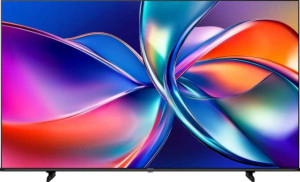
Hisense 43E7Q 43"
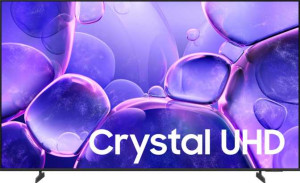
Samsung UN43U8000FF 43"

Hisense 43E7Q 43" Samsung UN43U8000FF 43"

Overview

Welcome to our detailed spec comparison between the Hisense 43E7Q 43″ and the Samsung UN43U8000FF 43″ — two 43-inch 4K TVs competing in a closely contested segment. Both sets share a strong feature foundation, yet they diverge in meaningful ways across display technology, connectivity, audio output, and everyday running costs. Read on to discover which one aligns best with your living room and lifestyle.

Common Features

  • Both TVs have a 4K (UHD) display resolution of 3840 x 2160 px.
  • Both TVs display 1070 million colors with a 10-bit bit depth.
  • Both TVs have a 60Hz refresh rate.
  • HDR10 support is available on both products.
  • HDR10+ support is available on both products.
  • HLG support is available on both products.
  • Bluetooth connectivity is available on both products.
  • Both TVs use HDMI 2.1 and each has 3 HDMI ports.
  • Wi-Fi is supported on both TVs, with both offering Wi-Fi 4 (802.11n) and Wi-Fi 5 (802.11ac).
  • Both TVs have 1 RJ45 port.
  • Miracast support is available on both products.
  • Neither TV has an external memory slot.
  • Dolby Digital support is available on both products.
  • Digital Out support is available on both products.
  • Both TVs feature stereo speakers and Dolby Audio.
  • Dolby Virtual support is not available on either product.
  • Neither TV includes a subwoofer.
  • Both TVs support HDMI ARC and HDMI eARC.
  • VESA mount support is available on both products.
  • AirPlay is available on both products.
  • Both TVs have a built-in smart TV platform.
  • Google Assistant compatibility is present on both products.
  • Alexa support is available on both products.
  • Apple HomeKit and Siri support is not available on either product.
  • Remote smartphone control is supported on both products.
  • Neither TV includes a rechargeable remote control.
  • USB recording support is available on both products.

Main Differences

  • The display type is QLED, LED-backlit, LCD on the Hisense 43E7Q 43″ and LED-backlit, LCD on the Samsung UN43U8000FF 43″.
  • The screen size is 43″ on the Hisense 43E7Q 43″ and 42.5″ on the Samsung UN43U8000FF 43″.
  • Pixel density is 102 ppi on the Hisense 43E7Q 43″ and 104 ppi on the Samsung UN43U8000FF 43″.
  • Dolby Vision support is present on the Hisense 43E7Q 43″ but not available on the Samsung UN43U8000FF 43″.
  • The Bluetooth version is 5 on the Hisense 43E7Q 43″ and 5.3 on the Samsung UN43U8000FF 43″.
  • USB ports number 2 on the Hisense 43E7Q 43″ and 1 on the Samsung UN43U8000FF 43″.
  • A 3.5 mm audio jack socket is present on the Hisense 43E7Q 43″ but not available on the Samsung UN43U8000FF 43″.
  • Audio output power is 2 x 7W on the Hisense 43E7Q 43″ and 2 x 10W on the Samsung UN43U8000FF 43″.
  • Width is 963 mm on the Hisense 43E7Q 43″ and 957.8 mm on the Samsung UN43U8000FF 43″.
  • Weight is 6900 g on the Hisense 43E7Q 43″ and 6600 g on the Samsung UN43U8000FF 43″.
  • Thickness is 74 mm on the Hisense 43E7Q 43″ and 76.3 mm on the Samsung UN43U8000FF 43″.
  • Height is 560 mm on the Hisense 43E7Q 43″ and 558.8 mm on the Samsung UN43U8000FF 43″.
  • Volume is 39906.72 cm³ on the Hisense 43E7Q 43″ and 40837.182232 cm³ on the Samsung UN43U8000FF 43″.
  • Operating power consumption is 48W on the Hisense 43E7Q 43″ and 85W on the Samsung UN43U8000FF 43″.
  • The warranty period is 3 years on the Hisense 43E7Q 43″ and 1 year on the Samsung UN43U8000FF 43″.
Specs Comparison
Hisense 43E7Q 43"

Hisense 43E7Q 43"

Samsung UN43U8000FF 43"

Samsung UN43U8000FF 43"

Display:
display resolution 4K (UHD) 4K (UHD)
Display type QLED, LED-backlit, LCD LED-backlit, LCD
screen size 43" 42.5"
resolution 3840 x 2160 px 3840 x 2160 px
pixel density 102 ppi 104 ppi
display colors 1070 million 1070 million
bit depth 10-bit 10-bit
refresh rate 60Hz 60Hz
supports HDR10
supports HDR10+
supports Dolby Vision
supports HLG
has anti-reflection coating
has an ambient light sensor
maximum horizontal viewing angle 178º 178º
maximum vertical viewing angle 178º 178º

Both the Hisense 43E7Q and the Samsung UN43U8000FF share a strong display foundation: identical 4K (3840 x 2160) resolution, 10-bit color depth capable of rendering 1.07 billion colors, a 60Hz refresh rate, and matching 178° viewing angles in both directions. Anti-reflection coating and an ambient light sensor are present on both, meaning neither has a practical edge in everyday usability or image accessibility.

The most meaningful differentiator is panel technology. The Hisense uses a QLED layer over its LED-backlit LCD, which typically yields higher color volume and peak brightness compared to a conventional LED-backlit LCD like the one in the Samsung. In practice, this translates to more vivid, saturated colors — especially noticeable in HDR content. Speaking of HDR, the Hisense also supports Dolby Vision, while the Samsung does not. Dolby Vision is a dynamically mastered HDR format that can deliver scene-by-scene tone mapping; its absence on the Samsung means that Dolby Vision-encoded content on streaming platforms will either fall back to HDR10 or not trigger enhanced HDR at all.

The Samsung's 104 ppi pixel density versus the Hisense's 102 ppi is a negligible 2% difference — imperceptible at normal viewing distances. Overall, the Hisense 43E7Q holds a clear display advantage: its QLED panel promises richer color performance, and its Dolby Vision support gives it a broader HDR compatibility edge that directly benefits users subscribed to major streaming services.

Connectivity:
Has Bluetooth
HDMI version HDMI 2.1 HDMI 2.1
HDMI ports 3 3
supports Wi-Fi
Wi-Fi version Wi-Fi 4 (802.11n), Wi-Fi 5 (802.11ac) Wi-Fi 4 (802.11n), Wi-Fi 5 (802.11ac)
Bluetooth version 5 5.3
USB ports 2 1
RJ45 ports 1 1
supports Miracast
has a socket for a 3.5 mm audio jack
has an external memory slot
has a VGA connector
has a DVI connector

On the wired side, both TVs are well-matched where it counts: three HDMI 2.1 ports and a dedicated RJ45 ethernet jack ensure that bandwidth is not a bottleneck for consoles, streaming boxes, or a stable wired network connection. Wireless connectivity is also identical — both support Wi-Fi 5 (802.11ac) and Miracast, providing solid throughput and screen-mirroring capability without meaningful distinction.

The differences emerge in the finer details. The Samsung carries Bluetooth 5.3 versus the Hisense's Bluetooth 5.0 — a newer revision that brings marginal improvements in connection stability and power efficiency, relevant mainly for wireless headphones or peripherals. However, the Hisense counters with two USB ports compared to Samsung's single port, a practical win for users who want to connect a USB drive and a peripheral simultaneously without a hub. More notably, the Hisense includes a 3.5mm audio jack that the Samsung omits entirely — a meaningful difference for anyone using wired headphones or a legacy audio system directly through the TV.

On balance, the Hisense 43E7Q holds a connectivity edge for most users. The extra USB port and the presence of a headphone jack address common, everyday use cases that the Samsung simply cannot accommodate without additional adapters. The Samsung's slightly newer Bluetooth revision is a real but minor advantage that few users will notice in practice.

Audio:
supports Dolby Digital
audio output power 2 x 7W 2 x 10W
supports Digital Out
has SRS TheaterSound HD
has stereo speakers
has Dolby Audio
supports Dolby Virtual
has a subwoofer
HDMI ARC / eARC HDMI ARC, HDMI eARC HDMI ARC, HDMI eARC

Across most audio specifications, these two TVs are virtually identical: both deliver stereo sound with Dolby Digital and Dolby Audio support, both include Digital Out, and both offer HDMI ARC and eARC — the latter being the more important of the two, as eARC supports lossless audio formats when passing sound to a capable soundbar or receiver. Neither includes a subwoofer, which is typical at this screen size and price tier.

The sole differentiator is amplifier output: the Samsung drives its speakers at 2 x 10W, while the Hisense outputs 2 x 7W. That 3W-per-channel gap translates to a modest but perceptible difference in maximum volume and dynamic headroom — the Samsung can get louder before the audio starts to compress or distort, which matters most in larger rooms or during action-heavy content. It is worth noting, however, that neither TV's built-in audio will satisfy critical listeners, and the eARC port on both makes it equally straightforward to upgrade to an external sound system.

The Samsung UN43U8000FF holds a narrow audio edge purely due to its higher amplifier output. For users relying solely on the TV's built-in speakers, that extra wattage is a tangible advantage. Those planning to use a soundbar or AV receiver will find the two TVs functionally equivalent in this category.

Design:
width 963 mm 957.8 mm
weight 6900 g 6600 g
thickness 74 mm 76.3 mm
height 560 mm 558.8 mm
volume 39906.72 cm³ 40837.182232 cm³
Supports VESA mount

Dimensionally, these two TVs are remarkably close — within 6mm of each other in width and barely 1.2mm apart in height. In practice, they will occupy essentially the same footprint on a TV stand or wall mount, and both support VESA mounting, making either a straightforward fit for standard wall brackets.

Where a small but real difference surfaces is weight. The Samsung comes in at 6,600g versus the Hisense's 6,900g — a 300g gap that is unlikely to matter for a wall-mounted installation but could be a minor consideration during solo setup or repositioning. Interestingly, the Samsung is also very slightly thicker at 76.3mm compared to the Hisense's 74mm, meaning the Hisense has a marginally slimmer profile despite being the heavier unit.

Taken together, the design differences between these two TVs are negligible for the vast majority of users. Neither product holds a meaningful advantage here — this category is effectively a tie, with only minor trade-offs in weight and depth that will not influence a real-world purchasing decision.

Features:
release date April 2025 March 2025
has AirPlay
has built-in smart TV
compatible with Google Assistant
works with Alexa
works with Siri/Apple HomeKit
supports a remote smartphone
has a rechargeable remote control
supports USB recording
operating power consumption 48W 85W
standby power consumption 0.5W 0.5W
has a search browser
has a sleep timer
has a child lock
warranty period 3 years 1 years
has voice commands

From a smart feature standpoint, these two TVs are carbon copies of each other. Both run a built-in smart platform with voice control, support AirPlay, Google Assistant, and Alexa, allow smartphone remote control, and include USB recording. Neither supports Apple HomeKit or comes with a rechargeable remote. For a buyer evaluating the software and ecosystem experience, this category offers no grounds for differentiation.

The hardware story, however, is where the gap opens up sharply. The Samsung draws 85W during operation compared to the Hisense's 48W — a difference of nearly 77%. For a TV used four to five hours daily, that gap adds up to meaningful electricity costs over months and years of ownership. Standby consumption is identical at 0.5W for both, so the delta is purely in active use.

Equally significant is the warranty: the Hisense covers owners for 3 years versus Samsung's 1 year. A longer warranty is a direct indicator of post-purchase financial protection and, implicitly, manufacturer confidence in the product's durability. Combined with its dramatically lower power draw, the Hisense 43E7Q holds a clear advantage in this category — offering lower long-term running costs and substantially better ownership assurance without sacrificing a single smart feature.

Comparison Summary & Verdict

After examining every specification, it is clear that these two TVs each excel in different areas. The Hisense 43E7Q 43″ stands out with its QLED panel and Dolby Vision support, a longer 3-year warranty, significantly lower 48W power consumption, two USB ports, and a 3.5 mm audio jack — making it the smarter long-term value pick for budget-conscious buyers who want a richer HDR experience. The Samsung UN43U8000FF 43″ counters with a more powerful 2 x 10W audio output, a newer Bluetooth 5.3 chip, a slightly sharper 104 ppi pixel density, and a lighter, more compact build. Neither TV is an outright winner; your ideal choice depends on whether you prioritize display versatility and running costs or audio punch and wireless refinement.

Hisense 43E7Q 43
Buy Hisense 43E7Q 43" if...

Buy the Hisense 43E7Q 43″ if you want a QLED display with Dolby Vision, a 3-year warranty, and much lower power consumption for reduced running costs.

Samsung UN43U8000FF 43
Buy Samsung UN43U8000FF 43" if...

Buy the Samsung UN43U8000FF 43″ if you prioritize stronger built-in audio at 2 x 10W, a newer Bluetooth 5.3 connection, and a lighter, more compact design.