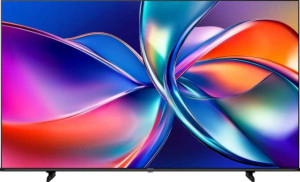
Hisense 43E7Q 43"
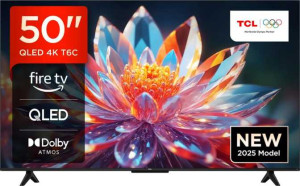
TCL 50T6C-UK 50"

Hisense 43E7Q 43" TCL 50T6C-UK 50"

Overview

Welcome to our in-depth specification face-off between the Hisense 43E7Q 43″ and the TCL 50T6C-UK 50″ — two QLED 4K smart TVs competing for your living room. Both share a strong common foundation, including Dolby Vision, HDR10, Dolby Atmos, and HDMI 2.1 connectivity, but they diverge in some critical areas. In this comparison, we put their display performance, refresh rates, brightness, contrast, and overall value under the microscope to help you make the right choice.

Common Features

  • Both TVs have a 4K (UHD) display resolution of 3840 x 2160 px.
  • Both use a QLED, LED-backlit, LCD display type.
  • Both support a display color depth of 1070 million colors with 10-bit panel.
  • HDR10 support is available on both products.
  • Dolby Vision support is available on both products.
  • HLG support is available on both products.
  • Bluetooth 5 is available on both products.
  • Both TVs include 3 HDMI 2.1 ports.
  • Wi-Fi 4 (802.11n) and Wi-Fi 5 (802.11ac) are supported on both products.
  • Both TVs have 2 USB ports and 1 RJ45 port.
  • Dolby Digital support is available on both products.
  • Dolby Digital Plus support is available on both products.
  • Digital Out support is available on both products.
  • Dolby Atmos support is available on both products.
  • Dolby Audio support is available on both products.
  • SRS TheaterSound HD is not available on either product.
  • Dolby Virtual support is not available on either product.
  • Both TVs have stereo speakers.
  • VESA mount support is available on both products.
  • Both TVs have a built-in smart TV platform, AirPlay, Alexa compatibility, and remote smartphone support.
  • Neither TV has a rechargeable remote control.
  • USB recording support is available on both products.
  • Standby power consumption is 0.5W on both products.
  • Both TVs share the same operating temperature range of 5 °C to 35 °C.

Main Differences

  • Screen size is 43″ on Hisense 43E7Q 43″ and 50″ on TCL 50T6C-UK 50″.
  • Pixel density is 102 ppi on Hisense 43E7Q 43″ and 88 ppi on TCL 50T6C-UK 50″.
  • Typical brightness is 275 nits on Hisense 43E7Q 43″ and 350 nits on TCL 50T6C-UK 50″.
  • Contrast ratio is 4000:1 on Hisense 43E7Q 43″ and 6000:1 on TCL 50T6C-UK 50″.
  • Refresh rate is 60Hz on Hisense 43E7Q 43″ and 120Hz on TCL 50T6C-UK 50″.
  • HDR10+ support is present on Hisense 43E7Q 43″ but not available on TCL 50T6C-UK 50″.
  • A 3.5 mm audio jack socket is present on Hisense 43E7Q 43″ but not available on TCL 50T6C-UK 50″.
  • Audio output power is 2 x 7W on Hisense 43E7Q 43″ and 2 x 10W on TCL 50T6C-UK 50″.
  • Width is 963 mm on Hisense 43E7Q 43″ and 1111 mm on TCL 50T6C-UK 50″.
  • Height is 560 mm on Hisense 43E7Q 43″ and 646 mm on TCL 50T6C-UK 50″.
  • Thickness is 74 mm on Hisense 43E7Q 43″ and 69 mm on TCL 50T6C-UK 50″.
  • Weight is 6900 g on Hisense 43E7Q 43″ and 9600 g on TCL 50T6C-UK 50″.
  • Volume is 39906.72 cm³ on Hisense 43E7Q 43″ and 49521.714 cm³ on TCL 50T6C-UK 50″.
  • Warranty period is 3 years on Hisense 43E7Q 43″ and 2 years on TCL 50T6C-UK 50″.
  • EU energy label is E on Hisense 43E7Q 43″ and F on TCL 50T6C-UK 50″.
Specs Comparison
Hisense 43E7Q 43"

Hisense 43E7Q 43"

TCL 50T6C-UK 50"

TCL 50T6C-UK 50"

Display:
display resolution 4K (UHD) 4K (UHD)
Display type QLED, LED-backlit, LCD QLED, LED-backlit, LCD
screen size 43" 50"
resolution 3840 x 2160 px 3840 x 2160 px
pixel density 102 ppi 88 ppi
display colors 1070 million 1070 million
bit depth 10-bit 10-bit
brightness (typical) 275 nits 350 nits
contrast ratio 4000:1 6000:1
refresh rate 60Hz 120Hz
supports HDR10
supports HDR10+
supports Dolby Vision
supports HLG
has anti-reflection coating
has an ambient light sensor
maximum horizontal viewing angle 178º 178º
maximum vertical viewing angle 178º 178º

Both the Hisense 43E7Q and the TCL 50T6C-UK share the same fundamental display technology — QLED, LED-backlit LCD panels with a 4K (3840 x 2160) resolution, 10-bit color depth, and 1070 million colors — so their baseline picture quality starts from a comparable foundation. They also match on viewing angles (178º horizontally and vertically), anti-reflection coating, and ambient light sensor support, meaning neither has an edge on these shared traits.

Where the two diverge meaningfully is in brightness, contrast, and motion performance. The TCL delivers 350 nits of typical brightness versus the Hisense's 275 nits, which translates to a more watchable image in well-lit rooms. More significantly, the TCL's 6000:1 contrast ratio substantially outpaces the Hisense's 4000:1 — in practice, this means deeper perceived blacks and more punch in HDR scenes. The TCL also features a 120Hz refresh rate compared to the Hisense's 60Hz, a real-world advantage for sports, fast gaming, and action content where motion clarity matters. On the other side, the Hisense's smaller 43″ screen yields a higher pixel density of 102 ppi versus 88 ppi on the TCL's 50″ panel, so up close the Hisense image may appear slightly sharper. The Hisense also adds HDR10+ support, which the TCL lacks, though Dolby Vision — present on both — is arguably the more widely adopted premium HDR format.

Overall, the TCL 50T6C-UK holds a clear display advantage for most users: its higher brightness, superior contrast ratio, and 120Hz refresh rate represent more impactful real-world gains than the Hisense's modest pixel density lead or HDR10+ support. The Hisense 43E7Q remains a reasonable choice for smaller spaces where screen size and pixel sharpness at close range are priorities, but purely on display performance metrics, the TCL edges ahead.
Connectivity:
Has Bluetooth
HDMI version HDMI 2.1 HDMI 2.1
HDMI ports 3 3
supports Wi-Fi
Wi-Fi version Wi-Fi 4 (802.11n), Wi-Fi 5 (802.11ac) Wi-Fi 4 (802.11n), Wi-Fi 5 (802.11ac)
Bluetooth version 5 5
USB ports 2 2
RJ45 ports 1 1
supports Miracast
has a socket for a 3.5 mm audio jack
has an external memory slot
has a VGA connector
DVB standards DVB-T, DVB-T2, DVB-C, DVB-S, DVB-S2 DVB-T, DVB-T2, DVB-C, DVB-S, DVB-S2
has a DVI connector

Connectivity is almost entirely a wash between these two TVs. Both carry identical port counts — 3 HDMI 2.1 inputs, 2 USB ports, and a single RJ45 ethernet jack — alongside matching wireless specs: Wi-Fi 5 (802.11ac) and Bluetooth 5. HDMI 2.1 is worth highlighting as a genuine shared strength, since it supports the bandwidth needed for 4K at higher frame rates and features like eARC for premium audio passthrough. For most users, this port lineup will cover all practical use cases without compromise on either model.

The one tangible difference is that the Hisense 43E7Q includes a 3.5mm audio jack, while the TCL 50T6C-UK does not. This may seem minor, but it has real practical value — it allows direct connection of headphones for private listening without relying on Bluetooth, which adds latency and requires a paired device. For users who occasionally want to watch late at night or in shared spaces, the Hisense's headphone socket is a quietly useful feature the TCL simply cannot replicate.

On connectivity, the Hisense 43E7Q holds a narrow but clear edge solely due to the presence of that 3.5mm jack. Everything else — ports, wireless standards, tuner support, and casting via Miracast — is identical. If headphone connectivity matters to you, the Hisense wins this category; otherwise, treat these two as effectively tied.

Audio:
supports Dolby Digital
audio output power 2 x 7W 2 x 10W
supports Digital Out
supports Dolby Digital Plus
has SRS TheaterSound HD
has stereo speakers
has Dolby Atmos
has Dolby Audio
supports Dolby Virtual
has a subwoofer
has DTS:X
HDMI ARC / eARC HDMI ARC, HDMI eARC HDMI ARC, HDMI eARC

Audio formats are a clean sweep for both TVs — Dolby Atmos, Dolby Audio, Dolby Digital Plus, and DTS:X are all present on each model, alongside both HDMI ARC and eARC. The inclusion of eARC in particular is worth noting, as it enables lossless audio passthrough to a compatible soundbar or AV receiver, making either TV a solid foundation for a home theatre setup where external speakers will do the heavy lifting.

The sole differentiator in this category is raw output power. The TCL 50T6C-UK puts out 2 x 10W compared to the Hisense 43E7Q's 2 x 7W — a roughly 43% increase in rated power. In practice, this translates to the TCL being able to fill a larger room more comfortably at higher volumes without the amplifier straining, and generally delivering a fuller, more dynamic sound from its built-in speakers. Neither TV has a subwoofer, so bass reproduction will be limited on both, but the TCL's extra headroom gives it a meaningful advantage for those relying solely on the TV's speakers day-to-day.

The TCL takes the edge in audio on the strength of its higher speaker output alone. For users planning to pair either TV with an external soundbar or audio system, the difference becomes largely irrelevant given their identical format support and eARC capability — but for built-in speaker performance, the TCL has a clear and practical advantage.

Design:
width 963 mm 1111 mm
weight 6900 g 9600 g
thickness 74 mm 69 mm
height 560 mm 646 mm
volume 39906.72 cm³ 49521.714 cm³
Supports VESA mount
maximum operating temperature 35 °C 35 °C
lowest potential operating temperature 5 °C 5 °C

Screen size difference inevitably drives most of the physical distinctions here. The TCL 50T6C-UK is naturally larger and heavier — 9.6 kg versus the Hisense 43E7Q's 6.9 kg — and spans considerably more wall or cabinet space at 1111 mm wide compared to 963 mm. That 2.7 kg weight gap is practically relevant at installation time, particularly for solo wall-mounting, where the TCL will require more effort and ideally a second pair of hands to position safely.

One subtle but genuine design win for the TCL is its slimmer profile: at 69 mm thick versus the Hisense's 74 mm, the TCL sits marginally flatter against a wall. It's a modest difference, but for wall-mounted setups where a low-profile look matters, the TCL has a slight aesthetic edge. Operating temperature ranges are identical on both — 5 °C to 35 °C — and both support VESA mounting, so neither has any advantage in installation flexibility or environmental tolerance.

There is no meaningful design winner here beyond what screen size naturally dictates. The Hisense 43E7Q is lighter and more compact, making it easier to handle and better suited to smaller spaces or furniture placement. The TCL 50T6C-UK offers a marginally slimmer depth. Ultimately, the right choice comes down to the room and the installation scenario rather than any design superiority on either side.

Features:
release date April 2025 April 2025
has AirPlay
has built-in smart TV
works with Alexa
works with Siri/Apple HomeKit
supports a remote smartphone
has a rechargeable remote control
supports USB recording
standby power consumption 0.5W 0.5W
has a search browser
has a sleep timer
has a child lock
warranty period 3 years 2 years
has voice commands
EU energy label E F

Feature parity is extensive between these two TVs. Both run a built-in smart platform with voice commands, AirPlay, Alexa compatibility, smartphone remote support, USB recording, and a browser — a well-rounded smart feature set that covers the vast majority of everyday use cases. Neither supports Apple HomeKit or Siri, and both share an identical 0.5W standby consumption, so there is nothing to separate them on day-to-day smart functionality or energy draw at rest.

Two differences stand out. First, the Hisense 43E7Q carries a 3-year warranty versus the TCL's 2-year coverage — a full extra year of manufacturer protection that has tangible financial value, particularly for a large electronics purchase where repairs outside warranty can be costly. Second, the Hisense holds an EU energy label of E compared to the TCL's label of F. The F rating indicates relatively higher energy consumption in use, which adds up over years of daily viewing and may matter to environmentally conscious buyers or those in markets with higher electricity costs.

The Hisense 43E7Q has a clear edge in this category, winning on both warranty duration and energy efficiency rating. Neither difference affects the viewing experience directly, but both represent real long-term value considerations — the Hisense costs less to run and offers better post-purchase protection.

Comparison Summary & Verdict

After examining every specification, it is clear that these two TVs serve subtly different audiences. The Hisense 43E7Q 43″ stands out with its higher pixel density of 102 ppi, exclusive HDR10+ support, a 3-year warranty, a better EU energy rating, and the convenience of a 3.5 mm audio jack — making it an excellent pick for those who value image sharpness and long-term ownership reassurance in a compact form. The TCL 50T6C-UK 50″, on the other hand, counters with a larger 50-inch screen, a superior 120Hz refresh rate, higher brightness at 350 nits, a stronger 6000:1 contrast ratio, and more powerful 2 x 10W speakers — qualities that appeal to cinephiles and gamers who prioritise immersion and fluid motion on a bigger canvas.

Hisense 43E7Q 43
Buy Hisense 43E7Q 43" if...

Buy the Hisense 43E7Q 43″ if you want a sharper, more compact screen with HDR10+ support, a longer 3-year warranty, and a better energy efficiency rating.

TCL 50T6C-UK 50
Buy TCL 50T6C-UK 50" if...

Buy the TCL 50T6C-UK 50″ if you prioritise a larger display, a smoother 120Hz refresh rate, higher brightness, stronger contrast, and more powerful audio output.