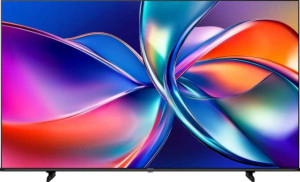
Hisense 43E7Q 43"
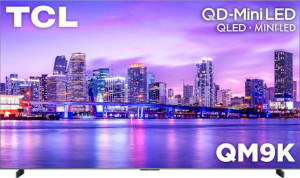
TCL 65QM9K 65"

Hisense 43E7Q 43" TCL 65QM9K 65"

Overview

Welcome to our in-depth specification comparison between the Hisense 43E7Q 43″ and the TCL 65QM9K 65″. These two QLED televisions share a strong HDR foundation — including Dolby Vision, HDR10+, and HLG — yet diverge sharply when it comes to display technology, refresh rate, and screen size. Whether you are focused on a compact everyday setup or a large-screen cinematic experience, this breakdown will help you weigh every key specification before making your decision.

Common Features

  • Both TVs have a 4K (UHD) display resolution of 3840 x 2160 px.
  • Both TVs display 1070 million colors with a 10-bit bit depth.
  • HDR10 support is available on both products.
  • HDR10+ support is available on both products.
  • Dolby Vision support is available on both products.
  • HLG support is available on both products.
  • Both TVs share the same QLED, LED-backlit, LCD display technology.
  • Bluetooth connectivity is available on both products.
  • Both TVs use HDMI 2.1 as their HDMI version.
  • Wi-Fi support is available on both products.
  • Both TVs have 2 USB ports and 1 RJ45 port.
  • Miracast support is available on both products.
  • Neither product has an external memory slot.
  • Neither product has a VGA connector.
  • Dolby Digital support is available on both products.
  • Digital Out support is available on both products.
  • Dolby Digital Plus support is available on both products.
  • Dolby Atmos and Dolby Audio are available on both products.
  • SRS TheaterSound HD is not available on either product.
  • Stereo speakers are present on both products.
  • Dolby Virtual support is not available on either product.
  • Both TVs support VESA mounting.
  • Both TVs operate within the same temperature range of 5 °C to 35 °C.
  • AirPlay is available on both products.
  • Both TVs have a built-in smart TV platform.
  • Google Assistant compatibility is present on both products.
  • Alexa support is available on both products.
  • Siri and Apple HomeKit support is not available on either product.
  • Remote smartphone control is supported on both products.
  • Neither product has a rechargeable remote control.
  • USB recording is supported on both products.

Main Differences

  • The Hisense 43E7Q 43″ uses QLED, LED-backlit, LCD technology, while the TCL 65QM9K 65″ adds Mini-LED to its display panel.
  • Screen size is 43″ on the Hisense 43E7Q 43″ and 64.5″ on the TCL 65QM9K 65″.
  • Pixel density is 102 ppi on the Hisense 43E7Q 43″ and 68 ppi on the TCL 65QM9K 65″.
  • Refresh rate is 60Hz on the Hisense 43E7Q 43″ and 144Hz on the TCL 65QM9K 65″.
  • HDMI ports number 3 on the Hisense 43E7Q 43″ and 4 on the TCL 65QM9K 65″.
  • The Hisense 43E7Q 43″ supports Wi-Fi 4 and Wi-Fi 5, while the TCL 65QM9K 65″ also adds Wi-Fi 6 (802.11ax) support.
  • Bluetooth version is 5 on the Hisense 43E7Q 43″ and 5.4 on the TCL 65QM9K 65″.
  • A 3.5 mm audio jack is present on the Hisense 43E7Q 43″ but not available on the TCL 65QM9K 65″.
  • Width is 963 mm on the Hisense 43E7Q 43″ and 1434.1 mm on the TCL 65QM9K 65″.
  • Height is 560 mm on the Hisense 43E7Q 43″ and 823.9 mm on the TCL 65QM9K 65″.
  • Thickness is 74 mm on the Hisense 43E7Q 43″ and 50 mm on the TCL 65QM9K 65″.
  • Weight is 6900 g on the Hisense 43E7Q 43″ and 23101 g on the TCL 65QM9K 65″.
  • Volume is 39906.72 cm³ on the Hisense 43E7Q 43″ and 59077.7495 cm³ on the TCL 65QM9K 65″.
  • Warranty period is 3 years on the Hisense 43E7Q 43″ and 1 year on the TCL 65QM9K 65″.
Specs Comparison
Hisense 43E7Q 43"

Hisense 43E7Q 43"

TCL 65QM9K 65"

TCL 65QM9K 65"

Display:
display resolution 4K (UHD) 4K (UHD)
Display type QLED, LED-backlit, LCD QLED, LED-backlit, LCD, Mini-LED
screen size 43" 64.5"
resolution 3840 x 2160 px 3840 x 2160 px
pixel density 102 ppi 68 ppi
display colors 1070 million 1070 million
bit depth 10-bit 10-bit
refresh rate 60Hz 144Hz
supports HDR10
supports HDR10+
supports Dolby Vision
supports HLG
has anti-reflection coating
has an ambient light sensor
maximum horizontal viewing angle 178º 178º
maximum vertical viewing angle 178º 178º

Both the Hisense 43E7Q and the TCL 65QM9K share the same 4K (3840 x 2160) resolution, QLED LED-backlit LCD panel technology, 10-bit color depth, and 1.07 billion displayable colors. They also match on HDR support — covering HDR10, HDR10+, Dolby Vision, and HLG — and both include anti-reflection coatings, ambient light sensors, and wide 178° viewing angles in both axes. On these fundamentals, the two TVs are evenly matched.

The meaningful differences emerge in three areas. First, the TCL's Mini-LED backlight layer — absent on the Hisense — allows for finer local dimming zones, which typically translates to deeper blacks and better contrast control in HDR content. Second, and most significantly, the TCL's 144Hz refresh rate versus the Hisense's 60Hz is a major advantage for motion clarity: fast-moving sports, action films, and especially gaming benefit greatly from the higher rate, reducing blur and enabling smoother frame interpolation. Third, the Hisense's smaller 43″ panel produces a much higher pixel density of 102 ppi compared to the TCL's 68 ppi at 64.5″ — meaning individual pixels are harder to discern up close on the Hisense, which matters at shorter viewing distances.

Overall, the TCL 65QM9K holds a clear display advantage for most living-room use cases: its larger screen, Mini-LED backlighting, and especially its 144Hz panel make it the more capable performer for both cinematic HDR content and high-frame-rate sources. The Hisense 43E7Q's edge in pixel density is real but only relevant if the viewer sits unusually close, and it does not offset the TCL's broader feature set.
Connectivity:
Has Bluetooth
HDMI version HDMI 2.1 HDMI 2.1
HDMI ports 3 4
supports Wi-Fi
Wi-Fi version Wi-Fi 4 (802.11n), Wi-Fi 5 (802.11ac) Wi-Fi 4 (802.11n), Wi-Fi 5 (802.11ac), Wi-Fi 6 (802.11ax)
Bluetooth version 5 5.4
USB ports 2 2
RJ45 ports 1 1
supports Miracast
has a socket for a 3.5 mm audio jack
has an external memory slot
has a VGA connector
has a DVI connector

The shared connectivity foundation is solid on both TVs: HDMI 2.1, dual USB ports, a wired Ethernet port, Bluetooth 5, and Wi-Fi with support for both 802.11n and 802.11ac are present on each. Miracast wireless screen mirroring is also available on both, covering the most common use cases for modern living-room setups.

Where the TCL 65QM9K pulls ahead is in the upgrades layered on top of that baseline. Its Wi-Fi 6 (802.11ax) support — missing on the Hisense — delivers lower latency and better performance in congested network environments with many connected devices, which is increasingly relevant in modern homes. Its Bluetooth 5.4 (versus 5.0 on the Hisense) brings improved connection stability and efficiency, particularly useful when pairing headphones or soundbars. The TCL also adds a fourth HDMI port, a practical advantage for users with multiple consoles, media players, or AV receivers who want to avoid swapping cables. The Hisense counters with a 3.5mm audio jack, which the TCL lacks — a small but real convenience for plugging in headphones directly without an adapter or Bluetooth pairing.

On balance, the TCL 65QM9K has the connectivity edge. The extra HDMI port, newer Wi-Fi standard, and updated Bluetooth version represent tangible, forward-looking advantages that outweigh the Hisense's headphone jack inclusion for the majority of users.

Audio:
supports Dolby Digital
supports Digital Out
supports Dolby Digital Plus
has SRS TheaterSound HD
has stereo speakers
has Dolby Atmos
has Dolby Audio
supports Dolby Virtual
has a subwoofer
has DTS:X
HDMI ARC / eARC HDMI ARC, HDMI eARC HDMI ARC, HDMI eARC

Audio is the one specification group where these two TVs are in complete lockstep. Every single data point — from Dolby Atmos and DTS:X object-based surround support, to Dolby Digital Plus passthrough, stereo speakers, and both HDMI ARC and eARC — is identical across the Hisense 43E7Q and the TCL 65QM9K.

The presence of eARC is worth highlighting as a shared strength: unlike standard ARC, eARC carries enough bandwidth to pass lossless audio formats such as Dolby TrueHD and DTS-HD Master Audio to a compatible soundbar or receiver, making both TVs well-equipped as the hub of a serious home theater audio chain. Dolby Atmos and DTS:X support means both can decode or pass through height-channel audio metadata when the source provides it, adding a sense of vertical space to the soundstage.

This group is a clear tie. There is no audio specification in the provided data that favors either product, and any difference in actual sound quality — such as speaker wattage or driver configuration — is not reflected in the available specs. Users prioritizing audio should treat both TVs as equivalent on paper and focus their decision on an external sound system if output quality matters.

Design:
width 963 mm 1434.1 mm
weight 6900 g 23101 g
thickness 74 mm 50 mm
height 560 mm 823.9 mm
volume 39906.72 cm³ 59077.7495 cm³
Supports VESA mount
maximum operating temperature 35 °C 35 °C
lowest potential operating temperature 5 °C 5 °C

The size and weight gap between these two TVs is substantial, which is entirely expected given the difference in screen size but still worth quantifying for practical planning. The Hisense 43E7Q weighs approximately 6.9 kg and spans 963 mm wide — manageable for a single person to mount or reposition. The TCL 65QM9K, at 23.1 kg and 1434 mm wide, is a significantly more demanding physical installation that will realistically require two people and careful wall or stand preparation to handle safely.

One design detail that does stand out independently of screen size is thickness. The TCL is notably slimmer at 50 mm deep compared to the Hisense's 74 mm — a 32% reduction that gives the larger TV a more premium, low-profile appearance on a wall mount. Both support VESA mounting and share identical operating temperature ranges (5–35 °C), so neither has an environmental advantage in that regard.

There is no outright winner here — the right choice depends entirely on the user's context. The Hisense 43E7Q has a clear practical edge for smaller rooms, easier solo installation, and tight spaces. The TCL 65QM9K's sleeker profile is a genuine design plus if wall-mounting a large panel, but its weight demands proper planning. Buyers should treat this group as a fit-for-space decision rather than a quality judgment.

Features:
release date April 2025 September 2025
has AirPlay
has built-in smart TV
compatible with Google Assistant
works with Alexa
works with Siri/Apple HomeKit
supports a remote smartphone
has a rechargeable remote control
supports USB recording
standby power consumption 0.5W 0.5W
has a search browser
has a sleep timer
has a child lock
warranty period 3 years 1 years
has voice commands

Across virtually every smart feature category, these two TVs are identical: both run a built-in smart platform, support AirPlay, Google Assistant, Alexa, and smartphone remote control, and include USB recording, voice commands, sleep timer, and child lock. Neither supports Apple HomeKit/Siri, and both draw a miserly 0.5W in standby — a negligible difference in electricity costs over time. For day-to-day smart TV usability, users of either model will have the same ecosystem access and feature set available to them.

The sole differentiator in this group is the warranty period: the Hisense 43E7Q comes backed by a 3-year warranty, while the TCL 65QM9K ships with just 1 year. This is a more meaningful gap than it might initially appear — a three-year coverage window substantially reduces financial risk from panel or component failures that tend to surface after the first year of use, and it signals a degree of manufacturer confidence in long-term reliability.

The Hisense 43E7Q holds the edge in this group, solely on the strength of its warranty advantage. Given that every other feature is evenly matched, the additional two years of coverage is a tangible, quantifiable benefit that adds real purchase security — particularly relevant for a TV expected to remain in use for many years.

Comparison Summary & Verdict

After examining every specification, two distinct profiles emerge. The Hisense 43E7Q 43″ stands out for its compact footprint, higher pixel density of 102 ppi, 3-year warranty, and the inclusion of a 3.5 mm audio jack — making it a practical and reliable choice for smaller rooms or desktop-adjacent setups where sharpness and longevity matter. The TCL 65QM9K 65″, on the other hand, makes a compelling case for home cinema enthusiasts with its larger 64.5-inch Mini-LED panel, blazing 144Hz refresh rate, Wi-Fi 6 support, and Bluetooth 5.4 — all built for immersive, high-performance viewing. Both TVs share an equally strong HDR suite and smart platform feature set, so the choice ultimately comes down to your room size, use case, and whether gaming or cinematic performance is your priority.

Hisense 43E7Q 43
Buy Hisense 43E7Q 43" if...

Buy the Hisense 43E7Q 43″ if you want a compact, sharper-per-inch QLED TV with a 3-year warranty and a 3.5 mm audio jack for a smaller room or budget-conscious setup.

TCL 65QM9K 65
Buy TCL 65QM9K 65" if...

Buy the TCL 65QM9K 65″ if you want a large-screen Mini-LED display with a 144Hz refresh rate, Wi-Fi 6, and Bluetooth 5.4 for an immersive gaming or home cinema experience.