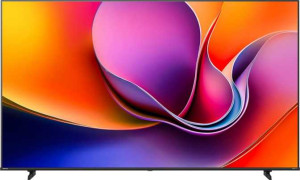
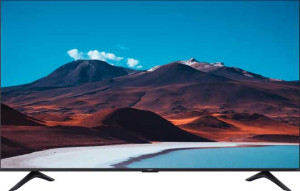
At the foundation, both TVs are nearly identical: 50″ 4K (3840 x 2160) panels at 88 ppi, with 10-bit color depth, 1070 million colors, a 60Hz refresh rate, and wide 178° viewing angles in both directions. These shared traits mean neither has an inherent edge in sharpness, color volume ceiling, motion handling, or how well the picture holds up when viewed from the side.
The first meaningful split is panel technology. The Xiaomi TV F 2026 uses a QLED layer on top of its LED-backlit LCD panel, which uses quantum dots to expand color gamut and peak brightness potential — at least in theory. However, since the specs do not provide brightness figures or measured color gamut data, the real-world QLED advantage cannot be confirmed from this data alone. The Hisense 50A6Q is a conventional LED-backlit LCD without quantum dot enhancement, which typically means a narrower color gamut and lower peak brightness by comparison.
The clearest and most decisive differentiator, however, is HDR format support. The Hisense covers all four major standards — HDR10, HDR10+, Dolby Vision, and HLG — while the Xiaomi only supports HDR10 and HLG, missing both HDR10+ and Dolby Vision. In practice, this matters because streaming platforms (Netflix, Disney+, Apple TV+) and Blu-ray content increasingly use Dolby Vision or HDR10+ for dynamic, scene-by-scene tone mapping; without these, the Xiaomi will fall back to base HDR10, which is less precise. On balance, despite the Xiaomi's QLED hardware, the Hisense 50A6Q holds a clear display advantage thanks to its comprehensive HDR ecosystem coverage.