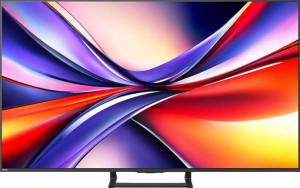
Hisense 50A7Q 50"
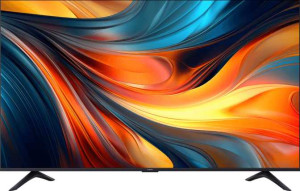
Xiaomi TV A 2026 50"

Hisense 50A7Q 50" Xiaomi TV A 2026 50"

Overview

When choosing between the Hisense 50A7Q 50″ and the Xiaomi TV A 2026 50″, shoppers are faced with two 50-inch 4K TVs that share a strong foundation yet diverge sharply on display technology, audio capabilities, and everyday practicality. Both deliver UHD resolution and HDR10 support, but key battlegrounds emerge around panel quality and HDR formats, audio richness, power efficiency, and long-term value — making this a genuinely competitive head-to-head worth examining closely.

Common Features

  • Both TVs have a 50″ screen size.
  • Both TVs offer 4K UHD resolution at 3840 x 2160 px.
  • Both TVs have a pixel density of 88 ppi.
  • Both TVs support 1070 million display colors with 10-bit bit depth.
  • Both TVs have a 60Hz refresh rate.
  • HDR10 support is available on both TVs.
  • Both TVs use LED-backlit LCD panel technology.
  • Both TVs have 3 HDMI ports with HDMI 2.1 version.
  • Both TVs support Wi-Fi 4 (802.11n) and Wi-Fi 5 (802.11ac).
  • Both TVs have Bluetooth 5.
  • Both TVs include 1 RJ45 port.
  • Miracast support is available on both TVs.
  • Both TVs feature stereo speakers and Dolby Audio.
  • DTS:X support is available on both TVs.
  • Both TVs support Digital Out audio.
  • Both TVs include HDMI ARC and HDMI eARC.
  • SRS TheaterSound HD is not available on either TV.
  • Dolby Virtual is not supported on either TV.
  • Both TVs have a width of 1111 mm and support VESA mounting.
  • AirPlay is available on both TVs.
  • Both TVs have a built-in smart TV platform and are compatible with Google Assistant.
  • Works with Siri/Apple HomeKit is not supported on either TV.
  • Both TVs support remote smartphone control and USB recording.
  • Neither TV has a rechargeable remote control.
  • Both TVs have a standby power consumption of 0.5W.

Main Differences

  • The Hisense 50A7Q 50″ uses a QLED, LED-backlit LCD panel, while the Xiaomi TV A 2026 50″ uses a standard LED-backlit LCD panel.
  • HDR10+ support is available on the Hisense 50A7Q 50″ but not on the Xiaomi TV A 2026 50″.
  • Dolby Vision support is available on the Hisense 50A7Q 50″ but not on the Xiaomi TV A 2026 50″.
  • The Hisense 50A7Q 50″ has 2 USB ports, while the Xiaomi TV A 2026 50″ has 1 USB port.
  • Dolby Atmos support is available on the Hisense 50A7Q 50″ but not on the Xiaomi TV A 2026 50″.
  • The Hisense 50A7Q 50″ includes a built-in subwoofer, while the Xiaomi TV A 2026 50″ does not.
  • The Hisense 50A7Q 50″ weighs 13000 g, while the Xiaomi TV A 2026 50″ weighs 7400 g.
  • The Hisense 50A7Q 50″ is 78 mm thick, while the Xiaomi TV A 2026 50″ is 73 mm thick.
  • The Hisense 50A7Q 50″ has a height of 647 mm, while the Xiaomi TV A 2026 50″ is 643 mm tall.
  • The Hisense 50A7Q 50″ has a volume of 56067.726 cm³, compared to 52149.229 cm³ for the Xiaomi TV A 2026 50″.
  • The maximum operating temperature is 35 °C on the Hisense 50A7Q 50″ and 40 °C on the Xiaomi TV A 2026 50″.
  • The lowest potential operating temperature is 5 °C on the Hisense 50A7Q 50″ and 0 °C on the Xiaomi TV A 2026 50″.
  • Alexa support is available on the Hisense 50A7Q 50″ but not on the Xiaomi TV A 2026 50″.
  • Operating power consumption is 150W on the Hisense 50A7Q 50″ and 75W on the Xiaomi TV A 2026 50″.
  • The warranty period is 3 years on the Hisense 50A7Q 50″ and 1 year on the Xiaomi TV A 2026 50″.
Specs Comparison
Hisense 50A7Q 50"

Hisense 50A7Q 50"

Xiaomi TV A 2026 50"

Xiaomi TV A 2026 50"

Display:
display resolution 4K (UHD) 4K (UHD)
Display type QLED, LED-backlit, LCD LED-backlit, LCD
screen size 50" 50"
resolution 3840 x 2160 px 3840 x 2160 px
pixel density 88 ppi 88 ppi
display colors 1070 million 1070 million
bit depth 10-bit 10-bit
refresh rate 60Hz 60Hz
supports HDR10
supports HDR10+
supports Dolby Vision
supports HLG
has anti-reflection coating
has an ambient light sensor
maximum horizontal viewing angle 178º 178º
maximum vertical viewing angle 178º 178º

Both the Hisense 50A7Q and the Xiaomi TV A 2026 50″ share the same foundational display specs: a 4K (3840 x 2160) resolution at 88 ppi, a 10-bit panel capable of reproducing over a billion colors, a 60Hz refresh rate, and identical 178°/178° viewing angles. Both also feature anti-reflection coating and an ambient light sensor, meaning neither has an edge in these areas.

The most meaningful differentiator lies in the panel technology and HDR support. The Hisense uses a QLED panel — a quantum dot-enhanced LCD — which typically delivers wider color gamut and higher peak brightness compared to a standard LED-backlit LCD like the one in the Xiaomi. More critically, the Hisense supports Dolby Vision and HDR10+ in addition to HDR10 and HLG, while the Xiaomi is limited to HDR10 and HLG only. Dolby Vision and HDR10+ are dynamic metadata formats that optimize tone-mapping scene by scene, producing more nuanced highlight and shadow detail on compatible content — an advantage that is perceptible on well-mastered films and streaming content from platforms like Netflix or Amazon Prime.

The Hisense 50A7Q holds a clear edge in this category. Its QLED panel and broader HDR format compatibility — particularly Dolby Vision — make it the more capable display for HDR content consumption, assuming the content library and streaming services support those formats. The Xiaomi TV A 2026 is competitive on the basics but falls short where it counts for picture quality enthusiasts.

Connectivity:
Has Bluetooth
HDMI version HDMI 2.1 HDMI 2.1
HDMI ports 3 3
supports Wi-Fi
Wi-Fi version Wi-Fi 4 (802.11n), Wi-Fi 5 (802.11ac) Wi-Fi 4 (802.11n), Wi-Fi 5 (802.11ac)
Bluetooth version 5 5
USB ports 2 1
RJ45 ports 1 1
supports Miracast
has a socket for a 3.5 mm audio jack
has an external memory slot
has a VGA connector
DVB standards DVB-T, DVB-T2, DVB-C, DVB-S, DVB-S2 DVB-T, DVB-T2, DVB-C, DVB-S, DVB-S2
has a DVI connector

Connectivity between these two TVs is largely identical: both offer HDMI 2.1 across three ports, shared Wi-Fi 4/5 dual-band wireless, Bluetooth 5, an RJ45 ethernet port, a 3.5mm audio jack, and Miracast screen mirroring. For most users building a typical home theater setup — connecting a soundbar, a gaming console, and a streaming stick simultaneously — neither TV creates a bottleneck here.

The only concrete differentiator is USB port count. The Hisense 50A7Q provides 2 USB ports versus the Xiaomi TV A 2026′s 1 USB port. In practice, this matters when you want to connect multiple peripherals simultaneously — for example, a USB storage drive alongside a wireless keyboard dongle or a USB-powered device — without reaching for a hub. It is a small but genuinely practical advantage in day-to-day use.

Overall, the Hisense 50A7Q takes a narrow edge here solely due to its extra USB port. For users who regularly attach external drives or peripherals, this distinction is worth noting. Otherwise, connectivity is effectively a tie.

Audio:
supports Digital Out
has SRS TheaterSound HD
has stereo speakers
has Dolby Atmos
has Dolby Audio
supports Dolby Virtual
has a subwoofer
has DTS:X
HDMI ARC / eARC HDMI ARC, HDMI eARC HDMI ARC, HDMI eARC

Both TVs share a reasonable audio foundation — stereo speakers, Dolby Audio, DTS:X, Digital Out, and HDMI ARC/eARC — so passthrough to an external soundbar is equally capable on either set. Where they diverge, however, is significant for users who intend to rely on the TV′s built-in audio system.

The Hisense 50A7Q goes meaningfully further in two ways: it includes a built-in subwoofer and supports Dolby Atmos, neither of which the Xiaomi TV A 2026 offers. Dolby Atmos adds an object-based spatial audio layer that creates a more immersive, three-dimensional soundstage on compatible content from streaming platforms like Netflix and Disney+. A built-in subwoofer reinforces low-frequency output — bass in action scenes, depth in music — without requiring an external speaker. Together, these two features represent a concrete step up in out-of-the-box audio performance.

The Hisense 50A7Q holds a clear advantage in this category. For users who plan to use the TV′s native speakers without an external sound system, the combination of Dolby Atmos and a subwoofer makes a tangible difference in everyday listening. The Xiaomi TV A 2026 is not deficient by any absolute standard, but it simply does not match the Hisense′s built-in audio capability.

Design:
width 1111 mm 1111 mm
weight 13000 g 7400 g
thickness 78 mm 73 mm
height 647 mm 643 mm
volume 56067.726 cm³ 52149.229 cm³
Supports VESA mount
maximum operating temperature 35 °C 40 °C
lowest potential operating temperature 5 °C 0 °C

At identical widths and nearly the same height, these two TVs occupy virtually the same footprint on a stand or wall. Both support VESA mounting, so installation flexibility is equal. The subtle differences in thickness — 78 mm for the Hisense versus 73 mm for the Xiaomi — are negligible in any real-world placement scenario.

Weight, however, tells a more consequential story. The Hisense 50A7Q tips the scales at 13,000 g, while the Xiaomi TV A 2026 comes in at just 7,400 g — nearly half the weight. This gap matters most during installation: a lighter TV is significantly easier for one or two people to mount, reposition, or transport without assistance. It also places less long-term stress on wall mounts and furniture.

The Xiaomi also edges ahead on operating temperature range, tolerating conditions from 0 °C to 40 °C compared to the Hisense′s 5 °C to 35 °C. This is unlikely to matter in a standard living room but could be relevant in garages, sunrooms, or colder climates. Overall, the Xiaomi TV A 2026 has a meaningful design advantage here, primarily driven by its substantially lower weight and slightly broader environmental tolerance.

Features:
release date April 2025 August 2025
has AirPlay
has built-in smart TV
compatible with Google Assistant
works with Alexa
works with Siri/Apple HomeKit
supports a remote smartphone
has a rechargeable remote control
supports USB recording
operating power consumption 150W 75W
standby power consumption 0.5W 0.5W
has a search browser
has a sleep timer
has a child lock
warranty period 3 years 1 years
has voice commands

The smart feature baseline is strong on both sides — AirPlay, Google Assistant, smartphone remote support, USB recording, voice commands, and a browser are all present on each TV. For the majority of users, this shared foundation covers everything needed for a modern smart TV experience.

Three points of divergence are worth examining closely. First, the Hisense 50A7Q adds Alexa compatibility, which the Xiaomi lacks — a meaningful perk for households already invested in Amazon′s smart home ecosystem. Second, and more striking, is the power consumption gap: the Hisense draws 150W during operation compared to the Xiaomi′s 75W — exactly half. Over hours of daily use, that difference compounds into a noticeably higher electricity bill over the TV′s lifespan. Third, the Hisense carries a 3-year warranty versus the Xiaomi′s 1-year warranty, which is a substantial long-term assurance advantage and reflects greater manufacturer confidence in the product′s durability.

This group does not produce a clean winner — it depends on user priorities. The Hisense 50A7Q wins on ecosystem breadth and after-sales coverage, while the Xiaomi TV A 2026 wins decisively on energy efficiency. For cost-conscious or environmentally aware buyers, the Xiaomi′s power draw is a compelling long-term argument; for smart home integration and peace of mind, the Hisense pulls ahead.

Comparison Summary & Verdict

After a thorough comparison, both TVs serve distinct audiences well. The Hisense 50A7Q 50″ is the stronger choice for home cinema enthusiasts who demand the best picture quality, thanks to its QLED panel, Dolby Vision, and HDR10+ support, complemented by a richer audio setup with Dolby Atmos and a built-in subwoofer. It also adds Alexa voice control, 2 USB ports, and a reassuring 3-year warranty. On the other side, the Xiaomi TV A 2026 50″ is a compelling pick for budget-conscious buyers and those mindful of running costs, drawing just 75W during operation — half the power of the Hisense — while being noticeably lighter and slightly more compact. For most casual viewers who prioritize efficiency and simplicity, the Xiaomi delivers excellent value; for those who want a cinematic, feature-rich experience, the Hisense is the clear step up.

Hisense 50A7Q 50
Buy Hisense 50A7Q 50" if...

Buy the Hisense 50A7Q 50″ if you want a premium picture experience with QLED, Dolby Vision, HDR10+, and Dolby Atmos, and value a longer 3-year warranty with Alexa support.

Xiaomi TV A 2026 50
Buy Xiaomi TV A 2026 50" if...

Buy the Xiaomi TV A 2026 50″ if you prioritize lower power consumption, a significantly lighter and slimmer design, and a more affordable day-to-day running cost.