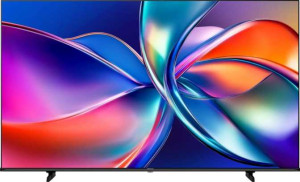
Hisense 50E7Q 50"
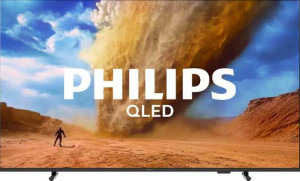
Philips 50PUS7800/12 50"

Hisense 50E7Q 50" Philips 50PUS7800/12 50"

Overview

Welcome to our in-depth spec comparison between the Hisense 50E7Q 50″ and the Philips 50PUS7800/12 50″ — two 50-inch 4K QLED televisions aimed at home entertainment enthusiasts. While both sets share a strong foundation of features, key battlegrounds emerge around HDR format support, audio capabilities, and physical design trade-offs that could meaningfully influence your buying decision. Read on as we break down every specification side by side.

Common Features

  • Both products have a 4K (UHD) display resolution of 3840 x 2160 px.
  • Both products use a QLED, LED-backlit, LCD display type.
  • Both products support 1070 million display colors at 10-bit depth.
  • Both products have a 60Hz refresh rate.
  • HDR10 support is available on both products.
  • HDR10+ support is available on both products.
  • Both products have Bluetooth connectivity.
  • Both products use HDMI 2.1 with 3 HDMI ports.
  • Wi-Fi 4 (802.11n) and Wi-Fi 5 (802.11ac) are supported on both products.
  • Both products have 2 USB ports and 1 RJ45 port.
  • Miracast support is available on both products.
  • Both products deliver 2 x 10W audio output power with stereo speakers.
  • Dolby Atmos and Dolby Audio are supported on both products.
  • Dolby Digital support is available on both products.
  • Digital Out support is available on both products.
  • Both products share the same height of 649 mm and support VESA mounting.
  • The operating temperature range is 5 °C to 35 °C on both products.
  • Both products have a built-in smart TV platform and are compatible with Google Assistant and Alexa.
  • USB recording support is available on both products.
  • Both products have a standby power consumption of 0.5W.

Main Differences

  • Screen size is 50″ on Hisense 50E7Q 50″ and 49.5″ on Philips 50PUS7800/12 50″.
  • Pixel density is 88 ppi on Hisense 50E7Q 50″ and 89 ppi on Philips 50PUS7800/12 50″.
  • Dolby Vision support is present on Hisense 50E7Q 50″ but not available on Philips 50PUS7800/12 50″.
  • Bluetooth version is 5.0 on Hisense 50E7Q 50″ and 5.2 on Philips 50PUS7800/12 50″.
  • Dolby Digital Plus support is present on Hisense 50E7Q 50″ but not available on Philips 50PUS7800/12 50″.
  • Width is 1119 mm on Hisense 50E7Q 50″ and 1111 mm on Philips 50PUS7800/12 50″.
  • Weight is 9500 g on Hisense 50E7Q 50″ and 8230 g on Philips 50PUS7800/12 50″.
  • Thickness is 80 mm on Hisense 50E7Q 50″ and 88 mm on Philips 50PUS7800/12 50″.
  • Volume is 58098.48 cm³ on Hisense 50E7Q 50″ and 63451.432 cm³ on Philips 50PUS7800/12 50″.
  • AirPlay support is present on Hisense 50E7Q 50″ but not available on Philips 50PUS7800/12 50″.
  • Operating power consumption is 54W on Hisense 50E7Q 50″ and 52W on Philips 50PUS7800/12 50″.
Specs Comparison
Hisense 50E7Q 50"

Hisense 50E7Q 50"

Philips 50PUS7800/12 50"

Philips 50PUS7800/12 50"

Display:
display resolution 4K (UHD) 4K (UHD)
Display type QLED, LED-backlit, LCD QLED, LED-backlit, LCD
screen size 50" 49.5"
resolution 3840 x 2160 px 3840 x 2160 px
pixel density 88 ppi 89 ppi
display colors 1070 million 1070 million
bit depth 10-bit 10-bit
refresh rate 60Hz 60Hz
supports HDR10
supports HDR10+
supports Dolby Vision
supports HLG
has anti-reflection coating
has an ambient light sensor
maximum horizontal viewing angle 178º 178º
maximum vertical viewing angle 178º 178º

Both the Hisense 50E7Q and the Philips 50PUS7800/12 share the same core display architecture: a QLED, LED-backlit LCD panel running at 3840 x 2160 px (4K UHD), with a 10-bit color pipeline capable of rendering 1.07 billion colors. Their pixel densities are virtually identical at 88 and 89 ppi respectively, and both refresh at 60Hz — meaning neither has an advantage in motion handling or sharpness at this screen size.

The one meaningful differentiator in this group is HDR format support. Both TVs cover HDR10, HDR10+, and HLG, but only the Hisense also supports Dolby Vision. In practice, Dolby Vision uses dynamic metadata — adjusting brightness and color on a scene-by-scene or even frame-by-frame basis — which can produce more accurate highlights and shadow detail compared to the static metadata of HDR10. As streaming platforms like Netflix and Disney+ increasingly master content in Dolby Vision, this translates to a tangible quality advantage when watching supported titles.

All other display specs — viewing angles (178° horizontal and vertical), anti-reflection coating, and ambient light sensor — are identical. The Hisense 50E7Q therefore holds a clear edge in this category, driven entirely by its Dolby Vision support, which the Philips 50PUS7800/12 lacks.

Connectivity:
Has Bluetooth
HDMI version HDMI 2.1 HDMI 2.1
HDMI ports 3 3
supports Wi-Fi
Wi-Fi version Wi-Fi 4 (802.11n), Wi-Fi 5 (802.11ac) Wi-Fi 4 (802.11n), Wi-Fi 5 (802.11ac)
Bluetooth version 5 5.2
USB ports 2 2
RJ45 ports 1 1
supports Miracast
has a socket for a 3.5 mm audio jack
has an external memory slot
has a VGA connector
DVB standards DVB-T, DVB-T2, DVB-C, DVB-S, DVB-S2 DVB-T, DVB-T2, DVB-C, DVB-S, DVB-S2
has a DVI connector

The connectivity layouts of the Hisense 50E7Q and the Philips 50PUS7800/12 are nearly identical on paper: both offer 3x HDMI 2.1 ports, 2x USB, a single RJ45 ethernet port, a 3.5mm audio jack, Miracast wireless mirroring, and matching Wi-Fi 5 (802.11ac) support. For most living room setups — connecting a soundbar, a games console, and a streaming stick simultaneously — either TV provides a perfectly capable port selection.

The only measurable difference lies in Bluetooth. The Hisense ships with Bluetooth 5.0, while the Philips steps up to Bluetooth 5.2. The newer revision introduces enhanced audio features including LE Audio and improved codec handling, which can result in lower latency and more stable connections with modern wireless headphones or speakers. For users who rely heavily on Bluetooth audio accessories, this is a genuine — if modest — advantage for the Philips.

On balance, the two TVs are essentially evenly matched in connectivity. The Philips holds a slight technical edge through its newer Bluetooth revision, but the gap is narrow and only relevant to users with Bluetooth 5.2-capable peripherals. Neither TV offers an external memory slot or legacy connectors, keeping both firmly in the same modern mid-range tier.

Audio:
supports Dolby Digital
audio output power 2 x 10W 2 x 10W
supports Digital Out
supports Dolby Digital Plus
has SRS TheaterSound HD
has stereo speakers
has Dolby Atmos
has Dolby Audio
supports Dolby Virtual
has a subwoofer
has DTS:X
HDMI ARC / eARC HDMI ARC, HDMI eARC HDMI ARC, HDMI eARC

At the foundation, both TVs are well-matched in their audio hardware: identical 2 x 10W stereo output, no subwoofer, and the same suite of premium audio standards including Dolby Atmos, DTS:X, Dolby Audio, and full HDMI ARC and eARC support. The presence of eARC on both is worth noting — it allows a connected soundbar to receive high-bandwidth, uncompressed audio formats, which matters if you plan to upgrade your setup down the line.

The single differentiator in this group is Dolby Digital Plus, which the Hisense 50E7Q supports and the Philips 50PUS7800/12 does not. Dolby Digital Plus is an enhanced compression codec that carries more audio channels and higher bitrates than standard Dolby Digital, and it serves as the transport layer for Dolby Atmos content delivered via streaming services. Without it, the Philips technically decodes Dolby Atmos through an alternative path — but the absence of DD+ can limit the fidelity of streamed Atmos content in certain scenarios.

The Hisense has a clear, if focused, edge here. For users who primarily watch Atmos content via streaming platforms, its Dolby Digital Plus support ensures a more complete and standards-compliant audio decoding chain. Those who route all audio through an external soundbar via eARC will feel the difference less, but for built-in audio performance, the Hisense holds the advantage.

Design:
width 1119 mm 1111 mm
weight 9500 g 8230 g
thickness 80 mm 88 mm
height 649 mm 649 mm
volume 58098.48 cm³ 63451.432 cm³
Supports VESA mount
maximum operating temperature 35 °C 35 °C
lowest potential operating temperature 5 °C 5 °C

Dimensionally, these two TVs are remarkably close: both share the same 649 mm height and sit within 8 mm of each other in width, making them near-equivalent in terms of footprint and wall space required. Where they diverge is in thickness and weight. The Hisense 50E7Q is the slimmer of the two at 80 mm deep versus the Philips at 88 mm, while also occupying a meaningfully smaller volume overall — a practical advantage if the set needs to fit into a tight media unit or against a wall with limited clearance.

The more striking difference is weight. The Hisense tips the scales at 9,500 g compared to the Philips at 8,230 g — a gap of roughly 1.3 kg. While this is largely irrelevant once the TV is mounted or placed on a stand, it does make the Philips noticeably easier to handle, position, and wall-mount during installation, particularly if working alone.

Both support VESA mounting and share identical operating temperature ranges, so neither holds an advantage in versatility or placement flexibility. On balance, this category is close to a draw with a lean toward the Philips for its lighter weight — an edge that is most relevant at the point of installation rather than in day-to-day use.

Features:
release date April 2025 February 2025
has AirPlay
has built-in smart TV
compatible with Google Assistant
works with Alexa
works with Siri/Apple HomeKit
supports a remote smartphone
has a rechargeable remote control
supports USB recording
operating power consumption 54W 52W
standby power consumption 0.5W 0.5W
has a search browser
has a sleep timer
has a child lock
has voice commands
EU energy label E E

Feature parity between these two TVs is high across the essentials: both are full smart TVs with built-in voice commands, Google Assistant and Alexa compatibility, smartphone remote support, USB recording, and a matching EU energy label E with near-identical power profiles — 54W operating for the Hisense versus 52W for the Philips, a difference too small to have any meaningful impact on electricity bills.

The standout differentiator is AirPlay, which the Hisense 50E7Q supports and the Philips 50PUS7800/12 does not. For households with iPhones, iPads, or Macs, AirPlay enables seamless wireless streaming and screen mirroring directly from Apple devices without additional hardware or apps. Its absence on the Philips means Apple users would need to rely on workarounds, making this a genuinely impactful gap depending on the ecosystem in use. Notably, neither TV supports Apple HomeKit, so neither integrates natively into an Apple smart home setup beyond AirPlay.

The Hisense holds a clear advantage in this category, driven entirely by AirPlay support. For non-Apple households the two TVs are effectively equivalent in features, but for anyone invested in the Apple ecosystem, the Hisense is the more frictionless choice.

Comparison Summary & Verdict

Both the Hisense 50E7Q 50″ and the Philips 50PUS7800/12 50″ deliver a solid 4K QLED experience with shared strengths including HDR10 and HDR10+ support, Dolby Atmos audio, and a full smart TV platform with Google Assistant and Alexa compatibility. However, the differences are meaningful. The Hisense pulls ahead for cinephiles and Apple ecosystem users thanks to its Dolby Vision support, Dolby Digital Plus, and AirPlay compatibility. The Philips, on the other hand, is slightly lighter at 8230 g versus 9500 g, features a newer Bluetooth 5.2 chip, and consumes marginally less power at 52W. Choose the Hisense 50E7Q 50″ if premium HDR formats and Apple device integration matter to you; opt for the Philips 50PUS7800/12 50″ if you value a lighter build, newer Bluetooth, and slightly lower energy consumption.

Hisense 50E7Q 50
Buy Hisense 50E7Q 50" if...

Buy the Hisense 50E7Q 50″ if you want Dolby Vision HDR, Dolby Digital Plus audio, and AirPlay support for seamless integration with Apple devices.

Philips 50PUS7800/12 50
Buy Philips 50PUS7800/12 50" if...

Buy the Philips 50PUS7800/12 50″ if you prefer a lighter, slightly more energy-efficient TV with a newer Bluetooth 5.2 connection.