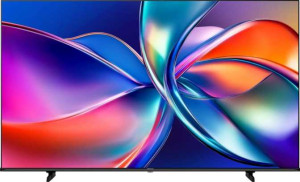
Hisense 50E7Q 50"
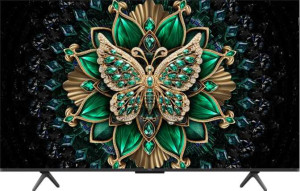
TCL 50C6K 50"

Hisense 50E7Q 50" TCL 50C6K 50"

Overview

Welcome to our in-depth spec comparison between the Hisense 50E7Q 50″ and the TCL 50C6K 50″, two 50-inch 4K QLED televisions competing in the same market segment. While they share a surprisingly long list of common ground — from full HDR format support to smart platform features — the real story lies in their contrasting approaches to brightness and panel technology, motion handling, and overall display performance. Read on to discover which TV is the right fit for your living room.

Common Features

  • Both TVs have a 4K UHD display resolution of 3840 x 2160 px.
  • Both TVs feature a QLED, LED-backlit LCD display type as a base.
  • Both TVs support a color depth of 1070 million colors with 10-bit panel.
  • HDR10 support is available on both products.
  • HDR10+ support is available on both products.
  • Dolby Vision support is available on both products.
  • HLG support is available on both products.
  • Both TVs include Bluetooth connectivity.
  • Both TVs use HDMI 2.1 ports.
  • Wi-Fi support is available on both products, covering Wi-Fi 4 (802.11n) and Wi-Fi 5 (802.11ac).
  • Both TVs include 2 USB ports and 1 RJ45 ethernet port.
  • Miracast support is available on both products.
  • A 3.5 mm audio jack socket is present on both products.
  • Dolby Digital support is available on both products.
  • Dolby Digital Plus support is available on both products.
  • Dolby Atmos support is available on both products.
  • Dolby Audio support is available on both products.
  • SRS TheaterSound HD is not available on either product.
  • Dolby Virtual support is not available on either product.
  • Both TVs feature stereo speakers and Digital Out support.
  • Both TVs support VESA mounting and share the same operating temperature range of 5 °C to 35 °C.
  • AirPlay support is available on both products.
  • Both TVs have a built-in smart TV platform.
  • Google Assistant compatibility is available on both products.
  • Alexa compatibility is available on both products.
  • Siri and Apple HomeKit support is not available on either product.
  • Smartphone remote control support is available on both products.
  • Neither TV includes a rechargeable remote control.
  • USB recording support is available on both products.

Main Differences

  • The TCL 50C6K 50″ features an additional Mini-LED backlight layer, while the Hisense 50E7Q 50″ does not.
  • Screen size is 50″ on the Hisense 50E7Q 50″ and 49.5″ on the TCL 50C6K 50″.
  • Pixel density is 88 ppi on the Hisense 50E7Q 50″ and 89 ppi on the TCL 50C6K 50″.
  • Typical brightness is 330 nits on the Hisense 50E7Q 50″ and 1000 nits on the TCL 50C6K 50″.
  • Contrast ratio is 4000:1 on the Hisense 50E7Q 50″ and 6000:1 on the TCL 50C6K 50″.
  • Refresh rate is 60Hz on the Hisense 50E7Q 50″ and 144Hz on the TCL 50C6K 50″.
  • HDMI port count is 3 on the Hisense 50E7Q 50″ and 4 on the TCL 50C6K 50″.
  • Bluetooth version is 5 on the Hisense 50E7Q 50″ and 5.4 on the TCL 50C6K 50″.
  • Audio output power is 2 x 10W on the Hisense 50E7Q 50″ and 2 x 15W on the TCL 50C6K 50″.
  • Width is 1119 mm on the Hisense 50E7Q 50″ and 1111 mm on the TCL 50C6K 50″.
  • Height is 649 mm on the Hisense 50E7Q 50″ and 646 mm on the TCL 50C6K 50″.
  • Thickness is 80 mm on the Hisense 50E7Q 50″ and 68.7 mm on the TCL 50C6K 50″.
  • Weight is 9500 g on the Hisense 50E7Q 50″ and 9100 g on the TCL 50C6K 50″.
  • Volume is 58098.48 cm³ on the Hisense 50E7Q 50″ and 49306.4022 cm³ on the TCL 50C6K 50″.
Specs Comparison
Hisense 50E7Q 50"

Hisense 50E7Q 50"

TCL 50C6K 50"

TCL 50C6K 50"

Display:
display resolution 4K (UHD) 4K (UHD)
Display type QLED, LED-backlit, LCD QLED, LED-backlit, LCD, Mini-LED
screen size 50" 49.5"
resolution 3840 x 2160 px 3840 x 2160 px
pixel density 88 ppi 89 ppi
display colors 1070 million 1070 million
bit depth 10-bit 10-bit
brightness (typical) 330 nits 1000 nits
contrast ratio 4000:1 6000:1
refresh rate 60Hz 144Hz
supports HDR10
supports HDR10+
supports Dolby Vision
supports HLG
has anti-reflection coating
has an ambient light sensor
maximum horizontal viewing angle 178º 178º
maximum vertical viewing angle 178º 178º

Both the Hisense 50E7Q and TCL 50C6K share a strong common foundation: 4K QLED LCD panels with 10-bit color depth, 1,070 million colors, full HDR format support (HDR10, HDR10+, Dolby Vision, and HLG), anti-reflection coatings, ambient light sensors, and wide 178° viewing angles in both directions. For most everyday viewing conditions, these shared traits put them on equal footing in terms of color coverage and compatibility.

Where the two diverge significantly is in brightness, contrast, and motion handling. The TCL 50C6K uses a Mini-LED backlight — a more advanced technology that enables tighter local dimming zones — and this shows directly in the numbers: it delivers 1,000 nits of typical brightness versus the Hisense's 330 nits, and a contrast ratio of 6,000:1 compared to 4,000:1. In practice, this means the TCL produces noticeably punchier highlights in HDR content, deeper perceived blacks, and better performance in bright rooms. The gap here is not marginal — three times the brightness is a meaningful real-world difference, especially for HDR movies or sports in a well-lit living room. On top of that, the TCL's 144Hz refresh rate versus the Hisense's 60Hz is a decisive advantage for gaming and fast-motion content, reducing blur and enabling smoother frame rates from compatible sources.

The TCL 50C6K has a clear display advantage across every key performance metric — brightness, contrast, backlight technology, and refresh rate — while matching the Hisense on all shared features. Unless the price difference is substantial, the TCL is the stronger panel for both cinematic HDR viewing and gaming use cases.
Connectivity:
Has Bluetooth
HDMI version HDMI 2.1 HDMI 2.1
HDMI ports 3 4
supports Wi-Fi
Wi-Fi version Wi-Fi 4 (802.11n), Wi-Fi 5 (802.11ac) Wi-Fi 4 (802.11n), Wi-Fi 5 (802.11ac)
Bluetooth version 5 5.4
USB ports 2 2
RJ45 ports 1 1
supports Miracast
has a socket for a 3.5 mm audio jack
has an external memory slot
has a VGA connector
DVB standards DVB-T, DVB-T2, DVB-C, DVB-S, DVB-S2 DVB-T, DVB-T2, DVB-C, DVB-S, DVB-S2
has a DVI connector

The connectivity picture for these two TVs is largely identical: both offer HDMI 2.1, dual USB ports, an Ethernet port, Wi-Fi 5, Miracast, a 3.5mm audio jack, and identical DVB tuner support. For the vast majority of users, this shared baseline covers all the essentials — HDMI 2.1 ensures full bandwidth for 4K@120Hz sources, and Wi-Fi 5 is sufficient for stable 4K streaming on most home networks.

Two differences are worth noting. First, the TCL 50C6K edges ahead with 4 HDMI ports versus the Hisense's 3, which is a practical advantage for users running multiple sources simultaneously — a soundbar, a games console, a streaming stick, and a set-top box can all stay plugged in without swapping cables. Second, the TCL carries Bluetooth 5.4 compared to the Hisense's Bluetooth 5.0. While both are reliable, 5.4 brings incremental improvements in connection stability and efficiency, which can matter for wireless audio peripherals or headphones used over longer sessions.

Neither difference is dramatic, but the TCL 50C6K holds a modest connectivity edge — an extra HDMI port adds real everyday convenience, and the newer Bluetooth version is a forward-looking plus. The Hisense is not meaningfully limited, but for users with crowded home theater setups, the TCL's port count tips the balance.

Audio:
supports Dolby Digital
audio output power 2 x 10W 2 x 15W
supports Digital Out
supports Dolby Digital Plus
has SRS TheaterSound HD
has stereo speakers
has Dolby Atmos
has Dolby Audio
supports Dolby Virtual
has a subwoofer
has DTS:X
HDMI ARC / eARC HDMI ARC, HDMI eARC HDMI ARC, HDMI eARC

On the audio format side, these two TVs are essentially identical — both decode Dolby Atmos, Dolby Digital Plus, Dolby Audio, and DTS:X, and both support HDMI ARC and eARC for seamless external soundbar integration. That shared format coverage means neither has an advantage in terms of what audio codecs it can pass through or process natively.

The one concrete differentiator is output power: the TCL 50C6K delivers 2 x 15W versus the Hisense's 2 x 10W. That 50% increase in rated power translates to a louder maximum volume ceiling and generally more headroom before the amplifier starts to strain — useful in larger rooms or for users who prefer watching without a separate sound system. It does not guarantee better sound quality on its own, but all else being equal, more watts means the built-in speakers can fill a space more comfortably.

The TCL 50C6K takes a narrow audio edge purely on the strength of its higher output power. For anyone planning to pair either TV with an external soundbar or AV receiver, this difference becomes irrelevant — but for those relying solely on the built-in speakers, the TCL's extra wattage offers a tangible real-world benefit.

Design:
width 1119 mm 1111 mm
weight 9500 g 9100 g
thickness 80 mm 68.7 mm
height 649 mm 646 mm
volume 58098.48 cm³ 49306.4022 cm³
Supports VESA mount
maximum operating temperature 35 °C 35 °C
lowest potential operating temperature 5 °C 5 °C

Footprint-wise, these two TVs are nearly indistinguishable — both sit within 8mm of each other in width and 3mm in height, so shelf or wall placement will feel essentially the same. Both also support VESA mounting and share identical operating temperature ranges, making them equally versatile for installation environments.

The more meaningful physical differences emerge in thickness and weight. The TCL 50C6K is noticeably slimmer at 68.7mm deep compared to the Hisense's 80mm, a gap of over 11mm that adds up visually when wall-mounted — the TCL will sit closer to the wall and look sleeker in profile. It is also lighter at 9,100g versus 9,500g for the Hisense, a 400g difference that eases handling during installation, particularly relevant when mounting solo. The combined effect of these two factors is reflected in the TCL's notably smaller overall volume of 49,306 cm³ against the Hisense's 58,098 cm³.

The TCL 50C6K has a clear design edge — it is slimmer, lighter, and more compact overall. For wall-mount setups where a low-profile appearance matters, or simply for easier handling during install, the TCL is the more refined physical package.

Features:
release date April 2025 March 2025
has AirPlay
has built-in smart TV
compatible with Google Assistant
works with Alexa
works with Siri/Apple HomeKit
supports a remote smartphone
has a rechargeable remote control
supports USB recording
standby power consumption 0.5W 0.5W
has a search browser
has a sleep timer
has a child lock
has voice commands

Across every single feature tracked in this category, the Hisense 50E7Q and TCL 50C6K are a perfect match. Both run a built-in smart TV platform, support AirPlay, Google Assistant, and Alexa, allow smartphone remote control, handle USB recording, and include practical utilities like a sleep timer, child lock, and voice commands. Notably, neither supports Apple HomeKit/Siri, so users deep in the Apple ecosystem will face the same limitation on both sets.

Even the finer details align: both draw just 0.5W in standby — an efficient figure that keeps idle energy costs negligible — and neither ships with a rechargeable remote, meaning both rely on disposable batteries out of the box.

This is a complete tie. There is no differentiator to weigh here — a buyer's feature expectations will be met or missed equally by either TV, and this category should carry no influence in the final purchasing decision.

Comparison Summary & Verdict

After a thorough comparison, these two TVs share a strong common foundation: both offer 4K QLED panels, full HDR support (HDR10, HDR10+, Dolby Vision, HLG), Dolby Atmos audio, and a feature-rich smart platform. However, their differences are decisive. The TCL 50C6K 50″ pulls ahead in pure display performance with its Mini-LED backlight, a significant 1000-nit brightness advantage over the Hisense’s 330 nits, a superior 6000:1 contrast ratio, and a 144Hz refresh rate that makes it far better suited for gaming and fast-paced content. The Hisense 50E7Q 50″, while more modest in those areas, remains a solid choice for casual viewers who prioritize value and a straightforward viewing experience without requiring peak brightness or high frame-rate performance.

Hisense 50E7Q 50
Buy Hisense 50E7Q 50" if...

Buy the Hisense 50E7Q 50″ if you are a casual viewer who wants a capable 4K QLED TV with broad HDR and smart platform support at a no-frills level of performance.

TCL 50C6K 50
Buy TCL 50C6K 50" if...

Buy the TCL 50C6K 50″ if you want superior display performance, with its Mini-LED panel, 1000-nit brightness, 144Hz refresh rate, and higher contrast ratio making it ideal for gamers and cinephiles alike.