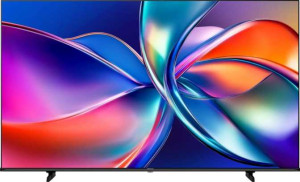
Hisense 50E7Q 50"
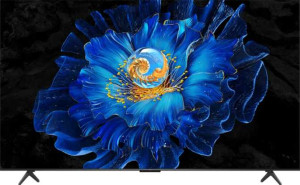
TCL 50C6KS 50"

Hisense 50E7Q 50" TCL 50C6KS 50"

Overview

Welcome to our detailed spec comparison between the Hisense 50E7Q 50″ and the TCL 50C6KS 50″ — two 50-inch QLED 4K televisions competing in the same segment. While both share a strong foundation of HDR support, Dolby Vision, and smart TV features, key battlegrounds emerge around display technology, refresh rate, and overall build. Read on to see how every spec stacks up before making your decision.

Common Features

  • Both TVs have a 4K UHD display resolution of 3840 x 2160 px.
  • Both TVs display 1070 million colors with a 10-bit panel.
  • HDR10 support is available on both products.
  • HDR10+ support is available on both products.
  • Dolby Vision support is available on both products.
  • HLG support is available on both products.
  • Both TVs use a QLED, LED-backlit LCD display type as a baseline.
  • Bluetooth connectivity is available on both products.
  • Both TVs feature HDMI 2.1 ports.
  • Wi-Fi is supported on both TVs, with Wi-Fi 4 (802.11n) and Wi-Fi 5 (802.11ac).
  • Both TVs include 2 USB ports and 1 RJ45 port.
  • Miracast support is available on both products.
  • A 3.5mm audio jack socket is present on both TVs.
  • Both TVs deliver 2 x 10W of audio output power with stereo speakers.
  • Dolby Digital, Dolby Digital Plus, Dolby Atmos, and Dolby Audio support are all available on both products.
  • Digital Out support is available on both products.
  • SRS TheaterSound HD is not available on either product.
  • Both TVs support VESA mounting.
  • Both TVs share the same operating temperature range of 5°C to 35°C.
  • AirPlay support is available on both products.
  • A built-in smart TV platform is present on both products.
  • Google Assistant compatibility is available on both products.
  • Siri and Apple HomeKit support is not available on either product.
  • Remote smartphone control is supported on both products.
  • Neither TV includes a rechargeable remote control.
  • USB recording support is available on both products.
  • Standby power consumption is 0.5W on both TVs.

Main Differences

  • The Hisense 50E7Q 50″ uses a standard QLED LED-backlit LCD panel, while the TCL 50C6KS 50″ adds Mini-LED backlighting technology.
  • Screen size is 50″ on the Hisense 50E7Q 50″ and 49.5″ on the TCL 50C6KS 50″.
  • Pixel density is 88 ppi on the Hisense 50E7Q 50″ and 89 ppi on the TCL 50C6KS 50″.
  • Contrast ratio is 4000:1 on the Hisense 50E7Q 50″ and 5000:1 on the TCL 50C6KS 50″.
  • Refresh rate is 60Hz on the Hisense 50E7Q 50″ and 120Hz on the TCL 50C6KS 50″.
  • HDMI port count is 3 on the Hisense 50E7Q 50″ and 4 on the TCL 50C6KS 50″.
  • Bluetooth version is 5 on the Hisense 50E7Q 50″ and 5.4 on the TCL 50C6KS 50″.
  • A built-in subwoofer is not present on the Hisense 50E7Q 50″ but is included on the TCL 50C6KS 50″.
  • Width is 1119 mm on the Hisense 50E7Q 50″ and 1111 mm on the TCL 50C6KS 50″.
  • Weight is 9500 g on the Hisense 50E7Q 50″ and 9100 g on the TCL 50C6KS 50″.
  • Thickness is 80 mm on the Hisense 50E7Q 50″ and 68.7 mm on the TCL 50C6KS 50″.
  • Height is 649 mm on the Hisense 50E7Q 50″ and 646 mm on the TCL 50C6KS 50″.
  • Total volume is 58098.48 cm³ on the Hisense 50E7Q 50″ and 49306.4022 cm³ on the TCL 50C6KS 50″.
Specs Comparison
Hisense 50E7Q 50"

Hisense 50E7Q 50"

TCL 50C6KS 50"

TCL 50C6KS 50"

Display:
display resolution 4K (UHD) 4K (UHD)
Display type QLED, LED-backlit, LCD QLED, LED-backlit, LCD, Mini-LED
screen size 50" 49.5"
resolution 3840 x 2160 px 3840 x 2160 px
pixel density 88 ppi 89 ppi
display colors 1070 million 1070 million
bit depth 10-bit 10-bit
contrast ratio 4000:1 5000:1
refresh rate 60Hz 120Hz
supports HDR10
supports HDR10+
supports Dolby Vision
supports HLG
has anti-reflection coating
has an ambient light sensor
maximum horizontal viewing angle 178º 178º
maximum vertical viewing angle 178º 178º

Both the Hisense 50E7Q and the TCL 50C6KS share a strong foundation: identical 4K (3840 x 2160) resolution, the same QLED, LED-backlit LCD panel technology, 10-bit color depth rendering 1.07 billion colors, and full support for every major HDR format — HDR10, HDR10+, Dolby Vision, and HLG. Viewing angles are identical at 178° both horizontally and vertically, and both panels include an anti-reflection coating and an ambient light sensor. At roughly 50 inches, the size difference (50″ vs 49.5″) is imperceptible in practice.

Where the two sets diverge meaningfully is in contrast and motion handling. The TCL 50C6KS gains an extra layer of backlighting precision through its Mini-LED architecture, which enables tighter local dimming zones and translates directly into its superior 5000:1 contrast ratio versus the Hisense's 4000:1 — a 25% advantage that produces deeper blacks and more punch in HDR content. More importantly, the TCL doubles the Hisense on refresh rate: 120Hz versus 60Hz. In real-world use, 120Hz noticeably reduces motion blur during fast-paced sports, action films, and gaming, whereas 60Hz panels can exhibit judder and smearing in the same scenarios.

The TCL 50C6KS holds a clear display advantage in this group. The combination of Mini-LED backlighting, a higher contrast ratio, and a 120Hz panel makes it the stronger performer for both cinematic HDR viewing and any motion-intensive content. The Hisense 50E7Q remains competitive on color volume and HDR format support, but its 60Hz refresh rate and lower contrast ceiling are tangible limitations that the TCL directly addresses.
Connectivity:
Has Bluetooth
HDMI version HDMI 2.1 HDMI 2.1
HDMI ports 3 4
supports Wi-Fi
Wi-Fi version Wi-Fi 4 (802.11n), Wi-Fi 5 (802.11ac) Wi-Fi 4 (802.11n), Wi-Fi 5 (802.11ac)
Bluetooth version 5 5.4
USB ports 2 2
RJ45 ports 1 1
supports Miracast
has a socket for a 3.5 mm audio jack
has an external memory slot
has a VGA connector
DVB standards DVB-T, DVB-T2, DVB-C, DVB-S, DVB-S2 DVB-T, DVB-T2, DVB-C, DVB-S, DVB-S2
has a DVI connector

On the wired side, both TVs share a solid and largely identical layout: HDMI 2.1 ports, 2 USB ports, a single RJ45 Ethernet jack, and a 3.5mm audio output. The one tangible wired difference is port count — the TCL 50C6KS offers 4 HDMI ports versus the Hisense's 3. For users running a soundbar, a games console, a streaming stick, and a Blu-ray player simultaneously, that extra port eliminates the need for an HDMI switch entirely.

Wirelessly, the two sets are closely matched on Wi-Fi — both top out at Wi-Fi 5 (802.11ac) — but Bluetooth tells a more nuanced story. The Hisense carries Bluetooth 5.0, while the TCL steps up to Bluetooth 5.4. The newer revision brings improvements in connection stability, reduced interference in crowded wireless environments, and lower energy consumption for connected peripherals like headphones or keyboards. It is a modest but real upgrade for anyone who regularly uses Bluetooth audio devices.

The TCL 50C6KS earns a narrow connectivity edge here. Neither product offers anything exotic, and shared standards like Miracast, DVB tuner support, and identical USB and Ethernet provisions keep them level on most fronts. But the extra HDMI port and the more current Bluetooth version together give the TCL a practical advantage for users building a multi-device home entertainment setup.

Audio:
supports Dolby Digital
audio output power 2 x 10W 2 x 10W
supports Digital Out
supports Dolby Digital Plus
has SRS TheaterSound HD
has stereo speakers
has Dolby Atmos
has Dolby Audio
supports Dolby Virtual
has a subwoofer
has DTS:X
HDMI ARC / eARC HDMI ARC, HDMI eARC HDMI eARC, HDMI ARC

The audio specifications for these two TVs are remarkably close. Both deliver 2 x 10W of stereo output, support the same codec lineup — Dolby Atmos, Dolby Audio, Dolby Digital Plus, and DTS:X — and provide both HDMI ARC and eARC for connecting external audio equipment. For users planning to pair either TV with a dedicated soundbar, these shared capabilities mean no meaningful difference in compatibility or passthrough performance.

The single differentiator in this category is hardware: the TCL 50C6KS includes a built-in subwoofer, while the Hisense 50E7Q does not. A subwoofer handles low-frequency reproduction — the rumble of explosions, the depth of a film score, the punch of bass-heavy music — that standard stereo drivers struggle to reproduce convincingly. Even at the same rated wattage, a TV with a dedicated subwoofer will typically produce fuller, more three-dimensional sound straight out of the box.

For anyone relying solely on the TV's internal speakers, the TCL holds a clear audio edge due to its subwoofer. That said, users who intend to connect a quality soundbar or AV receiver will find both TVs equally capable on the connectivity front, effectively neutralizing the difference.

Design:
width 1119 mm 1111 mm
weight 9500 g 9100 g
thickness 80 mm 68.7 mm
height 649 mm 646 mm
volume 58098.48 cm³ 49306.4022 cm³
Supports VESA mount
maximum operating temperature 35 °C 35 °C
lowest potential operating temperature 5 °C 5 °C

Physically, these two sets sit in the same ballpark, but the TCL 50C6KS is the trimmer of the two across every dimension that matters for installation. It is 400g lighter (9,100g vs 9,500g), marginally narrower and shorter, and — most noticeably — 11.3mm thinner at 68.7mm versus the Hisense's 80mm. That difference in depth translates to a meaningfully sleeker profile on a TV stand and slightly easier flush positioning on a wall mount.

The volume figures reinforce this gap clearly: the TCL displaces roughly 49,306 cm³ compared to the Hisense's 58,098 cm³ — nearly 15% less physical bulk. For wall-mounting scenarios where the TV sits close to the surface, or for furniture with constrained rear clearance, the TCL's slimmer chassis is a practical advantage. Both TVs support VESA mounting and share identical operating temperature ranges, so neither has an edge on installation flexibility or environmental tolerance.

The TCL 50C6KS takes the design edge here. The weight and thickness reductions are consistent enough to matter during installation — particularly for single-person wall mounts — and the lower overall volume gives it a more refined physical presence. The Hisense is not large by any absolute measure, but the TCL is the more compact and manageable of the two.

Features:
release date April 2025 March 2025
has AirPlay
has built-in smart TV
compatible with Google Assistant
works with Siri/Apple HomeKit
supports a remote smartphone
has a rechargeable remote control
supports USB recording
standby power consumption 0.5W 0.5W
has a search browser
has a sleep timer
has a child lock
has voice commands

Across every feature listed in this group, the Hisense 50E7Q and the TCL 50C6KS are in complete lockstep. Both carry a built-in smart TV platform, AirPlay support, Google Assistant compatibility, smartphone remote control, USB recording, voice commands, and a 0.5W standby power consumption. Practical conveniences like a sleep timer, child lock, and search browser are present on both as well.

Notably, neither TV supports Apple HomeKit or Siri integration, which is worth flagging for users embedded in the Apple smart home ecosystem. This is a shared limitation rather than a differentiator, but it is the most consequential feature gap in this group relative to buyer expectations. AirPlay support does provide a degree of Apple device compatibility for streaming, but full HomeKit automation and Siri voice control are off the table on both sets.

This group is a complete tie. There is not a single feature here that separates the two products — every capability and every omission is shared equally. Buyers prioritizing smart features and usability conveniences will find no reason to choose one over the other based on this category alone.

Comparison Summary & Verdict

Both the Hisense 50E7Q 50″ and the TCL 50C6KS 50″ deliver a capable 4K QLED experience with full HDR support, Dolby Vision, AirPlay, and Google Assistant. However, the differences tell an important story. The TCL 50C6KS 50″ pulls ahead on core display metrics thanks to its Mini-LED backlighting, superior 5000:1 contrast ratio, and a fluid 120Hz refresh rate — making it the stronger pick for cinephiles and gamers alike. It also adds a built-in subwoofer and an extra HDMI port. The Hisense 50E7Q 50″, on the other hand, is a solid choice for viewers who prioritize a slightly larger physical footprint and do not need the higher refresh rate or advanced backlighting. Both televisions offer excellent value, but your choice should hinge on whether the premium display and audio upgrades of the TCL justify the trade-off for your specific viewing needs.

Hisense 50E7Q 50
Buy Hisense 50E7Q 50" if...

Buy the Hisense 50E7Q 50″ if you want a reliable 4K QLED TV with comprehensive HDR and smart features and do not require a high refresh rate or Mini-LED backlighting.

TCL 50C6KS 50
Buy TCL 50C6KS 50" if...

Buy the TCL 50C6KS 50″ if you want a superior picture with Mini-LED backlighting, a 120Hz refresh rate, a higher contrast ratio, and built-in subwoofer for a more immersive viewing and gaming experience.