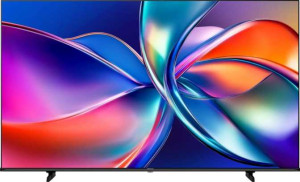
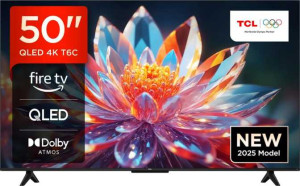
Both the Hisense 50E7Q and TCL 50T6C-UK share a strong display foundation: identical 4K (3840 x 2160) resolution, the same QLED LED-backlit LCD panel technology, 10-bit color depth rendering 1.07 billion colors, and matching 178º viewing angles in both directions. At this level, neither has a structural advantage in sharpness or color volume — they start from the same baseline.
The meaningful separators emerge in motion handling, contrast, and HDR ecosystem. The TCL's 120Hz refresh rate is a significant real-world advantage over the Hisense's 60Hz panel — fast-paced sports, action films, and gaming will appear noticeably smoother on the TCL. Its 6000:1 contrast ratio also outpaces the Hisense's 4000:1, meaning deeper perceived blacks and more distinct shadow detail in dark scenes — a genuine picture-quality differentiator on an LCD panel. The TCL also edges ahead slightly in brightness at 350 nits vs 330 nits, though the gap is too small to matter in most room lighting conditions. On the HDR side, the Hisense counters by supporting HDR10+, which the TCL lacks — a format used by Amazon and some UHD Blu-rays for dynamic scene-by-scene tone mapping. Both support Dolby Vision, HDR10, and HLG, so for most streaming content, coverage is effectively equal.
Overall, the TCL 50T6C-UK holds a clear display edge for most users: its 120Hz refresh rate and higher contrast ratio deliver tangible improvements in everyday viewing and gaming. The Hisense's HDR10+ support is a niche advantage that only matters if your content library leans specifically on that format, which remains less prevalent than Dolby Vision.