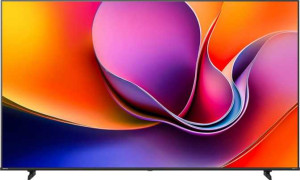
Hisense 55A6Q 55"
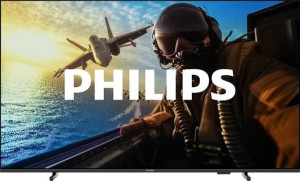
Philips 55PUS7000/12 55"

Hisense 55A6Q 55" Philips 55PUS7000/12 55"

Overview

Welcome to our in-depth spec comparison between the Hisense 55A6Q 55″ and the Philips 55PUS7000/12 55″ — two 4K LED TVs competing closely in the same market segment. While they share a surprising amount of common ground, key battlegrounds emerge around HDR format support, audio capabilities, and power efficiency. Read on to see how every detail stacks up before you make your decision.

Common Features

  • Both TVs have a 4K UHD display resolution of 3840 x 2160 px.
  • Both use an LED-backlit LCD display type.
  • Both support a color depth of 1070 million colors with a 10-bit panel.
  • Both have a 60Hz refresh rate.
  • HDR10 support is available on both products.
  • HDR10+ support is available on both products.
  • Bluetooth is present on both products.
  • Both support Wi-Fi 4 (802.11n) and Wi-Fi 5 (802.11ac).
  • Both feature 3 HDMI 2.1 ports.
  • Both include 2 USB ports and 1 RJ45 port.
  • Miracast support is available on both products.
  • Dolby Digital support is available on both products.
  • Both deliver an audio output power of 2 x 10W.
  • Digital Out support is available on both products.
  • Both have stereo speakers and support Dolby Audio.
  • Neither product includes a subwoofer or supports Dolby Virtual.
  • VESA mount support is available on both products.
  • Both operate within a temperature range of 5 °C to 35 °C.
  • Both have a built-in smart TV platform and are compatible with Google Assistant and Alexa.
  • Neither product works with Siri/Apple HomeKit or has a rechargeable remote control.
  • USB recording support is available on both products.
  • Both have a standby power consumption of 0.5W.

Main Differences

  • Screen size is 55″ on Hisense 55A6Q 55″ and 54.6″ on Philips 55PUS7000/12 55″.
  • Pixel density is 80 ppi on Hisense 55A6Q 55″ and 81 ppi on Philips 55PUS7000/12 55″.
  • Dolby Vision support is present on Hisense 55A6Q 55″ but not available on Philips 55PUS7000/12 55″.
  • Bluetooth version is 5.0 on Hisense 55A6Q 55″ and 5.2 on Philips 55PUS7000/12 55″.
  • Dolby Atmos support is present on Philips 55PUS7000/12 55″ but not available on Hisense 55A6Q 55″.
  • Width is 1234 mm on Hisense 55A6Q 55″ and 1226 mm on Philips 55PUS7000/12 55″.
  • Weight is 11000 g on Hisense 55A6Q 55″ and 9900 g on Philips 55PUS7000/12 55″.
  • Thickness is 81 mm on Hisense 55A6Q 55″ and 88 mm on Philips 55PUS7000/12 55″.
  • Height is 716 mm on Hisense 55A6Q 55″ and 715 mm on Philips 55PUS7000/12 55″.
  • Volume is 71567.064 cm³ on Hisense 55A6Q 55″ and 77139.92 cm³ on Philips 55PUS7000/12 55″.
  • AirPlay support is present on Hisense 55A6Q 55″ but not available on Philips 55PUS7000/12 55″.
  • Operating power consumption is 130W on Hisense 55A6Q 55″ and 64W on Philips 55PUS7000/12 55″.
Specs Comparison
Hisense 55A6Q 55"

Hisense 55A6Q 55"

Philips 55PUS7000/12 55"

Philips 55PUS7000/12 55"

Display:
display resolution 4K (UHD) 4K (UHD)
Display type LED-backlit, LCD LED-backlit, LCD
screen size 55" 54.6"
resolution 3840 x 2160 px 3840 x 2160 px
pixel density 80 ppi 81 ppi
display colors 1070 million 1070 million
bit depth 10-bit 10-bit
refresh rate 60Hz 60Hz
supports HDR10
supports HDR10+
supports Dolby Vision
supports HLG
has anti-reflection coating
has an ambient light sensor
maximum horizontal viewing angle 178º 178º
maximum vertical viewing angle 178º 178º

At their core, the Hisense 55A6Q and the Philips 55PUS7000/12 share an almost identical display foundation: both use LED-backlit LCD panels at 4K (3840 x 2160) resolution, with matching 10-bit color depth, 1070 million displayable colors, a 60Hz refresh rate, and identical 178º viewing angles in both directions. Practical differences in screen size (55″ vs 54.6″) and pixel density (80 vs 81 ppi) are negligible and imperceptible in normal viewing conditions.

The one meaningful differentiator in this group is HDR format support. Both TVs handle HDR10, HDR10+, and HLG, but only the Hisense adds Dolby Vision. This matters because Dolby Vision uses dynamic, scene-by-scene metadata to optimize brightness and color on a frame-by-frame basis, and it remains the preferred HDR format for a significant portion of streaming content on platforms like Netflix and Apple TV+. Without it, the Philips will fall back to HDR10 or HDR10+ for that content, which delivers a solid but less precisely calibrated image.

Both TVs are otherwise well-equipped for their class, sharing anti-reflection coatings and ambient light sensors for adaptive brightness. However, the Hisense 55A6Q holds a clear edge in this group strictly due to its Dolby Vision support, giving it broader HDR compatibility and a richer viewing experience for users who consume content from Dolby Vision-enabled sources.

Connectivity:
Has Bluetooth
HDMI version HDMI 2.1 HDMI 2.1
HDMI ports 3 3
supports Wi-Fi
Wi-Fi version Wi-Fi 4 (802.11n), Wi-Fi 5 (802.11ac) Wi-Fi 4 (802.11n), Wi-Fi 5 (802.11ac)
Bluetooth version 5 5.2
USB ports 2 2
RJ45 ports 1 1
supports Miracast
has a socket for a 3.5 mm audio jack
has an external memory slot
has a VGA connector
DVB standards DVB-T, DVB-T2, DVB-C, DVB-S, DVB-S2 DVB-T, DVB-T2, DVB-C, DVB-S, DVB-S2
has a DVI connector

Connectivity is remarkably well-matched between these two TVs. Both offer 3 HDMI 2.1 ports, 2 USB ports, a wired RJ45 ethernet port, a 3.5mm audio jack, and identical wireless capabilities with Wi-Fi 5 (802.11ac) and Miracast support. For day-to-day use — connecting a soundbar, streaming stick, game console, or a laptop via wireless casting — the two are functionally equivalent.

The only measurable difference in this group is Bluetooth: the Hisense ships with Bluetooth 5.0 while the Philips steps up to Bluetooth 5.2. In practice, 5.2 introduced improvements to connection stability and audio synchronization through features like LE Audio, which can benefit wireless headphone and speaker pairing. The gap is modest for typical TV use cases, but it is a genuine, if incremental, advantage for users who rely heavily on Bluetooth audio accessories.

Overall, the Philips 55PUS7000/12 holds a narrow edge in this group on the strength of its newer Bluetooth version. That said, for users whose wireless audio needs are basic or who primarily use wired connections, the difference will be imperceptible in practice — making connectivity effectively a near-tie between these two sets.

Audio:
supports Dolby Digital
audio output power 2 x 10W 2 x 10W
supports Digital Out
has SRS TheaterSound HD
has stereo speakers
has Dolby Atmos
has Dolby Audio
supports Dolby Virtual
has a subwoofer
has DTS:X
HDMI ARC / eARC HDMI ARC, HDMI eARC HDMI ARC, HDMI eARC

On paper, these two TVs are nearly indistinguishable in the audio department. Both deliver 2 x 10W of stereo output, support Dolby Digital, Dolby Audio, and DTS:X, and come equipped with both HDMI ARC and eARC — the latter being particularly valuable for passing high-quality, uncompressed audio to an external soundbar without signal degradation.

The single differentiator here is Dolby Atmos, which the Philips 55PUS7000/12 supports and the Hisense 55A6Q does not. Dolby Atmos adds a height dimension to the soundstage, creating a more immersive, three-dimensional audio experience. While its impact through a basic stereo speaker system is inherently limited, the real-world benefit becomes tangible when the TV is paired with an Atmos-capable soundbar or AV receiver via eARC — in that setup, the Philips can pass a full Atmos signal through to the external system, while the Hisense cannot.

For users who plan to rely solely on the built-in speakers, both TVs will perform essentially the same. But for anyone looking to build out a home theater setup with an Atmos soundbar down the line, the Philips takes a clear edge in this group — its Dolby Atmos passthrough capability is a meaningful, future-proof advantage that the Hisense simply lacks.

Design:
width 1234 mm 1226 mm
weight 11000 g 9900 g
thickness 81 mm 88 mm
height 716 mm 715 mm
volume 71567.064 cm³ 77139.92 cm³
Supports VESA mount
maximum operating temperature 35 °C 35 °C
lowest potential operating temperature 5 °C 5 °C

Dimensionally, these two TVs are nearly identical siblings — within 8mm of each other in width and just 1mm apart in height. Both support VESA mounting and share the same operating temperature range, so neither has a practical edge in terms of installation flexibility or environmental tolerance.

Where they diverge is weight and depth. The Philips is notably lighter at 9,900g versus the Hisense's 11,000g — a difference of 1.1kg that is genuinely felt during wall mounting or repositioning, where every kilogram adds complexity and affects the hardware requirements for safe installation. In the other direction, the Hisense is the slimmer set at 81mm deep compared to the Philips at 88mm, which translates to a slightly flatter profile against a wall.

These two advantages pull in opposite directions, so the better choice depends on priorities. For wall mounting, the Philips 55PUS7000/12 has the edge — its lower weight reduces strain on brackets and makes the install process easier. For those placing the TV on a stand where depth matters for a cleaner look, the Hisense 55A6Q has a marginal advantage. Overall, neither product has a commanding lead in design; the practical differences are real but narrow.

Features:
release date April 2025 February 2025
has AirPlay
has built-in smart TV
compatible with Google Assistant
works with Alexa
works with Siri/Apple HomeKit
supports a remote smartphone
has a rechargeable remote control
supports USB recording
operating power consumption 130W 64W
standby power consumption 0.5W 0.5W
has a search browser
has a sleep timer
has a child lock
has voice commands
EU energy label E E

Smart feature parity is strong between these two sets — both run a built-in smart TV platform, support voice commands, work with Google Assistant and Alexa, offer smartphone remote control, USB recording, and standard utilities like a sleep timer and child lock. For the majority of users, the day-to-day smart TV experience will feel comparable on either screen.

Two specs break the tie, and they pull in opposite directions. The Hisense adds AirPlay support, which the Philips lacks entirely. For users embedded in the Apple ecosystem — wirelessly casting from an iPhone, iPad, or Mac — this is a tangible, practical convenience that the Philips simply cannot replicate. On the other hand, the power consumption gap is striking: the Hisense draws 130W during operation versus just 64W for the Philips. That is more than double the energy use, which adds up meaningfully over months of regular viewing and translates directly to higher electricity bills.

This group ultimately presents a genuine trade-off rather than a clean winner. The Hisense 55A6Q holds the edge for Apple users thanks to AirPlay, but the Philips 55PUS7000/12 is the clear winner on energy efficiency — consuming dramatically less power for the same screen size. Buyers who prioritize ecosystem integration should lean Hisense; those focused on long-term running costs will find the Philips the more economical choice.

Comparison Summary & Verdict

Both the Hisense 55A6Q 55″ and the Philips 55PUS7000/12 55″ deliver a solid 4K HDR experience with shared support for HDR10, HDR10+, Dolby Audio, and smart platform features including Google Assistant and Alexa. However, their differences reveal two distinct profiles. The Hisense 55A6Q 55″ stands out with Dolby Vision support and AirPlay compatibility, making it the stronger pick for users embedded in the Apple ecosystem or who demand the widest HDR coverage. On the other hand, the Philips 55PUS7000/12 55″ wins on Dolby Atmos audio, a more advanced Bluetooth 5.2 connection, and a significantly lower operating power consumption of 64W versus 130W — making it the smarter choice for energy-conscious buyers and those who prioritize immersive sound.

Hisense 55A6Q 55
Buy Hisense 55A6Q 55" if...

Buy the Hisense 55A6Q 55″ if you want the broadest HDR coverage including Dolby Vision, or if AirPlay integration with Apple devices is important to you.

Philips 55PUS7000/12 55
Buy Philips 55PUS7000/12 55" if...

Buy the Philips 55PUS7000/12 55″ if you prioritize Dolby Atmos sound, a more modern Bluetooth 5.2 connection, and significantly lower energy consumption at just 64W.