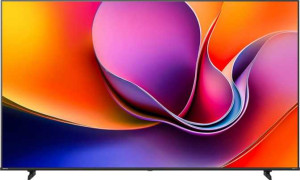
Hisense 55A6Q 55"
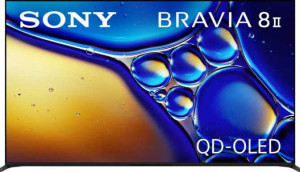
Sony Bravia K-55XR80M2 55"

Hisense 55A6Q 55" Sony Bravia K-55XR80M2 55"

Overview

Welcome to our in-depth specification comparison between the Hisense 55A6Q 55″ and the Sony Bravia K-55XR80M2 55″. These two 55-inch 4K televisions take very different approaches to picture technology, audio performance, and overall design — making the choice between them far from straightforward. From their display panel types to their connectivity options and power consumption, each model has a distinct set of strengths worth examining closely before you decide.

Common Features

  • Both televisions offer 4K (UHD) display resolution at 3840 x 2160 px.
  • Both televisions display 1070 million colors at a 10-bit color depth.
  • HDR10 support is available on both products.
  • Dolby Vision support is available on both products.
  • HLG support is available on both products.
  • An anti-reflection coating is present on both products.
  • Bluetooth is available on both products.
  • Both televisions feature HDMI 2.1 ports.
  • Wi-Fi support is available on both products.
  • Both televisions include 2 USB ports and 1 RJ45 port.
  • Miracast support is available on both products.
  • Neither television includes an external memory slot or a VGA connector.
  • Dolby Digital and Dolby Digital Plus support is available on both products.
  • Digital Out support is available on both products.
  • Both televisions feature stereo speakers with Dolby Audio and DTS:X.
  • SRS TheaterSound HD is not available on either product.
  • Dolby Virtual support is not available on either product.
  • Both televisions support VESA mounting.
  • AirPlay and built-in smart TV functionality are present on both products.
  • Both televisions are compatible with Google Assistant and Alexa, and both support remote smartphone control and USB recording.
  • Neither television works with Siri or Apple HomeKit.
  • Both televisions have a standby power consumption of 0.5W.

Main Differences

  • The display type is LED-backlit LCD on the Hisense 55A6Q 55″ and OLED/AMOLED on the Sony Bravia K-55XR80M2 55″.
  • The screen size is 55″ on the Hisense 55A6Q 55″ and 54.6″ on the Sony Bravia K-55XR80M2 55″.
  • The pixel density is 80 ppi on the Hisense 55A6Q 55″ and 81 ppi on the Sony Bravia K-55XR80M2 55″.
  • The refresh rate is 60Hz on the Hisense 55A6Q 55″ and 120Hz on the Sony Bravia K-55XR80M2 55″.
  • HDR10+ support is present on the Hisense 55A6Q 55″ but not available on the Sony Bravia K-55XR80M2 55″.
  • The number of HDMI ports is 3 on the Hisense 55A6Q 55″ and 4 on the Sony Bravia K-55XR80M2 55″.
  • The Wi-Fi version includes Wi-Fi 4 and Wi-Fi 5 on the Hisense 55A6Q 55″, while the Sony Bravia K-55XR80M2 55″ also adds Wi-Fi 6 and Wi-Fi 6E.
  • The Bluetooth version is 5 on the Hisense 55A6Q 55″ and 5.3 on the Sony Bravia K-55XR80M2 55″.
  • A 3.5 mm audio jack is present on the Hisense 55A6Q 55″ but not available on the Sony Bravia K-55XR80M2 55″.
  • Dolby Atmos support is present on the Sony Bravia K-55XR80M2 55″ but not available on the Hisense 55A6Q 55″.
  • A built-in subwoofer is present on the Sony Bravia K-55XR80M2 55″ but not included on the Hisense 55A6Q 55″.
  • The width is 1234 mm on the Hisense 55A6Q 55″ and 1224 mm on the Sony Bravia K-55XR80M2 55″.
  • The weight is 11000 g on the Hisense 55A6Q 55″ and 17200 g on the Sony Bravia K-55XR80M2 55″.
  • The thickness is 81 mm on the Hisense 55A6Q 55″ and 34 mm on the Sony Bravia K-55XR80M2 55″.
  • The height is 716 mm on the Hisense 55A6Q 55″ and 707 mm on the Sony Bravia K-55XR80M2 55″.
  • The volume is 71567.064 cm³ on the Hisense 55A6Q 55″ and 29422.512 cm³ on the Sony Bravia K-55XR80M2 55″.
  • The maximum operating temperature is 35 °C on the Hisense 55A6Q 55″ and 40 °C on the Sony Bravia K-55XR80M2 55″.
  • The lowest potential operating temperature is 5 °C on the Hisense 55A6Q 55″ and 0 °C on the Sony Bravia K-55XR80M2 55″.
  • A rechargeable remote control is included with the Sony Bravia K-55XR80M2 55″ but not with the Hisense 55A6Q 55″.
  • The operating power consumption is 130W on the Hisense 55A6Q 55″ and 313W on the Sony Bravia K-55XR80M2 55″.
  • The warranty period is 3 years on the Hisense 55A6Q 55″ and 1 year on the Sony Bravia K-55XR80M2 55″.
Specs Comparison
Hisense 55A6Q 55"

Hisense 55A6Q 55"

Sony Bravia K-55XR80M2 55"

Sony Bravia K-55XR80M2 55"

Display:
display resolution 4K (UHD) 4K (UHD)
Display type LED-backlit, LCD OLED/AMOLED
screen size 55" 54.6"
resolution 3840 x 2160 px 3840 x 2160 px
pixel density 80 ppi 81 ppi
display colors 1070 million 1070 million
bit depth 10-bit 10-bit
refresh rate 60Hz 120Hz
supports HDR10
supports HDR10+
supports Dolby Vision
supports HLG
has anti-reflection coating
has an ambient light sensor
maximum horizontal viewing angle 178º 178º
maximum vertical viewing angle 178º 178º

Both TVs share the same 4K (3840 x 2160) resolution, near-identical pixel density (~80–81 ppi), a 10-bit panel capable of displaying 1.07 billion colors, and identical 178º viewing angles in both directions — so on paper, the raw resolution story is a draw. The more decisive difference lies in panel technology: the Hisense 55A6Q uses a traditional LED-backlit LCD, while the Sony Bravia XR80M2 employs an OLED/AMOLED panel. In practice, OLED delivers per-pixel light control, which means true infinite contrast ratios, perfect blacks, and far more precise local dimming compared to any LCD-based design — a fundamental structural advantage that no spec tweak on an LED panel can fully replicate.

The second major differentiator is refresh rate. The Hisense tops out at 60Hz, while the Sony runs at 120Hz. For everyday TV viewing, 60Hz is adequate, but for fast-motion sports, action films, or gaming, the Sony's higher refresh rate produces noticeably smoother motion with significantly less blur or judder. On the HDR front, the Hisense edges ahead by supporting HDR10+ in addition to HDR10, Dolby Vision, and HLG — the Sony omits HDR10+, supporting only HDR10, Dolby Vision, and HLG. HDR10+ is a dynamic metadata format that can optimize tone-mapping scene by scene, so this is a real, if content-dependent, advantage for the Hisense.

Overall, the Sony Bravia XR80M2 holds a clear display advantage: its OLED panel and 120Hz refresh rate represent qualitative leaps over the Hisense's LED-LCD at 60Hz — improvements that translate directly into visible picture quality in dark scenes, contrast handling, and motion clarity. The Hisense's HDR10+ support is a genuine plus, but it does not offset the panel-type and motion gap. Buyers prioritizing pure display performance should favor the Sony; those who need HDR10+ compatibility and can accept an LCD panel may find the Hisense sufficient.
Connectivity:
Has Bluetooth
HDMI version HDMI 2.1 HDMI 2.1
HDMI ports 3 4
supports Wi-Fi
Wi-Fi version Wi-Fi 4 (802.11n), Wi-Fi 5 (802.11ac) Wi-Fi 4 (802.11n), Wi-Fi 5 (802.11ac), Wi-Fi 6 (802.11ax), Wi-Fi 6E (802.11ax)
Bluetooth version 5 5.3
USB ports 2 2
RJ45 ports 1 1
supports Miracast
has a socket for a 3.5 mm audio jack
has an external memory slot
has a VGA connector
has a DVI connector

Wired connectivity is nearly identical between the two: both offer HDMI 2.1, two USB ports, and an RJ45 Ethernet port — though the Sony edges ahead with 4 HDMI ports versus the Hisense's 3, a meaningful difference for users with multiple HDMI devices like consoles, soundbars, and streaming boxes who want to avoid a switcher.

The wireless gap is more significant. Both support Wi-Fi 4 and Wi-Fi 5, but the Sony also adds Wi-Fi 6 and Wi-Fi 6E — newer standards that deliver faster throughput, lower latency, and better performance in congested network environments with many connected devices. Similarly, the Sony's Bluetooth 5.3 versus the Hisense's Bluetooth 5.0 offers incremental improvements in connection stability and energy efficiency, though this is a minor real-world difference for typical TV use cases like wireless headphones or keyboards. One notable trade-off: the Hisense includes a 3.5mm audio jack, which the Sony lacks — useful for directly plugging in wired headphones without a separate adapter or wireless solution.

The Sony Bravia XR80M2 holds a clear connectivity advantage overall, driven by its superior Wi-Fi support and extra HDMI port — both of which matter in a modern living room setup. The Hisense's 3.5mm jack is a convenience win for some users, but it does not offset the Sony's broader and more future-ready wireless and wired port lineup.

Audio:
supports Dolby Digital
supports Digital Out
supports Dolby Digital Plus
has SRS TheaterSound HD
has stereo speakers
has Dolby Atmos
has Dolby Audio
supports Dolby Virtual
has a subwoofer
has DTS:X
HDMI ARC / eARC HDMI ARC, HDMI eARC HDMI ARC, HDMI eARC

On the audio format support side, both TVs are well-matched: Dolby Digital, Dolby Digital Plus, Dolby Audio, DTS:X, and both HDMI ARC and eARC are present on each. The eARC port in particular is worth noting — it allows high-bandwidth audio formats to pass through to a compatible soundbar or AV receiver without compression, so neither TV creates a bottleneck for external audio setups.

The meaningful divergence comes in built-in speaker capability. The Sony Bravia XR80M2 supports Dolby Atmos — an object-based spatial audio format that creates a sense of height and dimensionality in supported content — while the Hisense 55A6Q does not. More tangibly, the Sony also includes a built-in subwoofer, which adds low-frequency reinforcement that stereo drivers alone typically cannot reproduce well. The Hisense relies solely on stereo speakers with no dedicated bass driver, which generally results in a thinner sound profile at high volumes or during bass-heavy scenes.

The Sony Bravia XR80M2 has a clear audio advantage for users who care about out-of-the-box sound quality — Dolby Atmos support and an integrated subwoofer are both substantive additions, not just spec-sheet checkboxes. The Hisense is a reasonable choice if an external soundbar is already planned, since both TVs handle the passthrough side equally well via eARC; but for those relying on the TV's own speakers, the Sony delivers a noticeably more capable built-in audio setup.

Design:
width 1234 mm 1224 mm
weight 11000 g 17200 g
thickness 81 mm 34 mm
height 716 mm 707 mm
volume 71567.064 cm³ 29422.512 cm³
Supports VESA mount
maximum operating temperature 35 °C 40 °C
lowest potential operating temperature 5 °C 0 °C

The footprint of these two TVs is nearly identical — width and height differ by less than 10mm — but the profile tells a very different story. The Hisense 55A6Q is 81mm thick, while the Sony Bravia XR80M2 measures just 34mm, less than half as deep. This is a direct consequence of their panel technologies: OLED panels require no backlight assembly, allowing for dramatically slimmer chassis. In practical terms, the Sony will sit far closer to a wall when mounted, producing a cleaner, more flush aesthetic that the Hisense simply cannot match.

Weight cuts the other way. The Hisense at 11,000g is notably lighter than the Sony at 17,200g, which is a meaningful consideration during installation — particularly for single-person wall mounts where a heavier panel is harder to handle safely. Both TVs support VESA mounting, so bracket compatibility is not a differentiator. On operating temperature range, the Sony holds a slight edge, rated from 0°C to 40°C versus the Hisense's 5°C to 35°C, giving it marginally more flexibility in environments that run cold or warm.

There is no single winner here — the right choice depends on priorities. For wall-mounted installations where a slim, low-profile look matters, the Sony's 34mm depth is a decisive advantage. For users who need to move, reposition, or install the TV without assistance, the Hisense's significantly lower weight is a practical benefit. Both designs are otherwise well-matched in footprint and mounting support.

Features:
release date April 2025 April 2025
has AirPlay
has built-in smart TV
compatible with Google Assistant
works with Alexa
works with Siri/Apple HomeKit
supports a remote smartphone
has a rechargeable remote control
supports USB recording
operating power consumption 130W 313W
standby power consumption 0.5W 0.5W
has a search browser
has a sleep timer
has a child lock
warranty period 3 years 1 years
has voice commands

Smart platform features are essentially identical across both TVs: AirPlay, Google Assistant, Alexa, smartphone remote support, USB recording, voice commands, and standard smart TV functionality are all present on each. Neither supports Apple HomeKit/Siri, so that gap is shared equally. The one small but convenient hardware difference is that the Sony includes a rechargeable remote control, eliminating the need to replace batteries — a minor but appreciated quality-of-life feature the Hisense lacks.

The starkest numerical gap in this group is power consumption. The Hisense draws 130W during operation versus the Sony's 313W — more than double. Over extended daily use, that difference adds up meaningfully on an electricity bill. Standby consumption is identical at 0.5W on both, so the gap is entirely in active use. This is worth factoring in for users who watch several hours of TV per day.

Warranty coverage swings decisively in the Hisense's favor: it carries a 3-year warranty compared to the Sony's 1 year. For a premium-priced product, a shorter warranty period places more financial risk on the buyer after the first year. Taken together, the Hisense holds a meaningful edge in this group — its dramatically lower power draw and triple the warranty coverage are tangible long-term advantages, while the Sony's only distinguishing feature here is its rechargeable remote.

Comparison Summary & Verdict

After a thorough look at the specs, these two televisions clearly serve different audiences. The Hisense 55A6Q 55″ stands out for its lighter build, lower operating power consumption of 130W, HDR10+ support, a 3.5 mm audio jack, and an impressive 3-year warranty — making it a practical, budget-conscious choice for everyday viewing. The Sony Bravia K-55XR80M2 55″, on the other hand, justifies its premium positioning with an OLED panel, a smoother 120Hz refresh rate, Wi-Fi 6E connectivity, Dolby Atmos audio with a built-in subwoofer, and a slimmer 34 mm profile. If picture quality and immersive audio are your top priorities, the Sony is the clear pick. If value, longevity, and a lighter footprint matter more, the Hisense is the smarter investment.

Hisense 55A6Q 55
Buy Hisense 55A6Q 55" if...

Buy the Hisense 55A6Q 55″ if you want a lightweight, energy-efficient TV with HDR10+ support, a 3-year warranty, and a lower purchase cost for everyday viewing.

Sony Bravia K-55XR80M2 55
Buy Sony Bravia K-55XR80M2 55" if...

Buy the Sony Bravia K-55XR80M2 55″ if you prioritize a premium OLED display with a 120Hz refresh rate, Dolby Atmos sound with a built-in subwoofer, and cutting-edge Wi-Fi 6E connectivity.