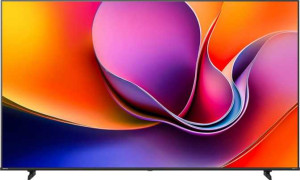
Hisense 55A6Q 55"
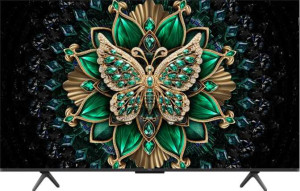
TCL 55C6K 55"

Hisense 55A6Q 55" TCL 55C6K 55"

Overview

Welcome to our in-depth spec comparison between the Hisense 55A6Q 55″ and the TCL 55C6K 55″, two 55-inch 4K TVs competing for your living room. While both share a strong foundation of HDR support, smart platform features, and modern connectivity, they diverge sharply in areas like display technology, brightness, and refresh rate. Read on to find out which of these sets best matches your viewing habits and budget priorities.

Common Features

  • Both TVs have a 4K UHD display resolution of 3840 x 2160 px.
  • Both TVs support 1070 million display colors at 10-bit depth.
  • HDR10 support is available on both products.
  • HDR10+ support is available on both products.
  • Dolby Vision support is available on both products.
  • HLG support is available on both products.
  • Both TVs use HDMI 2.1 ports.
  • Bluetooth connectivity is available on both products.
  • Both TVs support Wi-Fi 4 (802.11n) and Wi-Fi 5 (802.11ac).
  • Both TVs include 2 USB ports and 1 RJ45 port.
  • Miracast support is available on both products.
  • A 3.5 mm audio jack socket is present on both products.
  • Dolby Digital and Dolby Digital Plus support is available on both products.
  • Digital Out support is available on both products.
  • Stereo speakers and Dolby Audio are present on both products.
  • DTS:X support is available on both products.
  • SRS TheaterSound HD is not available on either product.
  • Dolby Virtual is not available on either product.
  • Both TVs support VESA mounting.
  • Both TVs operate within the same temperature range of 5 °C to 35 °C.
  • AirPlay support is available on both products.
  • Both TVs have a built-in smart TV platform.
  • Google Assistant compatibility is available on both products.
  • Alexa compatibility is available on both products.
  • Siri and Apple HomeKit support is not available on either product.
  • Remote smartphone control is supported on both products.
  • Neither TV includes a rechargeable remote control.
  • USB recording is supported on both products.

Main Differences

  • The display technology is LED-backlit LCD on Hisense 55A6Q 55″ and QLED LED-backlit LCD Mini-LED on TCL 55C6K 55″.
  • Screen size is 55″ on Hisense 55A6Q 55″ and 54.6″ on TCL 55C6K 55″.
  • Pixel density is 80 ppi on Hisense 55A6Q 55″ and 81 ppi on TCL 55C6K 55″.
  • Typical brightness is 300 nits on Hisense 55A6Q 55″ and 1000 nits on TCL 55C6K 55″.
  • Contrast ratio is 4000:1 on Hisense 55A6Q 55″ and 6000:1 on TCL 55C6K 55″.
  • Refresh rate is 60Hz on Hisense 55A6Q 55″ and 144Hz on TCL 55C6K 55″.
  • HDMI port count is 3 on Hisense 55A6Q 55″ and 4 on TCL 55C6K 55″.
  • Bluetooth version is 5 on Hisense 55A6Q 55″ and 5.4 on TCL 55C6K 55″.
  • Dolby Atmos support is present on TCL 55C6K 55″ but not available on Hisense 55A6Q 55″.
  • A built-in subwoofer is present on TCL 55C6K 55″ but not available on Hisense 55A6Q 55″.
  • Width is 1234 mm on Hisense 55A6Q 55″ and 1229 mm on TCL 55C6K 55″.
  • Weight is 11000 g on Hisense 55A6Q 55″ and 12400 g on TCL 55C6K 55″.
  • Thickness is 81 mm on Hisense 55A6Q 55″ and 55.9 mm on TCL 55C6K 55″.
  • Height is 716 mm on Hisense 55A6Q 55″ and 713 mm on TCL 55C6K 55″.
  • Volume is 71567.064 cm³ on Hisense 55A6Q 55″ and 48983.8843 cm³ on TCL 55C6K 55″.
Specs Comparison
Hisense 55A6Q 55"

Hisense 55A6Q 55"

TCL 55C6K 55"

TCL 55C6K 55"

Display:
display resolution 4K (UHD) 4K (UHD)
Display type LED-backlit, LCD QLED, LED-backlit, LCD, Mini-LED
screen size 55" 54.6"
resolution 3840 x 2160 px 3840 x 2160 px
pixel density 80 ppi 81 ppi
display colors 1070 million 1070 million
bit depth 10-bit 10-bit
brightness (typical) 300 nits 1000 nits
contrast ratio 4000:1 6000:1
refresh rate 60Hz 144Hz
supports HDR10
supports HDR10+
supports Dolby Vision
supports HLG
has anti-reflection coating
has an ambient light sensor
maximum horizontal viewing angle 178º 178º
maximum vertical viewing angle 178º 178º

Both the Hisense 55A6Q and the TCL 55C6K share the same 4K resolution, 10-bit color depth, and 1070 million display colors, meaning color reproduction capability and sharpness are essentially identical on paper. They also support the full suite of HDR formats — HDR10, HDR10+, Dolby Vision, and HLG — so neither has an edge in content compatibility. Viewing angles are a dead tie at 178° both horizontally and vertically, and both include an anti-reflection coating and ambient light sensor.

The real-world gap opens up in three critical areas. First, the TCL's QLED + Mini-LED panel technology versus the Hisense's standard LED-backlit LCD directly enables its dramatically higher 1000 nits typical brightness compared to just 300 nits on the Hisense — more than three times the light output. In a bright living room or for HDR highlights, this difference is immediately visible. Second, the TCL's contrast ratio of 6000:1 versus 4000:1 on the Hisense means deeper perceived blacks and more punch in dark scenes. Third, the TCL's 144Hz refresh rate versus the Hisense's 60Hz is a decisive advantage for gaming and fast-motion content, where smoother frame delivery and lower input lag matter significantly.

The TCL 55C6K has a clear and substantial advantage in this category. Its superior panel technology translates into real, everyday benefits: far brighter HDR performance, better contrast, and a much higher refresh rate that future-proofs it for gaming. The Hisense 55A6Q covers the fundamentals competently, but it cannot match the TCL on any of the key differentiating specs.
Connectivity:
Has Bluetooth
HDMI version HDMI 2.1 HDMI 2.1
HDMI ports 3 4
supports Wi-Fi
Wi-Fi version Wi-Fi 4 (802.11n), Wi-Fi 5 (802.11ac) Wi-Fi 4 (802.11n), Wi-Fi 5 (802.11ac)
Bluetooth version 5 5.4
USB ports 2 2
RJ45 ports 1 1
supports Miracast
has a socket for a 3.5 mm audio jack
has an external memory slot
has a VGA connector
DVB standards DVB-T, DVB-T2, DVB-C, DVB-S, DVB-S2 DVB-T, DVB-T2, DVB-C, DVB-S, DVB-S2
has a DVI connector

At their core, these two TVs share a largely identical connectivity foundation: both run HDMI 2.1, dual USB ports, an RJ45 ethernet port, a 3.5mm audio jack, Miracast support, and identical Wi-Fi coverage spanning Wi-Fi 4 and Wi-Fi 5. For most users, this shared baseline means the same bandwidth ceiling for 4K HDR sources and comparable wireless network performance in either direction.

Two differences are worth examining. The TCL 55C6K offers 4 HDMI ports versus 3 on the Hisense — a practical win for users who run multiple simultaneous sources like a console, soundbar, streaming stick, and Blu-ray player without needing a switch. The TCL also carries Bluetooth 5.4 against the Hisense's Bluetooth 5.0, a newer revision that brings modest improvements in connection stability and efficiency, which matters most when pairing wireless audio accessories or peripherals.

The TCL 55C6K holds a narrow but genuine edge here. The extra HDMI port is a tangible convenience for device-heavy setups, and the newer Bluetooth version adds a degree of forward compatibility. Neither difference is dramatic, but for users who value a well-equipped rear panel and plan to use wireless audio, the TCL is the more accommodating option.

Audio:
supports Dolby Digital
supports Digital Out
supports Dolby Digital Plus
has SRS TheaterSound HD
has stereo speakers
has Dolby Atmos
has Dolby Audio
supports Dolby Virtual
has a subwoofer
has DTS:X
HDMI ARC / eARC HDMI ARC, HDMI eARC HDMI ARC, HDMI eARC

Strip away the shared specs — Dolby Digital, Dolby Digital Plus, Dolby Audio, DTS:X, Digital Out, and HDMI ARC/eARC are all present on both TVs — and two meaningful differences emerge. The TCL 55C6K includes Dolby Atmos decoding while the Hisense 55A6Q does not. In practice, Atmos is now the dominant object-based surround format on streaming platforms and 4K Blu-ray, so its absence on the Hisense means that Atmos-encoded content will either be downmixed or passed through to an external device rather than processed natively by the TV itself.

The second differentiator is hardware: the TCL ships with a built-in subwoofer, which the Hisense lacks. A dedicated low-frequency driver means the TCL can reproduce bass frequencies more convincingly through its own speakers — a genuine advantage for users who want a fuller sound without adding a soundbar or external audio system. The Hisense, limited to stereo speakers alone, will sound comparatively thinner at the low end in a standalone setup.

The TCL 55C6K has a clear audio advantage for users relying primarily on the TV's built-in system. Dolby Atmos support keeps it compatible with the most widely used immersive audio format, and the integrated subwoofer delivers a more complete frequency range out of the box. The Hisense is a reasonable choice if an external soundbar is already planned, since eARC on both TVs ensures lossless audio passthrough remains available either way.

Design:
width 1234 mm 1229 mm
weight 11000 g 12400 g
thickness 81 mm 55.9 mm
height 716 mm 713 mm
volume 71567.064 cm³ 48983.8843 cm³
Supports VESA mount
maximum operating temperature 35 °C 35 °C
lowest potential operating temperature 5 °C 5 °C

Footprint-wise, these two TVs are virtually interchangeable — width and height differ by only a few millimeters, so either will fit the same shelf or wall space without meaningful distinction. Where they diverge is in depth and weight. The TCL 55C6K is considerably slimmer at 55.9 mm thick compared to the Hisense 55A6Q's 81 mm, a gap of over 25 mm that has a real aesthetic impact when wall-mounting: the TCL will sit noticeably closer to the wall and look more flush in a modern setup.

The trade-off is weight. Despite its slimmer profile, the TCL is actually heavier at 12.4 kg versus the Hisense's 11 kg — a difference likely attributable to the denser Mini-LED backlighting hardware packed into that thinner chassis. This is reflected in the volume figures: the TCL displaces considerably less space overall yet weighs more, indicating higher internal component density. For wall-mounting, the extra 1.4 kg is negligible with a properly rated bracket, but it is worth noting for single-person installations.

Both TVs support VESA mounting and share identical operating temperature ranges, so neither has an edge on installation flexibility or environmental tolerance. Overall, the TCL holds the design advantage for wall-mount scenarios thanks to its significantly slimmer depth, while the Hisense's lighter weight gives it a marginal handling convenience edge — making this category a contextual call depending on how and where the TV will be installed.

Features:
release date April 2025 March 2025
has AirPlay
has built-in smart TV
compatible with Google Assistant
works with Alexa
works with Siri/Apple HomeKit
supports a remote smartphone
has a rechargeable remote control
supports USB recording
standby power consumption 0.5W 0.5W
has a search browser
has a sleep timer
has a child lock
has voice commands

This is a rare case of a complete spec-for-spec tie. Every feature listed for the Hisense 55A6Q and the TCL 55C6K is identical across the board: both carry a built-in smart TV platform, AirPlay, Google Assistant, Alexa, smartphone remote support, USB recording, voice commands, and a standby consumption of 0.5W. Neither supports Siri or Apple HomeKit, and neither includes a rechargeable remote.

The practical takeaway is that users of either TV will land in the same ecosystem with the same access points. AirPlay covers Apple device mirroring, Google Assistant and Alexa handle the two dominant voice platforms, and USB recording adds a useful time-shifting capability without needing an external recorder. The 0.5W standby draw is also identically efficient on both, which is a minor but welcome detail for energy-conscious households.

Based strictly on the provided specs, this group is a dead tie. Neither TV offers a feature the other lacks, and no meaningful differentiation exists here. A buying decision in this category comes down entirely to other spec groups.

Comparison Summary & Verdict

After examining every specification, a clear picture emerges of two TVs built for different audiences. The Hisense 55A6Q 55″ is a solid, no-frills 4K LED TV that covers all the HDR bases and keeps things simple — its slimmer footprint in terms of volume and lighter weight make it an approachable everyday set. However, the TCL 55C6K 55″ raises the bar significantly with its Mini-LED QLED panel, a vastly superior 1000-nit brightness and 6000:1 contrast ratio, a fluid 144Hz refresh rate ideal for gaming and sports, and an enhanced audio setup including Dolby Atmos and a built-in subwoofer. If you want a dependable budget-friendly screen for casual viewing, the Hisense delivers. But if you demand a more cinematic, high-performance experience, the TCL is the clear step up.

Hisense 55A6Q 55
Buy Hisense 55A6Q 55" if...

Buy the Hisense 55A6Q 55″ if you want a straightforward 4K HDR TV for everyday casual viewing and prefer a lighter, less bulky set at a more accessible price point.

TCL 55C6K 55
Buy TCL 55C6K 55" if...

Buy the TCL 55C6K 55″ if you prioritize superior brightness, a higher contrast Mini-LED QLED panel, a 144Hz refresh rate for gaming or sports, and a more immersive audio experience with Dolby Atmos and a built-in subwoofer.