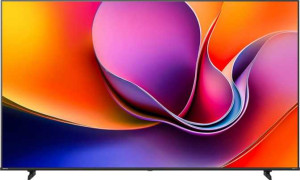
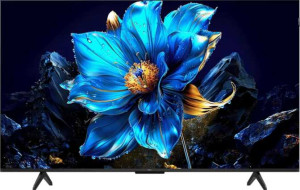
At the core, both the Hisense 55A6Q and the TCL 55P7K share the same fundamental panel architecture: a 4K (3840 x 2160) resolution, 10-bit color depth rendering 1.07 billion colors, a 60Hz refresh rate, and identical wide viewing angles of 178º both horizontally and vertically. Their HDR format support is also a perfect match, covering HDR10, HDR10+, Dolby Vision, and HLG, meaning neither will leave you without compatibility regardless of your streaming source. Both also include an anti-reflection coating and an ambient light sensor, which are practical quality-of-life features for varied lighting environments.
The meaningful distinctions come down to two points: panel technology and brightness. The TCL 55P7K uses a QLED (Quantum Light-Emitting Diode) layer on top of its LCD panel, whereas the Hisense 55A6Q relies on a conventional LED-backlit LCD. In practice, QLED technology typically produces a wider color gamut and more saturated, vibrant colors — a real-world advantage when watching HDR content or anything with rich, dynamic imagery. Compounding this, the TCL also edges ahead on typical brightness at 350 nits versus the Hisense's 300 nits — a 17% gap that can make a noticeable difference in well-lit rooms, where a brighter panel better combats ambient glare and maintains picture punch.
Overall, the TCL 55P7K holds a clear display advantage in this group. The combination of QLED panel technology and higher brightness gives it a tangible edge in color vibrancy and real-world luminance performance. The Hisense 55A6Q is not outclassed in terms of resolution, HDR support, or bit depth — but on pure panel quality, the TCL 55P7K comes out ahead based strictly on the provided specifications.