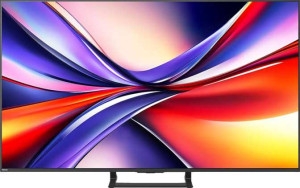
Hisense 55A7Q 55"
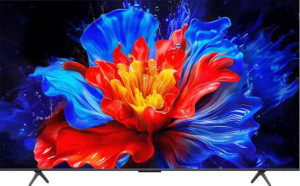
TCL 55P8K 55"

Hisense 55A7Q 55" TCL 55P8K 55"

Overview

Welcome to our in-depth spec comparison between the Hisense 55A7Q 55″ and the TCL 55P8K 55″ — two 55-inch QLED 4K smart TVs that share a surprising amount of common ground yet diverge in some truly meaningful ways. In this head-to-head, we examine the key battlegrounds including refresh rate performance, brightness output, connectivity options, and physical design to help you decide which panel best suits your living room and viewing habits.

Common Features

  • Both TVs have a 4K UHD display resolution of 3840 x 2160 px.
  • Both TVs use a QLED, LED-backlit LCD display type.
  • Both TVs offer a color depth of 1070 million colors with 10-bit panel support.
  • HDR10 support is available on both products.
  • HDR10+ support is available on both products.
  • Dolby Vision support is available on both products.
  • Bluetooth connectivity is available on both products.
  • Both TVs feature HDMI 2.1 ports.
  • Wi-Fi is supported on both products, including Wi-Fi 4 (802.11n) and Wi-Fi 5 (802.11ac).
  • Both TVs include one RJ45 Ethernet port.
  • Miracast support is available on both products.
  • A 3.5 mm audio jack is present on both products.
  • Neither TV includes an external memory card slot.
  • Dolby Digital support is available on both products.
  • Dolby Digital Plus support is available on both products.
  • Dolby Atmos support is available on both products.
  • Dolby Audio support is available on both products.
  • Digital audio output is supported on both products.
  • Stereo speakers are present on both products.
  • SRS TheaterSound HD is not available on either product.
  • Dolby Virtual is not supported on either product.
  • Both TVs support VESA mounting.
  • Both TVs share the same operating temperature range of 5 °C to 35 °C.
  • AirPlay support is available on both products.
  • Both TVs have a built-in smart TV platform.
  • Google Assistant compatibility is available on both products.
  • Siri and Apple HomeKit support is not available on either product.
  • Smartphone remote control is supported on both products.
  • Neither TV includes a rechargeable remote control.
  • USB recording is supported on both products.
  • Both TVs have a standby power consumption of 0.5W.

Main Differences

  • Screen size is 55″ on Hisense 55A7Q 55″ and 54.6″ on TCL 55P8K 55″.
  • Pixel density is 80 ppi on Hisense 55A7Q 55″ and 81 ppi on TCL 55P8K 55″.
  • Typical brightness is 400 nits on Hisense 55A7Q 55″ and 350 nits on TCL 55P8K 55″.
  • Refresh rate is 60Hz on Hisense 55A7Q 55″ and 144Hz on TCL 55P8K 55″.
  • HDMI port count is 3 on Hisense 55A7Q 55″ and 4 on TCL 55P8K 55″.
  • Bluetooth version is 5.0 on Hisense 55A7Q 55″ and 5.4 on TCL 55P8K 55″.
  • USB port count is 2 on Hisense 55A7Q 55″ and 1 on TCL 55P8K 55″.
  • Width is 1226 mm on Hisense 55A7Q 55″ and 1224 mm on TCL 55P8K 55″.
  • Weight is 14800 g on Hisense 55A7Q 55″ and 11300 g on TCL 55P8K 55″.
  • Thickness is 78 mm on Hisense 55A7Q 55″ and 69.5 mm on TCL 55P8K 55″.
  • Height is 711 mm on Hisense 55A7Q 55″ and 708 mm on TCL 55P8K 55″.
  • Volume is 67991.508 cm³ on Hisense 55A7Q 55″ and 60228.144 cm³ on TCL 55P8K 55″.
Specs Comparison
Hisense 55A7Q 55"

Hisense 55A7Q 55"

TCL 55P8K 55"

TCL 55P8K 55"

Display:
display resolution 4K (UHD) 4K (UHD)
Display type QLED, LED-backlit, LCD QLED, LED-backlit, LCD
screen size 55" 54.6"
resolution 3840 x 2160 px 3840 x 2160 px
pixel density 80 ppi 81 ppi
display colors 1070 million 1070 million
bit depth 10-bit 10-bit
brightness (typical) 400 nits 350 nits
refresh rate 60Hz 144Hz
supports HDR10
supports HDR10+
supports Dolby Vision
supports HLG
has anti-reflection coating
has an ambient light sensor
maximum horizontal viewing angle 178º 178º
maximum vertical viewing angle 178º 178º

Both the Hisense 55A7Q and the TCL 55P8K share the same foundational display architecture — QLED, LED-backlit LCD panels running at 4K (3840 x 2160) resolution with 10-bit color depth and 1070 million colors. They also match on every HDR format (HDR10, HDR10+, Dolby Vision, and HLG), identical 178° viewing angles in both axes, and both include anti-reflection coating and an ambient light sensor. In practice, these shared traits mean neither TV has a structural advantage in color volume, HDR compatibility, or off-angle usability.

Where the two diverge meaningfully is on refresh rate and brightness. The Hisense delivers a typical brightness of 400 nits versus the TCL's 350 nits — a 14% advantage that translates to slightly punchier HDR highlights and better visibility in well-lit rooms. The TCL, however, counters with a dramatically higher native 144Hz refresh rate compared to the Hisense's 60Hz. For everyday TV viewing this gap is irrelevant, but for gaming or fast-motion sports content, 144Hz produces noticeably smoother motion with far less blur — a capability the 60Hz Hisense simply cannot match.

Overall, the TCL 55P8K holds the stronger display edge for most buyers. The Hisense's brightness lead is real but modest, while the TCL's 144Hz panel is a qualitative leap that opens the door to high-frame-rate gaming and fluid motion handling. If peak brightness in a bright living room is your single priority, the Hisense is the pick; for virtually any other use case — especially gaming — the TCL's refresh rate advantage is the more impactful differentiator.

Connectivity:
Has Bluetooth
HDMI version HDMI 2.1 HDMI 2.1
HDMI ports 3 4
supports Wi-Fi
Wi-Fi version Wi-Fi 4 (802.11n), Wi-Fi 5 (802.11ac) Wi-Fi 4 (802.11n), Wi-Fi 5 (802.11ac)
Bluetooth version 5 5.4
USB ports 2 1
RJ45 ports 1 1
supports Miracast
has a socket for a 3.5 mm audio jack
has an external memory slot
has a VGA connector
DVB standards DVB-T, DVB-T2, DVB-C, DVB-S, DVB-S2 DVB-T, DVB-T2, DVB-C, DVB-S, DVB-S2
has a DVI connector

The connectivity foundations of both TVs are remarkably similar: identical HDMI 2.1 support, the same dual-band Wi-Fi stack (Wi-Fi 4 and Wi-Fi 5), a shared RJ45 Ethernet port, Miracast, a 3.5mm audio jack, and matching DVB tuner standards. Neither offers an external memory slot or legacy video connectors, which is expected at this tier. The real story lies in a few targeted differences that will matter depending on how you set up your entertainment system.

On port count, the two TVs trade blows. The TCL 55P8K edges ahead with 4 HDMI ports versus the Hisense's 3 — a meaningful advantage for users juggling a console, soundbar, streaming stick, and Blu-ray player simultaneously without a switch. The Hisense flips the script on USB, offering 2 USB ports to the TCL's single one, which is more convenient for simultaneously connecting a storage drive and a USB peripheral. Bluetooth tells a cleaner story: the TCL's Bluetooth 5.4 is a newer revision than the Hisense's Bluetooth 5.0, meaning marginally improved connection stability and efficiency, particularly relevant for wireless audio devices or peripherals.

Connectivity here is genuinely split, and the right pick depends on your setup priorities. The TCL holds the advantage for heavily source-rich home theaters where a fourth HDMI port removes the need for an external switch, and its newer Bluetooth revision adds a small but real quality-of-life benefit. The Hisense is the better fit for users who rely on USB-connected media or peripherals. Neither TV is deficient — the gap comes down to which port you are more likely to run out of first.

Audio:
supports Dolby Digital
supports Digital Out
supports Dolby Digital Plus
has SRS TheaterSound HD
has stereo speakers
has Dolby Atmos
has Dolby Audio
supports Dolby Virtual
has a subwoofer
has DTS:X
HDMI ARC / eARC HDMI ARC, HDMI eARC HDMI ARC, HDMI eARC

Audio is the rare category where these two TVs are in complete lockstep — every single specified feature is identical across the board. Both carry a strong and well-rounded codec suite: Dolby Atmos, Dolby Audio, Dolby Digital Plus, and DTS:X are all present, meaning object-based spatial audio from streaming services, Blu-ray, and broadcast sources is fully supported on either set without compromise.

Equally important for home theater integration, both TVs include both HDMI ARC and eARC, which allows a compatible soundbar or AV receiver to receive high-bandwidth audio formats — including lossless Atmos — over a single HDMI cable. This is the more future-proof connection compared to ARC alone, and the fact that both TVs offer it is a genuine plus. On the hardware side, both also include a built-in subwoofer alongside stereo speakers, which at least promises some low-frequency presence from the internal audio system.

Given the spec-for-spec parity here, audio is a complete tie. Neither TV offers any capability the other lacks, and there is no differentiator to tilt a decision in either direction based solely on this data. Any distinction in actual sound quality would come down to real-world tuning and output wattage — neither of which is captured in the provided specs.

Design:
width 1226 mm 1224 mm
weight 14800 g 11300 g
thickness 78 mm 69.5 mm
height 711 mm 708 mm
volume 67991.508 cm³ 60228.144 cm³
Supports VESA mount
maximum operating temperature 35 °C 35 °C
lowest potential operating temperature 5 °C 5 °C

Footprint-wise, these two TVs are nearly indistinguishable — width and height differ by just 2–3 mm, so they will occupy virtually the same wall space or TV stand. Where they genuinely diverge is in depth and mass. The TCL 55P8K is noticeably slimmer at 69.5 mm thick versus the Hisense's 78 mm, and that 8.5 mm difference is perceptible when mounting flush against a wall or fitting into a media unit with tight clearance.

The more striking gap is weight. At 11,300 g, the TCL is roughly 3,500 g lighter than the Hisense's 14,800 g — a difference of over 23%. For a solo wall-mount installation, that gap is practically significant: a heavier panel is harder to maneuver into position, places greater stress on wall brackets, and demands more robust mounting hardware. The TCL's lower volume figure (60,228 cm³ vs. 67,991 cm³) reinforces that it is a more compact chassis overall, not just thinner in one dimension.

Both TVs share VESA mount support and identical operating temperature ranges, so there is no difference in installation flexibility or environmental tolerance. On design and physical form, however, the TCL 55P8K holds a clear advantage — it is lighter, slimmer, and easier to handle, which matters most during installation and in spaces where a lower-profile TV is preferable.

Features:
release date April 2025 March 2025
has AirPlay
has built-in smart TV
compatible with Google Assistant
works with Siri/Apple HomeKit
supports a remote smartphone
has a rechargeable remote control
supports USB recording
standby power consumption 0.5W 0.5W
has a search browser
has a sleep timer
has a child lock
has voice commands

Features is another category where the Hisense 55A7Q and TCL 55P8K arrive at an exact draw — every specified capability is shared identically. Both run a built-in smart TV platform with a search browser, support Google Assistant and AirPlay, and allow smartphone remote control, giving users solid ecosystem flexibility whether they are in an Android or Apple household — though notably, neither supports Siri/Apple HomeKit, which rules out native integration with HomeKit-based smart home setups.

Practically useful shared features include USB recording — allowing live TV to be recorded directly to an attached USB drive — alongside a sleep timer, child lock, and voice commands. Standby power consumption is an identical 0.5W on both, meaning neither has an energy draw advantage when the screen is off. The absence of a rechargeable remote on either model is a minor shared omission, though not unusual at this price tier.

With no differentiating data point to separate them, this group is a complete tie. A buyer's feature-set experience on either TV will be functionally equivalent based on the provided specs alone.

Comparison Summary & Verdict

After a thorough look at the specs, both TVs deliver a solid 4K QLED experience with full HDR support — including Dolby Vision, HDR10+, and HDR10 — alongside Dolby Atmos audio and a capable smart platform with AirPlay and Google Assistant. However, the differences are telling. The TCL 55P8K 55″ stands out with its remarkable 144Hz refresh rate, a slimmer and significantly lighter build at 11,300 g, and an extra HDMI 2.1 port, making it the stronger choice for gamers and those who value a sleek, easy-to-mount design. The Hisense 55A7Q 55″, on the other hand, wins on typical brightness at 400 nits and offers two USB ports instead of one, which is a practical advantage for users who connect multiple peripherals. Choose the Hisense if consistent brightness and extra USB connectivity matter most; choose the TCL if smooth motion and a lightweight form factor are your priorities.

Hisense 55A7Q 55
Buy Hisense 55A7Q 55" if...

Buy the Hisense 55A7Q 55″ if you prioritize higher typical brightness and need two USB ports to connect multiple devices simultaneously.

TCL 55P8K 55
Buy TCL 55P8K 55" if...

Buy the TCL 55P8K 55″ if you want a smoother 144Hz refresh rate for gaming or fast-paced content, and prefer a lighter, slimmer TV with an extra HDMI port.