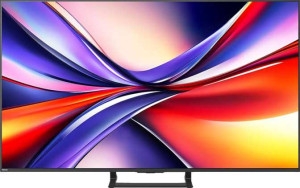
Hisense 55A7Q 55"
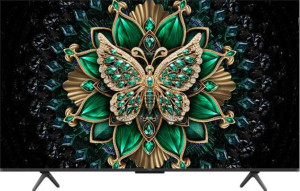
TCL 75C6K 75"

Hisense 55A7Q 55" TCL 75C6K 75"

Overview

Welcome to our in-depth specification comparison between the Hisense 55A7Q 55″ and the TCL 75C6K 75″. These two QLED televisions share a strong common foundation — both deliver 4K UHD resolution with full HDR format support and a rich smart TV feature set — yet they diverge significantly when it comes to display performance, screen size, and refresh rate. Read on to discover how each TV stacks up across every key specification category.

Common Features

  • Both TVs have a 4K (UHD) display resolution of 3840 x 2160 px.
  • Both TVs display 1070 million colors with a 10-bit bit depth.
  • HDR10 support is available on both products.
  • HDR10+ support is available on both products.
  • Dolby Vision support is available on both products.
  • HLG support is available on both products.
  • Both TVs use a QLED, LED-backlit, LCD display type as a base.
  • Both TVs include Bluetooth connectivity.
  • Both TVs support Wi-Fi, including Wi-Fi 4 (802.11n) and Wi-Fi 5 (802.11ac).
  • Both TVs feature HDMI 2.1 ports.
  • Both TVs include 2 USB ports and 1 RJ45 port.
  • Miracast support is available on both products.
  • A 3.5 mm audio jack socket is present on both products.
  • Dolby Digital support is available on both products.
  • Dolby Digital Plus support is available on both products.
  • Digital Out support is available on both products.
  • Dolby Atmos and Dolby Audio are available on both products.
  • SRS TheaterSound HD is not available on either product.
  • Dolby Virtual support is not available on either product.
  • Both TVs have stereo speakers.
  • Both TVs support VESA mounting.
  • The operating temperature range is 5 °C to 35 °C on both products.
  • AirPlay is available on both products.
  • Both TVs have a built-in smart TV platform.
  • Google Assistant compatibility is present on both products.
  • Alexa compatibility is present on both products.
  • Siri and Apple HomeKit support is not available on either product.
  • Remote smartphone control is supported on both products.
  • Neither product includes a rechargeable remote control.
  • USB recording is supported on both products.

Main Differences

  • The display technology is QLED, LED-backlit, LCD on Hisense 55A7Q 55″ and QLED, LED-backlit, LCD, Mini-LED on TCL 75C6K 75″.
  • Screen size is 55″ on Hisense 55A7Q 55″ and 74.5″ on TCL 75C6K 75″.
  • Pixel density is 80 ppi on Hisense 55A7Q 55″ and 59 ppi on TCL 75C6K 75″.
  • Typical brightness is 400 nits on Hisense 55A7Q 55″ and 1000 nits on TCL 75C6K 75″.
  • Contrast ratio is 3800:1 on Hisense 55A7Q 55″ and 7000:1 on TCL 75C6K 75″.
  • Refresh rate is 60Hz on Hisense 55A7Q 55″ and 144Hz on TCL 75C6K 75″.
  • HDMI port count is 3 on Hisense 55A7Q 55″ and 4 on TCL 75C6K 75″.
  • Bluetooth version is 5 on Hisense 55A7Q 55″ and 5.4 on TCL 75C6K 75″.
  • Width is 1226 mm on Hisense 55A7Q 55″ and 1670 mm on TCL 75C6K 75″.
  • Height is 711 mm on Hisense 55A7Q 55″ and 960 mm on TCL 75C6K 75″.
  • Thickness is 78 mm on Hisense 55A7Q 55″ and 56.7 mm on TCL 75C6K 75″.
  • Weight is 14800 g on Hisense 55A7Q 55″ and 23500 g on TCL 75C6K 75″.
  • Volume is 67991.508 cm³ on Hisense 55A7Q 55″ and 90901.44 cm³ on TCL 75C6K 75″.
Specs Comparison
Hisense 55A7Q 55"

Hisense 55A7Q 55"

TCL 75C6K 75"

TCL 75C6K 75"

Display:
display resolution 4K (UHD) 4K (UHD)
Display type QLED, LED-backlit, LCD QLED, LED-backlit, LCD, Mini-LED
screen size 55" 74.5"
resolution 3840 x 2160 px 3840 x 2160 px
pixel density 80 ppi 59 ppi
display colors 1070 million 1070 million
bit depth 10-bit 10-bit
brightness (typical) 400 nits 1000 nits
contrast ratio 3800:1 7000:1
refresh rate 60Hz 144Hz
supports HDR10
supports HDR10+
supports Dolby Vision
supports HLG
has anti-reflection coating
has an ambient light sensor
maximum horizontal viewing angle 178º 178º
maximum vertical viewing angle 178º 178º

Both the Hisense 55A7Q and the TCL 75C6K share a solid common foundation: native 4K (3840 x 2160) resolution, a 10-bit QLED LED-backlit LCD panel, full HDR format support (HDR10, HDR10+, Dolby Vision, and HLG), and identical 178° viewing angles in both directions. For everyday usability, they also both include an anti-reflection coating and an ambient light sensor. However, beyond this shared baseline, the two panels diverge significantly in nearly every performance metric that matters.

The TCL 75C6K pulls ahead on picture quality fundamentals. Its Mini-LED backlighting architecture enables a contrast ratio of 7000:1 versus the Hisense's 3800:1 — nearly double — which translates to deeper blacks and more convincing HDR highlights in dark scenes. This is reinforced by a peak brightness of 1000 nits compared to just 400 nits on the Hisense, a difference that is clearly noticeable with HDR content in bright rooms. The TCL also offers a 144Hz refresh rate against the Hisense's 60Hz, which is a substantial advantage for fast-motion content, gaming, and general motion clarity. The trade-off is pixel density: the smaller 55″ Hisense naturally yields a sharper 80 ppi versus the TCL's 59 ppi on its 74.5″ panel, though at typical living-room viewing distances this difference is unlikely to be perceptible.

The TCL 75C6K holds a clear display advantage across the most impactful specs — brightness, contrast, and refresh rate — making it the stronger performer for HDR movies, sports, and gaming. The Hisense 55A7Q is a capable panel, but its 60Hz ceiling and significantly lower brightness and contrast place it in a different performance tier. Viewers prioritizing screen real estate and picture punch will find the TCL the more compelling choice; those constrained by room size or budget may find the Hisense's smaller footprint and adequate HDR coverage sufficient.
Connectivity:
Has Bluetooth
HDMI version HDMI 2.1 HDMI 2.1
HDMI ports 3 4
supports Wi-Fi
Wi-Fi version Wi-Fi 4 (802.11n), Wi-Fi 5 (802.11ac) Wi-Fi 4 (802.11n), Wi-Fi 5 (802.11ac)
Bluetooth version 5 5.4
USB ports 2 2
RJ45 ports 1 1
supports Miracast
has a socket for a 3.5 mm audio jack
has an external memory slot
has a VGA connector
DVB standards DVB-T, DVB-T2, DVB-C, DVB-S, DVB-S2 DVB-T, DVB-T2, DVB-C, DVB-S, DVB-S2
has a DVI connector

On paper, these two TVs share a remarkably similar connectivity blueprint — identical Wi-Fi support (Wi-Fi 5), matching USB counts, the same RJ45 Ethernet port, Miracast wireless casting, a 3.5mm audio jack, and HDMI 2.1 on all ports. For most users, this common ground covers all the essentials comfortably, and the absence of legacy connectors like VGA or DVI is entirely expected at this tier.

The differences are modest but worth noting. The TCL 75C6K edges ahead with 4 HDMI ports versus the Hisense's 3, which is a practical win for users running multiple 4K sources simultaneously — think a gaming console, a soundbar with ARC, a streaming stick, and a Blu-ray player all connected at once without reaching for a switch. More technically, the TCL also carries Bluetooth 5.4 compared to the Hisense's Bluetooth 5.0. Version 5.4 introduces improvements in connection reliability and efficiency, which can matter for wireless audio accessories and peripherals, though the day-to-day difference for typical TV use cases is unlikely to be dramatic.

The TCL 75C6K holds a narrow connectivity edge, primarily due to its additional HDMI port and newer Bluetooth version. Neither advantage is a dealbreaker, but for a heavily connected home theater setup, one extra HDMI input can save real frustration. The Hisense 55A7Q remains perfectly adequate for standard setups and loses nothing in wireless connectivity.

Audio:
supports Dolby Digital
supports Digital Out
supports Dolby Digital Plus
has SRS TheaterSound HD
has stereo speakers
has Dolby Atmos
has Dolby Audio
supports Dolby Virtual
has a subwoofer
has DTS:X
HDMI ARC / eARC HDMI ARC, HDMI eARC HDMI ARC, HDMI eARC

Audio is the one area where there is genuinely nothing to separate these two TVs — every single specification is identical. Both carry Dolby Atmos and DTS:X, the two dominant object-based surround sound formats, meaning either set can decode and process immersive, three-dimensional audio from compatible streaming services and Blu-ray sources without relying on an external receiver. Both also include a built-in subwoofer alongside stereo speakers, which provides at least some low-frequency body that purely two-channel setups cannot replicate.

For external audio systems, both TVs offer HDMI ARC and eARC — the latter being the more important of the two, as eARC carries enough bandwidth to pass lossless Dolby Atmos and DTS:X bitstreams to a compatible soundbar or AV receiver. This means neither TV creates a bottleneck for users investing in a premium audio setup downstream. Dolby Digital Plus passthrough is also supported on both, rounding out a comprehensive and well-matched audio feature set.

This is a straightforward tie. The audio specifications are point-for-point identical, and no advantage can be awarded to either the Hisense 55A7Q or the TCL 75C6K based solely on the data provided. Audio performance in practice will depend on speaker tuning and amplifier power — factors not captured in these specs — so prospective buyers should look to hands-on reviews for real-world sound quality differences.

Design:
width 1226 mm 1670 mm
weight 14800 g 23500 g
thickness 78 mm 56.7 mm
height 711 mm 960 mm
volume 67991.508 cm³ 90901.44 cm³
Supports VESA mount
maximum operating temperature 35 °C 35 °C
lowest potential operating temperature 5 °C 5 °C

The size difference between these two TVs is substantial and shapes every aspect of the design comparison. The TCL 75C6K is a significantly larger unit — 1670 mm wide and 960 mm tall versus the Hisense's 1226 mm and 711 mm — which is expected given the 20-inch screen size gap. At 23.5 kg, the TCL is also considerably heavier than the Hisense's 14.8 kg, meaning wall mounting or repositioning will realistically require two people. Both sets support VESA mounting, so neither limits installation flexibility in that regard.

Where the Hisense does give something back is thickness: at 78 mm deep, it is noticeably chunkier than the TCL's slimmer 56.7 mm profile. For wall-mount installations where flush appearance matters, the TCL will sit closer to the wall and look cleaner from the side. For stand placement, the depth difference is largely inconsequential. Operating temperature ranges are identical on both — 5°C to 35°C — so neither holds an environmental advantage.

There is no overall design winner here in the traditional sense, as each product's physical characteristics are largely a function of its screen size. The Hisense 55A7Q is the more manageable unit for tighter spaces and solo installation, while the TCL 75C6K rewards larger rooms with its scale but demands more space and handling effort. Buyers should treat the physical specs as a compatibility checklist against their room dimensions rather than a performance differentiator.

Features:
release date April 2025 March 2025
has AirPlay
has built-in smart TV
compatible with Google Assistant
works with Alexa
works with Siri/Apple HomeKit
supports a remote smartphone
has a rechargeable remote control
supports USB recording
standby power consumption 0.5W 0.5W
has a search browser
has a sleep timer
has a child lock
has voice commands

Much like the audio category, the features group produces an exact mirror image between these two TVs — every single data point is identical. Both offer a full smart TV platform with AirPlay, Google Assistant, and Alexa integration, covering the three most widely used smart home and voice ecosystems. The notable shared omission is Apple HomeKit/Siri support, which may matter to users deeply embedded in the Apple ecosystem, but neither TV differentiates itself here.

Practically useful shared features include USB recording — allowing live TV to be recorded directly to an external drive without a separate recorder — and smartphone remote control support, which reduces dependence on a physical remote. Standby power consumption is a matching 0.5W on both, a negligible draw that will have no meaningful impact on energy bills. Neither set ships with a rechargeable remote, a minor but increasingly common convenience that both happen to skip.

This is an unambiguous tie. The Hisense 55A7Q and TCL 75C6K are feature-for-feature identical based on the provided data, and no advantage can be assigned to either. Buyers for whom smart features and ecosystem integration are a deciding factor will need to look beyond these specs — such as OS fluency, app availability, or interface responsiveness — to find any distinction between the two.

Comparison Summary & Verdict

After examining every specification, a clear picture emerges for each TV. The Hisense 55A7Q 55″ is a solid, compact choice for everyday living rooms: its smaller footprint, lighter weight of 14,800 g, and more affordable 55-inch size make it easy to place and live with. However, its 60Hz refresh rate and 400-nit brightness mean it is best suited to casual viewing rather than gaming or bright-room HDR content. The TCL 75C6K 75″, on the other hand, is a powerhouse built for those who want a more immersive experience: its Mini-LED panel delivers a striking 1000-nit brightness and a 7000:1 contrast ratio, while the 144Hz refresh rate makes it an excellent pick for gaming and fast-motion content. The larger 74.5-inch screen and 4 HDMI 2.1 ports further cement its role as a premium home-cinema and gaming hub. Choose the Hisense for simplicity and size; choose the TCL for performance and scale.

Hisense 55A7Q 55
Buy Hisense 55A7Q 55" if...

Buy the Hisense 55A7Q 55″ if you need a compact, lighter TV for a smaller room and are primarily a casual viewer who does not require high-refresh-rate gaming or peak HDR brightness.

TCL 75C6K 75
Buy TCL 75C6K 75" if...

Buy the TCL 75C6K 75″ if you want a large-screen, high-performance TV with Mini-LED brightness, a 144Hz refresh rate for gaming, a superior contrast ratio, and an extra HDMI port for multiple devices.