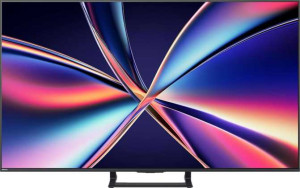
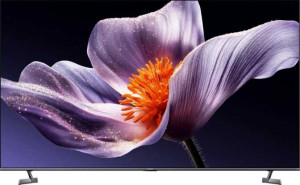
These two 55″ panels share a surprisingly long list of identical specs: both are 4K Mini-LED LCD displays running at 144Hz, with the same 3840×2160 resolution, 80 ppi pixel density, 10-bit color depth rendering 1.07 billion colors, and identical 178°/178° viewing angles. Both also carry the full suite of HDR formats — HDR10, HDR10+, Dolby Vision, and HLG — along with anti-reflection coatings and ambient light sensors. In most respects, these two screens are built from the same blueprint.
The single but decisive differentiator is brightness. The Hisense 55E8Q is rated at 450 nits typical, while the Xiaomi TV S Pro Mini LED 2026 is rated at 1700 nits — nearly four times higher. In practice, this gap is enormous: higher peak brightness is what makes HDR content look genuinely dramatic rather than just adequate, and it determines how well a TV holds up in a bright living room. At 450 nits, HDR highlights are modest; at 1700 nits, specular highlights, sunlit scenes, and HDR10+ or Dolby Vision metadata can be rendered with the kind of punch they were mastered for. The Xiaomi also adds a QLED quantum dot layer to its panel stack, which broadens its color gamut and improves color saturation at high brightness levels — a combination that compounds the advantage.
The display edge belongs clearly to the Xiaomi TV S Pro Mini LED 2026. Unless brightness and color volume are not priorities for your viewing environment, the roughly 3.8× brightness advantage and the addition of QLED quantum dot technology give it a meaningfully superior picture ceiling over the Hisense 55E8Q for HDR and well-lit room use cases.