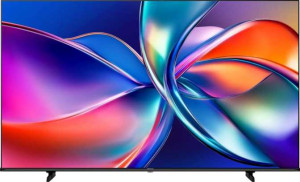
Hisense 65E7Q 65"
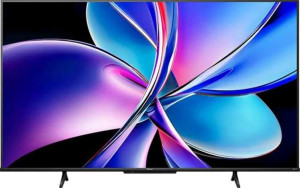
Hisense 65E7Q Pro 65"

Hisense 65E7Q 65" Hisense 65E7Q Pro 65"

Overview

Choosing between the Hisense 65E7Q 65″ and the Hisense 65E7Q Pro 65″ means navigating two closely related 65-inch QLED 4K televisions that share a surprisingly broad common ground yet diverge in ways that could meaningfully impact your viewing experience. From refresh rate and contrast performance to power consumption and connectivity options, this comparison digs into every detail that sets these two models apart, helping you identify which one truly fits your needs.

Common Features

  • Both TVs have a 65″ screen size.
  • Both TVs use a QLED, LED-backlit, LCD display type.
  • Both TVs offer 4K (UHD) resolution at 3840 x 2160 px.
  • Both TVs have a pixel density of 68 ppi.
  • Both TVs support 1070 million display colors at 10-bit depth.
  • HDR10 support is available on both products.
  • Both TVs have Bluetooth 5 connectivity.
  • Both TVs support Wi-Fi 4 (802.11n) and Wi-Fi 5 (802.11ac).
  • Both TVs use HDMI 2.1 ports.
  • Both TVs include 2 USB ports and 1 RJ45 port.
  • Miracast support is available on both products.
  • Both TVs deliver 2 x 10W audio output power.
  • Dolby Digital, Dolby Digital Plus, Dolby Atmos, and Dolby Audio support are available on both products.
  • Digital Out support is available on both products.
  • SRS TheaterSound HD is not available on either product.
  • Stereo speakers are present on both products.
  • Both TVs share the same thickness of 76 mm.
  • Both TVs support VESA mounting.
  • Both TVs operate within a temperature range of 5 °C to 35 °C.
  • AirPlay support is available on both products.
  • Both TVs have a built-in smart TV platform.
  • Google Assistant compatibility is available on both products.
  • Alexa compatibility is available on both products.
  • Siri and Apple HomeKit support is not available on either product.
  • Smartphone remote control support is available on both products.
  • Neither TV has a rechargeable remote control.
  • USB recording support is available on both products.

Main Differences

  • Typical brightness is 385 nits on Hisense 65E7Q 65″ and 365 nits on Hisense 65E7Q Pro 65″.
  • Contrast ratio is 3800:1 on Hisense 65E7Q 65″ and 5000:1 on Hisense 65E7Q Pro 65″.
  • Refresh rate is 60Hz on Hisense 65E7Q 65″ and 144Hz on Hisense 65E7Q Pro 65″.
  • Response time is 8 ms on Hisense 65E7Q 65″ and 6 ms on Hisense 65E7Q Pro 65″.
  • HDMI port count is 3 on Hisense 65E7Q 65″ and 4 on Hisense 65E7Q Pro 65″.
  • Width is 1453 mm on Hisense 65E7Q 65″ and 1446 mm on Hisense 65E7Q Pro 65″.
  • Height is 838 mm on Hisense 65E7Q 65″ and 836 mm on Hisense 65E7Q Pro 65″.
  • Weight is 15200 g on Hisense 65E7Q 65″ and 19200 g on Hisense 65E7Q Pro 65″.
  • Volume is 92538.664 cm³ on Hisense 65E7Q 65″ and 91873.056 cm³ on Hisense 65E7Q Pro 65″.
  • Operating power consumption is 190W on Hisense 65E7Q 65″ and 84W on Hisense 65E7Q Pro 65″.
Specs Comparison
Hisense 65E7Q 65"

Hisense 65E7Q 65"

Hisense 65E7Q Pro 65"

Hisense 65E7Q Pro 65"

Display:
display resolution 4K (UHD) 4K (UHD)
Display type QLED, LED-backlit, LCD QLED, LED-backlit, LCD
screen size 65" 65"
resolution 3840 x 2160 px 3840 x 2160 px
pixel density 68 ppi 68 ppi
display colors 1070 million 1070 million
bit depth 10-bit 10-bit
brightness (typical) 385 nits 365 nits
contrast ratio 3800:1 5000:1
refresh rate 60Hz 144Hz
supports HDR10
supports HDR10+
supports Dolby Vision
supports HLG
response time 8 ms 6 ms
has anti-reflection coating
has an ambient light sensor
maximum horizontal viewing angle 178º 178º
maximum vertical viewing angle 178º 178º

Both the Hisense 65E7Q and 65E7Q Pro share the same foundational panel architecture — QLED, LED-backlit LCD at 4K (3840 x 2160) resolution, 68 ppi pixel density, 10-bit color depth, and 1.07 billion colors. Viewing angles are identical at 178º in both axes, and both support the full suite of HDR formats: HDR10, HDR10+, Dolby Vision, and HLG. In everyday HDR movie watching, this parity means neither has an edge in content compatibility.

Where the two diverge meaningfully is in motion and contrast performance. The E7Q Pro's 144Hz refresh rate versus the E7Q's 60Hz is the single biggest differentiator in this group — for gaming and fast-motion sports content, 144Hz delivers dramatically smoother visuals and reduces motion blur. The Pro also edges ahead with a faster 6ms response time (vs. 8ms) and a notably higher contrast ratio of 5000:1 (vs. 3800:1), meaning deeper blacks and more punch in dark scenes. The base E7Q does pull slightly ahead on typical brightness at 385 nits versus the Pro's 365 nits, but this 20-nit gap is unlikely to be perceptible in real-world viewing.

The E7Q Pro has a clear display advantage. Unless you are certain you will never game or watch fast-action content, the jump to 144Hz alone justifies the Pro, and the better contrast ratio further strengthens that case. The E7Q remains a competent display for casual TV watching, but the Pro is the stronger panel by a meaningful margin.

Connectivity:
Has Bluetooth
HDMI version HDMI 2.1 HDMI 2.1
HDMI ports 3 4
supports Wi-Fi
Wi-Fi version Wi-Fi 4 (802.11n), Wi-Fi 5 (802.11ac) Wi-Fi 4 (802.11n), Wi-Fi 5 (802.11ac)
Bluetooth version 5 5
USB ports 2 2
RJ45 ports 1 1
supports Miracast
has a socket for a 3.5 mm audio jack
has an external memory slot
has a VGA connector
DVB standards DVB-T, DVB-T2, DVB-C, DVB-S, DVB-S2 DVB-T, DVB-T2, DVB-C, DVB-S, DVB-S2
has a DVI connector

The connectivity profiles of these two TVs are nearly identical across the board — both offer HDMI 2.1, Bluetooth 5, Wi-Fi 5, 2 USB ports, a single RJ45 ethernet port, Miracast, and a 3.5mm audio jack. HDMI 2.1 is worth noting as a shared strength: it supports the bandwidth needed for 4K at high refresh rates, which pairs well with the E7Q Pro's 144Hz panel in particular.

The only concrete difference here is that the E7Q Pro has 4 HDMI ports versus 3 on the base E7Q. For a living room hub connecting a games console, streaming stick, soundbar, and Blu-ray player simultaneously, that extra port removes the need for an HDMI switch — a small but genuinely practical convenience. Wi-Fi is capped at Wi-Fi 5 (802.11ac) on both models, which is adequate for 4K streaming but falls short of the faster and less congested Wi-Fi 6 now common on competing sets at this price tier.

The E7Q Pro holds a narrow edge in this group purely by virtue of its additional HDMI port. For users with multiple source devices, this is a tangible real-world benefit. Otherwise, the two TVs are effectively tied on connectivity, with no differences in wireless standards, USB count, or any other interface.

Audio:
supports Dolby Digital
audio output power 2 x 10W 2 x 10W
supports Digital Out
supports Dolby Digital Plus
has SRS TheaterSound HD
has stereo speakers
has Dolby Atmos
has Dolby Audio
supports Dolby Virtual
has a subwoofer
has DTS:X
HDMI ARC / eARC HDMI ARC, HDMI eARC HDMI ARC, HDMI eARC

Audio is the one area where there is absolutely nothing to separate these two TVs — every single specification is identical. Both deliver 2 x 10W of stereo output, support Dolby Atmos, Dolby Digital Plus, Dolby Audio, and DTS:X, and neither includes a subwoofer. The format support is genuinely solid for built-in TV audio, covering the object-based spatial audio standards that streaming platforms and Blu-ray discs increasingly rely on.

Both models also feature HDMI ARC and eARC, which is the more important spec for most buyers. eARC in particular allows a connected soundbar or AV receiver to receive high-bandwidth audio formats like lossless Dolby TrueHD Atmos over a single HDMI cable — meaning the built-in speakers are largely a secondary concern for anyone planning to pair the TV with an external audio system.

This group is a complete tie. Neither the E7Q nor the E7Q Pro holds any audio advantage over the other, and the choice of external speaker setup will matter far more than anything in this spec group.

Design:
width 1453 mm 1446 mm
weight 15200 g 19200 g
thickness 76 mm 76 mm
height 838 mm 836 mm
volume 92538.664 cm³ 91873.056 cm³
Supports VESA mount
maximum operating temperature 35 °C 35 °C
lowest potential operating temperature 5 °C 5 °C

Physically, these two 65-inch sets are almost indistinguishable in footprint — width and height differ by just 7mm and 2mm respectively, and thickness is identical at 76mm. Both support VESA mounting and share the same operating temperature range, so installation considerations are essentially the same for either model.

The one meaningful design difference is weight. The E7Q Pro comes in at 19,200g, a full 4kg heavier than the base E7Q's 15,200g. That 26% increase in mass is worth factoring in during installation — particularly for wall mounting, where the additional load may influence bracket selection or require a second person to safely handle the set. On a stand it is a non-issue, but for a solo wall-mount install, the difference is noticeable.

The E7Q has a practical edge here on account of its significantly lower weight, which simplifies handling and reduces wall-mount hardware requirements. For buyers who are desk- or stand-mounting, the two are effectively tied in this group.

Features:
release date April 2025 April 2025
has AirPlay
has built-in smart TV
compatible with Google Assistant
works with Alexa
works with Siri/Apple HomeKit
supports a remote smartphone
has a rechargeable remote control
supports USB recording
operating power consumption 190W 84W
standby power consumption 0.5W 0.5W
has a search browser
has a sleep timer
has a child lock
warranty period 3 years 3 years
has voice commands
EU energy label E E

From a smart features standpoint, these two TVs are mirrors of each other. Both run a built-in smart TV platform with AirPlay, Google Assistant, and Alexa support, USB recording, voice commands, and smartphone remote control. Neither supports Apple HomeKit, and both carry a solid 3-year warranty. For day-to-day usability, there is no functional difference between them.

The standout divergence in this group is power consumption — and it is dramatic. The E7Q draws 190W during operation compared to just 84W for the E7Q Pro, meaning the base model consumes more than twice the power under normal use. For a TV that might run 6–8 hours a day, this translates to a substantial difference in electricity costs over the lifespan of the set. Standby consumption is identical at 0.5W for both, so the gap is purely in active use.

The E7Q Pro has a clear edge here. Its dramatically lower operating power draw is a significant long-term advantage for running costs, and it is a surprising reversal of the assumption that a more capable panel always means higher energy consumption. Both share the same EU energy label of E, but the raw wattage figures tell a meaningfully different story in practice.

Comparison Summary & Verdict

Both the Hisense 65E7Q 65″ and the Hisense 65E7Q Pro 65″ are well-rounded 65-inch QLED 4K TVs sharing Dolby Atmos, AirPlay, Google Assistant, HDMI 2.1, and a solid audio package. Yet their differences point clearly to different buyers. The Hisense 65E7Q Pro is the stronger pick for gamers and home cinema fans, delivering a 144Hz refresh rate, a deeper 5000:1 contrast ratio, a faster 6ms response time, an extra fourth HDMI port, and a remarkably lower operating power draw of just 84W. The standard Hisense 65E7Q, by contrast, edges ahead with a slightly higher brightness of 385 nits and a much lighter weight of 15,200g versus 19,200g, making it easier to wall-mount or reposition. Choose the Pro for immersive gaming and cinematic depth; choose the standard E7Q for a bright, lighter, straightforward everyday display.

Hisense 65E7Q 65
Buy Hisense 65E7Q 65" if...

Buy the Hisense 65E7Q 65″ if you prioritize a lighter, easier-to-mount television with slightly higher brightness, and do not require a high refresh rate for gaming or fast-motion content.

Hisense 65E7Q Pro 65
Buy Hisense 65E7Q Pro 65" if...

Buy the Hisense 65E7Q Pro 65″ if you want a smoother 144Hz experience for gaming or sports, deeper contrast, a faster response time, more HDMI ports, and the benefit of significantly lower power consumption at just 84W.