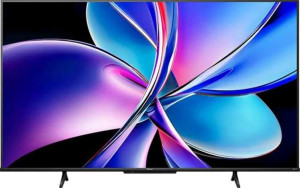
Hisense 65E7Q Pro 65"
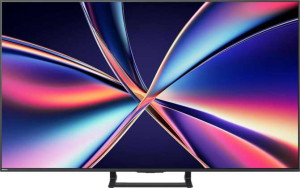
Hisense 65E8Q 65"

Hisense 65E7Q Pro 65" Hisense 65E8Q 65"

Overview

When choosing between the Hisense 65E7Q Pro 65″ and the Hisense 65E8Q 65″, buyers are faced with two capable 65-inch 4K smart TVs that share a strong foundation but diverge in meaningful ways. Both offer 144Hz refresh rates, Dolby Atmos audio, and a full suite of smart features, yet key distinctions in display technology and audio hardware set them apart. This comparison examines where each model pulls ahead to help you make the right choice.

Common Features

  • Both TVs have a 65″ screen size.
  • Both TVs offer 4K (UHD) resolution at 3840 x 2160 px.
  • Both TVs have a pixel density of 68 ppi.
  • Both TVs support 1070 million display colors at 10-bit depth.
  • Both TVs have a contrast ratio of 5000:1.
  • Both TVs feature a 144Hz refresh rate.
  • Both TVs have 4 HDMI 2.1 ports and 2 USB ports.
  • Both TVs support Wi-Fi 4 (802.11n) and Wi-Fi 5 (802.11ac).
  • Both TVs include Bluetooth 5 and one RJ45 port.
  • Dolby Atmos, Dolby Audio, Dolby Digital, and Dolby Digital Plus are supported on both TVs.
  • Digital Out support is available on both TVs.
  • Stereo speakers are present on both TVs.
  • SRS TheaterSound HD is not available on either TV.
  • Dolby Virtual is not supported on either TV.
  • Both TVs share the same dimensions: 1446 mm wide, 836 mm tall, and 76 mm thick.
  • Both TVs support VESA mounting.
  • The operating temperature range is identical on both TVs, from 5 °C to 35 °C.
  • AirPlay is available on both TVs.
  • Google Assistant and Alexa compatibility is present on both TVs.
  • Siri and Apple HomeKit are not supported on either TV.
  • USB recording is supported on both TVs.
  • A rechargeable remote control is not included with either TV.
  • Both TVs have built-in smart TV functionality and support remote smartphone control.

Main Differences

  • The display technology is QLED, LED-backlit LCD on the Hisense 65E7Q Pro 65″, while the Hisense 65E8Q 65″ uses Mini-LED, LED-backlit LCD.
  • Typical brightness is 365 nits on the Hisense 65E7Q Pro 65″ and 450 nits on the Hisense 65E8Q 65″.
  • Response time is 6 ms on the Hisense 65E7Q Pro 65″ and 6.5 ms on the Hisense 65E8Q 65″.
  • A built-in subwoofer is present on the Hisense 65E8Q 65″ but not available on the Hisense 65E7Q Pro 65″.
  • Weight is 19200 g on the Hisense 65E7Q Pro 65″ and 19800 g on the Hisense 65E8Q 65″.
Specs Comparison
Hisense 65E7Q Pro 65"

Hisense 65E7Q Pro 65"

Hisense 65E8Q 65"

Hisense 65E8Q 65"

Display:
display resolution 4K (UHD) 4K (UHD)
Display type QLED, LED-backlit, LCD LED-backlit, LCD, Mini-LED
screen size 65" 65"
resolution 3840 x 2160 px 3840 x 2160 px
pixel density 68 ppi 68 ppi
display colors 1070 million 1070 million
bit depth 10-bit 10-bit
brightness (typical) 365 nits 450 nits
contrast ratio 5000:1 5000:1
refresh rate 144Hz 144Hz
supports HDR10
supports HDR10+
supports Dolby Vision
supports HLG
response time 6 ms 6.5 ms
has anti-reflection coating
has an ambient light sensor
maximum horizontal viewing angle 178º 178º
maximum vertical viewing angle 178º 178º

At a glance, the Hisense 65E7Q Pro and Hisense 65E8Q share a remarkably similar display foundation: both deliver a 4K (3840 x 2160) resolution at 68 ppi, a 10-bit panel capable of 1.07 billion colors, a 144Hz refresh rate, and identical 5000:1 contrast ratios, 178º viewing angles, and full HDR support across HDR10, HDR10+, Dolby Vision, and HLG. For most everyday viewing criteria, these two televisions are effectively on par.

The real distinction lies in their backlighting technologies and what those mean in practice. The E7Q Pro uses a QLED (quantum dot) layer over a standard LED-backlit LCD panel, which enhances color volume and saturation. The E8Q, by contrast, drops the quantum dot layer but steps up to Mini-LED backlighting — a technology that uses a far greater number of smaller LEDs to enable more precise local dimming zones. The practical payoff shows up directly in brightness: the E8Q achieves 450 nits typical brightness versus the E7Q Pro′s 365 nits, a roughly 23% advantage that makes a noticeable difference in well-lit rooms and HDR highlights. The one area where the E7Q Pro edges ahead is response time: 6 ms versus the E8Q′s 6.5 ms — a marginal gap that will be imperceptible to all but the most demanding competitive gamers.

Overall, the E8Q holds the display edge for most users. Its Mini-LED backlighting delivers meaningfully higher brightness and, in principle, more granular control over local dimming — advantages that outweigh the E7Q Pro′s QLED color enhancement and fractionally faster response time. If vivid colors in a darkened room are the priority, the E7Q Pro remains competitive; but for bright-room viewing and peak HDR performance, the E8Q′s panel technology gives it a clear lead.
Connectivity:
Has Bluetooth
HDMI version HDMI 2.1 HDMI 2.1
HDMI ports 4 4
supports Wi-Fi
Wi-Fi version Wi-Fi 4 (802.11n), Wi-Fi 5 (802.11ac) Wi-Fi 4 (802.11n), Wi-Fi 5 (802.11ac)
Bluetooth version 5 5
USB ports 2 2
RJ45 ports 1 1
supports Miracast
has a socket for a 3.5 mm audio jack
has an external memory slot
has a VGA connector
DVB standards DVB-T, DVB-T2, DVB-C, DVB-S, DVB-S2 DVB-T, DVB-T2, DVB-C, DVB-S, DVB-S2
has a DVI connector

Connectivity is the one area where choosing between the Hisense 65E7Q Pro and the Hisense 65E8Q requires no deliberation — the two televisions are spec-for-spec identical across every single data point in this category.

Both ship with 4 HDMI 2.1 ports, which is a genuinely strong offering: HDMI 2.1 supports the full 4K/144Hz bandwidth needed to take advantage of these panels without bottlenecking a modern gaming console or PC. Wireless connectivity tops out at Wi-Fi 5 (802.11ac) and Bluetooth 5 on both models — solid, mainstream standards that deliver reliable streaming and peripheral pairing, even if neither reaches the speeds or range of Wi-Fi 6. The shared 2 USB ports, single RJ45 ethernet jack, Miracast support, and 3.5 mm audio output round out a well-balanced physical I/O layout.

This group is a complete tie. There is not a single connectivity feature separating these two models, so this category should carry no weight in a purchase decision between them.

Audio:
supports Dolby Digital
supports Digital Out
supports Dolby Digital Plus
has SRS TheaterSound HD
has stereo speakers
has Dolby Atmos
has Dolby Audio
supports Dolby Virtual
has a subwoofer
has DTS:X
HDMI ARC / eARC HDMI ARC, HDMI eARC HDMI ARC, HDMI eARC

Audio formats tell a largely identical story for both televisions. The Hisense 65E7Q Pro and Hisense 65E8Q share the same comprehensive codec support — Dolby Digital, Dolby Digital Plus, Dolby Atmos, Dolby Audio, and DTS:X — alongside both HDMI ARC and eARC. The presence of eARC is worth highlighting: it carries enough bandwidth for lossless Dolby Atmos and DTS:X bitstreams to a soundbar or AV receiver, meaning neither TV will bottleneck a high-end external audio setup.

The one hardware distinction that separates them is the built-in subwoofer found on the E8Q but absent on the E7Q Pro. A dedicated subwoofer handles low-frequency reproduction — bass, rumble, and cinematic impact — that standard stereo TV speakers typically struggle to reproduce convincingly. For viewers who rely primarily on the television′s own speakers rather than an external sound system, this is a tangible advantage in perceived audio depth and fullness.

The E8Q has the edge in this category, solely due to its integrated subwoofer. For users already planning to pair either TV with a soundbar or AV receiver, the difference is moot — eARC on both handles that use case equally well. But for out-of-the-box speaker performance, the E8Q′s hardware gives it a meaningful step up.

Design:
width 1446 mm 1446 mm
weight 19200 g 19800 g
thickness 76 mm 76 mm
height 836 mm 836 mm
volume 91873.056 cm³ 91873.056 cm³
Supports VESA mount
maximum operating temperature 35 °C 35 °C
lowest potential operating temperature 5 °C 5 °C

Dimensionally, the Hisense 65E7Q Pro and Hisense 65E8Q are virtually the same television. Width, height, thickness, and total volume are identical across both models, meaning they will occupy the same footprint on a stand or fit the same wall space — no surprises during installation. Both also support VESA mounting and share the same operating temperature range, so neither has any practical advantage in placement flexibility.

The only measurable difference is weight: the E8Q comes in at 19,800 g versus the E7Q Pro′s 19,200 g — a gap of just 600 g, or roughly 3%. In practice, this difference is negligible for wall mounting or stand placement and is almost certainly attributable to the E8Q′s additional Mini-LED backlighting hardware. It would not factor into any real-world handling or installation decision.

This category is effectively a tie. The physical profiles are identical and the marginal weight difference carries no practical significance. Design and form factor should play no role in choosing between these two models.

Features:
release date April 2025 April 2025
has AirPlay
has built-in smart TV
compatible with Google Assistant
works with Alexa
works with Siri/Apple HomeKit
supports a remote smartphone
has a rechargeable remote control
supports USB recording
operating power consumption 84W 84W
standby power consumption 0.5W 0.5W
has a search browser
has a sleep timer
has a child lock
warranty period 3 years 3 years
has voice commands
EU energy label E E

Feature parity is total here. The Hisense 65E7Q Pro and Hisense 65E8Q deliver an identical smart TV experience, with built-in voice assistant support spanning Google Assistant and Alexa, plus AirPlay for Apple device mirroring — a broad ecosystem coverage that suits most households regardless of which platforms they are invested in. Notably, neither model supports Apple HomeKit/Siri integration, which is a shared limitation for users deeply embedded in the Apple smart home ecosystem.

On the practical side, both share 84W operating power consumption and a minimal 0.5W standby draw, along with USB recording support, smartphone remote control, and a 3-year warranty — the latter being a meaningful after-sales assurance that applies equally to both. Energy labeling is identical at EU class E, so running costs will be the same over time.

This group is a complete tie. Every feature, power figure, and software capability is shared between the two models, making this category entirely irrelevant as a differentiator. Buyers should focus their decision on the display and audio distinctions covered in other groups.

Comparison Summary & Verdict

After a thorough look at the specs, both TVs deliver a compelling 65-inch 4K experience with 144Hz refresh rates, broad smart platform support, and Dolby Atmos. However, the differences matter depending on your priorities. The Hisense 65E7Q Pro 65″ stands out with a faster 6ms response time and a lighter 19.2 kg build, making it a solid pick for gaming enthusiasts or those who value snappier pixel transitions and easier installation. The Hisense 65E8Q 65″, on the other hand, pulls ahead with its Mini-LED backlighting, a notably higher 450-nit brightness, and a built-in subwoofer, making it the stronger choice for cinematic viewing in well-lit rooms and for those who want richer out-of-the-box audio without an external soundbar.

Hisense 65E7Q Pro 65
Buy Hisense 65E7Q Pro 65" if...

Buy the Hisense 65E7Q Pro 65″ if you prioritize a faster response time and a slightly lighter build, making it the better fit for gaming or wall-mounting with ease.

Hisense 65E8Q 65
Buy Hisense 65E8Q 65" if...

Buy the Hisense 65E8Q 65″ if you want higher brightness from Mini-LED backlighting and a built-in subwoofer for a more immersive cinematic experience without extra audio equipment.