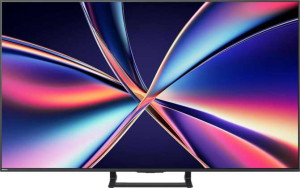
Hisense 65E8Q 65"
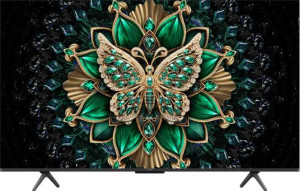
TCL 65C6K 65"

Hisense 65E8Q 65" TCL 65C6K 65"

Overview

When choosing between the Hisense 65E8Q 65″ and the TCL 65C6K 65″, shoppers are faced with two compelling 65-inch 4K Mini-LED televisions that share a strong common foundation yet diverge in some meaningful ways. Both sets offer 144Hz refresh rates and broad HDR support, but key battlegrounds emerge around brightness and contrast performance, display technology, physical design, and Bluetooth capability — differences that could tip the scales depending on your viewing priorities and living room setup.

Common Features

  • Both televisions offer 4K (UHD) display resolution.
  • Both televisions have a resolution of 3840 x 2160 px.
  • Both televisions share a pixel density of 68 ppi.
  • Both televisions support 1070 million display colors.
  • Both televisions feature a 10-bit color depth.
  • Both televisions have a 144Hz refresh rate.
  • HDR10 support is available on both televisions.
  • HDR10+ support is available on both televisions.
  • Bluetooth connectivity is available on both televisions.
  • Both televisions feature HDMI 2.1 ports.
  • Both televisions include 4 HDMI ports.
  • Wi-Fi support is available on both televisions, covering Wi-Fi 4 (802.11n) and Wi-Fi 5 (802.11ac).
  • Both televisions include 2 USB ports.
  • Both televisions include 1 RJ45 port.
  • Miracast support is available on both televisions.
  • Dolby Atmos is supported on both televisions.
  • Dolby Digital and Dolby Digital Plus are supported on both televisions.
  • Stereo speakers are present on both televisions.
  • AirPlay is available on both televisions.
  • Both televisions are compatible with Google Assistant and Amazon Alexa.
  • USB recording is supported on both televisions.
  • Both televisions have built-in smart TV functionality.
  • Remote smartphone control is supported on both televisions.
  • VESA mount support is available on both televisions.
  • Both televisions share the same operating temperature range of 5 °C to 35 °C.

Main Differences

  • The display type is LED-backlit, LCD, Mini-LED on the Hisense 65E8Q 65″ and QLED, LED-backlit, LCD, Mini-LED on the TCL 65C6K 65″.
  • The screen size is 65″ on the Hisense 65E8Q 65″ and 64.5″ on the TCL 65C6K 65″.
  • Typical brightness is 450 nits on the Hisense 65E8Q 65″ and 1000 nits on the TCL 65C6K 65″.
  • The contrast ratio is 5000:1 on the Hisense 65E8Q 65″ and 7000:1 on the TCL 65C6K 65″.
  • The Bluetooth version is 5 on the Hisense 65E8Q 65″ and 5.4 on the TCL 65C6K 65″.
  • The width is 1446 mm on the Hisense 65E8Q 65″ and 1447 mm on the TCL 65C6K 65″.
  • The weight is 19800 g on the Hisense 65E8Q 65″ and 17200 g on the TCL 65C6K 65″.
  • The thickness is 76 mm on the Hisense 65E8Q 65″ and 56 mm on the TCL 65C6K 65″.
  • The height is 836 mm on the Hisense 65E8Q 65″ and 832 mm on the TCL 65C6K 65″.
  • The volume is 91873.056 cm³ on the Hisense 65E8Q 65″ and 67418.624 cm³ on the TCL 65C6K 65″.
Specs Comparison
Hisense 65E8Q 65"

Hisense 65E8Q 65"

TCL 65C6K 65"

TCL 65C6K 65"

Display:
display resolution 4K (UHD) 4K (UHD)
Display type LED-backlit, LCD, Mini-LED QLED, LED-backlit, LCD, Mini-LED
screen size 65" 64.5"
resolution 3840 x 2160 px 3840 x 2160 px
pixel density 68 ppi 68 ppi
display colors 1070 million 1070 million
bit depth 10-bit 10-bit
brightness (typical) 450 nits 1000 nits
contrast ratio 5000:1 7000:1
refresh rate 144Hz 144Hz
supports HDR10
supports HDR10+
supports Dolby Vision
supports HLG
has anti-reflection coating
has an ambient light sensor
maximum horizontal viewing angle 178º 178º
maximum vertical viewing angle 178º 178º

Both the Hisense 65E8Q and the TCL 65C6K share the same fundamental display foundation: a 4K (3840 x 2160) resolution at 68 ppi, a 10-bit panel capable of 1.07 billion colors, a 144Hz refresh rate, and full HDR format support including HDR10, HDR10+, Dolby Vision, and HLG. Both also feature Mini-LED backlighting, anti-reflection coating, an ambient light sensor, and wide 178º viewing angles in both axes — meaning on paper, these two TVs are remarkably similar in their baseline display capabilities.

The critical differentiators, however, lie in brightness and contrast. The TCL 65C6K pulls significantly ahead with a typical brightness of 1000 nits versus the Hisense's 450 nits — more than double — and a contrast ratio of 7000:1 compared to 5000:1. In practice, this means the TCL will produce considerably more impactful HDR highlights, handle bright, sunlit rooms more effectively, and deliver deeper perceived blacks relative to its peak output. The TCL also incorporates a QLED quantum dot layer on top of its Mini-LED backlight, which typically contributes to wider color volume and more saturated, accurate colors at higher brightness levels — a feature absent on the Hisense.

The Hisense 65E8Q is by no means a poor display, and both sets share most of their core specs. But based strictly on the provided data, the TCL 65C6K holds a clear advantage in display performance: its substantially higher brightness, superior contrast ratio, and QLED color enhancement make it the stronger choice for HDR content and mixed lighting environments.
Connectivity:
Has Bluetooth
HDMI version HDMI 2.1 HDMI 2.1
HDMI ports 4 4
supports Wi-Fi
Wi-Fi version Wi-Fi 4 (802.11n), Wi-Fi 5 (802.11ac) Wi-Fi 4 (802.11n), Wi-Fi 5 (802.11ac)
Bluetooth version 5 5.4
USB ports 2 2
RJ45 ports 1 1
supports Miracast
has a socket for a 3.5 mm audio jack
has an external memory slot
has a VGA connector
DVB standards DVB-T, DVB-T2, DVB-C, DVB-S, DVB-S2 DVB-T, DVB-T2, DVB-C, DVB-S, DVB-S2
has a DVI connector

The connectivity specs of these two TVs are almost a carbon copy of each other. Both offer 4 HDMI 2.1 ports — enough for next-gen consoles, a soundbar, and a streaming device simultaneously, all with full bandwidth for 4K/144Hz passthrough — alongside 2 USB ports, a single RJ45 Ethernet jack, and identical Wi-Fi support covering Wi-Fi 4 and Wi-Fi 5. Wireless screen mirroring via Miracast, a 3.5mm audio jack, and the same suite of DVB tuner standards (T, T2, C, S, S2) round out an otherwise identical peripheral feature set.

The only measurable difference is Bluetooth: the Hisense 65E8Q ships with Bluetooth 5.0, while the TCL 65C6K steps up to Bluetooth 5.4. In real-world use, Bluetooth 5.4 brings improvements in connection reliability, lower latency for audio peripherals, and better handling of multiple simultaneous device connections compared to 5.0 — a meaningful upgrade for users who rely on wireless headphones or keyboards, though unlikely to be transformative for typical TV use.

Overall, connectivity is effectively a near-tie, with the TCL holding a minor edge purely due to its newer Bluetooth version. Neither TV is held back by its connectivity suite, and for most users the practical difference will be negligible day-to-day.

Audio:
supports Dolby Digital
supports Digital Out
supports Dolby Digital Plus
has SRS TheaterSound HD
has stereo speakers
has Dolby Atmos
has Dolby Audio
supports Dolby Virtual
has a subwoofer
has DTS:X
HDMI ARC / eARC HDMI ARC, HDMI eARC HDMI ARC, HDMI eARC

When it comes to audio, the Hisense 65E8Q and TCL 65C6K are in complete lockstep — every single specification is identical. Both feature built-in stereo speakers with a dedicated subwoofer, which is a meaningful inclusion at this tier, helping to reproduce low-frequency content without the immediate need for an external soundbar. On the format side, both cover the full Dolby ecosystem: Dolby Digital, Dolby Digital Plus, Dolby Atmos, and Dolby Audio, alongside DTS:X for object-based surround decoding from compatible sources.

For connecting external audio systems, each TV provides both HDMI ARC and eARC, the latter being the more important of the two — eARC carries enough bandwidth to pass lossless Dolby Atmos and DTS:X audio to a capable soundbar or AV receiver, whereas standard ARC is limited to compressed formats. This means neither TV will bottleneck a high-end home theater setup.

With no differentiating data point to separate them, audio is a complete tie. The choice between these two TVs will have no bearing on the audio experience, whether using the built-in speakers or an external audio system.

Design:
width 1446 mm 1447 mm
weight 19800 g 17200 g
thickness 76 mm 56 mm
height 836 mm 832 mm
volume 91873.056 cm³ 67418.624 cm³
Supports VESA mount
maximum operating temperature 35 °C 35 °C
lowest potential operating temperature 5 °C 5 °C

Footprint-wise, these two TVs are virtually identical siblings — their width and height differ by just a millimeter or two, making them interchangeable in any installation plan. Where they genuinely diverge is in depth and weight. The TCL 65C6K is notably slimmer at 56 mm thick versus the Hisense 65E8Q's 76 mm, a 26% reduction that translates to a more flush, modern profile against a wall mount and a less bulky presence on a TV stand.

The weight gap is equally significant: the TCL comes in at 17.2 kg compared to the Hisense's 19.8 kg — a difference of roughly 2.6 kg. That may sound modest, but during a solo wall-mount installation it is a meaningful advantage, reducing strain and making precise alignment easier to manage. It also results in a noticeably smaller overall volume (67,419 cm³ vs 91,873 cm³), reinforcing how much more compact the TCL chassis is despite housing the same screen size. Both sets support VESA mounting and share identical operating temperature ranges, so neither has an edge in placement flexibility or environmental tolerance.

On design and form factor, the TCL 65C6K has a clear advantage — it is lighter, thinner, and physically more compact, making it the easier TV to handle, install, and integrate into a living space.

Features:
release date April 2025 March 2025
has AirPlay
has built-in smart TV
compatible with Google Assistant
works with Alexa
works with Siri/Apple HomeKit
supports a remote smartphone
has a rechargeable remote control
supports USB recording
standby power consumption 0.5W 0.5W
has a search browser
has a sleep timer
has a child lock
has voice commands

Feature parity is total here — every single capability listed is shared equally by the Hisense 65E8Q and the TCL 65C6K. Both are full smart TVs with built-in voice command support spanning Google Assistant and Alexa, and both offer AirPlay for seamless content mirroring from Apple devices. Notably, neither supports Siri or Apple HomeKit, which is worth flagging for users deeply embedded in the Apple smart home ecosystem.

Practical day-to-day conveniences are also matched across the board: smartphone remote support, USB recording for live TV capture, a sleep timer, child lock, and a built-in browser are all present on both sets. Standby power consumption is identically lean at 0.5W, meaning neither TV will meaningfully inflate an electricity bill when idle. Neither remote is rechargeable, so both will require disposable batteries.

There is simply no differentiator to call out in this category — Features is a complete tie. Whichever TV a buyer leans toward based on display or design, they will land on an identical smart feature set.

Comparison Summary & Verdict

After a thorough side-by-side look, both televisions prove to be capable 4K home cinema contenders with shared strengths including 144Hz refresh rates, HDR10 and HDR10+ support, four HDMI 2.1 ports, and a full suite of smart features like AirPlay, Google Assistant, and Alexa. However, the distinctions are meaningful. The TCL 65C6K 65″ pulls ahead in raw picture performance, offering a significantly higher typical brightness of 1000 nits, a stronger 7000:1 contrast ratio, and QLED technology — making it the stronger choice for bright rooms or HDR-focused viewers. It is also noticeably lighter and slimmer. The Hisense 65E8Q 65″, while dimmer at 450 nits and bulkier in build, still delivers a solid 65-inch experience at what may be a more accessible price point. Choose the TCL for peak picture quality; choose the Hisense if value and screen size purity matter most.

Hisense 65E8Q 65
Buy Hisense 65E8Q 65" if...

Buy the Hisense 65E8Q 65″ if you want a straightforward 65-inch 4K Mini-LED TV with solid specs and are less concerned about peak brightness or a slimmer profile.

TCL 65C6K 65
Buy TCL 65C6K 65" if...

Buy the TCL 65C6K 65″ if you prioritize superior brightness at 1000 nits, a higher contrast ratio of 7000:1, QLED display technology, and a lighter, slimmer design.