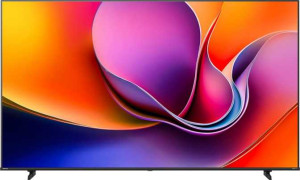
Hisense 75A6Q 75"
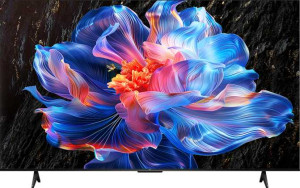
TCL 75P6K 75"

Hisense 75A6Q 75" TCL 75P6K 75"

Overview

When shopping for a large-screen 75-inch 4K TV, the Hisense 75A6Q 75″ and the TCL 75P6K 75″ are two compelling options that share a solid foundation but diverge in some meaningful ways. Both deliver 4K UHD resolution and LED-backlit LCD panels, yet key battlegrounds emerge around HDR format support, brightness performance, and physical design. Whether you prioritize premium picture formats or a slimmer, lighter build, this comparison breaks down every spec to help you make the right call.

Common Features

  • Both TVs have a 4K UHD resolution of 3840 x 2160 px.
  • Both TVs use an LED-backlit LCD display type.
  • Both TVs have a pixel density of 59 ppi.
  • Both TVs support 1070 million display colors with a 10-bit bit depth.
  • Both TVs have a 60Hz refresh rate.
  • HDR10 support is available on both TVs.
  • Both TVs have Bluetooth connectivity.
  • Both TVs use HDMI 2.1 and include 3 HDMI ports.
  • Both TVs support Wi-Fi 4 (802.11n) and Wi-Fi 5 (802.11ac).
  • Both TVs include 1 RJ45 port.
  • Miracast support is available on both TVs.
  • Both TVs have a 3.5mm audio jack socket.
  • Both TVs deliver 2 x 15W audio output power.
  • Both TVs support Digital Out audio.
  • SRS TheaterSound HD is not available on either TV.
  • Both TVs have stereo speakers and Dolby Audio support.
  • Neither TV includes a subwoofer.
  • Both TVs support VESA mounting.
  • Both TVs operate between 5°C and 35°C.
  • AirPlay support is available on both TVs.
  • Both TVs have a built-in smart TV platform.
  • Google Assistant and Amazon Alexa compatibility is available on both TVs.
  • Apple HomeKit and Siri support is not available on either TV.
  • Both TVs support smartphone remote control.
  • Neither TV has a rechargeable remote control.
  • Both TVs have a standby power consumption of 0.5W.
  • Both TVs share the same DVB tuner standards: DVB-T, DVB-T2, DVB-C, DVB-S, and DVB-S2.
  • Both TVs include HDMI ARC and HDMI eARC support.

Main Differences

  • Screen size is 75″ on Hisense 75A6Q 75″ and 74.5″ on TCL 75P6K 75″.
  • Typical brightness is 385 nits on Hisense 75A6Q 75″ and 330 nits on TCL 75P6K 75″.
  • HDR10+ support is present on Hisense 75A6Q 75″ but not available on TCL 75P6K 75″.
  • Dolby Vision support is present on Hisense 75A6Q 75″ but not available on TCL 75P6K 75″.
  • Bluetooth version is 5.0 on Hisense 75A6Q 75″ and 5.2 on TCL 75P6K 75″.
  • USB ports number 2 on Hisense 75A6Q 75″ and 1 on TCL 75P6K 75″.
  • Width is 1676 mm on Hisense 75A6Q 75″ and 1667 mm on TCL 75P6K 75″.
  • Weight is 23100 g on Hisense 75A6Q 75″ and 18200 g on TCL 75P6K 75″.
  • Thickness is 87 mm on Hisense 75A6Q 75″ and 74 mm on TCL 75P6K 75″.
  • Height is 960 mm on Hisense 75A6Q 75″ and 959 mm on TCL 75P6K 75″.
  • Volume is 139979.52 cm³ on Hisense 75A6Q 75″ and 118300.322 cm³ on TCL 75P6K 75″.
  • USB recording is supported on Hisense 75A6Q 75″ but not available on TCL 75P6K 75″.
Specs Comparison
Hisense 75A6Q 75"

Hisense 75A6Q 75"

TCL 75P6K 75"

TCL 75P6K 75"

Display:
display resolution 4K (UHD) 4K (UHD)
Display type LED-backlit, LCD LED-backlit, LCD
screen size 75" 74.5"
resolution 3840 x 2160 px 3840 x 2160 px
pixel density 59 ppi 59 ppi
display colors 1070 million 1070 million
bit depth 10-bit 10-bit
brightness (typical) 385 nits 330 nits
refresh rate 60Hz 60Hz
supports HDR10
supports HDR10+
supports Dolby Vision
supports HLG
has anti-reflection coating
has an ambient light sensor
maximum horizontal viewing angle 178º 178º
maximum vertical viewing angle 178º 178º

At their core, both the Hisense 75A6Q and the TCL 75P6K share the same foundational display architecture: LED-backlit LCD panels running at a native 4K (3840 x 2160) resolution with a 59 ppi pixel density, 10-bit color depth, and a 60Hz refresh rate. Wide 178° viewing angles in both directions, an anti-reflection coating, and an ambient light sensor are also common to both, meaning neither has a structural edge in panel construction or everyday usability features.

The meaningful divergence lies in two areas: brightness and HDR format support. The Hisense delivers a higher typical brightness of 385 nits versus the TCL's 330 nits — a roughly 17% gap that translates to a noticeably punchier image in well-lit rooms and more effective HDR highlights, even if neither panel reaches the peak levels of premium OLED or Mini-LED sets. On HDR formats, the Hisense supports HDR10, HDR10+, Dolby Vision, and HLG, while the TCL is limited to HDR10 and HLG only, missing both HDR10+ and Dolby Vision. This matters in practice because Dolby Vision in particular is the dominant premium HDR format on streaming platforms like Netflix and Disney+, and without it, the TCL will fall back to standard HDR10 for that content, losing the dynamic, scene-by-scene tone-mapping those formats provide.

The Hisense 75A6Q holds a clear edge in this category. Its brightness advantage improves real-world HDR impact and ambient viewing, and its full HDR format suite — especially Dolby Vision — ensures compatibility with virtually all high-quality streaming content, something the TCL 75P6K simply cannot match.
Connectivity:
Has Bluetooth
HDMI version HDMI 2.1 HDMI 2.1
HDMI ports 3 3
supports Wi-Fi
Wi-Fi version Wi-Fi 4 (802.11n), Wi-Fi 5 (802.11ac) Wi-Fi 4 (802.11n), Wi-Fi 5 (802.11ac)
Bluetooth version 5 5.2
USB ports 2 1
RJ45 ports 1 1
supports Miracast
has a socket for a 3.5 mm audio jack
has an external memory slot
has a VGA connector
DVB standards DVB-T, DVB-T2, DVB-C, DVB-S, DVB-S2 DVB-C, DVB-S, DVB-S2, DVB-T, DVB-T2
has a DVI connector

Connectivity is largely a draw between these two sets. Both offer three HDMI 2.1 ports, a gigabit-capable RJ45 Ethernet port, dual-band Wi-Fi (covering both Wi-Fi 4 and Wi-Fi 5), Miracast wireless display mirroring, and a 3.5mm audio jack. The matched HDMI spec is worth noting positively — HDMI 2.1 supports higher bandwidth than 2.0, which is useful for gaming consoles and high-frame-rate sources even on a 60Hz panel.

Two differences stand out. First, the Hisense ships with 2 USB ports compared to just 1 on the TCL — a practical advantage for users who want to connect a USB drive and a peripheral simultaneously without unplugging anything. Second, the TCL edges ahead with Bluetooth 5.2 versus the Hisense's Bluetooth 5.0. Version 5.2 introduced improvements to audio transmission efficiency and multi-stream audio, which can be relevant when pairing Bluetooth headphones or soundbars, though real-world audible differences depend heavily on the paired device also supporting 5.2.

Neither product pulls decisively ahead here. The Hisense 75A6Q wins on USB flexibility, while the TCL 75P6K has the marginally more modern Bluetooth version — these are minor, situational trade-offs rather than a clear category winner. Users who regularly connect USB devices will prefer the Hisense; those prioritizing Bluetooth audio quality with compatible peripherals may lean toward the TCL.

Audio:
audio output power 2 x 15W 2 x 15W
supports Digital Out
has SRS TheaterSound HD
has stereo speakers
has Dolby Audio
has a subwoofer
HDMI ARC / eARC HDMI ARC, HDMI eARC HDMI eARC, HDMI ARC

Audio is a straight tie — every single specification in this group is identical across both TVs. Each delivers 2 x 15W of stereo output, Dolby Audio processing, Digital Out support, and both HDMI ARC and eARC. The presence of eARC is the most practically significant shared feature here: unlike standard ARC, eARC carries enough bandwidth for lossless audio formats like Dolby TrueHD and DTS-HD Master Audio, meaning users who connect a capable soundbar via HDMI will get the full audio signal rather than a compressed version.

That said, 30W total output from a stereo pair — with no subwoofer — is fairly modest for a 75-inch screen. Both sets are best treated as serviceable out-of-the-box options, with the expectation that most users in this screen-size bracket will eventually pair them with an external sound system. The eARC port on both makes that upgrade path straightforward.

There is no winner to declare here. The Hisense 75A6Q and TCL 75P6K are perfectly matched on audio hardware and features, so this category should carry no weight in a purchasing decision between the two.

Design:
width 1676 mm 1667 mm
weight 23100 g 18200 g
thickness 87 mm 74 mm
height 960 mm 959 mm
volume 139979.52 cm³ 118300.322 cm³
Supports VESA mount
maximum operating temperature 35 °C 35 °C
lowest potential operating temperature 5 °C 5 °C

Despite occupying nearly identical footprints on a wall or stand — widths of 1676mm and 1667mm respectively, heights within 1mm of each other — these two 75-inch sets diverge noticeably in physical bulk. The TCL 75P6K is 13mm slimmer at 74mm deep versus the Hisense's 87mm, and that slimmer profile is reflected in a meaningfully smaller overall volume (118,300 cm³ vs 139,980 cm³). For wall-mounted installations, the TCL will sit closer to the wall and present a cleaner look.

The more consequential difference is weight. The TCL comes in at 18.2 kg, while the Hisense weighs 23.1 kg — nearly 5kg heavier. At this screen size, that gap matters during installation: a two-person lift is advisable for both, but the extra mass of the Hisense adds meaningful stress to wall mounts and makes repositioning more cumbersome. Both sets support VESA mounting, so bracket compatibility is not a distinguishing factor.

The TCL 75P6K has a clear edge in design. It is lighter, thinner, and more compact — advantages that pay off both during setup and in how the TV integrates into a living space. For users prioritizing a sleek wall-mount installation or who anticipate moving the set, the TCL is the more manageable option.

Features:
release date April 2025 March 2025
has AirPlay
has built-in smart TV
compatible with Google Assistant
works with Alexa
works with Siri/Apple HomeKit
supports a remote smartphone
has a rechargeable remote control
supports USB recording
standby power consumption 0.5W 0.5W
has a search browser
has a sleep timer
has a child lock
has voice commands

Feature parity between these two sets is remarkably high. Both run a built-in smart TV platform, support AirPlay, respond to Google Assistant and Alexa voice commands, allow smartphone remote control, and share an identical 0.5W standby consumption. Neither supports Apple HomeKit/Siri integration, and neither ships with a rechargeable remote — so those omissions cancel out equally.

The sole differentiator in this entire category is USB recording, which the Hisense 75A6Q supports and the TCL 75P6K does not. This feature allows users to connect an external USB drive and record live broadcast content directly — a genuinely useful capability for cord-cutters or anyone relying on the TV's built-in tuner as their primary broadcast source, removing the need for a separate PVR device.

The Hisense 75A6Q takes a narrow but concrete edge here. USB recording is the only point of separation, and for users who intend to use their TV's tuner regularly, it is a meaningful convenience. For viewers who stream exclusively and never touch live broadcast TV, the two sets are functionally identical in this category.

Comparison Summary & Verdict

Both the Hisense 75A6Q 75″ and the TCL 75P6K 75″ deliver a strong shared foundation: 4K UHD resolution, 60Hz refresh rate, HDMI 2.1, smart TV functionality, and broad voice assistant support. However, the differences are telling. The Hisense 75A6Q 75″ stands out with a higher typical brightness of 385 nits and exclusive support for HDR10+ and Dolby Vision, making it the stronger pick for cinephiles and those who want the widest HDR compatibility. It also offers 2 USB ports and supports USB recording, adding practical versatility. The TCL 75P6K 75″, on the other hand, is notably lighter at 18200 g and thinner at 74 mm, making installation easier, and it features the newer Bluetooth 5.2. Choose the Hisense if picture quality and HDR breadth are your priorities; opt for the TCL if a slimmer, lighter design is what matters most.

Hisense 75A6Q 75
Buy Hisense 75A6Q 75" if...

Buy the Hisense 75A6Q 75″ if you want broader HDR coverage with both HDR10+ and Dolby Vision support, higher brightness, and the added convenience of USB recording with 2 USB ports.

TCL 75P6K 75
Buy TCL 75P6K 75" if...

Buy the TCL 75P6K 75″ if you prefer a lighter, slimmer TV that is easier to mount and install, and value the slightly newer Bluetooth 5.2 standard.