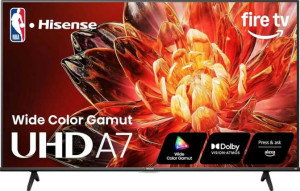
Hisense 75A7NF 75"
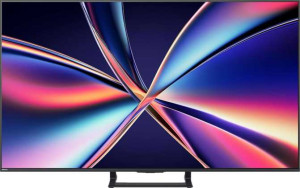
Hisense 75E8Q 75"

Hisense 75A7NF 75" Hisense 75E8Q 75"

Overview

When choosing between the Hisense 75A7NF 75″ and the Hisense 75E8Q 75″, shoppers are faced with two large-screen 4K TVs that share a strong foundation yet diverge in some meaningful ways. Both offer HDR10, HDR10+, and Dolby Vision support, but key battlegrounds emerge around display technology and refresh rate, connectivity options, audio hardware, and power consumption — making this a compelling comparison for any home theater enthusiast.

Common Features

  • Both TVs have a 4K (UHD) display resolution of 3840 x 2160 px.
  • Both TVs have a pixel density of 59 ppi.
  • Both TVs can display 1070 million colors with a 10-bit bit depth.
  • HDR10 support is available on both products.
  • HDR10+ support is available on both products.
  • Dolby Vision support is available on both products.
  • Bluetooth is available on both products, with version 5.
  • Wi-Fi is supported on both products, with Wi-Fi 4 (802.11n) and Wi-Fi 5 (802.11ac).
  • Both TVs have 2 USB ports and 1 RJ45 port.
  • Miracast support is available on both products.
  • A 3.5 mm audio jack socket is present on both products.
  • Both TVs support Digital Out audio.
  • SRS TheaterSound HD is not available on either product.
  • Stereo speakers are present on both products.
  • Dolby Atmos and Dolby Audio are supported on both products.
  • Dolby Virtual is not supported on either product.
  • Both TVs support HDMI ARC and HDMI eARC.
  • Both TVs support VESA mounting.
  • AirPlay is available on both products.
  • A built-in smart TV platform is present on both products.
  • Both TVs work with Alexa.
  • Siri and Apple HomeKit are not supported on either product.
  • Remote smartphone control is supported on both products.
  • Neither TV has a rechargeable remote control.
  • USB recording is supported on both products.
  • Standby power consumption is 0.5W on both products.

Main Differences

  • The display type is LED-backlit LCD on Hisense 75A7NF 75″ and LED-backlit LCD with Mini-LED on Hisense 75E8Q 75″.
  • The screen size is 74.5″ on Hisense 75A7NF 75″ and 75″ on Hisense 75E8Q 75″.
  • The refresh rate is 60Hz on Hisense 75A7NF 75″ and 144Hz on Hisense 75E8Q 75″.
  • The HDMI version is 2.0 on Hisense 75A7NF 75″ and 2.1 on Hisense 75E8Q 75″.
  • The number of HDMI ports is 3 on Hisense 75A7NF 75″ and 4 on Hisense 75E8Q 75″.
  • A built-in subwoofer is present on Hisense 75E8Q 75″ but not available on Hisense 75A7NF 75″.
  • The width is 1676.4 mm on Hisense 75A7NF 75″ and 1668 mm on Hisense 75E8Q 75″.
  • The weight is 23088 g on Hisense 75A7NF 75″ and 28500 g on Hisense 75E8Q 75″.
  • The thickness is 86.4 mm on Hisense 75A7NF 75″ and 86 mm on Hisense 75E8Q 75″.
  • The height is 960.1 mm on Hisense 75A7NF 75″ and 961 mm on Hisense 75E8Q 75″.
  • The volume is 139061.805696 cm³ on Hisense 75A7NF 75″ and 137853.528 cm³ on Hisense 75E8Q 75″.
  • Google Assistant compatibility is present on Hisense 75E8Q 75″ but not available on Hisense 75A7NF 75″.
  • Operating power consumption is 230W on Hisense 75A7NF 75″ and 107W on Hisense 75E8Q 75″.
Specs Comparison
Hisense 75A7NF 75"

Hisense 75A7NF 75"

Hisense 75E8Q 75"

Hisense 75E8Q 75"

Display:
display resolution 4K (UHD) 4K (UHD)
Display type LED-backlit, LCD LED-backlit, LCD, Mini-LED
screen size 74.5" 75"
resolution 3840 x 2160 px 3840 x 2160 px
pixel density 59 ppi 59 ppi
display colors 1070 million 1070 million
bit depth 10-bit 10-bit
refresh rate 60Hz 144Hz
supports HDR10
supports HDR10+
supports Dolby Vision
supports HLG
has anti-reflection coating
has an ambient light sensor
maximum horizontal viewing angle 178º 178º
maximum vertical viewing angle 178º 178º

Both the Hisense 75A7NF and the Hisense 75E8Q share a strong display foundation: a 4K (3840 x 2160) resolution at 59 ppi, a 10-bit panel capable of rendering over a billion colors, and full HDR suite support including HDR10, HDR10+, Dolby Vision, and HLG. Both also feature anti-reflection coating and an ambient light sensor, meaning neither has an edge in color volume, HDR versatility, or glare management.

The most significant display differentiator is the panel technology and refresh rate. The E8Q uses a Mini-LED backlight, which places a much denser array of smaller LEDs behind the LCD layer compared to the A7NF's conventional LED backlight. In practice, this translates to finer local dimming zones, deeper perceived blacks, higher peak brightness, and better contrast — without the burn-in risk of OLED. On top of that, the E8Q's 144Hz refresh rate versus the A7NF's 60Hz is a substantial gap: smoother motion handling in fast-paced sports or action content, and a meaningful advantage for gaming where high frame rates are supported.

The E8Q holds a clear edge in this category. The Mini-LED backlighting directly improves contrast and HDR performance — the specs where both panels technically look identical on paper will diverge meaningfully in a dark room — and the 144Hz panel future-proofs the set for high-frame-rate content in a way that the A7NF's 60Hz simply cannot match. The A7NF remains competitive in color and HDR format support, but for display quality and motion performance, the 75E8Q is the stronger choice.
Connectivity:
Has Bluetooth
HDMI version HDMI 2.0 HDMI 2.1
HDMI ports 3 4
supports Wi-Fi
Wi-Fi version Wi-Fi 4 (802.11n), Wi-Fi 5 (802.11ac) Wi-Fi 4 (802.11n), Wi-Fi 5 (802.11ac)
Bluetooth version 5 5
USB ports 2 2
RJ45 ports 1 1
supports Miracast
has a socket for a 3.5 mm audio jack
has an external memory slot
has a VGA connector
has a DVI connector

Both the Hisense 75A7NF and Hisense 75E8Q support Bluetooth, with Bluetooth version 5 available on both models. When it comes to HDMI connectivity, the 75A7NF features 3 HDMI 2.0 ports, while the 75E8Q has 4 HDMI 2.1 ports, offering more ports and a newer HDMI version. Both models also support Wi-Fi 4 (802.11n) and Wi-Fi 5 (802.11ac), so wireless networking options are the same on both televisions.

Both products are equipped with 2 USB ports and 1 RJ45 port for wired connections. They also support Miracast, allowing for wireless screen mirroring. Additionally, both models feature a 3.5mm audio jack socket for external audio devices.

Neither the 75A7NF nor the 75E8Q offers an external memory slot, VGA connector, or DVI connector, so these features are not available on either model. The key differences here are the number of HDMI ports and the HDMI version, with the 75E8Q offering more ports and the latest HDMI 2.1 standard, while the 75A7NF has 3 HDMI 2.0 ports.

Audio:
supports Digital Out
has SRS TheaterSound HD
has stereo speakers
has Dolby Atmos
has Dolby Audio
supports Dolby Virtual
has a subwoofer
HDMI ARC / eARC HDMI ARC, HDMI eARC HDMI ARC, HDMI eARC

Both the Hisense 75A7NF and Hisense 75E8Q support Digital Out, providing an option for external audio connections. Both models feature stereo speakers, Dolby Atmos, and Dolby Audio, ensuring quality audio playback. Neither model includes SRS TheaterSound HD or Dolby Virtual support.

One key difference between the two products is the inclusion of a subwoofer on the 75E8Q, which the 75A7NF lacks. This may result in more enhanced bass output on the 75E8Q for users looking for deeper sound. Both models support HDMI ARC and HDMI eARC, enabling high-quality audio transmission through compatible devices.

Overall, the audio setup is similar on both TVs, with the primary distinction being the subwoofer found only on the 75E8Q.

Design:
width 1676.4 mm 1668 mm
weight 23088 g 28500 g
thickness 86.4 mm 86 mm
height 960.1 mm 961 mm
volume 139061.805696 cm³ 137853.528 cm³
Supports VESA mount

The Hisense 75A7NF and Hisense 75E8Q have very similar design dimensions. The 75A7NF is slightly wider at 1676.4 mm, while the 75E8Q measures 1668 mm in width. The height of both models is almost identical, with the 75A7NF at 960.1 mm and the 75E8Q at 961 mm. Both products are also very close in thickness, with the 75A7NF at 86.4 mm and the 75E8Q at 86 mm.

The weight of the two models differs more significantly, with the 75A7NF being lighter at 23088 g compared to the 75E8Q's 28500 g. This may make the 75A7NF easier to move or mount, though both TVs support VESA mounting for wall installation.

In terms of volume, the 75A7NF has a slightly larger volume at 139061.805696 cm³, while the 75E8Q is a bit smaller at 137853.528 cm³. Despite these small differences, the overall design of both models is very similar, with both supporting VESA mounts for easy wall mounting.

Features:
release date January 2025 April 2025
has AirPlay
has built-in smart TV
compatible with Google Assistant
works with Alexa
works with Siri/Apple HomeKit
supports a remote smartphone
has a rechargeable remote control
supports USB recording
operating power consumption 230W 107W
standby power consumption 0.5W 0.5W
has a search browser
has a sleep timer
has a child lock
has voice commands

Both the Hisense 75A7NF and Hisense 75E8Q feature built-in smart TV functionality and support AirPlay for easy content sharing. Both models are also compatible with Alexa, but only the 75E8Q supports Google Assistant, while the 75A7NF does not. Neither TV works with Siri/Apple HomeKit, though both can be controlled via a smartphone app.

Both models support USB recording, offer a search browser, and include a sleep timer, child lock, and voice command features for added convenience. The operating power consumption is higher on the 75A7NF at 230W, compared to the 75E8Q’s 107W, which may result in energy savings with the latter model. Both models have the same standby power consumption of 0.5W and neither includes a rechargeable remote control.

In summary, the key differences between the two are the support for Google Assistant on the 75E8Q and the notable difference in power consumption, with the 75A7NF requiring more power for operation compared to the 75E8Q.

Comparison Summary & Verdict

After examining the full spec sheet, both TVs deliver a capable 4K HDR experience, but they clearly target different buyers. The Hisense 75A7NF 75″ is the more straightforward and lightweight option, weighing notably less at 23088 g, and its 60Hz panel will satisfy casual viewers who primarily watch streaming content or standard broadcast TV. However, the Hisense 75E8Q 75″ pulls ahead in several important areas: its Mini-LED panel with a 144Hz refresh rate, HDMI 2.1 ports, built-in subwoofer, and dramatically lower operating power consumption of 107W versus 230W make it a far more future-proof and feature-rich choice. If you are a gamer, sports fan, or home cinema enthusiast who wants the best picture and audio performance, the E8Q is the clear step up. Choose the A7NF if budget and simplicity are your priorities.

Hisense 75A7NF 75
Buy Hisense 75A7NF 75" if...

Buy the Hisense 75A7NF 75″ if you want a lighter, no-frills 4K TV for everyday viewing and prefer a simpler setup without the need for high refresh rates or advanced gaming features.

Hisense 75E8Q 75
Buy Hisense 75E8Q 75" if...

Buy the Hisense 75E8Q 75″ if you want a premium experience with a Mini-LED panel, 144Hz refresh rate, HDMI 2.1, a built-in subwoofer, Google Assistant support, and significantly lower power consumption.