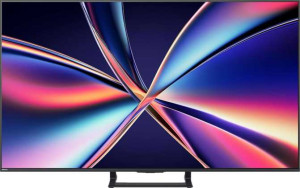
Hisense 75E8Q 75"
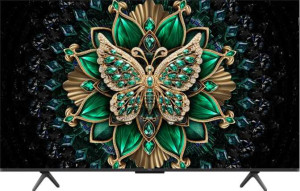
TCL 55C6K 55"

Hisense 75E8Q 75" TCL 55C6K 55"

Overview

Welcome to our in-depth specification comparison between the Hisense 75E8Q 75″ and the TCL 55C6K 55″. Both televisions share a strong foundation — 4K UHD resolution, 144Hz refresh rate, Mini-LED backlighting, and a full suite of HDR formats including Dolby Vision, HDR10, and HDR10+. Yet beneath that common ground lie meaningful differences in screen size, brightness, and contrast performance that could make one a far better fit for your living room than the other.

Common Features

  • Both products have a 4K (UHD) display resolution of 3840 x 2160 px.
  • Both products support 1070 million display colors at a 10-bit depth.
  • Both products have a 144Hz refresh rate.
  • HDR10 support is available on both products.
  • HDR10+ support is available on both products.
  • Dolby Vision support is available on both products.
  • Both products have Bluetooth connectivity.
  • Both products feature HDMI 2.1 with 4 HDMI ports.
  • Wi-Fi support is available on both products, covering Wi-Fi 4 (802.11n) and Wi-Fi 5 (802.11ac).
  • Both products have 2 USB ports and 1 RJ45 port.
  • Miracast support is available on both products.
  • Dolby Digital support is available on both products.
  • Digital Out support is available on both products.
  • Dolby Digital Plus support is available on both products.
  • Both products have stereo speakers with Dolby Atmos and Dolby Audio.
  • SRS TheaterSound HD is not available on either product.
  • Dolby Virtual is not available on either product.
  • Both products support VESA mounting and share the same operating temperature range of 5 °C to 35 °C.
  • AirPlay support is available on both products.
  • Both products have a built-in smart TV platform and are compatible with Google Assistant and Alexa.
  • Works with Siri/Apple HomeKit is not supported on either product.
  • Remote smartphone control is supported on both products.
  • Neither product has a rechargeable remote control.
  • USB recording is supported on both products.

Main Differences

  • The display type is LED-backlit, LCD, Mini-LED on the Hisense 75E8Q 75″ and QLED, LED-backlit, LCD, Mini-LED on the TCL 55C6K 55″.
  • Screen size is 75″ on the Hisense 75E8Q 75″ and 54.6″ on the TCL 55C6K 55″.
  • Pixel density is 59 ppi on the Hisense 75E8Q 75″ and 81 ppi on the TCL 55C6K 55″.
  • Typical brightness is 500 nits on the Hisense 75E8Q 75″ and 1000 nits on the TCL 55C6K 55″.
  • Contrast ratio is 1200:1 on the Hisense 75E8Q 75″ and 6000:1 on the TCL 55C6K 55″.
  • Bluetooth version is 5 on the Hisense 75E8Q 75″ and 5.4 on the TCL 55C6K 55″.
  • Width is 1668 mm on the Hisense 75E8Q 75″ and 1229 mm on the TCL 55C6K 55″.
  • Height is 961 mm on the Hisense 75E8Q 75″ and 713 mm on the TCL 55C6K 55″.
  • Thickness is 86 mm on the Hisense 75E8Q 75″ and 55.9 mm on the TCL 55C6K 55″.
  • Weight is 28500 g on the Hisense 75E8Q 75″ and 12400 g on the TCL 55C6K 55″.
  • Volume is 137853.528 cm³ on the Hisense 75E8Q 75″ and 48983.8843 cm³ on the TCL 55C6K 55″.
Specs Comparison
Hisense 75E8Q 75"

Hisense 75E8Q 75"

TCL 55C6K 55"

TCL 55C6K 55"

Display:
display resolution 4K (UHD) 4K (UHD)
Display type LED-backlit, LCD, Mini-LED QLED, LED-backlit, LCD, Mini-LED
screen size 75" 54.6"
resolution 3840 x 2160 px 3840 x 2160 px
pixel density 59 ppi 81 ppi
display colors 1070 million 1070 million
bit depth 10-bit 10-bit
brightness (typical) 500 nits 1000 nits
contrast ratio 1200:1 6000:1
refresh rate 144Hz 144Hz
supports HDR10
supports HDR10+
supports Dolby Vision
supports HLG
has anti-reflection coating
has an ambient light sensor
maximum horizontal viewing angle 178º 178º
maximum vertical viewing angle 178º 178º

Both the Hisense 75E8Q and the TCL 55C6K share the same 4K (3840 x 2160) resolution, 10-bit color depth, 144Hz refresh rate, and full HDR suite (HDR10, HDR10+, Dolby Vision, HLG) — so on paper, the core display feature set is evenly matched. However, the TCL gains a notable panel advantage by adding a QLED layer on top of its Mini-LED backlight, whereas the Hisense relies on Mini-LED alone. QLED's quantum dot filter significantly expands color volume and peak luminance potential, which is directly reflected in the numbers.

The most telling differentiators are brightness and contrast ratio. The TCL 55C6K delivers 1000 nits of typical brightness versus the Hisense's 500 nits — double the output — making HDR highlights far more impactful and the image more readable in bright rooms. The contrast gap is even more dramatic: 6000:1 on the TCL versus 1200:1 on the Hisense. In practice, this means deeper blacks, better shadow detail, and a more three-dimensional image, particularly in dark-room viewing. The TCL also posts a higher pixel density of 81 ppi compared to 59 ppi on the larger Hisense, meaning individual pixels are less discernible at typical viewing distances for its screen size.

The Hisense's primary advantage is its 75″ screen size, which delivers a far more immersive cinematic experience and is the better choice if sheer screen real estate is the priority. But strictly on display quality metrics — brightness, contrast, and panel technology — the TCL 55C6K holds a clear edge, offering a noticeably more vivid and punchy image despite being the smaller of the two.
Connectivity:
Has Bluetooth
HDMI version HDMI 2.1 HDMI 2.1
HDMI ports 4 4
supports Wi-Fi
Wi-Fi version Wi-Fi 4 (802.11n), Wi-Fi 5 (802.11ac) Wi-Fi 4 (802.11n), Wi-Fi 5 (802.11ac)
Bluetooth version 5 5.4
USB ports 2 2
RJ45 ports 1 1
supports Miracast
has a socket for a 3.5 mm audio jack
has an external memory slot
has a VGA connector
DVB standards DVB-T, DVB-T2, DVB-C, DVB-S, DVB-S2 DVB-T, DVB-T2, DVB-C, DVB-S, DVB-S2
has a DVI connector

Connectivity is remarkably consistent between these two TVs. Both offer 4 HDMI 2.1 ports, 2 USB ports, an RJ45 Ethernet port, a 3.5mm audio jack, Miracast wireless mirroring, and identical Wi-Fi support spanning Wi-Fi 4 and Wi-Fi 5. For most users, this means neither set will feel limiting — four HDMI 2.1 ports is generous enough to simultaneously connect a console, soundbar, streaming stick, and Blu-ray player without needing a switcher, and HDMI 2.1 ensures full 4K/144Hz passthrough for compatible devices.

The sole differentiator is Bluetooth: the Hisense ships with Bluetooth 5.0, while the TCL steps up to Bluetooth 5.4. In practical terms, 5.4 brings improvements to connection stability, reduced interference in crowded wireless environments, and better support for LE Audio — a modern codec framework relevant for wireless headphones and hearing devices. It is a modest but tangible upgrade, particularly for users who rely on Bluetooth audio accessories.

Overall, connectivity is essentially a near-tie, with the TCL 55C6K holding a slim edge purely by virtue of its newer Bluetooth version. Neither TV is meaningfully ahead in terms of port selection or wireless standards — the difference only becomes relevant if Bluetooth audio quality or future-proofing for wireless peripherals is a priority.

Audio:
supports Dolby Digital
supports Digital Out
supports Dolby Digital Plus
has SRS TheaterSound HD
has stereo speakers
has Dolby Atmos
has Dolby Audio
supports Dolby Virtual
has a subwoofer
has DTS:X
HDMI ARC / eARC HDMI ARC, HDMI eARC HDMI ARC, HDMI eARC

Audio is the rare category where these two TVs are in complete lockstep. Both carry an identical feature set: stereo speakers, a built-in subwoofer, Dolby Atmos, DTS:X, Dolby Audio, Dolby Digital Plus, and full HDMI ARC and eARC support. There is not a single differentiating data point between them in this group.

The practical implications of this shared spec sheet are meaningful. Dolby Atmos and DTS:X are the two dominant object-based surround formats, meaning both TVs can decode and virtualize height and spatial audio from streaming services, Blu-ray, and gaming consoles. The inclusion of a subwoofer suggests each TV aims to deliver low-frequency weight without an external soundbar, and eARC ensures lossless audio passthrough to an external sound system for users who do upgrade.

This is a clear and definitive tie. Buyers for whom audio capability is a deciding factor will find no advantage on either side — the choice between the Hisense 75E8Q and TCL 55C6K should rest entirely on the other specification groups.

Design:
width 1668 mm 1229 mm
weight 28500 g 12400 g
thickness 86 mm 55.9 mm
height 961 mm 713 mm
volume 137853.528 cm³ 48983.8843 cm³
Supports VESA mount
maximum operating temperature 35 °C 35 °C
lowest potential operating temperature 5 °C 5 °C

The size difference between these two TVs is substantial and expected given their respective screen sizes, but the physical disparity goes well beyond simple footprint. The Hisense 75E8Q weighs 28,500 g versus the TCL 55C6K's 12,400 g — more than double. That gap has direct consequences for installation: wall-mounting the Hisense demands a heavy-duty VESA bracket and ideally two people, while the TCL is considerably more manageable for a single-person install or furniture placement.

Profile depth tells a similar story. The Hisense measures 86 mm thick compared to the TCL's 55.9 mm — a noticeable difference when wall-mounted, where a slimmer profile sits closer to the wall and looks cleaner in a room. The TCL's lower volume footprint also makes it easier to fit into tighter spaces or entertainment units with depth constraints.

Operating temperature ranges are identical for both, so environment suitability is a non-factor. Design-wise, the TCL 55C6K holds the clear advantage in terms of physical manageability — it is lighter, slimmer, and easier to place or mount. The Hisense's larger dimensions are an inherent trade-off of its 75″ panel, not a design flaw, but buyers with limited space or solo installation plans will find the TCL significantly more accommodating.

Features:
release date April 2025 March 2025
has AirPlay
has built-in smart TV
compatible with Google Assistant
works with Alexa
works with Siri/Apple HomeKit
supports a remote smartphone
has a rechargeable remote control
supports USB recording
standby power consumption 0.5W 0.5W
has a search browser
has a sleep timer
has a child lock
has voice commands

Feature parity is total here. Every single spec in this group is identical across the Hisense 75E8Q and the TCL 55C6K — from smart TV functionality and voice assistant support to USB recording, smartphone remote capability, and a 0.5W standby power draw. Both work with Google Assistant, Alexa, and AirPlay, but neither supports Siri or Apple HomeKit, which is worth noting for users deeply embedded in the Apple ecosystem.

The shared feature set is genuinely well-rounded. USB recording allows live TV to be captured directly to an external drive — a convenience that not all smart TVs offer. AirPlay adds seamless content mirroring from Apple devices without needing an additional dongle, and smartphone remote support means the physical remote is optional from day one. The identical 0.5W standby consumption suggests equivalent energy efficiency when the TV is not in active use.

This is an unambiguous tie. There is no basis within this specification group to favor one TV over the other — buyers should look to display quality, audio, or design specs to differentiate between the two.

Comparison Summary & Verdict

After examining the full specification set, both TVs prove to be capable 4K displays with shared strengths in refresh rate, HDR support, and smart platform features. However, their differences define clearly distinct audiences. The Hisense 75E8Q 75″ is the go-to choice for anyone who prioritises sheer screen real estate — its 75-inch panel dominates large living rooms and dedicated home cinema spaces. The TCL 55C6K 55″, on the other hand, punches well above its size with a QLED panel, a significantly higher contrast ratio of 6000:1, double the peak brightness at 1000 nits, and a sharper pixel density of 81 ppi — making it the stronger performer in bright rooms or for viewers who demand image punch and colour vibrancy. Its lighter, more compact build also makes it easier to install in tighter spaces.

Hisense 75E8Q 75
Buy Hisense 75E8Q 75" if...

Buy the Hisense 75E8Q 75″ if you want the largest possible screen for a dedicated home cinema or spacious living room, and screen size is your top priority over image brightness and contrast.

TCL 55C6K 55
Buy TCL 55C6K 55" if...

Buy the TCL 55C6K 55″ if you value superior contrast (6000:1), higher brightness (1000 nits), a vibrant QLED panel, and a more compact, lightweight design that fits comfortably in a variety of room sizes.