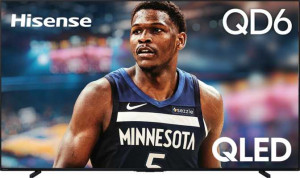
Hisense 75QD6QF 75"
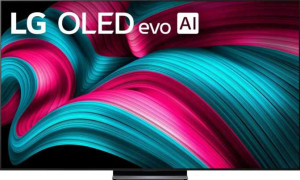
LG OLED65C5PUA 65"

Hisense 75QD6QF 75" LG OLED65C5PUA 65"

Overview

Welcome to our detailed spec comparison between the Hisense 75QD6QF 75″ and the LG OLED65C5PUA 65″. These two televisions represent very different philosophies in home cinema: one bets on sheer screen size and a high refresh rate, while the other counters with a premium panel technology and a slimmer footprint. In this head-to-head, we examine their display technology, connectivity options, audio capabilities, and design dimensions to help you decide which best fits your living room and viewing habits.

Common Features

  • Both TVs support 4K (UHD) resolution at 3840 x 2160 px.
  • Both TVs offer a color depth of 1070 million colors at 10-bit.
  • HDR10 support is available on both products.
  • Dolby Vision support is available on both products.
  • HLG support is available on both products.
  • An anti-reflection coating is present on both products.
  • Both TVs have 4 HDMI 2.1 ports and 1 RJ45 port.
  • Bluetooth connectivity is available on both products.
  • Wi-Fi support is available on both products.
  • Miracast support is available on both products.
  • Neither TV has an external memory slot.
  • Neither TV has a VGA connector.
  • Dolby Digital support is available on both products.
  • Digital Out support is available on both products.
  • Stereo speakers are present on both products.
  • Dolby Atmos support is available on both products.
  • Dolby Audio support is available on both products.
  • DTS:X support is available on both products.
  • Both TVs support VESA mounting.
  • AirPlay, built-in smart TV, Google Assistant compatibility, Alexa support, remote smartphone support, and USB recording are all available on both products.

Main Differences

  • The display type is QLED, LED-backlit, LCD on Hisense 75QD6QF 75″ and OLED/AMOLED on LG OLED65C5PUA 65″.
  • The screen size is 74.5″ on Hisense 75QD6QF 75″ and 65.1″ on LG OLED65C5PUA 65″.
  • Pixel density is 59 ppi on Hisense 75QD6QF 75″ and 68 ppi on LG OLED65C5PUA 65″.
  • The refresh rate is 144Hz on Hisense 75QD6QF 75″ and 120Hz on LG OLED65C5PUA 65″.
  • HDR10+ support is present on Hisense 75QD6QF 75″ but not available on LG OLED65C5PUA 65″.
  • Adaptive synchronization includes AMD FreeSync and AMD FreeSync Premium on Hisense 75QD6QF 75″, while LG OLED65C5PUA 65″ adds Nvidia G-Sync on top of both FreeSync standards.
  • Wi-Fi versions supported are Wi-Fi 4 and Wi-Fi 5 on Hisense 75QD6QF 75″, while LG OLED65C5PUA 65″ also adds Wi-Fi 6 (802.11ax) and Wi-Fi 6E (802.11ax).
  • The Bluetooth version is 5 on Hisense 75QD6QF 75″ and 5.3 on LG OLED65C5PUA 65″.
  • USB ports number 2 on Hisense 75QD6QF 75″ and 3 on LG OLED65C5PUA 65″.
  • A 3.5 mm audio jack socket is present on Hisense 75QD6QF 75″ but not available on LG OLED65C5PUA 65″.
  • Dolby Digital Plus support is present on Hisense 75QD6QF 75″ but not available on LG OLED65C5PUA 65″.
  • A built-in subwoofer is present on LG OLED65C5PUA 65″ but not available on Hisense 75QD6QF 75″.
  • Width is 1676.4 mm on Hisense 75QD6QF 75″ and 1440.2 mm on LG OLED65C5PUA 65″.
  • Weight is 18824 g on Hisense 75QD6QF 75″ and 18507 g on LG OLED65C5PUA 65″.
  • Thickness is 78.7 mm on Hisense 75QD6QF 75″ and 45.7 mm on LG OLED65C5PUA 65″.
  • Height is 965.2 mm on Hisense 75QD6QF 75″ and 825.5 mm on LG OLED65C5PUA 65″.
  • Volume is 127341.42 cm³ on Hisense 75QD6QF 75″ and 54332.05 cm³ on LG OLED65C5PUA 65″.
  • The maximum operating temperature is 35 °C on Hisense 75QD6QF 75″ and 40 °C on LG OLED65C5PUA 65″.
  • The lowest operating temperature is 5 °C on Hisense 75QD6QF 75″ and 0 °C on LG OLED65C5PUA 65″.
  • Operating power consumption is 250W on Hisense 75QD6QF 75″ and 163.9W on LG OLED65C5PUA 65″.
Specs Comparison
Hisense 75QD6QF 75"

Hisense 75QD6QF 75"

LG OLED65C5PUA 65"

LG OLED65C5PUA 65"

Display:
display resolution 4K (UHD) 4K (UHD)
Display type QLED, LED-backlit, LCD OLED/AMOLED
screen size 74.5" 65.1"
resolution 3840 x 2160 px 3840 x 2160 px
pixel density 59 ppi 68 ppi
display colors 1070 million 1070 million
bit depth 10-bit 10-bit
refresh rate 144Hz 120Hz
supports HDR10
supports HDR10+
supports Dolby Vision
supports HLG
Adaptive synchronization AMD FreeSync, AMD FreeSync Premium Nvidia G-Sync, AMD FreeSync, AMD FreeSync Premium
has anti-reflection coating
has an ambient light sensor
maximum horizontal viewing angle 178º 178º
maximum vertical viewing angle 178º 178º

The most fundamental difference here is panel technology. The Hisense 75QD6QF uses a QLED LED-backlit LCD panel, while the LG OLED65C5PUA uses OLED — a distinction that has sweeping real-world implications. OLED pixels are self-emissive, meaning each one produces its own light and can switch off completely, delivering true blacks and theoretically infinite contrast. QLED relies on a backlight, which — even with local dimming — cannot match OLED's per-pixel precision. On the other hand, the Hisense's larger 74.5″ screen versus the LG's 65.1″ is a meaningful size advantage in larger living rooms, and despite the bigger panel, both share the same 3840 x 2160 resolution, which is why the LG edges ahead on pixel density (68 ppi vs 59 ppi) — though at typical viewing distances neither difference is perceptible.

On motion and gaming performance, the Hisense holds an edge with a 144Hz refresh rate compared to the LG's 120Hz, which translates to smoother motion in fast-paced content and a lower ceiling for input lag in gaming scenarios. Both support AMD FreeSync and FreeSync Premium, but the LG additionally supports Nvidia G-Sync, making it more versatile for PC gamers regardless of their GPU brand. For HDR, the Hisense supports HDR10+ while the LG does not — a notable gap, as HDR10+ delivers dynamic metadata for scene-by-scene tone mapping, similar in concept to Dolby Vision, which both TVs support.

In summary, these two displays target different priorities. The LG OLED65C5PUA has a structural image-quality advantage through its OLED panel technology — superior blacks, contrast, and pixel density — giving it a clear edge for cinematic viewing and dark-room performance. The Hisense 75QD6QF counters with a significantly larger screen, a higher refresh rate, HDR10+ support, and broader gaming compatibility at what is presumably a lower price tier. If pure picture quality and panel technology are the deciding factors, the LG OLED wins this category; if screen size, refresh rate, and HDR format breadth matter more, the Hisense makes a compelling case.
Connectivity:
Has Bluetooth
HDMI version HDMI 2.1 HDMI 2.1
HDMI ports 4 4
supports Wi-Fi
Wi-Fi version Wi-Fi 4 (802.11n), Wi-Fi 5 (802.11ac) Wi-Fi 4 (802.11n), Wi-Fi 5 (802.11ac), Wi-Fi 6 (802.11ax), Wi-Fi 6E (802.11ax)
Bluetooth version 5 5.3
USB ports 2 3
RJ45 ports 1 1
supports Miracast
has a socket for a 3.5 mm audio jack
has an external memory slot
has a VGA connector
has a DVI connector

Both TVs share a solid wired foundation — 4 HDMI 2.1 ports and an RJ45 ethernet port — meaning neither will bottleneck high-bandwidth sources like 4K@120Hz consoles or eARC-capable soundbars. Where they diverge is wireless. The Hisense 75QD6QF tops out at Wi-Fi 5 (802.11ac), which is perfectly adequate for streaming but lacks the congestion-handling improvements of newer standards. The LG OLED65C5PUA goes further, adding Wi-Fi 6 and Wi-Fi 6E (802.11ax) support — a meaningful upgrade in busy households with many connected devices, as Wi-Fi 6 reduces interference and improves throughput stability, while Wi-Fi 6E opens up the less-crowded 6GHz band entirely.

Bluetooth tells a similar story. Both support Bluetooth 5, but the LG steps ahead with Bluetooth 5.3, which brings incremental improvements to connection stability and energy efficiency — relevant if you regularly pair wireless headphones or audio devices directly to the TV. The LG also has one additional USB port (3 vs 2), a small but practical advantage for users who connect multiple peripherals simultaneously. Conversely, the Hisense includes a 3.5mm audio jack that the LG omits — a niche but real differentiator for anyone wanting to plug in wired headphones directly without an adapter or Bluetooth workaround.

Overall, the LG OLED65C5PUA holds a clear connectivity edge, driven primarily by its superior Wi-Fi stack and newer Bluetooth version. The Hisense's 3.5mm jack is a useful consolation for a specific subset of users, but for most people the LG's broader wireless capabilities represent a more future-proof and versatile connectivity package.

Audio:
supports Dolby Digital
supports Digital Out
supports Dolby Digital Plus
has SRS TheaterSound HD
has stereo speakers
has Dolby Atmos
has Dolby Audio
supports Dolby Virtual
has a subwoofer
has DTS:X
HDMI ARC / eARC HDMI ARC, HDMI eARC HDMI ARC, HDMI eARC

At a glance, the two TVs share a strong common audio baseline — both support Dolby Atmos, DTS:X, Dolby Audio, Dolby Digital, and both feature HDMI ARC and eARC, the latter being important for passing lossless audio formats to an external soundbar without compression. For anyone planning to route audio through a dedicated sound system, this shared eARC support means neither TV is a bottleneck in a quality home theater chain.

The meaningful divergences emerge in two places. The LG OLED65C5PUA includes a built-in subwoofer, which the Hisense 75QD6QF lacks — a hardware advantage that adds low-frequency weight to the TV's onboard audio, making it noticeably fuller for users who watch without an external speaker setup. On the decoding side, the Hisense counters with support for Dolby Digital Plus, an enhanced version of Dolby Digital offering higher bitrates and more efficient audio compression, which the LG does not support. In practice this matters most for streaming services that use DD+ as their primary delivery format.

Neither TV has a dominant, across-the-board audio advantage — the trade-offs are real in both directions. That said, for viewers relying primarily on the TV's built-in speakers, the LG's subwoofer is the more tangible, everyday differentiator. For those piping audio through an external system and consuming DD+ streaming content natively, the Hisense has the edge on format support. Users with external audio setups will largely neutralize both products' built-in limitations through eARC, making this category close to a draw in that specific scenario.

Design:
width 1676.4 mm 1440.2 mm
weight 18824 g 18507 g
thickness 78.7 mm 45.7 mm
height 965.2 mm 825.5 mm
volume 127341.422736 cm³ 54332.04907 cm³
Supports VESA mount
maximum operating temperature 35 °C 40 °C
lowest potential operating temperature 5 °C 0 °C

Screen size accounts for much of the dimensional gap between these two TVs, but the physical design differences go beyond the expected. The Hisense 75QD6QF is naturally larger at 1676.4 mm wide versus the LG's 1440.2 mm, but the more telling contrast is thickness: the Hisense measures 78.7 mm deep while the LG OLED65C5PUA comes in at a considerably slimmer 45.7 mm. That nearly 33mm difference is immediately noticeable on a wall mount or entertainment unit — the LG sits flush and unobtrusive, while the Hisense will protrude more visibly from the wall.

The volume figures drive this point home starkly. The Hisense displaces roughly 127,341 cm³ compared to the LG's 54,332 cm³ — more than twice the physical bulk, even accounting for the larger screen. This is a direct consequence of LCD panel construction, which requires a backlight assembly and associated housing depth that OLED panels simply do not need. Despite all this, weight is surprisingly close: 18,824 g for the Hisense versus 18,507 g for the LG, meaning the two TVs feel nearly identical to handle and place similar demands on wall mounts and furniture.

The LG also edges ahead on operating temperature range, tolerating conditions from 0 °C to 40 °C versus the Hisense's 5 °C to 35 °C — a minor but real advantage for installations in garages, sunrooms, or less climate-controlled spaces. Both support VESA mounting. Overall, the LG OLED65C5PUA has a clear design advantage in form factor: its dramatically slimmer profile and substantially smaller physical footprint make it the more elegant and installation-friendly option, especially for wall-mounted setups.

Features:
release date April 2025 March 2025
has AirPlay
has built-in smart TV
compatible with Google Assistant
works with Alexa
works with Siri/Apple HomeKit
supports a remote smartphone
has a rechargeable remote control
supports USB recording
operating power consumption 250W 163.9W
standby power consumption 0.5W 0.5W
has a search browser
has a sleep timer
has a child lock
warranty period 1 years 1 years
has voice commands

Functionally, these two TVs are remarkably well-matched on features. Both run a full smart TV platform with Google Assistant, Alexa, and AirPlay support, both allow USB recording and smartphone remote control, and both share identical standby consumption at 0.5W. Neither supports Siri/Apple HomeKit, and neither ships with a rechargeable remote — so across the smart ecosystem and usability checklist, the two are effectively tied.

The one standout differentiator in this category is operating power consumption. The Hisense 75QD6QF draws 250W under normal use, while the LG OLED65C5PUA consumes just 163.9W — a gap of over 86W. Projected across regular daily use, this adds up meaningfully on an electricity bill over months and years. It is worth noting that the Hisense's larger screen size contributes to higher power demands, but the underlying LCD backlight technology is also an inherently less efficient light source than OLED's self-emissive pixels, which only consume power where the image requires it.

Given how closely these two TVs mirror each other across smart features, warranty, and usability, power efficiency becomes the deciding factor in this group — and the LG OLED65C5PUA wins it clearly. For users conscious of long-term running costs or energy consumption, the LG's lower draw is a tangible advantage that compounds over time.

Comparison Summary & Verdict

After a thorough look at the specs, both TVs share a strong foundation: 4K resolution, Dolby Vision, Dolby Atmos, and four HDMI 2.1 ports. However, their strengths diverge clearly. The Hisense 75QD6QF 75″ stands out with its larger 74.5″ QLED screen, a faster 144Hz refresh rate, HDR10+ support, and Dolby Digital Plus, making it a compelling pick for sports fans and gamers who value screen real estate. The LG OLED65C5PUA 65″, on the other hand, wins on panel quality with its OLED display, a slimmer 45.7 mm profile, Wi-Fi 6E, Nvidia G-Sync compatibility, a built-in subwoofer, and notably lower power consumption at 163.9W. If picture quality, energy efficiency, and a sleek design are your priorities, the LG is the clear choice; if maximum screen size and gaming refresh rates matter more, the Hisense delivers strong value.

Hisense 75QD6QF 75
Buy Hisense 75QD6QF 75" if...

Buy the Hisense 75QD6QF 75″ if you want a larger screen with a 144Hz refresh rate, HDR10+ support, and a 3.5 mm audio jack for a more versatile gaming and entertainment setup.

LG OLED65C5PUA 65
Buy LG OLED65C5PUA 65" if...

Buy the LG OLED65C5PUA 65″ if you prioritize premium OLED picture quality, a slimmer design, Wi-Fi 6E, Nvidia G-Sync, and lower energy consumption at 163.9W.