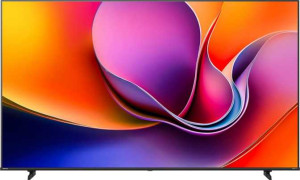
Hisense 85A6Q 85"
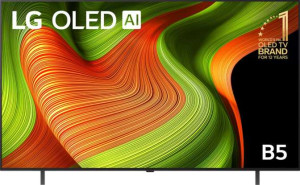
LG OLED83B5PUA 83"

Hisense 85A6Q 85" LG OLED83B5PUA 83"

Overview

Welcome to our in-depth specification comparison between the Hisense 85A6Q 85″ and the LG OLED83B5PUA 83″. These two large-screen televisions take very different approaches to picture technology, connectivity, and design, making the choice between them a fascinating one. We examine key battlegrounds including display technology and refresh rate, audio capabilities, build dimensions, and smart features to help you find the best fit for your living room.

Common Features

  • Both TVs support 4K (UHD) resolution at 3840 x 2160 px.
  • Both TVs offer 1070 million display colors at 10-bit depth.
  • HDR10 support is available on both products.
  • Dolby Vision support is available on both products.
  • HLG support is available on both products.
  • An anti-reflection coating is present on both products.
  • Bluetooth is available on both products.
  • Both TVs feature HDMI 2.1 ports.
  • Wi-Fi support is available on both products.
  • Both TVs have 2 USB ports and 1 RJ45 port.
  • Miracast support is available on both products.
  • Neither TV has an external memory slot or a VGA connector.
  • Dolby Digital support is available on both products.
  • Digital Out support is available on both products.
  • Stereo speakers are present on both products.
  • Dolby Audio support is available on both products.
  • DTS:X support is available on both products.
  • SRS TheaterSound HD is not available on either product.
  • Dolby Virtual is not supported on either product.
  • A subwoofer is not included on either product.
  • VESA mount support is available on both products.
  • AirPlay is available on both products.
  • Both TVs have a built-in smart TV platform.
  • Google Assistant compatibility is present on both products.
  • Alexa support is available on both products.
  • Apple HomeKit/Siri support is not available on either product.
  • Remote smartphone control is supported on both products.
  • Neither TV has a rechargeable remote control.
  • USB recording is supported on both products.

Main Differences

  • The display type is LED-backlit LCD on Hisense 85A6Q 85″ and OLED/AMOLED on LG OLED83B5PUA 83″.
  • Screen size is 85″ on Hisense 85A6Q 85″ and 83.5″ on LG OLED83B5PUA 83″.
  • Pixel density is 52 ppi on Hisense 85A6Q 85″ and 53 ppi on LG OLED83B5PUA 83″.
  • Refresh rate is 60Hz on Hisense 85A6Q 85″ and 120Hz on LG OLED83B5PUA 83″.
  • HDR10+ support is present on Hisense 85A6Q 85″ but not available on LG OLED83B5PUA 83″.
  • Response time is 8 ms on Hisense 85A6Q 85″ and 0.1 ms on LG OLED83B5PUA 83″.
  • HDMI port count is 3 on Hisense 85A6Q 85″ and 4 on LG OLED83B5PUA 83″.
  • Wi-Fi versions supported are Wi-Fi 4 and Wi-Fi 5 on Hisense 85A6Q 85″, while LG OLED83B5PUA 83″ also adds Wi-Fi 6 and Wi-Fi 6E.
  • Bluetooth version is 5 on Hisense 85A6Q 85″ and 5.3 on LG OLED83B5PUA 83″.
  • A 3.5 mm audio jack is present on Hisense 85A6Q 85″ but not available on LG OLED83B5PUA 83″.
  • Dolby Digital Plus support is present on Hisense 85A6Q 85″ but not available on LG OLED83B5PUA 83″.
  • Dolby Atmos support is present on LG OLED83B5PUA 83″ but not available on Hisense 85A6Q 85″.
  • Width is 1892 mm on Hisense 85A6Q 85″ and 1841.5 mm on LG OLED83B5PUA 83″.
  • Weight is 36000 g on Hisense 85A6Q 85″ and 27714 g on LG OLED83B5PUA 83″.
  • Thickness is 101 mm on Hisense 85A6Q 85″ and 53.3 mm on LG OLED83B5PUA 83″.
  • Height is 1099 mm on Hisense 85A6Q 85″ and 1054.1 mm on LG OLED83B5PUA 83″.
  • Volume is 210010.108 cm³ on Hisense 85A6Q 85″ and 103461.970495 cm³ on LG OLED83B5PUA 83″.
  • Maximum operating temperature is 35 °C on Hisense 85A6Q 85″ and 40 °C on LG OLED83B5PUA 83″.
  • Lowest operating temperature is 5 °C on Hisense 85A6Q 85″ and 0 °C on LG OLED83B5PUA 83″.
  • Operating power consumption is 330W on Hisense 85A6Q 85″ and 195.5W on LG OLED83B5PUA 83″.
  • Warranty period is 3 years on Hisense 85A6Q 85″ and 1 year on LG OLED83B5PUA 83″.
Specs Comparison
Hisense 85A6Q 85"

Hisense 85A6Q 85"

LG OLED83B5PUA 83"

LG OLED83B5PUA 83"

Display:
display resolution 4K (UHD) 4K (UHD)
Display type LED-backlit, LCD OLED/AMOLED
screen size 85" 83.5"
resolution 3840 x 2160 px 3840 x 2160 px
pixel density 52 ppi 53 ppi
display colors 1070 million 1070 million
bit depth 10-bit 10-bit
refresh rate 60Hz 120Hz
supports HDR10
supports HDR10+
supports Dolby Vision
supports HLG
response time 8 ms 0.1 ms
has anti-reflection coating
has an ambient light sensor
maximum horizontal viewing angle 178º 178º
maximum vertical viewing angle 178º 178º

The most consequential difference here is panel technology. The Hisense 85A6Q uses a LED-backlit LCD panel, while the LG OLED83B5PUA uses OLED. In practice, this means the LG can turn individual pixels completely off, producing true blacks and near-infinite contrast — something no LCD can replicate regardless of how well its local dimming is tuned. Both panels share the same 4K (3840 x 2160) resolution, near-identical pixel density (52 vs 53 ppi), a 10-bit color depth, and a claimed 1070 million colors, so on raw resolution and color depth the two are evenly matched. The Hisense does offer a slightly larger physical screen at 85″ versus the LG's 83.5″, which may matter in very large rooms.

Motion performance is another area where the gap is significant. The LG's 120Hz native refresh rate is double the Hisense's 60Hz, meaning smoother rendering of fast motion in sports and gaming. Compounding that, the LG's 0.1 ms response time versus the Hisense's 8 ms virtually eliminates pixel transition blur — a direct consequence of OLED's self-emissive nature. For HDR format support, the Hisense counters with HDR10+ compatibility (which the LG lacks), though both support Dolby Vision and HLG, covering the most widely used HDR formats on streaming platforms today.

Overall, the LG OLED83B5PUA holds a clear display advantage for picture quality and motion handling thanks to its OLED panel and 120Hz refresh rate. The Hisense 85A6Q's edge — a slightly bigger screen and HDR10+ support — is meaningful for viewers who prioritize screen real estate or own HDR10+ content, but it does not offset the fundamental image quality lead that OLED technology provides.

Connectivity:
Has Bluetooth
HDMI version HDMI 2.1 HDMI 2.1
HDMI ports 3 4
supports Wi-Fi
Wi-Fi version Wi-Fi 4 (802.11n), Wi-Fi 5 (802.11ac) Wi-Fi 4 (802.11n), Wi-Fi 5 (802.11ac), Wi-Fi 6 (802.11ax), Wi-Fi 6E (802.11ax)
Bluetooth version 5 5.3
USB ports 2 2
RJ45 ports 1 1
supports Miracast
has a socket for a 3.5 mm audio jack
has an external memory slot
has a VGA connector
DVB standards DVB-T, DVB-T2, DVB-C, DVB-S, DVB-S2 DVB-T, DVB-T2, DVB-C, DVB-S, DVB-S2
has a DVI connector

Wired connectivity is nearly identical between the two TVs — both offer HDMI 2.1, 2 USB ports, and an RJ45 ethernet port — but the LG OLED83B5PUA pulls ahead with 4 HDMI ports versus the Hisense's 3. That extra HDMI input is a practical win for users running multiple devices simultaneously, such as a gaming console, soundbar, streaming stick, and Blu-ray player, without needing an external switch.

The more meaningful gap is in wireless capability. The Hisense tops out at Wi-Fi 5 (802.11ac), while the LG adds support for Wi-Fi 6 and Wi-Fi 6E (802.11ax). In a congested home network with many connected devices, Wi-Fi 6 delivers better throughput and lower latency; Wi-Fi 6E extends that further by operating on the less crowded 6 GHz band. Similarly, the LG's Bluetooth 5.3 is a step ahead of the Hisense's Bluetooth 5.0, offering marginally improved connection stability and efficiency for wireless peripherals. The Hisense does include a 3.5 mm audio jack that the LG omits — a small but real convenience for users who want to plug in headphones directly.

On balance, the LG OLED83B5PUA holds a clear connectivity edge, driven primarily by its superior Wi-Fi standard and the additional HDMI port. The Hisense's headphone jack is a useful differentiator for a specific use case, but it is not enough to offset the LG's broader future-proofing in wireless and physical port count.

Audio:
supports Dolby Digital
supports Digital Out
supports Dolby Digital Plus
has SRS TheaterSound HD
has stereo speakers
has Dolby Atmos
has Dolby Audio
supports Dolby Virtual
has a subwoofer
has DTS:X
HDMI ARC / eARC HDMI ARC, HDMI eARC HDMI ARC, HDMI eARC

Both TVs share a solid common foundation for audio passthrough: stereo speakers, Dolby Audio, DTS:X, and full HDMI ARC/eARC support, meaning either can cleanly hand off audio to an external soundbar or AV receiver. Where they diverge is in their respective format exclusives. The LG OLED83B5PUA supports Dolby Atmos — the object-based surround format now standard on most streaming platforms and 4K Blu-rays — while the Hisense 85A6Q supports Dolby Digital Plus, an enhanced version of the core Dolby Digital codec used widely in streaming compression.

In practical terms, Dolby Atmos is the more impactful feature for most users today. It enables height and spatial audio cues when content is mixed for it, and it is natively supported by Netflix, Disney+, Apple TV+, and most major streaming services. Dolby Digital Plus, while useful for efficient audio delivery, does not add the same dimensional soundstage. That said, if either TV is paired with an eARC-capable soundbar, the soundbar's own Atmos or DTS:X decoding takes over regardless — so the distinction matters most for users relying purely on the TV's internal processing.

For built-in audio format support, the LG OLED83B5PUA holds the edge by virtue of Dolby Atmos compatibility, which is more relevant to current and future content libraries than Dolby Digital Plus. Users who plan to connect an external audio system via eARC will find both TVs equally capable as a transport, but those leaning on internal decoding will get a more immersive result from the LG.
Design:
width 1892 mm 1841.5 mm
weight 36000 g 27714 g
thickness 101 mm 53.3 mm
height 1099 mm 1054.1 mm
volume 210010.108 cm³ 103461.970495 cm³
Supports VESA mount
maximum operating temperature 35 °C 40 °C
lowest potential operating temperature 5 °C 0 °C

Physical form factor is where these two TVs differ most starkly. The LG OLED83B5PUA is dramatically thinner at 53.3 mm compared to the Hisense's 101 mm — nearly half the depth. This is a direct consequence of OLED's self-emissive panel requiring no backlight assembly, and it translates to a noticeably sleeker profile whether wall-mounted or stand-placed. The volume difference reinforces this: the LG displaces roughly 103,000 cm³ versus the Hisense's 210,000 cm³, making the Hisense physically almost twice as bulky despite being only 1.5 inches larger diagonally.

Weight is an equally practical consideration, especially for wall mounting. The Hisense 85A6Q weighs 36,000 g (36 kg), while the LG comes in at 27,714 g (approximately 27.7 kg) — a difference of over 8 kg. That gap affects not only the installation effort but also the load rating required from a wall bracket and the wall structure itself. Both TVs support VESA mounting, so neither has an inherent compatibility advantage there.

On operating temperature range, the LG again has a slight edge — rated from 0 °C to 40 °C versus the Hisense's 5 °C to 35 °C — giving it modestly more flexibility in environments that run cold or warm. Taken together, the LG OLED83B5PUA holds a clear design advantage: it is significantly thinner, lighter, and slightly more tolerant of temperature variation, all of which matter for installation ease and room integration.

Features:
release date April 2025 March 2025
has AirPlay
has built-in smart TV
compatible with Google Assistant
works with Alexa
works with Siri/Apple HomeKit
supports a remote smartphone
has a rechargeable remote control
supports USB recording
operating power consumption 330W 195.5W
standby power consumption 0.5W 0.5W
has a search browser
has a sleep timer
has a child lock
warranty period 3 years 1 years
has voice commands

From a smart platform standpoint, these two TVs are functionally identical — both offer AirPlay, Google Assistant, Alexa, smartphone remote support, USB recording, and a full browser. Neither supports Apple HomeKit/Siri, and neither ships with a rechargeable remote. For the vast majority of users, the day-to-day smart TV experience will feel indistinguishable between the two.

Where the data reveals a meaningful split is in power consumption and warranty coverage. The LG OLED83B5PUA draws just 195.5W during operation versus the Hisense's 330W — a difference of over 130W. Assuming four hours of daily use, that gap translates to roughly 190 kWh more energy consumed per year by the Hisense, which adds up to a tangible cost difference on electricity bills over time. Standby consumption is identical at 0.5W for both. On warranty, the Hisense offers a notably longer 3-year coverage period compared to the LG's 1-year term — a significant difference that reduces ownership risk and potential out-of-pocket repair costs over the medium term.

This group presents a genuine trade-off rather than a clear overall winner. The LG OLED83B5PUA has a strong edge in energy efficiency, which benefits users concerned about running costs. The Hisense 85A6Q counters with a 3-year warranty that provides substantially more long-term protection — particularly relevant given that large-screen TVs are a significant investment. Which advantage weighs more will depend on the buyer's priorities.

Comparison Summary & Verdict

After reviewing every specification, it is clear that these two TVs serve distinct audiences. The Hisense 85A6Q 85″ stands out with its larger 85-inch screen, HDR10+ support, Dolby Digital Plus audio, a generous 3-year warranty, and a 3.5 mm audio jack — making it a compelling choice for value-conscious buyers who want a big picture and broad format compatibility. The LG OLED83B5PUA 83″, however, counters with its superior OLED panel, a blazing 120Hz refresh rate, an ultra-fast 0.1 ms response time, Dolby Atmos sound, Wi-Fi 6E connectivity, and significantly lower power consumption at 195.5W — advantages that matter enormously for gaming, cinematic HDR content, and premium home theatre setups. Choose the Hisense for sheer size and format coverage; choose the LG for elite picture quality and next-generation performance.

Hisense 85A6Q 85
Buy Hisense 85A6Q 85" if...

Buy the Hisense 85A6Q 85″ if you want the largest possible screen, HDR10+ and Dolby Digital Plus format support, and the reassurance of a 3-year warranty at a more accessible price point.

LG OLED83B5PUA 83
Buy LG OLED83B5PUA 83" if...

Buy the LG OLED83B5PUA 83″ if you demand superior OLED picture quality, a 120Hz refresh rate with a 0.1 ms response time for gaming, Dolby Atmos audio, and cutting-edge Wi-Fi 6E connectivity.