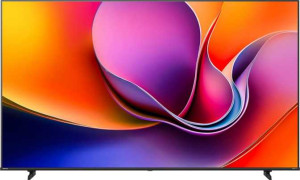
Hisense 85A6Q 85"
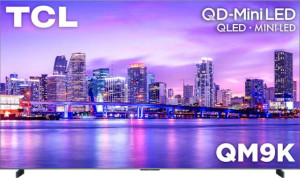
TCL 98QM9K 98"

Hisense 85A6Q 85" TCL 98QM9K 98"

Overview

Welcome to our in-depth specification comparison between the Hisense 85A6Q 85″ and the TCL 98QM9K 98″. These two large-screen televisions share a strong common foundation — including 4K UHD resolution, full HDR format support, and smart TV capabilities — yet they diverge sharply in areas like display technology, refresh rate, and overall size. Read on to explore how each model stacks up across display quality, connectivity, audio, and design.

Common Features

  • Both products have a 4K (UHD) display resolution of 3840 x 2160 px.
  • Both products display 1070 million colors with a 10-bit bit depth.
  • HDR10 support is available on both products.
  • HDR10+ support is available on both products.
  • Dolby Vision support is available on both products.
  • HLG support is available on both products.
  • Both products feature Bluetooth connectivity.
  • Both products use HDMI 2.1 ports.
  • Both products support Wi-Fi.
  • Both products include 2 USB ports and 1 RJ45 port.
  • Miracast support is available on both products.
  • Neither product has an external memory slot.
  • Neither product has a VGA connector.
  • Dolby Digital support is available on both products.
  • Digital Out support is available on both products.
  • Dolby Digital Plus support is available on both products.
  • Both products have stereo speakers and Dolby Audio.
  • SRS TheaterSound HD is not available on either product.
  • Neither product has a subwoofer.
  • Dolby Virtual support is not available on either product.
  • Both products support VESA mounting.
  • Both products operate within a temperature range of 5 °C to 35 °C.
  • AirPlay is available on both products.
  • Both products have a built-in smart TV platform.
  • Both products are compatible with Google Assistant and Alexa.
  • Neither product is compatible with Siri or Apple HomeKit.
  • Both products support remote smartphone control.
  • Neither product has a rechargeable remote control.
  • USB recording is supported on both products.

Main Differences

  • The display type is LED-backlit LCD on Hisense 85A6Q 85″ and QLED LED-backlit LCD Mini-LED on TCL 98QM9K 98″.
  • Screen size is 85″ on Hisense 85A6Q 85″ and 97.5″ on TCL 98QM9K 98″.
  • Pixel density is 52 ppi on Hisense 85A6Q 85″ and 54 ppi on TCL 98QM9K 98″.
  • Refresh rate is 60Hz on Hisense 85A6Q 85″ and 144Hz on TCL 98QM9K 98″.
  • HDMI port count is 3 on Hisense 85A6Q 85″ and 4 on TCL 98QM9K 98″.
  • Wi-Fi version support includes Wi-Fi 4 and Wi-Fi 5 on Hisense 85A6Q 85″, while TCL 98QM9K 98″ also adds Wi-Fi 6 (802.11ax).
  • Bluetooth version is 5 on Hisense 85A6Q 85″ and 5.4 on TCL 98QM9K 98″.
  • A 3.5 mm audio jack socket is present on Hisense 85A6Q 85″ but not available on TCL 98QM9K 98″.
  • Dolby Atmos support is present on TCL 98QM9K 98″ but not available on Hisense 85A6Q 85″.
  • Width is 1892 mm on Hisense 85A6Q 85″ and 2166.1 mm on TCL 98QM9K 98″.
  • Height is 1099 mm on Hisense 85A6Q 85″ and 1235.9 mm on TCL 98QM9K 98″.
  • Thickness is 101 mm on Hisense 85A6Q 85″ and 54.1 mm on TCL 98QM9K 98″.
  • Weight is 36000 g on Hisense 85A6Q 85″ and 56001 g on TCL 98QM9K 98″.
  • Volume is 210010.108 cm³ on Hisense 85A6Q 85″ and 144830.189759 cm³ on TCL 98QM9K 98″.
  • Warranty period is 3 years on Hisense 85A6Q 85″ and 1 year on TCL 98QM9K 98″.
Specs Comparison
Hisense 85A6Q 85"

Hisense 85A6Q 85"

TCL 98QM9K 98"

TCL 98QM9K 98"

Display:
display resolution 4K (UHD) 4K (UHD)
Display type LED-backlit, LCD QLED, LED-backlit, LCD, Mini-LED
screen size 85" 97.5"
resolution 3840 x 2160 px 3840 x 2160 px
pixel density 52 ppi 54 ppi
display colors 1070 million 1070 million
bit depth 10-bit 10-bit
refresh rate 60Hz 144Hz
supports HDR10
supports HDR10+
supports Dolby Vision
supports HLG
has anti-reflection coating
has an ambient light sensor
maximum horizontal viewing angle 178º 178º
maximum vertical viewing angle 178º 178º

Both the Hisense 85A6Q and the TCL 98QM9K share the same 4K (3840 x 2160) resolution, 10-bit color depth, and 1070 million colors, meaning neither has an inherent advantage in raw color volume or pixel count. Their pixel densities are virtually identical (52 ppi vs 54 ppi), so at typical viewing distances the sharpness of each image will be indistinguishable. Both panels also cover the full spectrum of HDR standards — HDR10, HDR10+, Dolby Vision, and HLG — along with anti-reflection coating, an ambient light sensor, and wide 178° viewing angles in both axes, making these shared traits effectively a draw.

The most significant differentiators lie in panel technology and motion handling. The TCL uses a QLED Mini-LED panel, which combines quantum dot color enhancement with a densely packed Mini-LED backlight for superior local dimming, higher peak brightness, and better contrast compared to the Hisense's conventional LED-backlit LCD. Equally important is the refresh rate gap: the TCL runs at 144Hz versus the Hisense's 60Hz. In practice, 144Hz delivers markedly smoother motion in fast-paced content like sports and action films, and is a substantial advantage for gaming with compatible sources. At 60Hz, the Hisense can show some motion blur in these scenarios that the TCL largely avoids.

The TCL 98QM9K holds a clear display advantage in this group. Its QLED Mini-LED technology raises the ceiling for contrast and brightness performance, and its 144Hz refresh rate is a meaningful real-world upgrade over 60Hz for any motion-heavy use case. The Hisense 85A6Q competes on all the fundamentals — resolution, HDR support, viewing angles — but its standard LCD backlight and lower refresh rate put it a step behind. The size difference (85″ vs 97.5″) is also substantial and worth factoring in for room fit, but as a pure display technology comparison, the TCL is the stronger panel.
Connectivity:
Has Bluetooth
HDMI version HDMI 2.1 HDMI 2.1
HDMI ports 3 4
supports Wi-Fi
Wi-Fi version Wi-Fi 4 (802.11n), Wi-Fi 5 (802.11ac) Wi-Fi 4 (802.11n), Wi-Fi 5 (802.11ac), Wi-Fi 6 (802.11ax)
Bluetooth version 5 5.4
USB ports 2 2
RJ45 ports 1 1
supports Miracast
has a socket for a 3.5 mm audio jack
has an external memory slot
has a VGA connector
has a DVI connector

On the wired side, both TVs share a solid foundation: HDMI 2.1 across all ports, two USB ports, and a single RJ45 Ethernet port. The TCL edges ahead here with 4 HDMI ports versus the Hisense's 3 — a practical difference for users running multiple 4K or high-refresh-rate devices simultaneously (a console, a soundbar, a streaming stick, and a Blu-ray player, for instance) without needing a separate switch.

Wireless connectivity is where the gap widens more meaningfully. The TCL supports Wi-Fi 6 (802.11ax) in addition to the older Wi-Fi 4 and 5 standards that both TVs share. Wi-Fi 6 delivers higher throughput, lower latency, and better performance in congested network environments — relevant for 4K HDR streaming, which is bandwidth-hungry, especially on a near-100-inch screen. On Bluetooth, the TCL's version 5.4 improves on the Hisense's 5.0 with better connection stability and efficiency, which matters for wireless headphones or audio accessories. The Hisense counters with a 3.5mm audio jack — absent on the TCL — which is a small but genuine advantage for users who want a direct wired headphone connection without an adapter or Bluetooth pairing.

The TCL 98QM9K has a clear connectivity edge overall. The extra HDMI port, Wi-Fi 6 support, and newer Bluetooth version give it a more future-ready and versatile setup. The Hisense's 3.5mm jack is a niche win for a specific use case, but it does not offset the TCL's broader connectivity advantages.

Audio:
supports Dolby Digital
supports Digital Out
supports Dolby Digital Plus
has SRS TheaterSound HD
has stereo speakers
has Dolby Atmos
has Dolby Audio
supports Dolby Virtual
has a subwoofer
has DTS:X
HDMI ARC / eARC HDMI ARC, HDMI eARC HDMI ARC, HDMI eARC

For the most part, these two TVs are evenly matched on audio credentials. Both support Dolby Digital, Dolby Digital Plus, Dolby Audio, DTS:X, and Digital Out, and both include HDMI ARC and eARC — the latter being particularly important, as eARC carries lossless audio formats like Dolby TrueHD and DTS-HD Master Audio to a connected soundbar without compression losses.

The single differentiator in this group is Dolby Atmos, which the TCL 98QM9K supports and the Hisense 85A6Q does not. Dolby Atmos adds a height dimension to the surround sound mix, creating a more immersive, three-dimensional audio experience compared to standard surround formats. On the TV's built-in speakers alone the practical impact is limited, but it becomes significant when passing audio to an Atmos-capable soundbar or AV receiver via eARC — in that scenario, the TCL can deliver the full object-based Atmos signal while the Hisense cannot.

The TCL holds a narrow but real audio edge solely due to Dolby Atmos support. Users who plan to pair their TV with a capable external audio system will appreciate the TCL's ability to pass through that richer format. For those relying entirely on built-in speakers, the two sets are functionally equivalent in this group.

Design:
width 1892 mm 2166.1 mm
weight 36000 g 56001 g
thickness 101 mm 54.1 mm
height 1099 mm 1235.9 mm
volume 210010.108 cm³ 144830.189759 cm³
Supports VESA mount
maximum operating temperature 35 °C 35 °C
lowest potential operating temperature 5 °C 5 °C

Size differences dominate this category, as expected from an 85″ versus a 97.5″ panel. The TCL 98QM9K is considerably larger in footprint — wider by roughly 274mm and taller by about 137mm — and its weight of 56 kg versus the Hisense's 36 kg is a logistically significant gap. Moving, wall-mounting, or repositioning the TCL is genuinely a two-or-more-person job, and wall brackets rated for that load class are essential. Buyers should factor in structural wall requirements and room dimensions carefully before committing.

Where the TCL surprises is in its 54.1mm thickness, nearly half the Hisense's 101mm depth. This is a direct consequence of its Mini-LED construction, which allows for a slimmer chassis despite the larger screen. The practical payoff is a more wall-hugging profile that looks cleaner in a living space, particularly on a wall mount. Interestingly, despite its much larger screen area, the TCL's overall physical volume (≈144,830 cm³) is actually lower than the Hisense's (≈210,010 cm³), meaning the Hisense's bulk is concentrated in its depth rather than its footprint.

There is no clear overall winner here — the right choice depends entirely on use case. The Hisense's lighter weight and shallower footprint commitment make it easier to install and reposition, while the TCL's dramatically slimmer profile rewards those who wall-mount and prioritize aesthetics. Both support VESA mounting and share identical operating temperature ranges, so neither has an environmental advantage. Buyers should treat this group as a practical fit-and-installation checklist rather than a performance differentiator.

Features:
release date April 2025 September 2025
has AirPlay
has built-in smart TV
compatible with Google Assistant
works with Alexa
works with Siri/Apple HomeKit
supports a remote smartphone
has a rechargeable remote control
supports USB recording
standby power consumption 0.5W 0.5W
has a search browser
has a sleep timer
has a child lock
warranty period 3 years 1 years
has voice commands

Across the smart feature set, these two TVs are remarkably alike. Both carry built-in smart TV platforms, AirPlay, Google Assistant, Alexa, smartphone remote support, USB recording, voice commands, and the same 0.5W standby consumption. Neither supports Siri/Apple HomeKit, and neither ships with a rechargeable remote. For the vast majority of daily use cases — streaming, voice control, smart home integration — the experience on paper is effectively identical.

The one meaningful differentiator is the warranty period. The Hisense covers the TV for 3 years, while the TCL offers only 1 year. On a large-screen premium purchase — especially one as substantial in size and price as a 98″ TV — the length of manufacturer coverage carries real financial weight. A longer warranty reduces the risk exposure for panel or component failures that fall outside the first year, which are not uncommon in large LCD panels.

The Hisense 85A6Q takes a clear edge in this group purely on the strength of its 3-year warranty. It is the only differentiator in an otherwise feature-identical comparison, but it is a consequential one. Buyers investing in the TCL's larger screen should factor in the cost of extended third-party coverage if long-term protection is a priority.

Comparison Summary & Verdict

After examining every specification, two distinct profiles emerge. The Hisense 85A6Q 85″ stands out for buyers who value a solid, well-rounded 85-inch TV with a 3-year warranty, a 3.5 mm audio jack, and a more manageable footprint — all at what is typically a lower price point. It covers the essentials confidently with full HDR support and smart platform integration. The TCL 98QM9K 98″, on the other hand, is built for enthusiasts who demand the absolute best: its Mini-LED QLED panel, blazing 144Hz refresh rate, Wi-Fi 6, Dolby Atmos audio, and near 98-inch screen make it a powerhouse for cinematic viewing and gaming alike. Choose the Hisense if you want a dependable large-screen TV with longer warranty coverage; choose the TCL if screen size, motion clarity, and premium display technology are your top priorities.

Hisense 85A6Q 85
Buy Hisense 85A6Q 85" if...

Buy the Hisense 85A6Q 85″ if you want a capable large-screen 4K TV with a reassuring 3-year warranty and a 3.5 mm audio jack for a more compact and lighter installation.

TCL 98QM9K 98
Buy TCL 98QM9K 98" if...

Buy the TCL 98QM9K 98″ if you prioritize a massive near-98-inch Mini-LED QLED screen, a 144Hz refresh rate for smooth gaming and sports, Dolby Atmos audio, and Wi-Fi 6 connectivity.