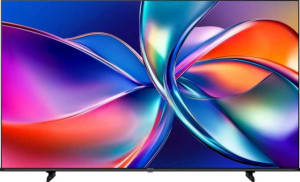
Hisense 85E7Q 85"
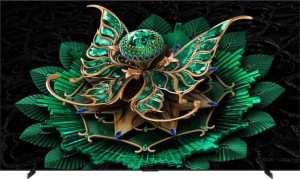
TCL 115C7K 115"

Hisense 85E7Q 85" TCL 115C7K 115"

Overview

Welcome to our in-depth specification comparison between the Hisense 85E7Q 85″ and the TCL 115C7K 115″. These two QLED televisions take notably different approaches to the living room experience, spanning a significant gap in screen size, brightness, and motion performance. From refresh rates and contrast ratios to connectivity options and smart features, this head-to-head breaks down exactly where each TV stands and what sets them apart.

Common Features

  • Both TVs offer 4K (UHD) resolution at 3840 x 2160 px.
  • Both TVs display 1070 million colors with a 10-bit bit depth.
  • HDR10 support is available on both products.
  • HDR10+ support is available on both products.
  • Dolby Vision support is available on both products.
  • HLG support is available on both products.
  • Both TVs use a QLED, LED-backlit, LCD display type as a base.
  • Both TVs include Bluetooth connectivity.
  • Both TVs use HDMI 2.1 ports.
  • Both TVs support Wi-Fi including Wi-Fi 4 (802.11n) and Wi-Fi 5 (802.11ac).
  • Both TVs include one RJ45 ethernet port.
  • Miracast support is available on both products.
  • A 3.5 mm audio jack socket is present on both TVs.
  • Neither TV includes an external memory slot.
  • Neither TV includes a VGA connector.
  • Dolby Digital support is available on both products.
  • Digital Out support is available on both products.
  • Dolby Atmos support is available on both products.
  • Dolby Audio support is available on both products.
  • Dolby Digital Plus support is available on both products.
  • SRS TheaterSound HD is not available on either product.
  • Both TVs feature stereo speakers.
  • Dolby Virtual support is not available on either product.
  • Both TVs support VESA mounting.
  • Both TVs share the same operating temperature range of 5 °C to 35 °C.
  • AirPlay support is available on both products.
  • Both TVs have a built-in smart TV platform.
  • Google Assistant compatibility is available on both products.
  • Siri and Apple HomeKit compatibility is not available on either product.
  • Both TVs support remote smartphone control.
  • Neither TV includes a rechargeable remote control.
  • USB recording support is available on both products.
  • Both TVs have a standby power consumption of 0.5W.

Main Differences

  • The Hisense 85E7Q 85″ uses a QLED, LED-backlit, LCD panel, while the TCL 115C7K 115″ adds Mini-LED backlighting technology.
  • Screen size is 85″ on the Hisense 85E7Q 85″ and 114.5″ on the TCL 115C7K 115″.
  • Pixel density is 52 ppi on the Hisense 85E7Q 85″ and 38 ppi on the TCL 115C7K 115″.
  • Typical brightness is 400 nits on the Hisense 85E7Q 85″ and 3000 nits on the TCL 115C7K 115″.
  • Contrast ratio is 3800:1 on the Hisense 85E7Q 85″ and 7000:1 on the TCL 115C7K 115″.
  • Refresh rate is 60Hz on the Hisense 85E7Q 85″ and 144Hz on the TCL 115C7K 115″.
  • HDMI port count is 3 on the Hisense 85E7Q 85″ and 4 on the TCL 115C7K 115″.
  • Wi-Fi support extends up to Wi-Fi 5 (802.11ac) on the Hisense 85E7Q 85″, while the TCL 115C7K 115″ also adds Wi-Fi 6 (802.11ax).
  • Bluetooth version is 5 on the Hisense 85E7Q 85″ and 5.4 on the TCL 115C7K 115″.
  • USB port count is 2 on the Hisense 85E7Q 85″ and 3 on the TCL 115C7K 115″.
  • A built-in subwoofer is absent on the Hisense 85E7Q 85″ but present on the TCL 115C7K 115″.
  • Width is 1892 mm on the Hisense 85E7Q 85″ and 2566 mm on the TCL 115C7K 115″.
  • Height is 1099 mm on the Hisense 85E7Q 85″ and 1471 mm on the TCL 115C7K 115″.
  • Thickness is 101 mm on the Hisense 85E7Q 85″ and 57 mm on the TCL 115C7K 115″.
  • Weight is 36000 g on the Hisense 85E7Q 85″ and 99800 g on the TCL 115C7K 115″.
  • Volume is 210010.108 cm³ on the Hisense 85E7Q 85″ and 215151.402 cm³ on the TCL 115C7K 115″.
  • Alexa support is present on the Hisense 85E7Q 85″ but not available on the TCL 115C7K 115″.
  • Operating power consumption is 129W on the Hisense 85E7Q 85″ and 180W on the TCL 115C7K 115″.
Specs Comparison
Hisense 85E7Q 85"

Hisense 85E7Q 85"

TCL 115C7K 115"

TCL 115C7K 115"

Display:
display resolution 4K (UHD) 4K (UHD)
Display type QLED, LED-backlit, LCD QLED, LED-backlit, LCD, Mini-LED
screen size 85" 114.5"
resolution 3840 x 2160 px 3840 x 2160 px
pixel density 52 ppi 38 ppi
display colors 1070 million 1070 million
bit depth 10-bit 10-bit
brightness (typical) 400 nits 3000 nits
contrast ratio 3800:1 7000:1
refresh rate 60Hz 144Hz
supports HDR10
supports HDR10+
supports Dolby Vision
supports HLG
has anti-reflection coating
has an ambient light sensor
maximum horizontal viewing angle 178º 178º
maximum vertical viewing angle 178º 178º

Both the Hisense 85E7Q and the TCL 115C7K share the same 4K (3840 x 2160) resolution and 10-bit color depth supporting 1.07 billion colors, along with full HDR format coverage — HDR10, HDR10+, Dolby Vision, and HLG — plus identical 178° viewing angles in both directions. These are strong foundational similarities, but the two TVs diverge sharply on nearly every performance metric that determines picture quality.

The most impactful differences are brightness and contrast. The TCL 115C7K's Mini-LED backlighting enables a peak brightness of 3000 nits versus just 400 nits on the Hisense — a 7.5× gap that is enormous in practice. Higher nits translate directly to more vivid HDR highlights, better performance in bright rooms, and a more cinematic image overall. The TCL also doubles down with a 7000:1 contrast ratio against the Hisense's 3800:1, meaning deeper blacks and a wider perceived dynamic range. Together, these two figures give the TCL a substantially more punchy and lifelike image. The TCL also offers a 144Hz refresh rate versus the Hisense's 60Hz, which matters greatly for gaming and fast-motion content — 60Hz can show noticeable judder in sports or action scenes that 144Hz handles cleanly.

The Hisense's one counter-advantage is pixel density: at 85″ it achieves 52 ppi compared to the TCL's 38 ppi at 114.5″. In theory, finer pixels mean a sharper image at close range, but at typical living-room viewing distances from a screen that large, the difference is unlikely to be perceptible to most viewers. Overall, the TCL 115C7K holds a clear display advantage in every high-impact metric — brightness, contrast, and motion handling — while also being a dramatically larger screen. The Hisense is a competent 4K QLED panel, but its specs are outclassed across the board by the TCL's Mini-LED-driven performance.

Connectivity:
Has Bluetooth
HDMI version HDMI 2.1 HDMI 2.1
HDMI ports 3 4
supports Wi-Fi
Wi-Fi version Wi-Fi 4 (802.11n), Wi-Fi 5 (802.11ac) Wi-Fi 4 (802.11n), Wi-Fi 5 (802.11ac), Wi-Fi 6 (802.11ax)
Bluetooth version 5 5.4
USB ports 2 3
RJ45 ports 1 1
supports Miracast
has a socket for a 3.5 mm audio jack
has an external memory slot
has a VGA connector
DVB standards DVB-T, DVB-T2, DVB-C, DVB-S, DVB-S2 DVB-T, DVB-T2, DVB-C, DVB-S, DVB-S2
has a DVI connector

At the foundation, both TVs share a solid common ground: HDMI 2.1 across all ports, a wired RJ45 Ethernet port, Miracast wireless casting, a 3.5mm audio jack, and identical DVB tuner support covering terrestrial, cable, and satellite standards. Neither offers an external memory slot or legacy video connectors, so on the basics these two are well matched.

The meaningful differences emerge in port count and wireless capability. The TCL 115C7K provides 4 HDMI ports and 3 USB ports versus the Hisense's 3 HDMI and 2 USB — a practical advantage for users running a full home theater setup with a soundbar, gaming console, streaming stick, and Blu-ray player simultaneously, where running out of ports becomes a real friction point. More notably, the TCL adds Wi-Fi 6 (802.11ax) support on top of Wi-Fi 4 and 5, while the Hisense tops out at Wi-Fi 5. Wi-Fi 6 delivers higher throughput, lower latency, and significantly better performance in congested multi-device households — relevant for 4K streaming and any future-proofing considerations. The TCL also edges ahead with Bluetooth 5.4 versus the Hisense's Bluetooth 5.0, bringing improved connection stability and slightly better range for wireless audio accessories.

None of these gaps are dramatic individually, but they consistently point in the same direction. The TCL 115C7K holds the connectivity edge — its extra HDMI and USB ports reduce cable management compromises, Wi-Fi 6 future-proofs the wireless connection, and the newer Bluetooth version is a small but genuine bonus for wireless peripherals.
Audio:
supports Dolby Digital
supports Digital Out
supports Dolby Digital Plus
has SRS TheaterSound HD
has stereo speakers
has Dolby Atmos
has Dolby Audio
supports Dolby Virtual
has a subwoofer
has DTS:X
HDMI ARC / eARC HDMI ARC, HDMI eARC HDMI ARC, HDMI eARC

Audio format support is essentially identical between these two TVs. Both decode Dolby Atmos, Dolby Audio, Dolby Digital Plus, and DTS:X, and both offer HDMI ARC and eARC for connecting external audio equipment. For anyone routing sound through a soundbar or AV receiver, this parity is largely academic — the external system will do the heavy lifting regardless.

Where it matters for built-in speaker performance, the sole but meaningful differentiator is that the TCL 115C7K includes a built-in subwoofer while the Hisense 85E7Q does not. A dedicated subwoofer handles low-frequency reproduction — bass in music, rumble in action films, weight in cinematic scores — that stereo drivers alone typically cannot deliver convincingly. For viewers who plan to use the TV's internal speakers without an external audio system, this gives the TCL a tangible advantage in sonic fullness and impact.

For users who already own or plan to buy a soundbar or surround system, the eARC port on both TVs ensures lossless audio passthrough and the gap effectively disappears. But judged purely on built-in audio capability, the TCL 115C7K has the edge by virtue of its integrated subwoofer — a single spec that can make a noticeable real-world difference in everyday listening.

Design:
width 1892 mm 2566 mm
weight 36000 g 99800 g
thickness 101 mm 57 mm
height 1099 mm 1471 mm
volume 210010.108 cm³ 215151.402 cm³
Supports VESA mount
maximum operating temperature 35 °C 35 °C
lowest potential operating temperature 5 °C 5 °C

The physical scale difference between these two TVs is substantial and carries real logistical consequences. The TCL 115C7K measures 2566 mm wide and 1471 mm tall — requiring a wall or furniture span of over 2.5 meters just for the panel itself — while the Hisense 85E7Q fits within a comparatively manageable 1892 × 1099 mm footprint. Both support VESA mounting, but prospective TCL buyers need to carefully audit their room dimensions and wall stud layout well before purchase.

Weight is the other critical installation variable. The TCL tips the scales at 99.8 kg — nearly 100 kg — compared to the Hisense at 36 kg. That near-threefold difference has direct implications: wall-mounting the TCL requires heavy-duty brackets rated for the load and almost certainly professional installation, whereas the Hisense is manageable with standard hardware and a two-person lift. On the flip side, the TCL is impressively slim at 57 mm thick versus the Hisense's 101 mm, which means that despite its enormous size it sits closer to the wall and presents a sleeker profile once mounted. Operating temperature ranges are identical for both, so environment is not a differentiating factor.

There is no single winner here — the right choice depends entirely on context. The Hisense 85E7Q is decisively easier to install and place, making it far more practical for typical home environments. The TCL's slim profile is an engineering achievement given its size, but its weight and dimensions make it a genuine infrastructure project. Buyers considering the TCL should treat installation complexity as a real cost of ownership, not an afterthought.

Features:
release date April 2025 March 2025
has AirPlay
has built-in smart TV
compatible with Google Assistant
works with Alexa
works with Siri/Apple HomeKit
supports a remote smartphone
has a rechargeable remote control
supports USB recording
operating power consumption 129W 180W
standby power consumption 0.5W 0.5W
has a search browser
has a sleep timer
has a child lock
has voice commands
EU energy label E E

Smart platform parity between these two TVs is strong: both run a built-in smart TV system with AirPlay, Google Assistant, smartphone remote control, USB recording, and the usual convenience features like sleep timer, child lock, and voice commands. For most households, this shared foundation covers the daily-use bases comfortably.

Two features separate them. The Hisense 85E7Q adds Alexa compatibility, which the TCL 115C7K lacks — a genuine advantage for households already invested in the Amazon Echo ecosystem, enabling direct voice control without a workaround. Neither TV supports Apple HomeKit or Siri, so that is a non-factor. On power consumption, the Hisense draws 129W in operation versus the TCL's 180W — a 40% difference that is partly expected given the TCL's vastly larger screen and brighter Mini-LED backlight, but still worth noting for running cost calculations over years of use. Both share the same EU energy label grade of E and an identical 0.5W standby draw, so the gap only applies during active viewing.

For feature-set purposes, the Hisense 85E7Q holds a narrow edge: its Alexa support broadens smart home integration options that the TCL cannot match, and its lower operating wattage is a long-term cost consideration. Neither advantage is dramatic, but for Amazon ecosystem users in particular, the Hisense is the more versatile choice on this dimension.

Comparison Summary & Verdict

After reviewing all the evidence, both TVs share a strong foundation: 4K QLED panels, full HDR format support including Dolby Vision and HDR10+, Dolby Atmos audio, AirPlay, and Google Assistant compatibility. However, their differences define two very distinct audiences. The Hisense 85E7Q 85″ is the more practical, space-conscious choice, offering a manageable 85-inch size, lower power consumption at 129W, and Amazon Alexa integration, making it ideal for everyday home viewing in standard living spaces. The TCL 115C7K 115″, on the other hand, is built for those who demand a truly cinematic experience, delivering a stunning 114.5-inch Mini-LED panel, an extraordinary 3000-nit brightness, a 144Hz refresh rate, and a built-in subwoofer — a powerhouse for home theater enthusiasts and sports fans who want the best picture and motion performance available.

Hisense 85E7Q 85
Buy Hisense 85E7Q 85" if...

Buy the Hisense 85E7Q 85″ if you want a capable 85-inch 4K QLED TV for everyday viewing with lower power consumption and Amazon Alexa support, without the bulk of a massive screen.

TCL 115C7K 115
Buy TCL 115C7K 115" if...

Buy the TCL 115C7K 115″ if you want an immersive home theater experience with a massive 114.5-inch Mini-LED screen, class-leading 3000-nit brightness, a 144Hz refresh rate, and a built-in subwoofer.