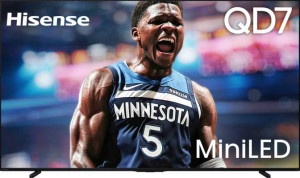
Hisense 85QD7QF 85"
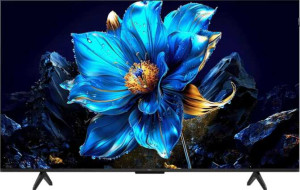
TCL 85P7K 85"

Hisense 85QD7QF 85" TCL 85P7K 85"

Overview

Welcome to our in-depth specification comparison between the Hisense 85QD7QF 85″ and the TCL 85P7K 85″ — two large-screen QLED televisions competing for the same living room. Both share a strong 4K HDR feature set, but key battlegrounds such as display technology, refresh rate, and physical design set them meaningfully apart. Read on to see which 85-inch TV best fits your needs.

Common Features

  • Both TVs have a 4K (UHD) display resolution of 3840 x 2160 px.
  • Both TVs share a pixel density of 52 ppi.
  • Both TVs display 1070 million colors with a 10-bit bit depth.
  • HDR10 support is available on both products.
  • HDR10+ support is available on both products.
  • Dolby Vision support is available on both products.
  • Both TVs use QLED, LED-backlit, LCD display technology.
  • Bluetooth connectivity is present on both products.
  • Both TVs use HDMI 2.1 ports.
  • Wi-Fi is supported on both products, including Wi-Fi 4 (802.11n) and Wi-Fi 5 (802.11ac).
  • Both TVs have 2 USB ports and 1 RJ45 port.
  • Miracast support is available on both products.
  • Both TVs have a 3.5 mm audio jack socket.
  • Digital Out support is present on both products.
  • Stereo speakers are included on both products.
  • Dolby Atmos support is available on both products.
  • DTS:X support is available on both products.
  • Both TVs support VESA mounting.
  • Both TVs operate within the same temperature range of 5 °C to 35 °C.
  • AirPlay, built-in smart TV, Google Assistant compatibility, Alexa support, and remote smartphone support are all present on both products, while neither supports Siri/Apple HomeKit or has a rechargeable remote control, and both share a standby power consumption of 0.5W.

Main Differences

  • The Hisense 85QD7QF 85″ features Mini-LED backlighting in addition to QLED, LED-backlit, and LCD technology, while the TCL 85P7K 85″ does not include Mini-LED.
  • The refresh rate is 144Hz on the Hisense 85QD7QF 85″ and 60Hz on the TCL 85P7K 85″.
  • Adaptive synchronization includes AMD FreeSync Premium on the Hisense 85QD7QF 85″, while the TCL 85P7K 85″ supports only AMD FreeSync.
  • Screen size is 84.5″ on the Hisense 85QD7QF 85″ and 84.6″ on the TCL 85P7K 85″.
  • The Hisense 85QD7QF 85″ has 4 HDMI ports, while the TCL 85P7K 85″ has 3 HDMI ports.
  • Bluetooth version is 5.0 on the Hisense 85QD7QF 85″ and 5.4 on the TCL 85P7K 85″.
  • A built-in subwoofer is present on the TCL 85P7K 85″ but not available on the Hisense 85QD7QF 85″.
  • Width is 1892.3 mm on the Hisense 85QD7QF 85″ and 1889.6 mm on the TCL 85P7K 85″.
  • Weight is 37013 g on the Hisense 85QD7QF 85″ and 31000 g on the TCL 85P7K 85″.
  • Thickness is 101.6 mm on the Hisense 85QD7QF 85″ and 63 mm on the TCL 85P7K 85″.
  • Height is 1092.2 mm on the Hisense 85QD7QF 85″ and 1086 mm on the TCL 85P7K 85″.
  • Volume is 209983.838096 cm³ on the Hisense 85QD7QF 85″ and 129282.6528 cm³ on the TCL 85P7K 85″.
  • USB recording is supported on the Hisense 85QD7QF 85″ but not available on the TCL 85P7K 85″.
Specs Comparison
Hisense 85QD7QF 85"

Hisense 85QD7QF 85"

TCL 85P7K 85"

TCL 85P7K 85"

Display:
display resolution 4K (UHD) 4K (UHD)
Display type QLED, LED-backlit, LCD, Mini-LED QLED, LED-backlit, LCD
screen size 84.5" 84.6"
resolution 3840 x 2160 px 3840 x 2160 px
pixel density 52 ppi 52 ppi
display colors 1070 million 1070 million
bit depth 10-bit 10-bit
refresh rate 144Hz 60Hz
supports HDR10
supports HDR10+
supports Dolby Vision
supports HLG
Adaptive synchronization AMD FreeSync, AMD FreeSync Premium AMD FreeSync
has anti-reflection coating
has an ambient light sensor
maximum horizontal viewing angle 178º 178º
maximum vertical viewing angle 178º 178º

Both the Hisense 85QD7QF and the TCL 85P7K share a strong display foundation: identical 4K (3840 × 2160) resolution at 52 ppi, 10-bit color depth, 1.07 billion colors, and full HDR format coverage including HDR10, HDR10+, Dolby Vision, and HLG. Viewing angles are equally wide at 178° on both axes, and both panels include an anti-reflection coating and an ambient light sensor. For everyday HDR streaming and cinematic content, these two TVs start from the same baseline.

The divergence becomes significant when examining panel technology and motion handling. The Hisense adds a Mini-LED backlight layer to its QLED LCD stack, which enables finer local dimming zones, deeper perceived blacks, and better peak brightness control compared to the TCL's standard LED-backlit QLED panel. More critically, the Hisense offers a 144Hz native refresh rate versus the TCL's 60Hz — a meaningful gap in practice. A 144Hz panel delivers noticeably smoother motion in fast sports, action sequences, and especially in gaming, where it also benefits from AMD FreeSync Premium (the Hisense) versus basic AMD FreeSync (the TCL). FreeSync Premium adds a mandatory low-framerate compensation requirement, reducing stutter at frame rates below the sync range.

The Hisense 85QD7QF holds a clear display advantage in this group. The combination of Mini-LED backlighting and a 144Hz refresh rate addresses two of the most impactful real-world display qualities — contrast and motion clarity — neither of which the TCL 85P7K can match at its 60Hz ceiling with a conventional LED backlight.
Connectivity:
Has Bluetooth
HDMI version HDMI 2.1 HDMI 2.1
HDMI ports 4 3
supports Wi-Fi
Wi-Fi version Wi-Fi 4 (802.11n), Wi-Fi 5 (802.11ac) Wi-Fi 4 (802.11n), Wi-Fi 5 (802.11ac)
Bluetooth version 5 5.4
USB ports 2 2
RJ45 ports 1 1
supports Miracast
has a socket for a 3.5 mm audio jack
has an external memory slot
has a VGA connector
has a DVI connector

Connectivity between the Hisense 85QD7QF and the TCL 85P7K is closely matched across most fronts. Both ship with HDMI 2.1 ports — supporting up to 4K at 120Hz and variable refresh rate passthrough — along with dual USB ports, a wired Ethernet jack, Wi-Fi 5, Miracast screen mirroring, and a 3.5mm audio output. For the vast majority of home theater and streaming setups, this shared foundation is more than adequate.

Two specs separate them. First, the Hisense provides 4 HDMI ports versus the TCL's 3 — a practical difference for users running multiple sources simultaneously, such as a games console, soundbar, streaming stick, and Blu-ray player, without needing a switch. Second, the TCL counters with Bluetooth 5.4 compared to the Hisense's Bluetooth 5.0. The newer 5.4 specification brings improvements to connection reliability and channel classification, which can reduce interference in congested wireless environments — relevant for users pairing wireless headphones or audio devices.

Neither product dominates this category outright. The Hisense holds a marginal edge for wired connectivity thanks to its extra HDMI port, while the TCL has a slight advantage for wireless peripherals with its newer Bluetooth revision. Which matters more depends entirely on the user's setup — those with dense device ecosystems will prefer the Hisense; those prioritizing wireless audio reliability may lean toward the TCL.

Audio:
supports Digital Out
has SRS TheaterSound HD
has stereo speakers
has Dolby Atmos
supports Dolby Virtual
has a subwoofer
has DTS:X
HDMI ARC / eARC HDMI ARC, HDMI eARC HDMI eARC, HDMI ARC

On paper, the audio specs of the Hisense 85QD7QF and the TCL 85P7K are nearly identical: both deliver stereo speakers, full Dolby Atmos and DTS:X object-based audio decoding, digital output, and both ARC and eARC over HDMI. The presence of eARC on both is worth noting — it allows lossless high-bandwidth audio formats to pass through to a compatible soundbar or AV receiver without a separate optical cable, which is the preferred connection for any serious audio setup.

The single differentiator in this group is that the TCL 85P7K includes a built-in subwoofer, while the Hisense does not. In practice, a dedicated subwoofer driver handles low-frequency reproduction that standard TV speakers typically struggle with — adding weight and presence to explosions, bass-heavy music, and cinematic soundtracks. For users who intend to use the TV's built-in audio without an external soundbar, this is a tangible advantage in perceived audio fullness.

The TCL 85P7K takes a narrow edge in this category solely due to its integrated subwoofer. That said, both TVs share the same decoding capabilities and external audio output options, so anyone planning to pair either set with a dedicated soundbar or home theater system will find the difference largely irrelevant in daily use.

Design:
width 1892.3 mm 1889.6 mm
weight 37013 g 31000 g
thickness 101.6 mm 63 mm
height 1092.2 mm 1086 mm
volume 209983.838096 cm³ 129282.6528 cm³
Supports VESA mount
maximum operating temperature 35 °C 35 °C
lowest potential operating temperature 5 °C 5 °C

At 85 inches, both TVs occupy virtually the same footprint — width and height differ by only a few millimeters — and both support VESA wall mounting with identical operating temperature ranges. For placement purposes, they are essentially interchangeable. The meaningful differences lie in depth and mass.

The TCL 85P7K is notably slimmer, measuring 63 mm thick compared to the Hisense's 101.6 mm — a gap of nearly 40 mm. That difference is visible in practice: the TCL will sit closer to the wall when mounted and present a cleaner profile on a stand. Much of the Hisense's added depth is attributable to its Mini-LED backlight assembly, which requires more physical space than a conventional LED panel. The weight gap is equally significant: the TCL comes in at 31 kg versus the Hisense's 37 kg — a difference of 6 kg that matters during installation, particularly for wall mounting where bracket load ratings and the number of people needed for a safe install are real considerations.

The TCL 85P7K has a clear design advantage here, offering a substantially thinner and lighter build that makes it easier to handle, install, and integrate aesthetically into a room. Users prioritizing a sleek wall-mounted look or working with weight-sensitive mounting solutions will find the TCL the more practical choice in this category.

Features:
release date April 2025 March 2025
has AirPlay
has built-in smart TV
compatible with Google Assistant
works with Alexa
works with Siri/Apple HomeKit
supports a remote smartphone
has a rechargeable remote control
supports USB recording
standby power consumption 0.5W 0.5W
has a search browser
has a sleep timer
has a child lock
has voice commands

Feature parity between the Hisense 85QD7QF and the TCL 85P7K is remarkably high in this category. Both run a built-in smart TV platform with Google Assistant and Alexa voice control, support AirPlay for iOS device mirroring, allow smartphone remote control, and share identical standby power consumption at 0.5W. Neither supports Apple HomeKit, and both omit a rechargeable remote — minor shared limitations that affect the same audience equally.

The only functional differentiator is USB recording, which the Hisense supports and the TCL does not. This feature allows users to connect an external USB drive and record live broadcast content directly — a genuinely useful capability for those who rely on over-the-air or cable tuner input and want a lightweight DVR alternative without a separate device. For cord-cutters or users in regions with strong free-to-air broadcast availability, this is a practical, real-world advantage.

The Hisense 85QD7QF takes a narrow edge here on the strength of USB recording alone. For users who have no interest in recording live TV, the two sets are effectively identical in this group and the distinction becomes irrelevant.

Comparison Summary & Verdict

After examining every specification, both TVs deliver a solid 4K QLED experience with Dolby Vision, HDR10+, Dolby Atmos, and a full smart TV platform. However, their strengths diverge sharply. The Hisense 85QD7QF 85″ stands out with its Mini-LED backlighting, a fast 144Hz refresh rate with AMD FreeSync Premium, 4 HDMI ports, and USB recording support — making it the stronger pick for gamers and home cinema enthusiasts who demand premium picture performance. The TCL 85P7K 85″, on the other hand, wins on practicality with a notably slimmer and lighter build, a built-in subwoofer for better out-of-the-box audio, and a newer Bluetooth 5.4 chip — making it ideal for those who prioritize clean installation and richer sound without a separate soundbar.

Hisense 85QD7QF 85
Buy Hisense 85QD7QF 85" if...

Buy the Hisense 85QD7QF 85″ if you want a high-performance gaming and cinema TV with Mini-LED backlighting, a 144Hz refresh rate with AMD FreeSync Premium, 4 HDMI ports, and USB recording support.

TCL 85P7K 85
Buy TCL 85P7K 85" if...

Buy the TCL 85P7K 85″ if you prefer a slimmer, lighter TV with a built-in subwoofer for richer audio out of the box and a more modern Bluetooth 5.4 connection.