Hisense 85S7N 85"
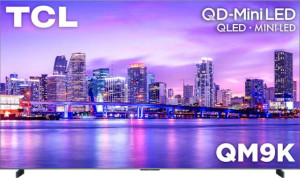
TCL 98QM9K 98"

Hisense 85S7N 85" TCL 98QM9K 98"

Overview

Welcome to our in-depth comparison of the Hisense 85S7N 85″ and the TCL 98QM9K 98″. Both TVs share a strong foundation — 4K resolution, 144Hz refresh rate, and a full suite of HDR formats — yet they diverge in meaningful ways across screen size, display technology, audio design, and connectivity. Whether you are weighing up Mini-LED backlighting against a more traditional QLED panel, or balancing sheer screen real estate against a more compact footprint, this comparison will walk you through every key specification to help you make the right choice.

Common Features

  • Both TVs have a 4K (UHD) display resolution of 3840 x 2160 px.
  • Both TVs display 1070 million colors at a 10-bit depth.
  • Both TVs have a 144Hz refresh rate.
  • HDR10 support is available on both products.
  • HDR10+ support is available on both products.
  • Dolby Vision support is available on both products.
  • Both TVs use a QLED, LED-backlit, LCD display panel.
  • Both TVs have 4 HDMI 2.1 ports and 2 USB ports.
  • Both TVs include 1 RJ45 port.
  • Bluetooth connectivity is available on both products.
  • Wi-Fi support is available on both products.
  • Miracast support is available on both products.
  • Neither TV has a 3.5mm audio jack.
  • Both TVs support Digital Out audio.
  • SRS TheaterSound HD is not available on either product.
  • Both TVs feature stereo speakers.
  • Both TVs support HDMI ARC and HDMI eARC.
  • Both TVs support VESA mounting.
  • Chromecast built-in is available on both products.
  • AirPlay support is available on both products.
  • Both TVs have a built-in smart TV platform compatible with Google Assistant and Alexa.
  • Neither TV works with Siri or Apple HomeKit.
  • Remote smartphone control is supported on both products.
  • Neither TV comes with a rechargeable remote control.

Main Differences

  • The Hisense 85S7N 85″ uses a QLED, LED-backlit, LCD panel, while the TCL 98QM9K 98″ adds Mini-LED technology to its display.
  • Screen size is 74.5″ on the Hisense 85S7N 85″ and 97.5″ on the TCL 98QM9K 98″.
  • Pixel density is 59 ppi on the Hisense 85S7N 85″ and 54 ppi on the TCL 98QM9K 98″.
  • Adaptive sync support includes AMD FreeSync and AMD FreeSync Premium on the Hisense 85S7N 85″, while the TCL 98QM9K 98″ also adds AMD FreeSync Premium Pro.
  • Wi-Fi versions supported are Wi-Fi 4 and Wi-Fi 5 on the Hisense 85S7N 85″, while the TCL 98QM9K 98″ also supports Wi-Fi 6 (802.11ax).
  • Bluetooth version is 5.3 on the Hisense 85S7N 85″ and 5.4 on the TCL 98QM9K 98″.
  • Dolby Digital support is present on the TCL 98QM9K 98″ but not available on the Hisense 85S7N 85″.
  • A built-in subwoofer is included on the Hisense 85S7N 85″ but not on the TCL 98QM9K 98″.
  • Width is 1694.2 mm on the Hisense 85S7N 85″ and 2166.1 mm on the TCL 98QM9K 98″.
  • Height is 977.9 mm on the Hisense 85S7N 85″ and 1235.9 mm on the TCL 98QM9K 98″.
  • Thickness is 35.6 mm on the Hisense 85S7N 85″ and 54.1 mm on the TCL 98QM9K 98″.
  • Weight is 35788 g on the Hisense 85S7N 85″ and 56001 g on the TCL 98QM9K 98″.
  • Volume is 58980.59 cm³ on the Hisense 85S7N 85″ and 144830.19 cm³ on the TCL 98QM9K 98″.
  • Warranty period is 2 years on the Hisense 85S7N 85″ and 1 year on the TCL 98QM9K 98″.
Specs Comparison
Hisense 85S7N 85"

Hisense 85S7N 85"

TCL 98QM9K 98"

TCL 98QM9K 98"

Display:
display resolution 4K (UHD) 4K (UHD)
Display type QLED, LED-backlit, LCD QLED, LED-backlit, LCD, Mini-LED
screen size 74.5" 97.5"
resolution 3840 x 2160 px 3840 x 2160 px
pixel density 59 ppi 54 ppi
display colors 1070 million 1070 million
bit depth 10-bit 10-bit
refresh rate 144Hz 144Hz
supports HDR10
supports HDR10+
supports Dolby Vision
supports HLG
Adaptive synchronization AMD FreeSync, AMD FreeSync Premium AMD FreeSync, AMD FreeSync Premium, AMD FreeSync Premium Pro
has anti-reflection coating
has an ambient light sensor
maximum horizontal viewing angle 178º 178º
maximum vertical viewing angle 178º 178º

Both the Hisense 85S7N and the TCL 98QM9K share a strong display foundation: 4K (3840 x 2160) resolution, a 10-bit panel capable of rendering 1.07 billion colors, a 144Hz refresh rate, and full HDR format coverage including HDR10, HDR10+, Dolby Vision, and HLG. In practice, this means both TVs are well-equipped for cinematic HDR content and smooth motion handling, whether for movies or gaming.

The most impactful difference lies in panel technology and physical scale. The TCL 98QM9K uses a Mini-LED backlighting layer on top of its QLED LCD stack, which enables finer local dimming zones for improved contrast and more precise highlights — a meaningful real-world advantage over the Hisense 85S7N's standard LED-backlit QLED. On screen size, the TCL's 97.5″ panel dwarfs the Hisense's 74.5″, a difference that fundamentally changes the viewing experience in larger rooms. As a trade-off, the Hisense achieves a slightly higher pixel density of 59 ppi versus the TCL's 54 ppi, meaning individual pixels are a touch less visible up close — though at typical viewing distances for screens this large, both are effectively indistinguishable to the naked eye.

For gaming specifically, the TCL gains an incremental edge with support for AMD FreeSync Premium Pro in addition to standard FreeSync and FreeSync Premium, adding low-framerate compensation and HDR support within the sync window — features the Hisense lacks. All other display parameters — viewing angles, anti-reflection coating, and ambient light sensor — are identical. Overall, the TCL 98QM9K holds a clear display advantage thanks to its Mini-LED backlighting, substantially larger screen, and broader adaptive sync support, making it the stronger choice where display quality and immersion are the priority.

Connectivity:
Has Bluetooth
HDMI version HDMI 2.1 HDMI 2.1
HDMI ports 4 4
supports Wi-Fi
Wi-Fi version Wi-Fi 4 (802.11n), Wi-Fi 5 (802.11ac) Wi-Fi 4 (802.11n), Wi-Fi 5 (802.11ac), Wi-Fi 6 (802.11ax)
Bluetooth version 5.3 5.4
USB ports 2 2
RJ45 ports 1 1
supports Miracast
has a socket for a 3.5 mm audio jack
has an external memory slot
has a VGA connector
has a DVI connector

The wired connectivity layout is identical across both TVs: 4 HDMI 2.1 ports, 2 USB ports, and a single RJ45 Ethernet jack. HDMI 2.1 is the key detail here — it supports up to 48 Gbps bandwidth, enabling 4K at 144Hz and features like VRR and eARC without compromise, which aligns well with both panels' 144Hz refresh rate and gaming credentials.

Where the two diverge is in wireless capabilities. The TCL 98QM9K adds Wi-Fi 6 (802.11ax) to the shared Wi-Fi 4/5 base, which in a congested home network environment translates to lower latency, better throughput stability, and more efficient handling of multiple simultaneous devices — a tangible benefit for 4K streaming and smart TV responsiveness. On the Bluetooth front, the TCL also edges ahead with Bluetooth 5.4 versus the Hisense's 5.3, though the practical difference between these two adjacent versions is minimal for typical TV use cases like connecting soundbars or remotes.

The TCL 98QM9K holds a modest but real connectivity advantage, driven almost entirely by its Wi-Fi 6 support. For users in dense wireless environments or those who prefer wireless over a wired Ethernet connection, this distinction matters. For users who hardwire via Ethernet or operate in less congested networks, the two TVs are effectively equivalent in connectivity.

Audio:
supports Dolby Digital
supports Digital Out
has SRS TheaterSound HD
has stereo speakers
has a subwoofer
HDMI ARC / eARC HDMI ARC, HDMI eARC HDMI ARC, HDMI eARC

Audio is where these two TVs make notably different trade-offs. The Hisense 85S7N includes a built-in subwoofer, which adds low-frequency extension to its stereo speaker system — meaning deeper bass reproduction straight out of the box without any external hardware. The TCL 98QM9K, by contrast, opts for stereo speakers only with no subwoofer, which typically results in a thinner low-end response for standalone listening.

The TCL counters with Dolby Digital support, a decoding capability the Hisense lacks. This matters when the TV is processing multichannel audio from broadcast or streaming sources directly — the TCL can decode and downmix Dolby Digital streams natively, whereas the Hisense cannot. Both TVs share HDMI ARC and eARC support alongside digital audio out, so either can pass audio to an external soundbar or AV receiver effectively; eARC in particular allows lossless and object-based audio formats to travel upstream to compatible soundbars.

The audio comparison presents a genuine split rather than a clear winner. The Hisense 85S7N has the stronger standalone audio experience thanks to its subwoofer, making it the better choice for users who rely primarily on the TV's built-in speakers. The TCL 98QM9K holds an edge in audio decoding flexibility via Dolby Digital support, which benefits users consuming broadcast or streaming content without an external audio system. Those planning to pair either TV with a soundbar or receiver will find both equally capable via eARC.

Design:
width 1694.2 mm 2166.1 mm
weight 35788 g 56001 g
thickness 35.6 mm 54.1 mm
height 977.9 mm 1235.9 mm
volume 58980.591208 cm³ 144830.189759 cm³
Supports VESA mount

The size gulf between these two TVs is substantial and has direct implications for installation planning. The TCL 98QM9K spans 2166.1 mm wide and 1235.9 mm tall, compared to the Hisense 85S7N's 1694.2 mm × 977.9 mm footprint — a difference of nearly half a meter in width. Prospective buyers should carefully measure their intended wall space or furniture surface before committing, as the TCL's dimensions demand a genuinely large room to avoid feeling overwhelming.

The weight disparity is equally significant. At 56 kg, the TCL 98QM9K is roughly 57% heavier than the Hisense's 35.8 kg, which has real consequences for installation. Mounting the TCL will require a heavy-duty wall bracket rated for that load, and maneuvering it into position typically demands multiple people. The Hisense, while still a large and heavy TV by any standard, is comparatively more manageable. The TCL is also noticeably thicker at 54.1 mm versus the Hisense's slimmer 35.6 mm profile, which may affect how flush it sits against a wall when mounted. Both support VESA mounting, so neither restricts the user to a proprietary stand solution.

There is no design ″winner″ in a traditional sense here — the differences are driven by the TCL's much larger screen size rather than any inefficiency in its construction. The Hisense 85S7N is clearly the more installation-friendly option, suiting a wider range of room sizes and requiring less structural consideration for wall mounting. The TCL 98QM9K's dimensions are simply the physical reality of a 97.5″ panel and should be treated as a key pre-purchase checklist item rather than a flaw.

Features:
release date March 2025 September 2025
has Chromecast built-in
has AirPlay
has built-in smart TV
compatible with Google Assistant
works with Alexa
works with Siri/Apple HomeKit
supports a remote smartphone
has a rechargeable remote control
supports USB recording
standby power consumption 0.5W 0.5W
has a search browser
has a sleep timer
has a child lock
warranty period 2 years 1 years
has voice commands

Across the smart feature set, these two TVs are remarkably well-matched. Both offer Chromecast built-in, AirPlay, Google Assistant, and Alexa compatibility, covering the full spectrum of major casting and voice assistant ecosystems — with the notable shared exception of Siri/Apple HomeKit. USB recording, smartphone remote support, and identical 0.5W standby power consumption round out a feature profile that is, for all practical purposes, equivalent on paper.

Given how closely aligned the feature sets are, the single most consequential differentiator in this group is the warranty period. The Hisense 85S7N comes with a 2-year warranty, while the TCL 98QM9K offers only 1 year. For large-screen TVs at this price tier, post-purchase peace of mind carries real value — a longer warranty window means more time covered against panel defects or hardware failures without out-of-pocket repair costs.

The Hisense 85S7N holds a clear edge in this group, solely on the strength of its longer warranty. Every other feature is a dead heat between the two. For buyers who place value on long-term ownership security — which is a reasonable priority for a significant home electronics purchase — this distinction tips the scales toward the Hisense in the Features category.

Comparison Summary & Verdict

After examining every specification, these two TVs serve clearly different audiences. The Hisense 85S7N 85″ is the stronger pick for buyers who want a capable, well-rounded large-screen TV without overwhelming a typical living room — it brings a built-in subwoofer for richer out-of-the-box audio, a 2-year warranty for added peace of mind, and a sharper 59 ppi pixel density. The TCL 98QM9K 98″, on the other hand, is built for those who demand a truly cinematic presence: its Mini-LED display, Wi-Fi 6 support, Dolby Digital audio, AMD FreeSync Premium Pro, and Bluetooth 5.4 make it the more future-proof and visually immersive choice — provided you have the space and budget to match its considerable size and weight.

Hisense 85S7N 85
Buy Hisense 85S7N 85" if...

Buy the Hisense 85S7N 85″ if you want a large-screen QLED TV with a built-in subwoofer for better standalone audio and a 2-year warranty for long-term value.

TCL 98QM9K 98
Buy TCL 98QM9K 98" if...

Buy the TCL 98QM9K 98″ if you want the ultimate big-screen experience with Mini-LED technology, Wi-Fi 6, AMD FreeSync Premium Pro, and Dolby Digital support.