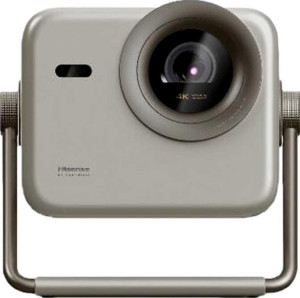
Hisense M2 Pro
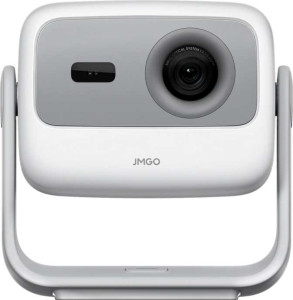
JMGO N1S SE

Hisense M2 Pro JMGO N1S SE

Overview

When choosing between the Hisense M2 Pro and the JMGO N1S SE, you are looking at two laser projectors that share a solid foundation — including 1080p output, AirPlay, Chromecast, and Miracast support — yet diverge in meaningful ways. This comparison digs into the key battlegrounds: image quality, physical footprint, audio performance, and smart feature support, helping you determine which projector is the right fit for your home setup.

Common Features

  • Both projectors use a laser light source.
  • Both projectors come with a 1-year warranty.
  • Both projectors output at 1080p resolution.
  • Both projectors support a maximum projection size of 200″.
  • HDR10+ support is not available on either projector.
  • Both projectors have 1 HDMI port.
  • Both projectors support AirPlay.
  • Both projectors support Wi-Fi.
  • Both projectors have 1 USB port.
  • Both projectors have Chromecast built-in.
  • Both projectors support Miracast.
  • A VGA connector is not available on either projector.
  • A DVI connector is not available on either projector.
  • Both projectors have stereo speakers.
  • Vertical lens shift is not available on either projector.
  • Horizontal lens shift is not available on either projector.
  • Both projectors include a remote control.
  • Both projectors have a built-in smart TV platform.
  • Both projectors have a 3.5 mm audio jack socket.
  • Dolby Atmos is not available on either projector.
  • An external memory slot is not available on either projector.

Main Differences

  • Width is 190 mm on the Hisense M2 Pro and 165 mm on the JMGO N1S SE.
  • Height is 230 mm on the Hisense M2 Pro and 182 mm on the JMGO N1S SE.
  • Thickness is 220 mm on the Hisense M2 Pro and 190 mm on the JMGO N1S SE.
  • Weight is 3900 g on the Hisense M2 Pro and 1800 g on the JMGO N1S SE.
  • Volume is 9614 cm³ on the Hisense M2 Pro and 5705.7 cm³ on the JMGO N1S SE.
  • Contrast ratio is 1000:1 on the Hisense M2 Pro and 1600:1 on the JMGO N1S SE.
  • Minimum throw distance is 1.9 m on the Hisense M2 Pro and 1.2 m on the JMGO N1S SE.
  • Dolby Vision support is available on the Hisense M2 Pro but not on the JMGO N1S SE.
  • HDR10 support is available on the Hisense M2 Pro but not on the JMGO N1S SE.
  • Audio output power is 2 x 10W on the Hisense M2 Pro and 2 x 5W on the JMGO N1S SE.
  • Voice command support is available on the Hisense M2 Pro but not on the JMGO N1S SE.
Specs Comparison
Hisense M2 Pro

Hisense M2 Pro

JMGO N1S SE

JMGO N1S SE

General info:
has laser light source
release date June 2025 April 2025
width 190 mm 165 mm
height 230 mm 182 mm
thickness 220 mm 190 mm
weight 3900 g 1800 g
volume 9614 cm³ 5705.7 cm³
warranty period 1 years 1 years

Both the Hisense M2 Pro and the JMGO N1S SE share a laser light source, placing them in the same premium projection technology tier. This is a meaningful common ground, as laser-based projectors generally offer superior longevity and color consistency compared to traditional lamp-based alternatives.

Where these two diverge significantly is physical footprint and weight. The M2 Pro is considerably bulkier, with a volume of 9614 cm³ and a weight of 3900 g, compared to the N1S SE's much more compact 5705.7 cm³ and lighter 1800 g. In real-world terms, the N1S SE is less than half the weight of the M2 Pro — a difference that matters greatly for portability, shelf placement, and ease of repositioning. The M2 Pro's larger chassis may suggest room for more internal hardware or thermal headroom, but from a physical handling perspective, the N1S SE is noticeably more practical.

Both products carry a 1-year warranty, so neither has an edge there. Overall, the JMGO N1S SE holds a clear advantage in this general info group purely on the basis of its significantly more portable and space-efficient form factor, assuming portability or compact placement is a priority for the user.

Projection quality:
output resolution 1080p 1080p
contrast ratio 1000:1 1600:1
maximum projection size 200" 200"
supports HDR10+
minimum throw distance 1.9 m 1.2 m
supports Dolby Vision
supports HDR10

Both projectors output at 1080p resolution and cap their maximum image size at 200″, so neither holds an advantage in raw sharpness or screen coverage. The more telling differentiators lie in contrast and HDR support.

On contrast, the JMGO N1S SE edges ahead with a 1600:1 ratio versus the M2 Pro's 1000:1 — a 60% gap that translates to noticeably deeper blacks and more visual punch in darker scenes. For movie watching in a dimmed room, this is a meaningful real-world distinction. However, the Hisense M2 Pro counters with Dolby Vision and HDR10 support, two formats that enable richer tone mapping and a wider dynamic range when the content supports it — something the N1S SE entirely lacks, as it supports neither standard. For users with a Dolby Vision-enabled streaming library, this is a significant content compatibility advantage.

Throw distance also splits the two: the N1S SE's 1.2 m minimum versus the M2 Pro's 1.9 m gives the N1S SE more flexibility in smaller rooms. Overall, this group is a genuine trade-off — the N1S SE wins on contrast and placement flexibility, while the M2 Pro wins on HDR ecosystem support. Users who prioritize streaming high-quality HDR content should lean toward the M2 Pro; those focused on image depth in a compact space will find the N1S SE more compelling.

Connectivity:
HDMI ports 1 1
has AirPlay
supports Wi-Fi
USB ports 1 1
has Chromecast built-in
has a VGA connector
has a DVI connector
supports Miracast
RJ45 ports 0 0
Has S/PDIF Out port

Connectivity is the rare category where these two projectors are in complete lockstep. Both offer identical wired and wireless specs across the board: a single HDMI port, one USB port, no ethernet, and a matching wireless feature set that includes Wi-Fi, AirPlay, Chromecast built-in, and Miracast.

The wireless lineup is notably strong for both. Having AirPlay, Chromecast, and Miracast simultaneously means seamless content casting from virtually any device ecosystem — Apple, Android, and Windows alike — without requiring adapters or additional hardware. This breadth of wireless casting support is a genuine practical advantage that both projectors share equally.

With no differentiating spec in this entire group, connectivity is a complete tie. Users choosing between the M2 Pro and the N1S SE can disregard this category entirely and focus their decision on the areas where the two actually diverge.

Features:
has stereo speakers
has lens shift (vertical)
has lens shift (horizontal)
has a remote control
has built-in smart TV
audio output power 2 x 10W 2 x 5W
has a socket for a 3.5 mm audio jack
has Dolby Atmos
has an external memory slot
has voice commands

Across most features, the Hisense M2 Pro and JMGO N1S SE are evenly matched — both include stereo speakers, a remote control, a built-in smart TV platform, a 3.5 mm audio jack, and neither offers lens shift or an external memory slot. The practical day-to-day experience around setup and usability is therefore largely equivalent.

Two specs break the tie. First, audio output: the M2 Pro delivers 2 x 10W compared to the N1S SE's 2 x 5W — double the rated power. In a living room or bedroom setting, this gap is audible; the M2 Pro's speakers are more likely to fill a larger space without needing an external audio solution. Second, the M2 Pro supports voice commands while the N1S SE does not, adding a hands-free convenience layer that can matter for users who prefer not to reach for a remote when adjusting settings or searching for content.

The Hisense M2 Pro holds a clear edge in this group. Its doubled speaker output and voice command support are both tangible, everyday advantages — not marginal spec differences — making it the stronger pick for users who want capable built-in audio and a more modern, voice-driven interface.

Comparison Summary & Verdict

Both the Hisense M2 Pro and the JMGO N1S SE are capable 1080p laser projectors with a matched connectivity suite, but their differences point them toward distinct audiences. The Hisense M2 Pro stands out for its superior audio with 2 x 10W stereo speakers, broader HDR support including Dolby Vision and HDR10, and built-in voice commands — making it ideal for users who want a feature-rich, home-cinema-oriented experience. The JMGO N1S SE, on the other hand, offers a notably higher contrast ratio of 1600:1, a shorter minimum throw distance of 1.2 m, and a much more compact and lightweight body at just 1800 g — making it the better pick for those who need a portable projector that fits tighter spaces and smaller rooms.

Hisense M2 Pro
Buy Hisense M2 Pro if...

Buy the Hisense M2 Pro if you want richer HDR support with Dolby Vision and HDR10, louder built-in speakers, and the convenience of voice commands for a complete home cinema setup.

JMGO N1S SE
Buy JMGO N1S SE if...

Buy the JMGO N1S SE if you need a compact and lightweight projector with a higher contrast ratio and a shorter throw distance, making it ideal for smaller spaces or on-the-go use.