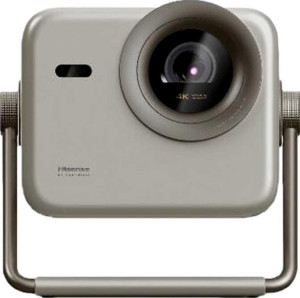
Hisense M2 Pro
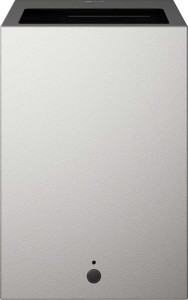
LG CineBeam S

Hisense M2 Pro LG CineBeam S

Overview

Welcome to our in-depth specification comparison between the Hisense M2 Pro and the LG CineBeam S, two laser projectors that take very different approaches to the home cinema experience. Both share a solid foundation — laser light sources, HDR10 and HLG support, built-in smart TV, AirPlay, Chromecast, and Miracast — yet they diverge sharply when it comes to brightness vs. resolution, contrast performance, physical footprint, and audio capabilities. Read on to see how every spec stacks up.

Common Features

  • Both the Hisense M2 Pro and LG CineBeam S use a laser light source.
  • Both the Hisense M2 Pro and LG CineBeam S have a dedicated smartphone app.
  • Neither the Hisense M2 Pro nor the LG CineBeam S has a motorized zoom.
  • HDR10+ support is not available on either the Hisense M2 Pro or the LG CineBeam S.
  • Manual focus is available on both the Hisense M2 Pro and the LG CineBeam S.
  • Both the Hisense M2 Pro and LG CineBeam S have a refresh rate of 60Hz.
  • HDR10 support is available on both the Hisense M2 Pro and the LG CineBeam S.
  • HLG support is available on both the Hisense M2 Pro and the LG CineBeam S.
  • Both the Hisense M2 Pro and LG CineBeam S have 1 HDMI port.
  • AirPlay is available on both the Hisense M2 Pro and the LG CineBeam S.
  • Wi-Fi is supported on both the Hisense M2 Pro and the LG CineBeam S.
  • Chromecast is built into both the Hisense M2 Pro and the LG CineBeam S.
  • Neither the Hisense M2 Pro nor the LG CineBeam S has a VGA connector.
  • Neither the Hisense M2 Pro nor the LG CineBeam S has a DVI connector.
  • Miracast is supported on both the Hisense M2 Pro and the LG CineBeam S.
  • Neither the Hisense M2 Pro nor the LG CineBeam S has an RJ45 port.
  • Stereo speakers are present on both the Hisense M2 Pro and the LG CineBeam S.
  • Both the Hisense M2 Pro and LG CineBeam S include a remote control.
  • Both the Hisense M2 Pro and LG CineBeam S have a built-in smart TV.
  • Neither the Hisense M2 Pro nor the LG CineBeam S has an external memory slot.

Main Differences

  • Width is 190 mm on the Hisense M2 Pro and 110 mm on the LG CineBeam S.
  • Height is 230 mm on the Hisense M2 Pro and 160 mm on the LG CineBeam S.
  • Thickness is 220 mm on the Hisense M2 Pro and 160 mm on the LG CineBeam S.
  • Weight is 3900 g on the Hisense M2 Pro and 1900 g on the LG CineBeam S.
  • Volume is 9614 cm³ on the Hisense M2 Pro and 2816 cm³ on the LG CineBeam S.
  • Brightness is 1200 lumens on the Hisense M2 Pro and 500 lumens on the LG CineBeam S.
  • Output resolution is 1080p on the Hisense M2 Pro and 4K on the LG CineBeam S.
  • Contrast ratio is 1000:1 on the Hisense M2 Pro and 450000:1 on the LG CineBeam S.
  • Motorized focus is available on the LG CineBeam S but not on the Hisense M2 Pro.
  • Maximum projection size is 200″ on the Hisense M2 Pro and 100″ on the LG CineBeam S.
  • Dolby Vision support is present on the Hisense M2 Pro but not available on the LG CineBeam S.
  • USB ports number 1 on the Hisense M2 Pro and 2 on the LG CineBeam S.
  • Audio output power is 2 x 10W on the Hisense M2 Pro and 2 x 4W on the LG CineBeam S.
  • Dolby Atmos support is present on the LG CineBeam S but not available on the Hisense M2 Pro.
Specs Comparison
Hisense M2 Pro

Hisense M2 Pro

LG CineBeam S

LG CineBeam S

General info:
has laser light source
release date June 2025 August 2025
width 190 mm 110 mm
height 230 mm 160 mm
thickness 220 mm 160 mm
weight 3900 g 1900 g
Has a dedicated smartphone app
volume 9614 cm³ 2816 cm³

Both the Hisense M2 Pro and the LG CineBeam S share two meaningful common ground features: a laser light source and a dedicated smartphone app. Laser projection delivers superior color accuracy, longer lamp life, and instant on/off compared to traditional lamp-based projectors, so buyers of either unit benefit from that technology baseline equally.

Where these two projectors diverge sharply is physical form factor. The LG CineBeam S weighs just 1900 g and occupies roughly 2816 cm³, while the Hisense M2 Pro comes in at 3900 g and a substantially larger 9614 cm³ — more than three times the volume. In practical terms, the LG is closer to a compact portable device you can slip into a bag without much thought, whereas the Hisense is a bulkier, desk-oriented unit that is less suited for frequent relocation.

For users who prioritize portability and space efficiency, the LG CineBeam S holds a clear edge in this category. The Hisense M2 Pro's larger chassis may accommodate more internal hardware headroom, but on general form factor alone, the LG is the more versatile and travel-friendly option.

Projection quality:
ANSI lumens 1200 lumens 500 lumens
output resolution 1080p 4K
contrast ratio 1000:1 450000:1
has motorized focus
maximum projection size 200" 100"
has motorized zoom
supports HDR10+
has manual focus
refresh rate 60Hz 60Hz
supports Dolby Vision
supports HDR10
supports HLG

The most striking trade-off in this group is the tension between brightness and resolution. The Hisense M2 Pro outputs 1200 ANSI lumens at 1080p, while the LG CineBeam S delivers native 4K resolution but at only 500 ANSI lumens. In real-world use, that brightness gap is significant — the M2 Pro can perform adequately in ambient light and scale up to a 200-inch image while maintaining watchable brightness, whereas the CineBeam S is better suited to a fully darkened room and tops out at 100 inches, half the maximum throw size.

On contrast, the LG flips the dynamic entirely. Its 450,000:1 contrast ratio dwarfs the M2 Pro's 1000:1, which means the CineBeam S produces far deeper blacks and more perceptible shadow detail — a critical factor for cinematic content. HDR format support also splits differently: the M2 Pro adds Dolby Vision to the shared HDR10 and HLG baseline, which gives it an edge for streaming services that use that format, while the LG offers none of the three HDR tiers beyond the standard pair.

Neither projector has a clear sweep here — the right choice depends entirely on viewing conditions and priorities. For large-room or ambient-light use, the Hisense M2 Pro's brightness and Dolby Vision support give it a practical edge. For a dedicated dark home theater where image depth and sharpness matter most, the LG CineBeam S's 4K resolution and exceptional contrast ratio are the stronger foundation.

Connectivity:
HDMI ports 1 1
has AirPlay
supports Wi-Fi
USB ports 1 2
has Chromecast built-in
has a VGA connector
has a DVI connector
supports Miracast
RJ45 ports 0 0
Has S/PDIF Out port

Connectivity is arguably the most evenly matched category between these two projectors. Both carry identical wireless stacks — Wi-Fi, AirPlay, Chromecast built-in, and Miracast — meaning users can mirror or stream from virtually any ecosystem, whether Apple, Android, or a laptop, without adapters or workarounds. That breadth of wireless protocol support is a genuine strength shared by both units.

On the wired side, the picture is nearly as balanced, with each projector offering a single HDMI port and no ethernet connection. The one tangible differentiator is USB: the LG CineBeam S provides 2 USB ports versus the Hisense M2 Pro's 1. In practice, that extra port matters — it allows simultaneous connection of, say, a storage drive and a power dongle, or two input devices, without requiring a hub.

Overall, connectivity is a near-tie, but the LG CineBeam S earns a slim edge purely due to its additional USB port. For most users the shared wireless feature set will handle the bulk of daily use, making this a minor rather than decisive advantage.

Features:
has stereo speakers
has a remote control
has built-in smart TV
has a built-in speaker
audio output power 2 x 10W 2 x 4W
has Dolby Atmos
has an external memory slot

At the feature level, both projectors share a solid common foundation: stereo speakers, a built-in smart TV platform, and a remote control. Neither offers an external memory slot, so local media playback depends entirely on USB or wireless streaming. The smart TV integration on both units means users can access streaming apps directly without an external stick or box, which is a meaningful convenience regardless of which model you choose.

Audio output is where the two diverge most concretely. The Hisense M2 Pro delivers 2 x 10W of speaker power versus the LG CineBeam S's 2 x 4W — a substantial difference that translates to noticeably higher volume headroom and fuller sound in larger rooms. The LG, however, counters with Dolby Atmos support, which the M2 Pro lacks. Dolby Atmos enables spatial audio processing for compatible content, enhancing perceived audio dimensionality even through built-in speakers, though the effect is naturally more pronounced with external speaker setups.

The conclusion here depends on listening priorities. For sheer volume and room-filling sound, the Hisense M2 Pro's 20W total output gives it a clear raw power advantage. For users who frequently watch Atmos-encoded content and value audio format fidelity over loudness, the LG CineBeam S holds a qualitative edge. On balance, the M2 Pro's significantly higher wattage makes it the more versatile audio performer for most use cases.

Comparison Summary & Verdict

After examining every specification, it is clear that the Hisense M2 Pro and LG CineBeam S are built for different priorities. The Hisense M2 Pro leads on raw brightness at 1200 lumens and delivers a massive 200-inch maximum projection size, complemented by a powerful 2x10W stereo output and Dolby Vision support, making it well-suited for large dedicated home theater rooms where output power matters. The LG CineBeam S counters with a stunning 4K output resolution, an extraordinary 450,000:1 contrast ratio, motorized focus convenience, Dolby Atmos audio, and a dramatically more compact and lightweight body at just 1900g — making it the stronger choice for image fidelity and versatile placement in smaller spaces. Neither projector is a universal winner; your ideal pick depends entirely on whether sheer screen size and brightness or picture quality and portability top your list.

Hisense M2 Pro
Buy Hisense M2 Pro if...

Buy the Hisense M2 Pro if you need maximum brightness and want to project onto screens up to 200 inches, and you value Dolby Vision support alongside more powerful built-in speakers.

LG CineBeam S
Buy LG CineBeam S if...

Buy the LG CineBeam S if you prioritize native 4K resolution and an exceptional contrast ratio in a compact, lightweight form factor, and want the convenience of motorized focus and Dolby Atmos audio.