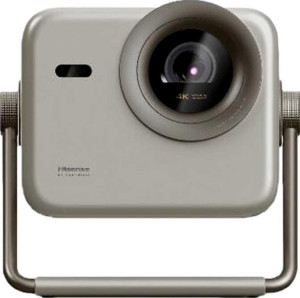
Hisense M2 Pro
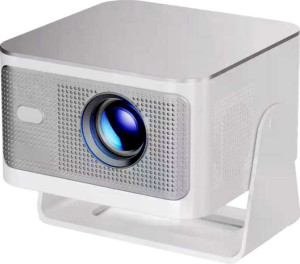
Magcubic HY350 MAX

Hisense M2 Pro Magcubic HY350 MAX

Overview

Welcome to our detailed spec comparison between the Hisense M2 Pro and the Magcubic HY350 MAX. Both projectors share a 1080p output, built-in smart TV functionality, and AirPlay support, but they take notably different approaches across key areas such as brightness and contrast, light source technology, HDR format compatibility, and focus mechanisms. Read on to explore how these two projectors stack up across every specification.

Common Features

  • Both products have a dedicated smartphone app.
  • Both products output at 1080p resolution.
  • Neither product has a motorized zoom.
  • HDR10+ support is not available on either product.
  • Both products have exactly 1 HDMI port.
  • AirPlay is supported on both products.
  • Wi-Fi is supported on both products.
  • Both products have exactly 1 USB port.
  • Neither product has a VGA connector.
  • Neither product has a DVI connector.
  • Neither product has an RJ45 port.
  • Neither product has an S/PDIF Out port.
  • Both products have stereo speakers.
  • Vertical lens shift is not available on either product.
  • Horizontal lens shift is not available on either product.
  • Both products include a remote control.
  • Both products have a built-in smart TV.
  • Both products have a built-in speaker.
  • Dolby Atmos is not available on either product.
  • Neither product has an external memory slot.

Main Differences

  • The Hisense M2 Pro uses a laser light source, while the Magcubic HY350 MAX does not.
  • Lamp life in eco mode is 25000 h on the Hisense M2 Pro and 30000 h on the Magcubic HY350 MAX.
  • Brightness is 1200 lumens on the Hisense M2 Pro and 900 lumens on the Magcubic HY350 MAX.
  • Contrast ratio is 1000:1 on the Hisense M2 Pro and 20000:1 on the Magcubic HY350 MAX.
  • Motorized focus is available on the Magcubic HY350 MAX but not on the Hisense M2 Pro.
  • 3D display with glasses is supported on the Hisense M2 Pro but not on the Magcubic HY350 MAX.
  • Maximum projection size is 200″ on the Hisense M2 Pro and 100″ on the Magcubic HY350 MAX.
  • Manual focus is available on the Hisense M2 Pro but not on the Magcubic HY350 MAX.
  • Dolby Vision support is present on the Hisense M2 Pro but not available on the Magcubic HY350 MAX.
  • HDR10 support is present on the Hisense M2 Pro but not available on the Magcubic HY350 MAX.
  • HLG support is present on the Hisense M2 Pro but not available on the Magcubic HY350 MAX.
  • Audio output power is 2 x 10W on the Hisense M2 Pro and 2 x 15W on the Magcubic HY350 MAX.
  • A 3.5 mm audio jack socket is present on the Hisense M2 Pro but not available on the Magcubic HY350 MAX.
Specs Comparison
Hisense M2 Pro

Hisense M2 Pro

Magcubic HY350 MAX

Magcubic HY350 MAX

General info:
has laser light source
release date June 2025 September 2025
lamp life (eco mode) 25000 h 30000 h
Has a dedicated smartphone app

The most significant differentiator in this group is the light source technology. The Hisense M2 Pro uses a laser light source, while the Magcubic HY350 MAX relies on a conventional lamp. In practical terms, laser projection typically delivers more accurate colors, higher contrast, and greater brightness consistency over time, as laser output degrades far more slowly than a traditional bulb.

Interestingly, the HY350 MAX claims a longer lamp life of 30,000 hours in eco mode versus the M2 Pro's 25,000 hours — but this comparison requires context. Laser projectors, despite a nominally shorter rated lifespan here, maintain brightness much more uniformly throughout their life, whereas conventional lamps tend to dim noticeably well before they fail. The real-world usable image quality of the M2 Pro is therefore likely to remain superior for longer, even if the raw hour count is lower.

Both products share a dedicated smartphone app, meaning neither has an advantage on that front. Overall, the Hisense M2 Pro holds a clear edge in this group: its laser technology represents a meaningful qualitative advantage in light source quality and long-term brightness consistency that the HY350 MAX's slightly higher lamp-hour rating cannot offset.

Projection quality:
ANSI lumens 1200 lumens 900 lumens
output resolution 1080p 1080p
contrast ratio 1000:1 20000:1
has motorized focus
displays 3D with glasses
maximum projection size 200" 100"
has motorized zoom
supports HDR10+
has manual focus
supports Dolby Vision
supports HDR10
supports HLG

Brightness and screen size tell a compelling story here. The Hisense M2 Pro outputs 1,200 ANSI lumens versus the Magcubic HY350 MAX's 900 ANSI lumens, and that gap becomes even more meaningful when paired with the M2 Pro's maximum throw of 200 inches — double the HY350 MAX's ceiling of 100 inches. More lumens spread over a larger canvas means the M2 Pro is far better suited for large-room or ambient-light environments, while the HY350 MAX is constrained to smaller, darker setups.

The HY350 MAX does fight back with a striking 20,000:1 contrast ratio compared to the M2 Pro's 1,000:1, which on paper suggests much deeper blacks and punchier shadow detail. However, the M2 Pro counters with a substantially richer HDR ecosystem — supporting Dolby Vision, HDR10, and HLG — while the HY350 MAX supports none of these standards. In practice, broad HDR format compatibility tends to have a greater real-world impact on perceived image quality than contrast ratio alone, since most modern streaming and disc content is mastered in one of these formats. The HY350 MAX also gains a minor convenience edge with its motorized focus, sparing users manual adjustment.

Across this group, the Hisense M2 Pro holds a clear overall advantage. Its higher brightness, dramatically larger maximum image size, and comprehensive HDR format support make it the stronger performer for most home cinema use cases, and the HY350 MAX's contrast ratio lead and motorized focus are not enough to offset those deficits.
Connectivity:
HDMI ports 1 1
has AirPlay
supports Wi-Fi
USB ports 1 1
has a VGA connector
has a DVI connector
RJ45 ports 0 0
Has S/PDIF Out port

Connectivity is a dead heat between these two projectors — every single spec in this group is identical. Both offer one HDMI port, one USB port, Wi-Fi, and AirPlay, with no wired Ethernet, no VGA, no DVI, and no S/PDIF audio output on either side.

The shared feature set is adequate for casual use: a single HDMI input covers a streaming stick, gaming console, or laptop, while Wi-Fi and AirPlay allow wireless casting without any extra hardware. That said, the absence of an RJ45 port means both projectors rely entirely on wireless networking, which may be a limitation in environments where a stable wired connection would be preferable. The lack of S/PDIF also means neither can output a digital audio signal to an external receiver via optical — users needing that will require a workaround through HDMI.

Since the data shows no differences whatsoever, connectivity is a complete tie. Neither product should be chosen or dismissed based on this specification group alone.

Features:
has stereo speakers
has lens shift (vertical)
has lens shift (horizontal)
has a remote control
has built-in smart TV
has a built-in speaker
audio output power 2 x 10W 2 x 15W
has a socket for a 3.5 mm audio jack
has Dolby Atmos
has an external memory slot
has voice commands

For the most part, these two projectors are evenly matched on features — both include a built-in smart TV platform, stereo speakers, a remote control, and voice commands, making them comparably self-contained out of the box. The meaningful differences come down to audio output and a single port.

On speaker power, the Magcubic HY350 MAX delivers 2 x 15W versus the Hisense M2 Pro's 2 x 10W — a 50% increase in rated output. In practice, this can translate to noticeably higher maximum volume and better headroom in larger rooms, though perceived loudness depends on driver quality as well. Where the M2 Pro claws back ground is with its 3.5mm audio jack, which the HY350 MAX lacks entirely. That socket lets users plug in wired headphones or connect to an external speaker system without relying on HDMI — a genuinely useful escape valve, especially for late-night viewing or when wireless audio is not an option.

This group ends in a narrow trade-off: the HY350 MAX has a raw audio power advantage, while the M2 Pro offers more audio routing flexibility via its headphone jack. Users who prioritize louder built-in sound lean toward the HY350 MAX; those who value wired audio output options will prefer the M2 Pro. Neither holds a decisive overall edge in this group.

Comparison Summary & Verdict

After examining all the specifications, it is clear that the Hisense M2 Pro and the Magcubic HY350 MAX each excel in distinct areas. The Hisense M2 Pro stands out with its laser light source, higher brightness at 1200 lumens, support for Dolby Vision, HDR10, and HLG, plus a generous 200″ maximum projection size and 3D capability, making it well suited for home theater enthusiasts who want premium image format support and a large screen. The Magcubic HY350 MAX counters with a significantly higher 20000:1 contrast ratio, convenient motorized focus, a longer lamp life of 30000 hours, and more powerful 2x15W speakers, appealing to users who prioritize deep blacks, ease of setup, and audio output over sheer brightness and HDR versatility.

Hisense M2 Pro
Buy Hisense M2 Pro if...

Buy the Hisense M2 Pro if you want a laser-powered projector with broad HDR format support including Dolby Vision and HDR10, 3D capability, and a maximum projection size of up to 200″.

Magcubic HY350 MAX
Buy Magcubic HY350 MAX if...

Buy the Magcubic HY350 MAX if you prioritize an exceptionally high contrast ratio of 20000:1, the convenience of motorized focus, longer lamp life, and more powerful built-in speakers.