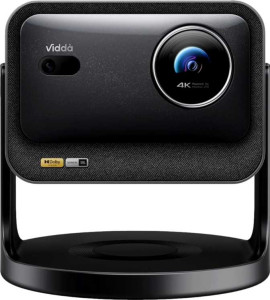
Hisense Vidda C3 Pro
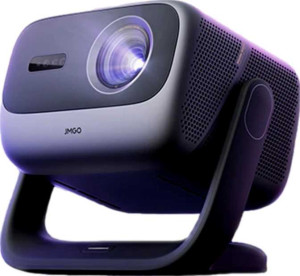
JMGO N3 Ultra

Hisense Vidda C3 Pro JMGO N3 Ultra

Overview

Welcome to our in-depth specification comparison between the Hisense Vidda C3 Pro and the JMGO N3 Ultra — two laser projectors targeting the 4K home cinema space. While both share a strong foundation of shared features, key battlegrounds emerge around throw distance flexibility, physical footprint, HDR format support, and audio output power. Read on to see how each model stacks up across every major specification.

Common Features

  • Both the Hisense Vidda C3 Pro and JMGO N3 Ultra use a laser light source.
  • Both projectors output at 4K resolution.
  • Both offer motorized focus.
  • Neither projector features motorized zoom.
  • Neither projector supports manual focus.
  • Both support Dolby Vision.
  • Both support HDR10.
  • The maximum projection size is 300″ on both projectors.
  • Both projectors include a single HDMI port.
  • Both projectors include a single USB port.
  • AirPlay is supported on both the Hisense Vidda C3 Pro and JMGO N3 Ultra.
  • Bluetooth is available on both projectors.
  • Wi-Fi is supported on both projectors.
  • Chromecast is built into both projectors.
  • Neither projector has a VGA connector.
  • Miracast is supported on both projectors.
  • Both projectors feature stereo speakers.
  • Both projectors come with a remote control.
  • Both projectors have a built-in smart TV platform.
  • A 3.5 mm audio jack socket is present on both projectors.
  • A sleep timer is available on both projectors.
  • Dolby Atmos is not supported on either projector.

Main Differences

  • Width is 254 mm on the Hisense Vidda C3 Pro and 210 mm on the JMGO N3 Ultra.
  • Height is 247 mm on the Hisense Vidda C3 Pro and 238 mm on the JMGO N3 Ultra.
  • Thickness is 247 mm on the Hisense Vidda C3 Pro and 243 mm on the JMGO N3 Ultra.
  • Weight is 9800 g on the Hisense Vidda C3 Pro and 6800 g on the JMGO N3 Ultra.
  • Volume is 15496.286 cm³ on the Hisense Vidda C3 Pro and 12145.14 cm³ on the JMGO N3 Ultra.
  • HDR10+ support is available on the Hisense Vidda C3 Pro but not on the JMGO N3 Ultra.
  • Minimum throw distance is 2 m on the Hisense Vidda C3 Pro and 0.5 m on the JMGO N3 Ultra.
  • A DVI connector is present on the JMGO N3 Ultra but not available on the Hisense Vidda C3 Pro.
  • Audio output power is 2 x 10W on the Hisense Vidda C3 Pro and 2 x 12.5W on the JMGO N3 Ultra.
Specs Comparison
Hisense Vidda C3 Pro

Hisense Vidda C3 Pro

JMGO N3 Ultra

JMGO N3 Ultra

General info:
has laser light source
release date May 2025 May 2025
width 254 mm 210 mm
height 247 mm 238 mm
thickness 247 mm 243 mm
weight 9800 g 6800 g
volume 15496.286 cm³ 12145.14 cm³

Both the Hisense Vidda C3 Pro and the JMGO N3 Ultra share a laser light source, placing them in the same premium projection tier where laser technology delivers superior brightness consistency, longer lifespan, and richer color compared to lamp-based alternatives. This is a meaningful shared foundation that makes the physical differentiators all the more important when choosing between them.

Where they diverge significantly is in size and weight. The Vidda C3 Pro is noticeably bulkier, with a volume of 15,496 cm³ versus the N3 Ultra's 12,145 cm³ — roughly 28% more mass. More practically, the C3 Pro weighs 9,800 g compared to the N3 Ultra's 6,800 g, a difference of 3 kg. That gap is substantial: the N3 Ultra is nearly 31% lighter, which translates directly into easier portability, simpler installation on ceiling mounts, and less strain on furniture or mounting hardware.

For users who prioritize a compact, lighter form factor — whether for portability between rooms or cleaner shelf placement — the JMGO N3 Ultra holds a clear physical advantage. The Vidda C3 Pro's larger footprint may be acceptable in a dedicated home theater setup where it stays stationary, but it offers no compensating benefit within this spec group alone.

Projection quality:
output resolution 4K 4K
has motorized focus
maximum projection size 300" 300"
has motorized zoom
supports HDR10+
has manual focus
minimum throw distance 2 m 0.5 m
supports Dolby Vision
supports HDR10

At the foundation, both projectors are well-matched: 4K output, motorized focus, a maximum image size of 300″, and support for both Dolby Vision and HDR10 are shared across the board. That HDR trio ensures wide compatibility with premium streaming content, and motorized focus removes the hassle of manual lens adjustments during setup.

The most consequential difference here is the minimum throw distance. The JMGO N3 Ultra requires as little as 0.5 m to project, effectively making it an ultra-short-throw capable unit — ideal for small rooms, apartments, or placements close to the wall. The Vidda C3 Pro, by contrast, needs at least 2 m of clearance, which demands more deliberate room planning and rules out tight spaces entirely. This single spec can be a deal-breaker depending on the intended installation environment.

On the HDR front, the Vidda C3 Pro adds support for HDR10+ — the dynamic metadata upgrade to standard HDR10 — which the N3 Ultra lacks. This gives the C3 Pro a minor but real edge for content mastered in HDR10+, enabling scene-by-scene tone mapping rather than a static global setting. Taken together, the N3 Ultra wins on placement flexibility, while the C3 Pro edges ahead on HDR format coverage — making the right choice heavily dependent on room size and content library.

Connectivity:
HDMI ports 1 1
has AirPlay
Has Bluetooth
supports Wi-Fi
USB ports 1 1
has Chromecast built-in
has a VGA connector
has a DVI connector
supports Miracast
RJ45 ports 0 0
Has S/PDIF Out port

Connectivity between these two projectors is remarkably parallel. Both offer a single HDMI port, one USB port, Wi-Fi, Bluetooth, AirPlay, Chromecast built-in, and Miracast — covering virtually every mainstream wired and wireless use case a modern home theater user would need. Neither includes an RJ45 ethernet port or S/PDIF audio output, so both rely on Wi-Fi for network connectivity and lack a dedicated optical audio passthrough.

The only point of divergence is the JMGO N3 Ultra's inclusion of a DVI connector, which the Vidda C3 Pro omits entirely. DVI is a legacy interface, largely superseded by HDMI in consumer electronics, but it retains relevance when connecting older PC hardware, certain commercial displays, or video processing equipment that predates HDMI adoption. For the vast majority of users, this will be a non-factor — but for anyone working with legacy source devices, the N3 Ultra's DVI port removes the need for an adapter.

Overall, this is essentially a tie in connectivity. The shared feature set is comprehensive and modern, and the N3 Ultra's DVI advantage is too niche to shift the balance meaningfully for typical home theater buyers. Neither unit stands out as significantly more versatile than the other in this category.

Features:
has stereo speakers
has a remote control
has built-in smart TV
has a built-in speaker
audio output power 2 x 10W 2 x 12.5W
has a socket for a 3.5 mm audio jack
has a sleep timer
has Dolby Atmos

Feature parity is the dominant story here. Both projectors arrive with stereo speakers, a built-in smart TV platform, a remote control, a 3.5 mm audio jack for headphones or external speakers, and a sleep timer — a complete, self-contained package that requires no additional hardware to start watching content out of the box.

The single numerical differentiator is audio output power. The JMGO N3 Ultra delivers 2 × 12.5W versus the Vidda C3 Pro's 2 × 10W — a 25% increase in rated power per channel. In practice, this translates to slightly higher achievable volume levels and potentially more headroom before the amplifier clips at loud passages, which matters in larger rooms or when ambient noise is a factor. That said, neither unit supports Dolby Atmos, so immersive spatial audio is off the table for both regardless of speaker power.

The N3 Ultra holds a narrow edge in audio output, but this is a slim margin in an otherwise identical feature set. Users who plan to rely on the built-in speakers for a mid-to-large room may appreciate the extra wattage, but anyone connecting an external sound system will find the two projectors functionally indistinguishable in this category.

Comparison Summary & Verdict

Both the Hisense Vidda C3 Pro and the JMGO N3 Ultra deliver 4K laser projection with Dolby Vision, HDR10, motorized focus, and a rich smart feature set — making either a capable choice for a dedicated home theater. However, their differences point to distinct audiences. The Hisense Vidda C3 Pro stands out for its HDR10+ support, appealing to videophiles who want the broadest HDR compatibility, though its 2-meter minimum throw distance demands a larger room. The JMGO N3 Ultra counters with a 0.5-meter minimum throw distance, making it far more versatile in smaller spaces, while its lighter 6800 g body and slightly higher 25W total audio output add to its appeal for flexible installations.

Hisense Vidda C3 Pro
Buy Hisense Vidda C3 Pro if...

Buy the Hisense Vidda C3 Pro if you have a large dedicated room with ample throw distance and want the broadest HDR format coverage, including HDR10+ support.

JMGO N3 Ultra
Buy JMGO N3 Ultra if...

Buy the JMGO N3 Ultra if you need an ultra-short throw setup for a smaller space, prefer a lighter and more compact unit, or want slightly more audio output power.