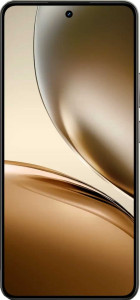
Honor 400 5G (China)
Realme P3

Honor 400 5G (China) Realme P3

Overview

Welcome to our in-depth comparison of the Honor 400 5G (China) and the Realme P3, two capable mid-range 5G smartphones that share more common ground than you might expect. Both arrive with OLED displays, IP68 waterproofing, and Android 15 out of the box, yet they diverge sharply when it comes to camera hardware, raw performance, and battery capacity. Read on as we break down every specification to help you find the right fit for your needs.

Common Features

  • Both phones are waterproof with an IP68 ingress protection rating.
  • Neither phone has a rugged build.
  • Neither phone can be folded.
  • Both phones feature an OLED/AMOLED display.
  • Both phones support a 120Hz refresh rate.
  • HDR10 support is not available on either phone.
  • HDR10+ support is not available on either phone.
  • Dolby Vision support is not available on either phone.
  • Neither phone has a secondary screen.
  • Both phones have a touchscreen.
  • Both phones have integrated LTE.
  • Both phones are built on a 4 nm semiconductor process.
  • Both phones support 64-bit processing.
  • Both phones support DirectX 12.
  • Both phones have integrated graphics.
  • Both phones use big.LITTLE technology.
  • Both phones have TrustZone support.
  • Both main cameras on each phone are multi-lens setups with optical image stabilization.
  • Neither phone has a BSI sensor, but both have a CMOS sensor.
  • Both phones support continuous autofocus and phase-detection autofocus when recording.
  • Both phones run Android 15.
  • Both phones have clipboard warnings, location privacy options, and camera/microphone privacy options.
  • App tracking blocking is available on both phones.
  • Cross-site tracking blocking is not available on either phone.
  • Neither phone supports wireless charging, but both support fast charging.
  • Neither phone has a removable battery.
  • Both phones have a battery level indicator and a rechargeable battery.
  • Neither phone has a 3.5mm audio jack.
  • Both phones have stereo speakers.
  • aptX support is not available on either phone.
  • LDAC support is not available on either phone.
  • aptX Lossless support is not available on either phone.
  • Neither phone has a radio.
  • Both phones support 5G and dual SIM.
  • Neither phone has an external memory slot.
  • Both phones have USB Type-C and NFC.
  • Both phones have a fingerprint scanner.
  • Emergency SOS via satellite is not available on either phone.
  • Crash detection is not available on either phone.
  • Both phones have a video light.
  • Neither phone has a sapphire glass display, a curved display, or an e-paper display.

Main Differences

  • Weight is 196 g on Honor 400 5G (China) and 194 g on Realme P3.
  • Thickness is 7.8 mm on Honor 400 5G (China) and 8 mm on Realme P3.
  • Width is 74.7 mm on Honor 400 5G (China) and 75.7 mm on Realme P3.
  • Height is 156.3 mm on Honor 400 5G (China) and 163.2 mm on Realme P3.
  • Volume is 91.07 cm³ on Honor 400 5G (China) and 98.83 cm³ on Realme P3.
  • Screen size is 6.55″ on Honor 400 5G (China) and 6.67″ on Realme P3.
  • Pixel density is 460 ppi on Honor 400 5G (China) and 395 ppi on Realme P3.
  • Resolution is 1264 x 2736 px on Honor 400 5G (China) and 1080 x 2400 px on Realme P3.
  • Damage-resistant glass is present on Honor 400 5G (China) but not available on Realme P3.
  • Always-On Display is available on Honor 400 5G (China) but not on Realme P3.
  • Internal storage is 512GB on Honor 400 5G (China) and 256GB on Realme P3.
  • RAM is 16GB on Honor 400 5G (China) and 8GB on Realme P3.
  • The chipset is Qualcomm Snapdragon 7 Gen 4 on Honor 400 5G (China) and Qualcomm Snapdragon 6 Gen 4 on Realme P3.
  • CPU speed is 1 x 2.8 & 4 x 2.4 & 3 x 1.8 GHz on Honor 400 5G (China) and 1 x 2.3 & 3 x 2.2 & 4 x 1.8 GHz on Realme P3.
  • GPU clock speed is 1000 MHz on Honor 400 5G (China) and 800 MHz on Realme P3.
  • RAM speed is 4200 MHz on Honor 400 5G (China) and 2750 MHz on Realme P3.
  • Maximum memory bandwidth is 33.6 GB/s on Honor 400 5G (China) and 12 GB/s on Realme P3.
  • Thermal Design Power (TDP) is 6W on Honor 400 5G (China) and 7W on Realme P3.
  • Main camera resolution is 200 & 12 MP on Honor 400 5G (China) and 50 & 2 MP on Realme P3.
  • Main camera aperture is f/2.2 & f/1.9 on Honor 400 5G (China) and f/1.8 on Realme P3.
  • Front camera resolution is 50MP on Honor 400 5G (China) and 16MP on Realme P3.
  • Front camera aperture is f/2 on Honor 400 5G (China) and f/2.4 on Realme P3.
  • Battery capacity is 7200 mAh on Honor 400 5G (China) and 6000 mAh on Realme P3.
  • Charging speed is 80W on Honor 400 5G (China) and 45W on Realme P3.
  • aptX HD support is present on Honor 400 5G (China) but not available on Realme P3.
  • aptX Adaptive support is present on Honor 400 5G (China) but not available on Realme P3.
  • Bluetooth version is 5.4 on Honor 400 5G (China) and 5.2 on Realme P3.
Specs Comparison
Honor 400 5G (China)

Honor 400 5G (China)

Realme P3

Realme P3

Design:
water resistance Waterproof Waterproof
weight 196 g 194 g
thickness 7.8 mm 8 mm
width 74.7 mm 75.7 mm
height 156.3 mm 163.2 mm
volume 91.069758 cm³ 98.83392 cm³
Ingress Protection (IP) rating IP68 IP68
has a rugged build
can be folded

Both the Honor 400 5G and the Realme P3 share a solid foundation in water resistance, carrying an IP68 rating that means full submersion protection — a genuinely useful feature for everyday durability. Neither adopts a rugged build or a foldable form factor, so both target the mainstream slab smartphone market.

Where the two diverge meaningfully is in overall footprint. The Realme P3 is noticeably taller at 163.2 mm versus 156.3 mm, and slightly wider at 75.7 mm versus 74.7 mm. Combined with its marginally greater thickness of 8 mm versus 7.8 mm, this adds up to a significantly larger total volume — 98.83 cm³ compared to 91.07 cm³ for the Honor. In practical terms, the Realme P3 will feel larger in the hand and pocket, which could hint at a bigger display or battery inside, but purely from a handling standpoint the Honor is the more compact device.

Weight is essentially a tie: 196 g for the Honor versus 194 g for the Realme — a 2 g difference no user will perceive. On design overall, the Honor 400 5G holds a clear edge in compactness and ergonomics, delivering the same IP68 protection in a meaningfully smaller and slightly slimmer shell, which matters for one-handed use and long-term comfort.

Display:
Display type OLED/AMOLED OLED/AMOLED
screen size 6.55" 6.67"
pixel density 460 ppi 395 ppi
resolution 1264 x 2736 px 1080 x 2400 px
refresh rate 120Hz 120Hz
has branded damage-resistant glass
supports HDR10
supports HDR10+
Always-On Display
supports Dolby Vision
Has a secondary screen
has a touch screen

Both phones use OLED/AMOLED panels with a 120Hz refresh rate, meaning smooth scrolling and vibrant, high-contrast visuals are guaranteed on either device. The Realme P3 offers a slightly larger canvas at 6.67″ versus 6.55″ on the Honor 400 5G, which some users will prefer for media consumption — but screen size alone tells only part of the story.

The more consequential difference is sharpness. The Honor's 1264 x 2736 px resolution translates to 460 ppi, while the Realme's 1080 x 2400 px panel lands at just 395 ppi. That 65 ppi gap is perceptible in daily use — text renders with noticeably crisper edges and fine detail in photos looks more defined on the Honor's screen. The Honor also gains a meaningful quality-of-life advantage with its Always-On Display support, allowing time, notifications, and widgets to remain visible without fully waking the screen — a feature entirely absent on the Realme P3.

Rounding out the Honor's display advantages, it ships with branded damage-resistant glass — a real-world durability benefit the Realme P3 lacks. On HDR standards, neither phone supports HDR10, HDR10+, or Dolby Vision, so that dimension is a non-factor. Taken together, the Honor 400 5G holds a clear display advantage: its sharper panel, Always-On Display, and protective glass make it the stronger choice for users who prioritize screen quality and everyday practicality.

Performance:
internal storage 512GB 256GB
RAM 16GB 8GB
Chipset (SoC) name Qualcomm Snapdragon 7 Gen 4 Qualcomm Snapdragon 6 Gen 4
CPU speed 1 x 2.8 & 4 x 2.4 & 3 x 1.8 GHz 1 x 2.3 & 3 x 2.2 & 4 x 1.8 GHz
GPU clock speed 1000 MHz 800 MHz
Has integrated LTE
RAM speed 4200 MHz 2750 MHz
semiconductor size 4 nm 4 nm
Supports 64-bit
DirectX version DirectX 12 DirectX 12
Has integrated graphics
OpenGL ES version 3.2 3.2
Uses big.LITTLE technology
Has TrustZone
maximum memory bandwidth 33.6 GB/s 12 GB/s
OpenCL version 2 2
Thermal Design Power (TDP) 6W 7W
DDR memory version 5 5

The chipset gap here is real and consequential. The Honor 400 5G runs on the Snapdragon 7 Gen 4 while the Realme P3 uses the Snapdragon 6 Gen 4 — one tier apart within Qualcomm's lineup, and the specs back that up across every meaningful dimension. The Honor's peak CPU core clocks at 2.8 GHz versus 2.3 GHz on the Realme, and its GPU runs at 1000 MHz compared to 800 MHz — a 25% clock speed advantage that will show up in demanding games and GPU-accelerated tasks.

Perhaps the starkest single number is memory bandwidth: the Honor delivers 33.6 GB/s against the Realme's 12 GB/s — nearly three times the throughput. Combined with significantly faster RAM at 4200 MHz versus 2750 MHz, the Honor can feed its processor data at a rate the Realme simply cannot match. In practice, this means snappier app launches, smoother multitasking, and better sustained performance under load. The Honor also doubles down on raw capacity with 16 GB of RAM and 512 GB of storage, compared to 8 GB / 256 GB on the Realme — a meaningful difference for heavy multitaskers and users with large media libraries.

Both chips are manufactured on a 4 nm process and share the same foundational feature set — DDR5 memory, big.LITTLE architecture, DirectX 12, and TrustZone security — so efficiency and compatibility are comparable. The Realme's slightly higher 7W TDP versus 6W on the Honor is a minor curiosity, suggesting the Honor may actually run a touch cooler under sustained load. Overall, the Honor 400 5G has a commanding performance advantage in this group, outpacing the Realme P3 on CPU speed, GPU power, RAM capacity, and memory bandwidth by margins that will be felt in real everyday use.

Cameras:
megapixels (main camera) 200 & 12 MP 50 & 2 MP
wide aperture (main camera) 2.2 & 1.9f 1.8f
Has a dual-lens (or multi-lens) main camera
megapixels (front camera) 50MP 16MP
has built-in optical image stabilization
Has a dual-tone LED flash
number of flash LEDs 1 1
has a BSI sensor
has a CMOS sensor
has continuous autofocus when recording movies
Has phase-detection autofocus for photos
supports slow-motion video recording
has a built-in HDR mode
has manual exposure
has a flash
optical zoom 0x 0x
has manual ISO
has a serial shot mode
has manual focus
has a front camera
Has laser autofocus
Shoots 360° panorama
has manual white balance
has touch autofocus
has manual shutter speed
can create panoramas in-camera
wide aperture (front camera) 2f 2.4f
Has timelapse function
Has a front-facing LED flash
has a dual-lens (or multi-lens) front camera
supports HDR10 recording
supports Dolby Vision recording
has a front-facing camera under the display
Has a RGB LED flash
has 3D photo/video recording capabilities

The headline difference is impossible to ignore: the Honor 400 5G's primary shooter clocks in at a staggering 200 MP, paired with a 12 MP secondary lens, while the Realme P3 offers a more conventional 50 MP + 2 MP setup. That 200 MP sensor enables extreme detail capture and flexible cropping — useful for picking out fine textures or digitally zooming into a scene without losing resolution — while the Realme's 2 MP secondary lens is largely a depth-assist unit with limited standalone utility.

The Realme does push back in one area: its main lens aperture of f/1.8 is wider than anything on the Honor's rear system, meaning it gathers more light per shot — an advantage in low-light scenes. The Honor's front camera, however, counters strongly with 50 MP at f/2.0 versus the Realme's 16 MP at f/2.4. That combination gives the Honor sharper selfies and better low-light performance up front simultaneously. Both phones include OIS on the main camera, phase-detection autofocus, continuous autofocus during video, slow-motion recording, and a full suite of manual controls — so the shooting experience and feature parity are otherwise well matched.

On balance, the Honor 400 5G holds a clear camera advantage. The Realme's wider main aperture is a genuine plus in low light, but the Honor's dominant megapixel count on both rear and front cameras, combined with a meaningfully more capable ultrawide-equivalent secondary sensor, makes it the stronger imaging package overall for users who prioritize resolution and versatility.

Operating system:
Android version Android 15 Android 15
has clipboard warnings
has location privacy options
has camera/microphone privacy options
has Mail Privacy Protection
has theme customization
can block app tracking
blocks cross-site tracking
has on-device machine learning
has notification permissions
has media picker
Can play games while they download
has dark mode
has Wi-Fi password sharing
has battery health check
has an extra dim mode
has focus modes
has dynamic theming
can offload apps
Has customizable notifications
has Live Text
has full-page screenshots
supports split screen
gets direct OS updates
has PiP
Can be used as a PC
Has sharing intents
has a child lock
Supports widgets
Is free and open source
Has offline voice recognition
has voice commands
Tracks the current position of a mobile device
is a multi-user system
has Quick Start

This is a rare case of complete parity. Both the Honor 400 5G and the Realme P3 run Android 15 and share an identical feature set across every single OS specification provided — from privacy controls like location and camera/microphone permissions, to productivity features like split-screen, Picture-in-Picture, and widgets, to quality-of-life additions like dark mode, dynamic theming, and on-device machine learning.

Notably, neither phone receives direct OS updates — meaning both rely on manufacturer-mediated update rollouts rather than receiving Android patches straight from Google. This is a shared limitation worth keeping in mind for users who prioritize long-term software support. On the privacy front, both offer solid baseline controls including app tracking blocking and clipboard warnings, though neither supports cross-site tracking protection or Mail Privacy Protection.

There is no differentiator to call out here: the OS comparison is a complete tie. A buyer's software experience will be effectively identical on either device based strictly on the data provided, and this category should carry no weight in a purchasing decision between the two.

Battery:
battery power 7200 mAh 6000 mAh
has wireless charging
Supports fast charging
charging speed 80W 45W
has a removable battery
has a battery level indicator
has a rechargeable battery

Battery capacity is where the Honor 400 5G makes one of its most striking statements. Its 7200 mAh cell is exceptionally large by current smartphone standards — a full 1200 mAh more than the Realme P3's already-respectable 6000 mAh. That 20% capacity advantage translates directly into real-world endurance: users who typically reach end-of-day on the Realme could comfortably stretch the Honor into a second day under similar usage patterns.

Charging speed tells a different side of the story. The Honor tops up at 80W versus 45W on the Realme — meaning that despite carrying a larger battery, the Honor can replenish it significantly faster. This combination of high capacity and fast charging is particularly compelling: you get extended runtime without sacrificing the ability to top up quickly when needed. Neither phone supports wireless charging, and both have sealed, non-removable batteries — so those dimensions are evenly matched.

The verdict here is clear-cut: the Honor 400 5G wins the battery category decisively, offering both a larger reservoir and faster replenishment. For heavy users, frequent travelers, or anyone who finds themselves hunting for a charger mid-afternoon, the Honor's battery setup is a meaningful practical advantage over the Realme P3.

Audio:
has a socket for a 3.5 mm audio jack
has stereo speakers
has aptX
has LDAC
has aptX HD
has aptX Adaptive
has aptX Lossless
Has a radio

The shared ground between these two is straightforward: both drop the 3.5mm headphone jack, both deliver stereo speakers for spatial audio output, and neither includes a radio. For wired headphone users, an adapter will be required on either device — that trade-off is equal. Where things diverge is in wireless audio codec support, and the gap is notable.

The Honor 400 5G supports aptX HD and aptX Adaptive, while the Realme P3 supports none of the advanced Bluetooth audio codecs listed. This matters for users with compatible wireless headphones: aptX HD enables higher-resolution audio streaming over Bluetooth, and aptX Adaptive goes further — dynamically adjusting bitrate for lower latency and more stable quality, making it particularly valuable for both music listening and gaming. The Realme, lacking these codecs, will fall back to more basic Bluetooth audio transmission when paired with premium headphones, which can result in audibly compressed sound and higher latency.

The Honor 400 5G has a clear audio advantage for wireless headphone users. The stereo speaker setup is equivalent on both phones, but the Honor's aptX HD and aptX Adaptive support meaningfully elevates the Bluetooth audio experience — a real differentiator for anyone who invests in quality wireless audio gear.

Connectivity & Features:
release date June 2025 March 2025
has 5G support
Wi-Fi version Wi-Fi 4 (802.11n), Wi-Fi 5 (802.11ac), Wi-Fi 6 (802.11ax) Wi-Fi 5 (802.11ac), Wi-Fi 4 (802.11n), Wi-Fi 6 (802.11ax)
SIM cards 2 SIM 2 SIM
Bluetooth version 5.4 5.2
has an external memory slot
Has USB Type-C
has NFC
Has a fingerprint scanner
has emergency SOS via satellite
has crash detection
is DLNA-certified
has a gyroscope
supports ANT+
Has a heart rate monitor
has GPS
has a compass
supports Wi-Fi
Has an infrared sensor
has an accelerometer
has a cellular module
Has a barometer
has an HDMI output
Uses 3D facial recognition
Has an iris scanner
Stylus included
supports Galileo
Has motion tracking
Has optical tracking
Has a built-in projector

Connectivity parity is the dominant story here. Both the Honor 400 5G and the Realme P3 cover the same essential bases: 5G, Wi-Fi 6, dual SIM, USB-C, NFC, fingerprint scanner, GPS with Galileo support, gyroscope, accelerometer, compass, and even an infrared sensor — a feature increasingly rare at this segment that lets either phone double as a universal remote. Neither offers expandable storage, a barometer, or satellite SOS.

The only measurable difference is Bluetooth: the Honor carries Bluetooth 5.4 against the Realme's 5.2. In practice, 5.4 brings improvements in connection stability, reduced interference in crowded wireless environments, and better support for the latest low-energy audio profiles. It is a modest but genuine step forward, particularly relevant for users who regularly pair wireless earbuds or speakers in busy public spaces.

Overall this category is nearly a tie, with a slight edge to the Honor 400 5G solely on the strength of its newer Bluetooth version. For most users the real-world difference will be subtle, but the Honor's connectivity stack is marginally more future-proof — everything else is functionally identical between the two devices.

Miscellaneous:
has a video light
Has sapphire glass display
Has a curved display
Has an e-paper display

The miscellaneous spec group offers nothing to separate these two devices. Both the Honor 400 5G and the Realme P3 include a video light, and neither features a sapphire glass display, curved display, or e-paper display — the full set of data points here is identical.

This is a complete tie. The provided specifications in this category carry no decision-making weight between the two phones, and buyers should look to other spec groups to inform their choice.

Comparison Summary & Verdict

After examining every specification, a clear picture emerges for each device. The Honor 400 5G (China) is the stronger all-around performer: it packs a 200 MP main camera, a larger 7200 mAh battery with faster 80W charging, a sharper 460 ppi display with Always-On support and damage-resistant glass, more RAM and storage, and a more powerful Snapdragon 7 Gen 4 chipset with nearly three times the memory bandwidth. It also adds aptX HD and aptX Adaptive audio. This phone suits users who want flagship-adjacent performance, photography versatility, and endurance in a compact body. The Realme P3, on the other hand, offers a larger 6.67″ screen and a slightly lighter, albeit taller, build, making it an appealing option for users who prioritize a bigger display experience at what is typically a more accessible price point. If long battery life, top-tier cameras, and processing muscle are your priorities, the Honor 400 5G (China) is the clear choice; if screen real estate and value matter most, the Realme P3 deserves serious consideration.

Honor 400 5G (China)
Buy Honor 400 5G (China) if...

Buy the Honor 400 5G (China) if you want a sharper display with Always-On support, a versatile 200 MP camera system, a bigger 7200 mAh battery with 80W fast charging, and superior overall performance thanks to the Snapdragon 7 Gen 4 chipset.

Realme P3
Buy Realme P3 if...

Buy the Realme P3 if you prefer a larger 6.67″ screen for media consumption and are looking for a more straightforward, value-oriented 5G smartphone with a solid OLED display and dependable battery life.