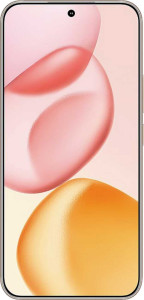
Honor 400 5G
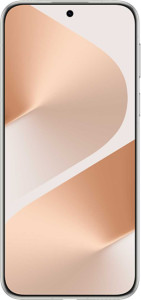
Huawei Pura 80 Pro Plus

Honor 400 5G Huawei Pura 80 Pro Plus

Overview

Welcome to our in-depth comparison of the Honor 400 5G and the Huawei Pura 80 Pro Plus, two compelling 5G smartphones that take very different approaches to design, performance, and photography. Whether you care most about display brightness and portability or prefer a more feature-packed camera system with advanced connectivity, this head-to-head breakdown covers every key specification to help you make the right choice.

Common Features

  • Neither device has a rugged build.
  • Neither device can be folded.
  • Both devices feature an OLED/AMOLED display.
  • Both devices support a 120Hz refresh rate.
  • HDR10 support is not available on either device.
  • HDR10+ support is not available on either device.
  • Always-On Display is available on both devices.
  • Dolby Vision support is not available on either device.
  • Neither device has a secondary screen.
  • Both devices have a touch screen.
  • Both devices support integrated LTE.
  • Both devices support 64-bit processing.
  • Both devices support DirectX 12.
  • Both devices have integrated graphics.
  • Both devices use big.LITTLE technology.
  • Both devices have a TrustZone security feature.
  • Both devices have a Thermal Design Power of 6W.
  • Both devices feature a multi-lens main camera.
  • Both devices have built-in optical image stabilization.
  • Neither device has a BSI sensor.
  • Both devices use a CMOS sensor.
  • Both devices support continuous autofocus when recording movies.
  • Both devices feature phase-detection autofocus for photos.
  • Both devices support slow-motion video recording.
  • Both devices have a built-in HDR mode.
  • Both devices offer camera and microphone privacy options.
  • Both devices support theme customization.
  • Both devices have a dark mode.
  • Both devices include a battery health check feature.
  • Both devices have customizable notifications.
  • Both devices support split screen.
  • Neither device gets direct OS updates.
  • Neither device can be used as a PC.
  • Both devices support fast charging.
  • Both devices come with a charger.
  • Neither device has a removable battery.
  • Both devices have a battery level indicator.
  • Both devices have a rechargeable battery.
  • Neither device has a 3.5mm audio jack.
  • Both devices feature stereo speakers.
  • aptX support is not available on either device.
  • aptX Adaptive support is not available on either device.
  • aptX Lossless support is not available on either device.
  • Neither device has a radio.
  • Both devices support 5G.
  • Both devices accommodate 2 SIM cards.
  • Neither device has an external memory slot.
  • Both devices feature USB Type-C.
  • Both devices have NFC.
  • Both devices have a fingerprint scanner.
  • Crash detection is not available on either device.
  • Neither device is DLNA-certified.
  • Both devices have a video light.
  • Neither device has a sapphire glass display.
  • Neither device has a curved display.
  • Neither device has an e-paper display.

Main Differences

  • Water resistance is rated as water resistant on Honor 400 5G and waterproof on Huawei Pura 80 Pro Plus.
  • Weight is 184g on Honor 400 5G and 219g on Huawei Pura 80 Pro Plus.
  • Thickness is 7.3mm on Honor 400 5G and 8.3mm on Huawei Pura 80 Pro Plus.
  • Width is 74.6mm on Honor 400 5G and 76.1mm on Huawei Pura 80 Pro Plus.
  • Height is 156.5mm on Honor 400 5G and 163mm on Huawei Pura 80 Pro Plus.
  • Volume is 85.23 cm³ on Honor 400 5G and 102.96 cm³ on Huawei Pura 80 Pro Plus.
  • IP rating is IP65 on Honor 400 5G and IP68 on Huawei Pura 80 Pro Plus.
  • Screen size is 6.55″ on Honor 400 5G and 6.8″ on Huawei Pura 80 Pro Plus.
  • Pixel density is 460 ppi on Honor 400 5G and 459 ppi on Huawei Pura 80 Pro Plus.
  • Resolution is 1264 x 2736 px on Honor 400 5G and 1276 x 2848 px on Huawei Pura 80 Pro Plus.
  • Typical brightness is 5000 nits on Honor 400 5G and 2500 nits on Huawei Pura 80 Pro Plus.
  • Branded damage-resistant glass is present on Huawei Pura 80 Pro Plus but not available on Honor 400 5G.
  • Internal storage is 512GB on Honor 400 5G and 1024GB on Huawei Pura 80 Pro Plus.
  • RAM is 12GB on Honor 400 5G and 16GB on Huawei Pura 80 Pro Plus.
  • The chipset is Qualcomm Snapdragon 7 Gen 3 on Honor 400 5G and HiSilicon Kirin 9010 on Huawei Pura 80 Pro Plus.
  • The GPU is Adreno 720 on Honor 400 5G and Mali-G57 on Huawei Pura 80 Pro Plus.
  • CPU speed is 1 x 2.63 & 3 x 2.4 & 4 x 1.8 GHz on Honor 400 5G and 1 x 2.3 & 4 x 2.18 & 3 x 1.55 GHz on Huawei Pura 80 Pro Plus.
  • RAM speed is 3200 MHz on Honor 400 5G and 2750 MHz on Huawei Pura 80 Pro Plus.
  • Semiconductor size is 4nm on Honor 400 5G and 7nm on Huawei Pura 80 Pro Plus.
  • Maximum memory bandwidth is 25.6 GB/s on Honor 400 5G and 44 GB/s on Huawei Pura 80 Pro Plus.
  • Main camera resolution is 200 & 12 MP on Honor 400 5G and 50 & 48 & 40 MP on Huawei Pura 80 Pro Plus.
  • Main camera wide aperture is f/2.2 & f/1.9 on Honor 400 5G and f/1.6 & f/2.1 & f/2.2 on Huawei Pura 80 Pro Plus.
  • Front camera resolution is 50MP on Honor 400 5G and 13MP on Huawei Pura 80 Pro Plus.
  • A dual-tone LED flash is present on Huawei Pura 80 Pro Plus but not available on Honor 400 5G.
  • Number of flash LEDs is 1 on Honor 400 5G and 2 on Huawei Pura 80 Pro Plus.
  • Optical zoom is 0x on Honor 400 5G and 4x on Huawei Pura 80 Pro Plus.
  • Laser autofocus is present on Huawei Pura 80 Pro Plus but not available on Honor 400 5G.
  • Manual shutter speed is available on Huawei Pura 80 Pro Plus but not on Honor 400 5G.
  • Battery capacity is 5300 mAh on Honor 400 5G and 5700 mAh on Huawei Pura 80 Pro Plus.
  • Wireless charging is supported on Huawei Pura 80 Pro Plus but not on Honor 400 5G.
  • Charging speed is 66W on Honor 400 5G and 100W on Huawei Pura 80 Pro Plus.
  • LDAC support is available on Huawei Pura 80 Pro Plus but not on Honor 400 5G.
  • aptX HD support is available on Honor 400 5G but not on Huawei Pura 80 Pro Plus.
  • Wi-Fi version support goes up to Wi-Fi 6 on Honor 400 5G and up to Wi-Fi 7 on Huawei Pura 80 Pro Plus.
  • Bluetooth version is 5.4 on Honor 400 5G and 5.2 on Huawei Pura 80 Pro Plus.
  • USB version is 2.0 on Honor 400 5G and 3.1 on Huawei Pura 80 Pro Plus.
  • Emergency SOS via satellite is available on Huawei Pura 80 Pro Plus but not on Honor 400 5G.
  • A barometer is present on Huawei Pura 80 Pro Plus but not on Honor 400 5G.
Specs Comparison
Honor 400 5G

Honor 400 5G

Huawei Pura 80 Pro Plus

Huawei Pura 80 Pro Plus

Design:
water resistance Water resistant Waterproof
weight 184 g 219 g
thickness 7.3 mm 8.3 mm
width 74.6 mm 76.1 mm
height 156.5 mm 163 mm
volume 85.22677 cm³ 102.95569 cm³
Ingress Protection (IP) rating IP65 IP68
has a rugged build
can be folded

The most consequential design difference between these two phones lies in their protection ratings. The Honor 400 5G carries an IP65 rating, which means it is shielded against dust and low-pressure water jets — adequate for rain or accidental splashes, but not submersion. The Huawei Pura 80 Pro Plus steps up to IP68, meaning it can withstand full immersion in water, typically up to 1.5 meters for 30 minutes. In practical terms, the Pura 80 Pro Plus offers meaningfully stronger protection for users who are near pools, prone to dropping their phone in sinks, or work in wet environments.

Form factor tells a similarly clear story. The Honor 400 5G is notably lighter at 184 g versus the Pura 80 Pro Plus's 219 g — a 35 g difference that is perceptible during extended one-handed use. Its slimmer 7.3 mm thickness (versus 8.3 mm) and more compact footprint (156.5 × 74.6 mm vs. 163 × 76.1 mm) also translate to a phone that is easier to pocket and handle. The volume difference — roughly 85 cm³ versus 103 cm³ — underscores just how much more substantial the Pura 80 Pro Plus physically is.

Neither phone has a rugged build or a foldable form factor, so those distinctions are off the table. Overall, the Honor 400 5G has a clear ergonomic edge for users who prioritize a lighter, more pocketable device, while the Huawei Pura 80 Pro Plus holds a meaningful advantage in water protection with its IP68 rating. Your priority — portability or durability — should drive the decision here.

Display:
Display type OLED/AMOLED OLED/AMOLED
screen size 6.55" 6.8"
pixel density 460 ppi 459 ppi
resolution 1264 x 2736 px 1276 x 2848 px
refresh rate 120Hz 120Hz
brightness (typical) 5000 nits 2500 nits
has branded damage-resistant glass
supports HDR10
supports HDR10+
Always-On Display
supports Dolby Vision
Has a secondary screen
has a touch screen

Both phones share the same OLED/AMOLED panel technology and a 120Hz refresh rate, so scrolling smoothness and color quality are on equal footing. Pixel density is virtually identical — 460 ppi on the Honor 400 5G versus 459 ppi on the Pura 80 Pro Plus — meaning neither has a perceptible sharpness advantage despite the Pura 80 Pro Plus's larger 6.8″ screen (versus 6.55″). The bigger canvas on the Pura 80 Pro Plus simply gives more room for content, which benefits media consumption and multitasking.

Where things diverge sharply is brightness. The Honor 400 5G claims a remarkable 5000 nits of typical brightness — double the Pura 80 Pro Plus's 2500 nits. In real-world terms, this means the Honor 400 5G should remain significantly more legible under direct sunlight, which is one of the most practically relevant display attributes for everyday outdoor use. Conversely, the Pura 80 Pro Plus counters with branded damage-resistant glass, a protection layer the Honor 400 5G lacks entirely — an important consideration for users prone to drops, as unprotected glass is far more vulnerable to scratching and cracking.

Neither display supports HDR10, HDR10+, or Dolby Vision, and both offer Always-On Display functionality, so those factors are a wash. On balance, this category is a genuine trade-off: the Honor 400 5G has a clear edge in outdoor visibility, while the Pura 80 Pro Plus holds the advantage in screen size and glass durability. Users who spend a lot of time outdoors will favor the Honor; those who want a larger, better-protected display will lean toward the Pura 80 Pro Plus.

Performance:
internal storage 512GB 1024GB
RAM 12GB 16GB
Chipset (SoC) name Qualcomm Snapdragon 7 Gen 3 HiSilicon Kirin 9010
GPU name Adreno 720 Mali-G57
CPU speed 1 x 2.63 & 3 x 2.4 & 4 x 1.8 GHz 1 x 2.3 & 4 x 2.18 & 3 x 1.55 GHz
Has integrated LTE
RAM speed 3200 MHz 2750 MHz
semiconductor size 4 nm 7 nm
Supports 64-bit
DirectX version DirectX 12 DirectX 12
Has integrated graphics
OpenGL ES version 3.2 3.2
Uses big.LITTLE technology
Has TrustZone
maximum memory bandwidth 25.6 GB/s 44 GB/s
Thermal Design Power (TDP) 6W 6W

The silicon gap here is significant. The Honor 400 5G runs on the Qualcomm Snapdragon 7 Gen 3, built on a modern 4 nm process, while the Pura 80 Pro Plus relies on the HiSilicon Kirin 9010 at 7 nm. A smaller fabrication node generally means better power efficiency and thermal performance at the same TDP — and both phones share an identical 6W TDP — so the Honor's chip is doing more work with less heat. The Snapdragon also leads in raw CPU clock speed, peaking at 2.63 GHz versus the Kirin's 2.3 GHz, and its RAM runs faster at 3200 MHz versus 2750 MHz.

The Pura 80 Pro Plus punches back in two meaningful areas: 16 GB of RAM (versus 12 GB) and a massive 1 TB of internal storage (versus 512 GB). More RAM benefits heavy multitaskers who keep many apps running simultaneously, reducing the frequency of app reloads. The storage advantage is simply practical — 1 TB is a significant buffer for users who shoot large volumes of photos and video and prefer not to rely on cloud storage. Notably, despite its slower RAM speed, the Kirin achieves a higher memory bandwidth of 44 GB/s versus 25.6 GB/s, which can benefit data-intensive workloads like image processing.

On balance, this is a split verdict. The Honor 400 5G has an architectural efficiency edge thanks to its newer process node and faster CPU and RAM clocks — advantages that matter for sustained performance and day-to-day responsiveness. But the Pura 80 Pro Plus holds a clear practical edge in capacity, offering more RAM for multitasking and double the storage. Users who prioritize raw chip modernity will favor the Honor; those who need headroom for data and concurrent workloads will find the Pura 80 Pro Plus better equipped.

Cameras:
megapixels (main camera) 200 & 12 MP 50 & 48 & 40 MP
wide aperture (main camera) 2.2 & 1.9f 1.6 & 2.1 & 2.2f
Has a dual-lens (or multi-lens) main camera
megapixels (front camera) 50MP 13MP
has built-in optical image stabilization
Has a dual-tone LED flash
number of flash LEDs 1 2
has a BSI sensor
has a CMOS sensor
has continuous autofocus when recording movies
Has phase-detection autofocus for photos
supports slow-motion video recording
has a built-in HDR mode
has manual exposure
has a flash
optical zoom 0x 4x
has manual ISO
has a serial shot mode
has manual focus
has a front camera
Has laser autofocus
Shoots 360° panorama
has manual white balance
has touch autofocus
has manual shutter speed
can create panoramas in-camera
wide aperture (front camera) 2f 2f
Has timelapse function
Has a front-facing LED flash
has a dual-lens (or multi-lens) front camera
supports HDR10 recording
supports Dolby Vision recording
has a front-facing camera under the display
Has a RGB LED flash
has 3D photo/video recording capabilities

Two very different camera philosophies are on display here. The Honor 400 5G bets big on a 200 MP primary sensor — one of the highest raw resolutions available on any smartphone — paired with a 12 MP secondary lens. High megapixel counts enable aggressive cropping and fine detail retention in ideal conditions, but the trade-off is that the main lens's f/2.2 aperture is relatively narrow, limiting light intake. The Pura 80 Pro Plus takes a more balanced approach with a triple-camera system (50 + 48 + 40 MP), and critically, its primary lens opens to a significantly wider f/1.6 aperture — the widest across either phone's entire camera array — meaning it gathers substantially more light per shot, which directly benefits low-light and indoor photography.

Versatility is where the Pura 80 Pro Plus pulls ahead most decisively. Its 4x optical zoom — compared to the Honor's 0x — is a fundamental capability gap. Optical zoom preserves image quality at distance in a way that digital cropping from a high-resolution sensor cannot fully replicate. The Pura 80 Pro Plus also adds laser autofocus for faster, more reliable locking in challenging conditions, a dual-tone LED flash for more natural artificial lighting, and manual shutter speed control for long-exposure photography — a feature entirely absent on the Honor. These are meaningful tools for enthusiast photographers.

The one area where the Honor 400 5G takes a clear lead is the selfie camera: 50 MP versus just 13 MP on the Pura 80 Pro Plus — a substantial gap for users who prioritize front-facing shots. Overall, though, the Pura 80 Pro Plus holds a broader camera advantage, offering superior low-light aperture, genuine optical zoom, three distinct focal lengths, and more manual controls. The Honor's headline 200 MP sensor and excellent selfie camera make it compelling for specific use cases, but the Pura 80 Pro Plus is the more versatile and well-rounded imaging system.

Operating system:
has camera/microphone privacy options
has theme customization
has dark mode
has battery health check
Has customizable notifications
supports split screen
gets direct OS updates
Can be used as a PC
Has sharing intents
has a child lock
Supports widgets
has voice commands
Tracks the current position of a mobile device
is a multi-user system

Across every single operating system feature captured in this data set, the Honor 400 5G and Huawei Pura 80 Pro Plus are in complete lockstep. Both offer the full suite of modern software conveniences: dark mode, split-screen multitasking, customizable notifications, widgets, voice commands, child lock, multi-user support, and camera/microphone privacy controls. There is not a single differentiating data point in this group.

One shared characteristic worth flagging is that neither phone receives direct OS updates — a notable consideration for users who prioritize long-term security patches and feature updates delivered straight from the platform developer. This is a shared limitation rather than a differentiator, but it is the most practically significant piece of information in this group for buyers thinking about device longevity.

This category is an unambiguous tie. Based strictly on the provided specs, no advantage can be awarded to either device. Users should treat OS software features as a neutral factor in their decision between these two phones and weigh the differences identified in other spec groups instead.

Battery:
battery power 5300 mAh 5700 mAh
has wireless charging
Supports fast charging
charging speed 66W 100W
comes with a charger
has a removable battery
has a battery level indicator
has a rechargeable battery

The Pura 80 Pro Plus leads on every measurable battery dimension. Its 5700 mAh cell outpaces the Honor 400 5G's 5300 mAh — a 400 mAh difference that, while not dramatic, does translate to a modest but real extension in screen-on time over the course of a heavy day. More impactful is the charging speed gap: the Pura 80 Pro Plus supports 100W fast charging versus the Honor's 66W. At 100W, a depleted battery can realistically reach a full charge in well under an hour, making top-ups during short breaks genuinely practical.

The single most decisive differentiator in this group, however, is wireless charging. The Pura 80 Pro Plus supports it; the Honor 400 5G does not. For users who have invested in wireless charging pads at their desk or bedside, this is a meaningful convenience gap — eliminating the need to plug in a cable every time. Both phones include a charger in the box and have non-removable batteries, so those factors cancel out.

The Pura 80 Pro Plus holds a clear and well-rounded advantage in this category — larger capacity, significantly faster wired charging, and the added flexibility of wireless charging. The Honor 400 5G's battery setup is perfectly adequate, but it cannot match the breadth of the Pura 80 Pro Plus's power features.

Audio:
has a socket for a 3.5 mm audio jack
has stereo speakers
has aptX
has LDAC
has aptX HD
has aptX Adaptive
has aptX Lossless
Has a radio

The shared audio foundation is identical: both phones drop the 3.5mm headphone jack, offer stereo speakers, and lack a radio. For wired headphone users, both require an adapter or Bluetooth. For everyone else, the stereo speaker setup on each device ensures spatial audio separation when watching video or listening to music — a meaningful step up from mono speaker setups.

Where they diverge is in Bluetooth audio codec support — a detail that matters specifically for wireless headphone users who care about audio fidelity. The Honor 400 5G supports aptX HD, Qualcomm's high-resolution wireless audio codec designed to deliver better-than-CD quality over Bluetooth to compatible headphones. The Pura 80 Pro Plus instead supports LDAC, Sony's high-resolution codec that transmits up to three times more data than standard Bluetooth audio at its highest quality setting. Both are premium codecs aimed at audiophiles, but LDAC is generally regarded as capable of higher peak bitrates, and it is natively supported by a wide range of high-end headphones from multiple manufacturers.

This category is close, but the Pura 80 Pro Plus holds a narrow edge for wireless audio enthusiasts thanks to LDAC's broader headphone ecosystem compatibility and higher potential bitrate ceiling. That said, the advantage only materializes if the user owns LDAC-compatible headphones — for everyone else, this group is effectively a tie.

Connectivity & Features:
release date May 2025 June 2025
has 5G support
Wi-Fi version Wi-Fi 4 (802.11n), Wi-Fi 5 (802.11ac), Wi-Fi 6 (802.11ax) Wi-Fi 4 (802.11n), Wi-Fi 5 (802.11ac), Wi-Fi 6 (802.11ax), Wi-Fi 7 (802.11be)
SIM cards 2 SIM 2 SIM
Bluetooth version 5.4 5.2
has an external memory slot
Has USB Type-C
USB version 2 3.1
has NFC
Has a fingerprint scanner
has emergency SOS via satellite
has crash detection
is DLNA-certified
has a gyroscope
supports ANT+
Has a heart rate monitor
has GPS
has a compass
supports Wi-Fi
Has an infrared sensor
has an accelerometer
has a cellular module
Has a barometer
has an HDMI output
Uses 3D facial recognition
Has an iris scanner
Stylus included
supports Galileo
Has motion tracking
Has optical tracking
Has a built-in projector

Shared connectivity foundations are strong on both devices — 5G, dual SIM, NFC, USB-C, Wi-Fi 6, and a solid sensor suite including GPS, gyroscope, compass, and infrared are all present on each. The meaningful divergences, however, are worth unpacking carefully. The Pura 80 Pro Plus supports Wi-Fi 7 (802.11be), the latest wireless standard offering significantly higher throughput and lower latency than Wi-Fi 6 — a future-proofing advantage that will matter increasingly as Wi-Fi 7 routers become more common. On the flip side, the Honor 400 5G sports the newer Bluetooth 5.4 versus the Pura's 5.2, which brings incremental improvements in connection reliability and power efficiency for wireless peripherals.

Two exclusive features set the Pura 80 Pro Plus apart in more tangible ways. Its USB 3.1 interface — compared to the Honor's USB 2.0 — enables dramatically faster data transfers when connecting to a computer or external drive, a practical difference anyone who regularly offloads large video files will feel immediately. Additionally, the Pura 80 Pro Plus includes emergency SOS via satellite, enabling distress signals in areas with no cellular coverage — a potentially life-critical capability — and a barometer, useful for weather awareness and altitude tracking during outdoor activities.

Across this group, the Pura 80 Pro Plus holds a clear overall advantage. Its leads in Wi-Fi 7, USB 3.1 transfer speeds, satellite emergency communication, and environmental sensing add up to a meaningfully more feature-complete connectivity package. The Honor 400 5G's newer Bluetooth version is a real but minor counterpoint that does not shift the balance.
Miscellaneous:
has a video light
Has sapphire glass display
Has a curved display
Has an e-paper display

The Miscellaneous group offers no differentiating information between these two phones. Both have a video light, and neither features sapphire glass, a curved display, or an e-paper display. Every data point is identical.

This is a complete tie by the provided data. No advantage can be assigned to either device, and buyers should look to the other specification groups — particularly Design, Battery, Cameras, and Connectivity — where the meaningful differences between the Honor 400 5G and the Huawei Pura 80 Pro Plus actually reside.

Comparison Summary & Verdict

After examining every specification, it is clear that both devices serve distinct audiences. The Honor 400 5G stands out with its significantly brighter 5000-nit display, lighter 184g frame, thinner 7.3mm profile, newer 4nm chipset, and a remarkable 200MP main camera — making it the stronger pick for users who prioritize screen visibility, everyday portability, and high-resolution photography. The Huawei Pura 80 Pro Plus, on the other hand, delivers a more premium all-around experience with its IP68 waterproofing, 4x optical zoom, 100W fast charging, wireless charging, Wi-Fi 7, USB 3.1, larger 5700 mAh battery, and a higher 1TB storage ceiling — catering to power users who demand top-tier durability, connectivity, and versatility from their device.

Honor 400 5G
Buy Honor 400 5G if...

Buy the Honor 400 5G if you want a lighter, slimmer phone with an exceptionally bright display, a high-resolution 200MP camera, and a more compact form factor for everyday use.

Huawei Pura 80 Pro Plus
Buy Huawei Pura 80 Pro Plus if...

Buy the Huawei Pura 80 Pro Plus if you need superior waterproofing, 4x optical zoom, faster 100W wired and wireless charging, Wi-Fi 7, and a larger battery for a more feature-complete flagship experience.