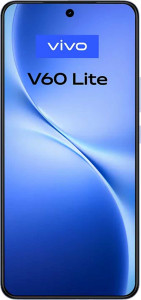
Connectivity is another area where the Honor 400 5G pulls ahead, most notably through Wi-Fi 6 (802.11ax) support — a standard the Vivo V60 Lite 5G lacks, topping out at Wi-Fi 5 instead. Wi-Fi 6 delivers faster throughput, lower latency, and significantly better performance in congested environments like offices or crowded public spaces. For users on a modern router, this is a tangible, everyday advantage. On cellular, the Honor also claims a higher peak download speed of 5000 Mbits/s versus the Vivo's 3270 Mbits/s, though it is worth noting the Vivo's stated upload speed of 3270 Mbits/s dwarfs the Honor's 160 Mbits/s — a notable reversal that may benefit users who frequently upload large files or stream live content over cellular.
Beyond wireless, the Honor holds one more exclusive: a built-in infrared sensor, which allows it to function as a universal remote for TVs, air conditioners, and other IR-compatible appliances — a niche but genuinely useful convenience the Vivo does not offer. Everything else is shared ground: both carry Bluetooth 5.4, NFC, dual SIM, USB Type-C, a fingerprint scanner, and a full location sensor suite including GPS, Galileo, gyroscope, and compass.
The Honor 400 5G edges out the Vivo V60 Lite 5G in this category. Wi-Fi 6 support and the infrared sensor are the decisive factors — the former is broadly useful, the latter a handy bonus. The Vivo's superior cellular upload speed is a meaningful counter for specific use cases, but it is not enough to shift the overall balance.