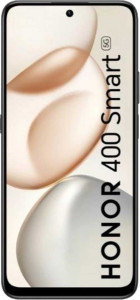
The panel technology gap here is substantial. The Honor 400 Lite uses an OLED/AMOLED display, which delivers true blacks, higher contrast, and more vibrant colors by lighting each pixel individually. The Honor 400 Smart 5G, by contrast, relies on an LCD IPS panel — a fundamentally older technology that cannot match OLED's contrast depth or power efficiency when rendering dark content. For users who watch video, browse at night, or care about color accuracy, this is one of the most impactful differences between the two devices.
Resolution compounds that advantage. The Lite's 1080 × 2412 px panel translates to a pixel density of 394 ppi, producing sharp, fine-grained text and imagery. The Smart 5G's 720 × 1610 px resolution yields just 261 ppi — a difference that is visibly noticeable, particularly when reading small text or viewing detailed photos. Both screens sit at similarly large sizes (6.7″ vs 6.77″) and both run at 120Hz, so scrolling smoothness is equal. But sharpness and panel quality are not.
One additional differentiator worth noting: the Lite supports an Always-On Display, letting users glance at time, notifications, or widgets without waking the screen — a convenience made practical precisely because OLED only powers the relevant pixels. The Smart 5G lacks this feature entirely. Across every meaningful display metric in this group, the Honor 400 Lite holds a clear and decisive advantage.