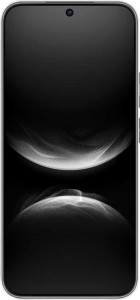
The camera systems on these two phones sit in entirely different leagues. The Huawei Nova 14 fields a versatile triple-lens rear setup — 50 MP + 12 MP + 8 MP — with a main aperture of f/1.9, 3x optical zoom, and optical image stabilization (OIS). The Honor 400 Lite, by contrast, pairs a 108 MP primary with a 2 MP depth sensor that offers no meaningful versatility, no OIS, and no optical zoom whatsoever. While 108 MP sounds impressive, without OIS even slightly unsteady hands introduce blur, and the absence of a telephoto or ultrawide lens severely limits compositional flexibility.
The gap extends into video and advanced features. The Nova 14 records in 4K at 30 fps compared to the 400 Lite's ceiling of 1080p at 30 fps — a generation behind for anyone who values crisp video. The Nova 14 also adds laser autofocus for faster, more reliable subject locking, and crucially supports RAW shooting, which is indispensable for photographers who post-process their images. On the front, the Nova 14's 50 MP selfie camera dwarfs the 400 Lite's 16 MP sensor, promising significantly more detail for portraits and video calls.
The Nova 14 wins this category decisively. Across every meaningful dimension — versatility, zoom, stabilization, video resolution, autofocus speed, and manual control depth — it outspecifies the Honor 400 Lite. The 400 Lite's high megapixel count on paper cannot compensate for the structural limitations of its two-sensor system.