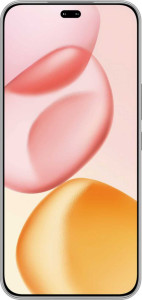
Honor 400 Pro 5G
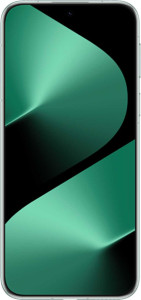
Huawei Pura 80 Pro

Honor 400 Pro 5G Huawei Pura 80 Pro

Overview

When two premium Android flagships from the same technology heritage go head-to-head, the details matter most. The Honor 400 Pro 5G and Huawei Pura 80 Pro share a solid foundation of IP68 waterproofing, 120Hz OLED displays, and 100W fast charging, yet diverge meaningfully across raw processing power, camera capabilities, and connectivity features. This in-depth comparison breaks down every specification to help you decide which of these high-end smartphones truly fits your needs.

Common Features

  • Both phones are waterproof with an IP68 ingress protection rating.
  • Both phones share the same width of 76.1 mm.
  • Neither phone has a rugged build.
  • Neither phone can be folded.
  • Both phones feature an OLED/AMOLED display.
  • Both phones support a 120Hz refresh rate.
  • HDR10 support is not available on either phone.
  • HDR10+ support is not available on either phone.
  • Always-On Display is available on both phones.
  • Dolby Vision support is not available on either phone.
  • Neither phone has a secondary screen.
  • Both phones have a touch screen.
  • Both phones come with 12GB of RAM.
  • Both phones have integrated LTE.
  • Both phones support 64-bit processing.
  • Both phones use DirectX 12.
  • Both phones have integrated graphics.
  • Both phones use big.LITTLE technology.
  • Both phones have TrustZone support.
  • Both phones feature a multi-lens main camera.
  • Optical image stabilization is built into both phones.
  • Neither phone uses a BSI sensor.
  • Both phones use a CMOS sensor.
  • Both phones support continuous autofocus when recording movies.
  • Both phones have phase-detection autofocus for photos.
  • Both phones support slow-motion video recording.
  • Both phones have a built-in HDR mode.
  • Camera and microphone privacy options are available on both phones.
  • Both phones support theme customization.
  • Dark mode is available on both phones.
  • Both phones include a battery health check feature.
  • Both phones have customizable notifications.
  • Both phones support split screen.
  • Neither phone gets direct OS updates.
  • Neither phone can be used as a PC.
  • Both phones support wireless charging.
  • Both phones support fast charging at 100W.
  • Both phones support reverse wireless charging.
  • Both phones come with a charger in the box.
  • Neither phone has a removable battery.
  • Both phones have a battery level indicator.
  • Both phones have a rechargeable battery.
  • Neither phone has a 3.5mm audio jack.
  • Both phones feature stereo speakers.
  • aptX support is not available on either phone.
  • aptX Adaptive support is not available on either phone.
  • aptX Lossless support is not available on either phone.
  • Neither phone has a radio.
  • Both phones support 5G connectivity.
  • Both phones support dual SIM cards.
  • Neither phone has an external memory slot.
  • Both phones have a USB Type-C port.
  • Both phones have NFC.
  • Both phones include a fingerprint scanner.
  • Crash detection is not available on either phone.
  • Neither phone is DLNA-certified.
  • Both phones have a video light.
  • Neither phone has a sapphire glass display.
  • Neither phone has a curved display.
  • Neither phone has an e-paper display.

Main Differences

  • Weight is 205 g on Honor 400 Pro 5G and 219 g on Huawei Pura 80 Pro.
  • Thickness is 8.1 mm on Honor 400 Pro 5G and 8.3 mm on Huawei Pura 80 Pro.
  • Height is 156.5 mm on Honor 400 Pro 5G and 163 mm on Huawei Pura 80 Pro.
  • Volume is 96.47 cm³ on Honor 400 Pro 5G and 102.96 cm³ on Huawei Pura 80 Pro.
  • Screen size is 6.7″ on Honor 400 Pro 5G and 6.8″ on Huawei Pura 80 Pro.
  • Pixel density is 460 ppi on Honor 400 Pro 5G and 459 ppi on Huawei Pura 80 Pro.
  • Resolution is 1280 x 2800 px on Honor 400 Pro 5G and 1276 x 2848 px on Huawei Pura 80 Pro.
  • Typical brightness is 5000 nits on Honor 400 Pro 5G and 2500 nits on Huawei Pura 80 Pro.
  • Damage-resistant branded glass is present on Huawei Pura 80 Pro but not available on Honor 400 Pro 5G.
  • Internal storage is 512GB on Honor 400 Pro 5G and 1024GB on Huawei Pura 80 Pro.
  • The chipset is Qualcomm Snapdragon 8 Gen 3 on Honor 400 Pro 5G and HiSilicon Kirin 9010 on Huawei Pura 80 Pro.
  • The GPU is Adreno 750 on Honor 400 Pro 5G and Mali-G57 on Huawei Pura 80 Pro.
  • CPU speed is 3 x 3.15 & 2 x 2.96 & 2 x 2.26 & 1 x 3.3 GHz on Honor 400 Pro 5G and 1 x 2.3 & 4 x 2.18 & 3 x 1.55 GHz on Huawei Pura 80 Pro.
  • RAM speed is 4800 MHz on Honor 400 Pro 5G and 2750 MHz on Huawei Pura 80 Pro.
  • Semiconductor size is 4 nm on Honor 400 Pro 5G and 7 nm on Huawei Pura 80 Pro.
  • Maximum memory bandwidth is 76.6 GB/s on Honor 400 Pro 5G and 44 GB/s on Huawei Pura 80 Pro.
  • L2 cache is 1 MB on Honor 400 Pro 5G and 0.512 MB on Huawei Pura 80 Pro.
  • L3 cache is 12 MB on Honor 400 Pro 5G and 4 MB on Huawei Pura 80 Pro.
  • Thermal Design Power is 12.5W on Honor 400 Pro 5G and 6W on Huawei Pura 80 Pro.
  • Main camera megapixels are 200 & 50 & 12 MP on Honor 400 Pro 5G and 50 & 48 & 40 MP on Huawei Pura 80 Pro.
  • Main camera wide aperture is f/1.9, f/2.4, f/2.2 on Honor 400 Pro 5G and f/1.6, f/2.1, f/2.2 on Huawei Pura 80 Pro.
  • Front camera megapixels are 50 & 2 MP on Honor 400 Pro 5G and 13 MP on Huawei Pura 80 Pro.
  • A dual-tone LED flash is present on Huawei Pura 80 Pro but not available on Honor 400 Pro 5G.
  • Number of flash LEDs is 1 on Honor 400 Pro 5G and 2 on Huawei Pura 80 Pro.
  • Optical zoom is 3x on Honor 400 Pro 5G and 4x on Huawei Pura 80 Pro.
  • Laser autofocus is available on Huawei Pura 80 Pro but not on Honor 400 Pro 5G.
  • Manual shutter speed is supported on Huawei Pura 80 Pro but not on Honor 400 Pro 5G.
  • A dual-lens front camera is present on Honor 400 Pro 5G but not on Huawei Pura 80 Pro.
  • Battery power is 6000 mAh on Honor 400 Pro 5G and 5700 mAh on Huawei Pura 80 Pro.
  • Wireless charging speed is 50W on Honor 400 Pro 5G and 80W on Huawei Pura 80 Pro.
  • LDAC support is available on Huawei Pura 80 Pro but not on Honor 400 Pro 5G.
  • aptX HD support is available on Honor 400 Pro 5G but not on Huawei Pura 80 Pro.
  • Wi-Fi 6E support is available on Honor 400 Pro 5G but not on Huawei Pura 80 Pro.
  • Bluetooth version is 5.4 on Honor 400 Pro 5G and 5.2 on Huawei Pura 80 Pro.
  • USB version is 2.0 on Honor 400 Pro 5G and 3.1 on Huawei Pura 80 Pro.
  • Emergency SOS via satellite is available on Huawei Pura 80 Pro but not on Honor 400 Pro 5G.
  • A gyroscope is present on Huawei Pura 80 Pro but not on Honor 400 Pro 5G.
  • A barometer is present on Huawei Pura 80 Pro but not on Honor 400 Pro 5G.
Specs Comparison
Honor 400 Pro 5G

Honor 400 Pro 5G

Huawei Pura 80 Pro

Huawei Pura 80 Pro

Design:
water resistance Waterproof Waterproof
weight 205 g 219 g
thickness 8.1 mm 8.3 mm
width 76.1 mm 76.1 mm
height 156.5 mm 163 mm
volume 96.468165 cm³ 102.95569 cm³
Ingress Protection (IP) rating IP68 IP68
has a rugged build
can be folded

Both the Honor 400 Pro 5G and the Huawei Pura 80 Pro share the same IP68 waterproof rating, meaning neither has an advantage in water and dust resistance — both can handle submersion in fresh water under standard conditions. They also share an identical 76.1 mm width, so neither feels noticeably wider in the hand.

The clearest differentiator in this group is overall size and weight. The Huawei Pura 80 Pro is taller at 163 mm versus 156.5 mm, heavier at 219 g versus 205 g, and slightly thicker at 8.3 mm versus 8.1 mm. Individually these gaps are modest, but combined they result in a meaningfully larger physical footprint — the Pura 80 Pro's volume of 102.96 cm³ is roughly 7% greater than the Honor's 96.47 cm³. In practice, the Honor 400 Pro will feel more pocketable and less fatiguing during extended one-handed use, while the Pura 80 Pro's extra height likely accommodates a larger display.

Edge: Honor 400 Pro 5G. For users who prioritize a more compact, lighter form factor, the Honor 400 Pro has a clear advantage. The Pura 80 Pro offers no design-related benefit in return for its added bulk based strictly on the specs in this group — both phones are equally protected and neither offers a rugged or foldable build.

Display:
Display type OLED/AMOLED OLED/AMOLED
screen size 6.7" 6.8"
pixel density 460 ppi 459 ppi
resolution 1280 x 2800 px 1276 x 2848 px
refresh rate 120Hz 120Hz
brightness (typical) 5000 nits 2500 nits
has branded damage-resistant glass
supports HDR10
supports HDR10+
Always-On Display
supports Dolby Vision
Has a secondary screen
has a touch screen

On paper, these two displays are remarkably close. Both use OLED/AMOLED panels, run at 120Hz, support Always-On Display, and land at virtually identical pixel densities — 460 ppi on the Honor 400 Pro versus 459 ppi on the Pura 80 Pro. At that level of sharpness, the human eye cannot distinguish a difference in day-to-day use. The screen sizes also differ by only 0.1 inch (6.7″ vs 6.8″), which is imperceptible in hand.

The two standout differentiators pull in opposite directions. The Honor 400 Pro's peak brightness of 5000 nits is double the Pura 80 Pro's 2500 nits — a gap that is anything but cosmetic. In direct sunlight, the Honor's panel will remain far more legible, making it the stronger choice for outdoor use. On the flip side, the Pura 80 Pro ships with branded damage-resistant glass, while the Honor 400 Pro does not. For users prone to drops, that added screen protection on the Pura 80 Pro is a meaningful real-world advantage that no software update can replicate.

Edge: context-dependent, but Honor 400 Pro for display performance. If outdoor visibility is the priority, the Honor's brightness advantage is decisive. However, users who value screen durability will find the Pura 80 Pro's damage-resistant glass a compelling counterargument. Neither phone holds an advantage in refresh rate, sharpness, or HDR support, so the decision within this group comes down to how you weight sunlight readability against physical screen protection.

Performance:
internal storage 512GB 1024GB
RAM 12GB 12GB
Chipset (SoC) name Qualcomm Snapdragon 8 Gen 3 HiSilicon Kirin 9010
GPU name Adreno 750 Mali-G57
CPU speed 3 x 3.15 & 2 x 2.96 & 2 x 2.26 & 1 x 3.3 GHz 1 x 2.3 & 4 x 2.18 & 3 x 1.55 GHz
Has integrated LTE
RAM speed 4800 MHz 2750 MHz
semiconductor size 4 nm 7 nm
Supports 64-bit
DirectX version DirectX 12 DirectX 12
Has integrated graphics
OpenGL ES version 3.2 3.2
Uses big.LITTLE technology
Has TrustZone
maximum memory bandwidth 76.6 GB/s 44 GB/s
OpenCL version 2 2
L2 cache 1 MB 0.512 MB
Thermal Design Power (TDP) 12.5W 6W
L3 cache 12 MB 4 MB

The silicon gap between these two phones is substantial. The Honor 400 Pro runs on the Qualcomm Snapdragon 8 Gen 3, built on a 4 nm process, while the Huawei Pura 80 Pro uses the HiSilicon Kirin 9010 at 7 nm. A smaller node generally means more transistors per mm², translating to higher computational throughput and better energy efficiency at equivalent workloads. This advantage cascades across nearly every other performance metric: the Honor's memory bandwidth of 76.6 GB/s versus the Pura 80 Pro's 44 GB/s, its RAM speed of 4800 MHz versus 2750 MHz, and its L3 cache of 12 MB versus 4 MB all point to a chip that can feed data to the CPU and GPU far more rapidly — critical for gaming, AI processing, and heavy multitasking.

The Pura 80 Pro's 6W TDP versus the Honor's 12.5W reflects the more modest power draw of the Kirin 9010, which may contribute to thermal comfort in sustained workloads, but it is also a direct consequence of the chip's lower peak performance ceiling. The one area where the Pura 80 Pro pulls ahead is storage: it offers 1024 GB versus the Honor's 512 GB — a meaningful difference for users who store large libraries of photos, video, or offline content. Both phones match on RAM at 12 GB.

Edge: Honor 400 Pro 5G — and it is not close. The Snapdragon 8 Gen 3 outpaces the Kirin 9010 across every processing and memory throughput metric provided. The Pura 80 Pro's doubled storage is a practical advantage for heavy media users, but it does not offset the generational chip deficit. Users who prioritize raw performance — gaming, computational photography, or future-proofing — will find the Honor significantly more capable based on these specs.

Cameras:
megapixels (main camera) 200 & 50 & 12 MP 50 & 48 & 40 MP
wide aperture (main camera) 1.9 & 2.4 & 2.2f 1.6 & 2.1 & 2.2f
Has a dual-lens (or multi-lens) main camera
megapixels (front camera) 50 & 2MP 13MP
has built-in optical image stabilization
Has a dual-tone LED flash
number of flash LEDs 1 2
has a BSI sensor
has a CMOS sensor
has continuous autofocus when recording movies
Has phase-detection autofocus for photos
supports slow-motion video recording
has a built-in HDR mode
has manual exposure
has a flash
optical zoom 3x 4x
has manual ISO
has a serial shot mode
has manual focus
has a front camera
Has laser autofocus
Shoots 360° panorama
has manual white balance
has touch autofocus
has manual shutter speed
can create panoramas in-camera
Has timelapse function
Has a front-facing LED flash
has a dual-lens (or multi-lens) front camera
supports HDR10 recording
supports Dolby Vision recording
has a front-facing camera under the display
Has a RGB LED flash
has 3D photo/video recording capabilities

The rear camera systems take philosophically different approaches. The Honor 400 Pro leads with a headline 200 MP primary sensor — a pixel count that enables aggressive detail capture and flexible cropping, but raw megapixels alone do not determine image quality. The Huawei Pura 80 Pro counters with wider apertures across its triple array: f/1.6 on the main lens versus the Honor's f/1.9, and f/2.1 on the secondary versus f/2.4. Wider apertures admit more light per frame, which typically benefits low-light and night photography — an area where aperture often matters more than megapixel count. The Pura 80 Pro also offers 4x optical zoom against the Honor's 3x, giving it a longer reach for telephoto shots without digital quality loss.

Several feature-level differences further distinguish the two. The Pura 80 Pro adds laser autofocus, which improves focus acquisition speed and reliability in low-contrast or dark scenes. It also supports manual shutter speed control — a capability the Honor 400 Pro lacks — making it more versatile for long-exposure or light-trail photography. On the flash side, the Pura 80 Pro includes a dual-tone LED flash with two LEDs for more natural-looking artificial illumination, while the Honor uses a single LED. The Honor fights back at the front: its dual front camera with a 50 MP primary selfie sensor significantly outresolves the Pura 80 Pro's single 13 MP front camera, which is a notable advantage for selfie-focused users.

Edge: Huawei Pura 80 Pro for rear photography; Honor 400 Pro 5G for selfies. The Pura 80 Pro's wider apertures, longer optical zoom, laser autofocus, and manual shutter speed control give it a more capable and flexible rear camera system on paper. The Honor's 200 MP sensor is impressive for detail and cropping flexibility, but the Pura 80 Pro's optical and feature advantages are more broadly impactful across shooting conditions. However, users who prioritize front camera quality will find the Honor's 50 MP dual selfie setup a clear win.

Operating system:
has camera/microphone privacy options
has theme customization
has dark mode
has battery health check
Has customizable notifications
supports split screen
gets direct OS updates
Can be used as a PC
Has sharing intents
has a child lock
Supports widgets
has voice commands
Tracks the current position of a mobile device
is a multi-user system

Across every operating system feature captured in this group, the Honor 400 Pro 5G and the Huawei Pura 80 Pro are an exact mirror of each other. Both support the full set of modern smartphone OS essentials: split-screen multitasking, widgets, customizable notifications, dark mode, voice commands, theme customization, child lock, multi-user support, device tracking, and camera/microphone privacy controls. There is not a single differentiating data point in this group.

Worth noting is that neither phone receives direct OS updates — a shared limitation that prospective buyers should factor into their long-term ownership expectations, regardless of which device they choose.

Verdict: Dead tie. Based strictly on the specs provided, no advantage can be assigned to either phone in this category. Any meaningful OS-level differences between these two devices fall outside the data available here.

Battery:
battery power 6000 mAh 5700 mAh
has wireless charging
Supports fast charging
charging speed 100W 100W
wireless charging speed 50W 80W
has reverse wireless charging
comes with a charger
has a removable battery
has a battery level indicator
has a rechargeable battery

Battery capacity is close but not identical: the Honor 400 Pro carries a 6000 mAh cell versus the Huawei Pura 80 Pro's 5700 mAh. A 300 mAh difference is modest in absolute terms, but combined with the Honor's lighter weight and more efficient 4 nm chipset noted in the performance group, it points toward the Honor having a more comfortable endurance lead in real-world usage. Both phones are solidly in the large-battery tier, so neither should struggle to last a full day under normal conditions.

Wired charging is identical at 100W for both — fast enough to top up either phone from near-empty in well under an hour. Where they diverge is wireless charging: the Pura 80 Pro pulls ahead with 80W wireless versus the Honor's 50W. That gap is practically significant — faster wireless charging reduces the time you need to leave the phone on a pad, making the Pura 80 Pro notably more convenient for users who prefer cable-free topping up. Both phones also support reverse wireless charging, allowing them to act as a wireless power bank for accessories like earbuds.

Edge: split, but Honor 400 Pro 5G overall. The Honor wins on raw capacity, which is the foundational battery metric. The Pura 80 Pro's faster wireless charging is a genuine advantage for pad-charging users, but it does not offset the larger cell. For most users, more milliamp-hours means more hours of use between charges — and that is the Honor's ground to stand on here.

Audio:
has a socket for a 3.5 mm audio jack
has stereo speakers
has aptX
has LDAC
has aptX HD
has aptX Adaptive
has aptX Lossless
Has a radio

Neither phone includes a 3.5 mm audio jack, so wired listening requires an adapter or Bluetooth headphones on both. Stereo speakers are present on each, meaning the shared baseline for speaker audio is identical. The meaningful divergence lies entirely in wireless audio codec support — and the two phones back different standards.

The Honor 400 Pro supports aptX HD, a Qualcomm codec capable of transmitting high-resolution audio over Bluetooth at up to 576 kbps, targeting audiophiles with compatible headphones. The Pura 80 Pro instead supports LDAC, Sony's high-fidelity Bluetooth codec that can transmit at up to 990 kbps — the highest bitrate of any widely adopted wireless audio codec. In practice, LDAC offers greater theoretical bandwidth for lossless-adjacent wireless listening, provided the user owns LDAC-compatible headphones and the connection conditions are stable enough to sustain the higher bitrate mode.

Edge: Huawei Pura 80 Pro, narrowly, for wireless audio quality potential. LDAC's higher maximum bitrate gives the Pura 80 Pro the ceiling advantage for high-fidelity Bluetooth listening. That said, this edge is only relevant to users with LDAC-compatible headphones; for everyone else, both phones deliver equivalent audio experiences through their shared stereo speaker setup. Neither codec advantage translates to better speaker output.

Connectivity & Features:
release date May 2025 June 2025
has 5G support
Wi-Fi version Wi-Fi 4 (802.11n), Wi-Fi 5 (802.11ac), Wi-Fi 6 (802.11ax), Wi-Fi 6E (802.11ax), Wi-Fi 7 (802.11be) Wi-Fi 4 (802.11n), Wi-Fi 5 (802.11ac), Wi-Fi 6 (802.11ax), Wi-Fi 7 (802.11be)
SIM cards 2 SIM 2 SIM
Bluetooth version 5.4 5.2
has an external memory slot
Has USB Type-C
USB version 2 3.1
has NFC
Has a fingerprint scanner
has emergency SOS via satellite
has crash detection
is DLNA-certified
has a gyroscope
supports ANT+
Has a heart rate monitor
has GPS
has a compass
supports Wi-Fi
Has an infrared sensor
has an accelerometer
has a cellular module
Has a barometer
has an HDMI output
Uses 3D facial recognition
Has an iris scanner
Stylus included
supports Galileo
Has motion tracking
Has optical tracking
Has a built-in projector

The shared connectivity foundation is strong on both devices: 5G, NFC, dual SIM, USB-C, GPS, infrared sensor, fingerprint scanner, and Galileo support all appear on each. Wi-Fi capability diverges in one direction — the Honor 400 Pro adds Wi-Fi 6E to its stack, giving it access to the less-congested 6 GHz band for faster, more interference-free connections where 6E routers are available. The Pura 80 Pro tops out at Wi-Fi 7 without 6E, while the Honor supports both. The Honor also has a newer Bluetooth 5.4 versus the Pura 80 Pro's 5.2, offering marginally improved connection stability and efficiency.

The Pura 80 Pro counters with advantages that are arguably more impactful for everyday and outdoor use. Its USB 3.1 port — versus the Honor's USB 2.0 — delivers dramatically faster wired data transfer speeds, which matters when moving large files like 4K video to a computer. It also includes a gyroscope and barometer, sensors the Honor lacks; the gyroscope enables more accurate motion-based gaming and AR applications, while the barometer adds altitude tracking and more precise weather data. Perhaps most distinctively, the Pura 80 Pro supports emergency SOS via satellite — a potentially life-saving feature for users who venture into areas without cellular coverage, and one the Honor 400 Pro does not offer at all.

Edge: Huawei Pura 80 Pro. The Honor's Wi-Fi 6E and newer Bluetooth are useful but incremental gains. The Pura 80 Pro's USB 3.1, additional sensors, and especially satellite SOS represent broader and more consequential feature advantages. For users who transfer large files regularly or spend time in remote environments, the Pura 80 Pro's connectivity and sensor suite pulls meaningfully ahead.
Miscellaneous:
has a video light
Has sapphire glass display
Has a curved display
Has an e-paper display

The Miscellaneous group offers no differentiation between these two phones whatsoever. Every data point — video light support, and the absence of sapphire glass, a curved display, or an e-paper display — is identical across the Honor 400 Pro 5G and the Huawei Pura 80 Pro.

Verdict: Complete tie. Based strictly on the specs provided here, this category contributes nothing to the decision between these two devices. Buyers should weigh the differentiators surfaced in other spec groups when making their choice.

Comparison Summary & Verdict

After a thorough side-by-side review, both devices carve out a distinct competitive identity. The Honor 400 Pro 5G is the stronger choice for performance-driven users: its Snapdragon 8 Gen 3 chipset, remarkable 5000-nit display brightness, larger 6000 mAh battery, and Wi-Fi 6E support make it a raw-power flagship in a lighter, more compact body. By contrast, the Huawei Pura 80 Pro appeals to those who value versatility and imaging depth, delivering superior 4x optical zoom, faster 80W wireless charging, a generous 1TB of storage, USB 3.1, LDAC audio, and practical extras such as a gyroscope, barometer, and satellite emergency SOS. Neither phone is an outright winner — the right pick comes down to whether cutting-edge processing speed or a richer, more feature-complete experience matters most to you.

Honor 400 Pro 5G
Buy Honor 400 Pro 5G if...

Buy the Honor 400 Pro 5G if you want the fastest processing power, a dramatically brighter 5000-nit display, and a larger 6000 mAh battery packed into a lighter, more compact body.

Huawei Pura 80 Pro
Buy Huawei Pura 80 Pro if...

Buy the Huawei Pura 80 Pro if you value greater optical zoom, faster 80W wireless charging, 1TB of storage, USB 3.1 connectivity, and premium extras like a gyroscope, barometer, and satellite emergency SOS.