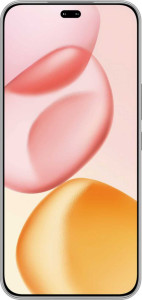
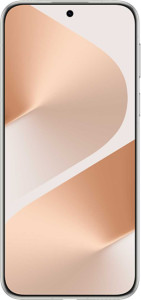
Honor 400 Pro 5G
Huawei Pura 80 Pro Plus

Honor 400 Pro 5G Huawei Pura 80 Pro Plus

Overview

Welcome to our in-depth comparison of the Honor 400 Pro 5G and the Huawei Pura 80 Pro Plus — two premium Android smartphones that share a solid foundation yet diverge in meaningful ways. Both arrive with IP68 waterproofing, OLED displays with 120Hz refresh rates, and 100W fast charging, but key battlegrounds emerge around raw processing performance, camera capabilities, display brightness, and connectivity features. Read on to discover which device best suits your needs.

Common Features

  • Both phones are waterproof with an IP68 ingress protection rating.
  • Both devices share the same width of 76.1 mm.
  • Neither phone has a rugged build.
  • Neither phone can be folded.
  • Both feature an OLED/AMOLED display type.
  • Both displays support a 120Hz refresh rate.
  • HDR10 support is not available on either product.
  • HDR10+ support is not available on either product.
  • Always-On Display is available on both phones.
  • Dolby Vision support is not available on either product.
  • Neither phone has a secondary screen.
  • Both phones have a touchscreen.
  • Both devices support integrated LTE and 64-bit processing.
  • Both use big.LITTLE CPU technology and have integrated graphics.
  • DirectX 12 is supported on both devices.
  • Both phones feature a multi-lens main camera with built-in optical image stabilization.
  • Phase-detection autofocus for photos is available on both devices.
  • Both phones support slow-motion video recording and have a built-in HDR mode.
  • Both devices support 100W fast charging and wireless charging, and come with a charger included.
  • Reverse wireless charging is available on both phones.
  • Neither phone has a removable battery.
  • Both phones lack a 3.5mm audio jack but feature stereo speakers.
  • aptX, aptX Adaptive, and aptX Lossless are not supported on either device.
  • Both phones support 5G, dual SIM, NFC, USB Type-C, and have a fingerprint scanner.
  • Neither phone has an external memory slot.
  • Crash detection is not available on either device.
  • Both phones have a video light, no sapphire glass display, no curved display, and no e-paper display.
  • Camera and microphone privacy options are available on both phones.
  • Both phones support dark mode and theme customization.
  • Battery health check and customizable notifications are available on both devices.
  • Split screen is supported on both phones.
  • Neither phone receives direct OS updates.
  • Neither device can be used as a PC.

Main Differences

  • Weight is 205 g on Honor 400 Pro 5G and 219 g on Huawei Pura 80 Pro Plus.
  • Thickness is 8.1 mm on Honor 400 Pro 5G and 8.3 mm on Huawei Pura 80 Pro Plus.
  • Height is 156.5 mm on Honor 400 Pro 5G and 163 mm on Huawei Pura 80 Pro Plus.
  • Volume is 96.47 cm³ on Honor 400 Pro 5G and 102.96 cm³ on Huawei Pura 80 Pro Plus.
  • Screen size is 6.7″ on Honor 400 Pro 5G and 6.8″ on Huawei Pura 80 Pro Plus.
  • Pixel density is 460 ppi on Honor 400 Pro 5G and 459 ppi on Huawei Pura 80 Pro Plus.
  • Resolution is 1280 x 2800 px on Honor 400 Pro 5G and 1276 x 2848 px on Huawei Pura 80 Pro Plus.
  • Typical brightness is 5000 nits on Honor 400 Pro 5G and 2500 nits on Huawei Pura 80 Pro Plus.
  • Branded damage-resistant glass is present on Huawei Pura 80 Pro Plus but not available on Honor 400 Pro 5G.
  • Internal storage is 512GB on Honor 400 Pro 5G and 1024GB on Huawei Pura 80 Pro Plus.
  • RAM is 12GB on Honor 400 Pro 5G and 16GB on Huawei Pura 80 Pro Plus.
  • The chipset is Qualcomm Snapdragon 8 Gen 3 on Honor 400 Pro 5G and HiSilicon Kirin 9010 on Huawei Pura 80 Pro Plus.
  • The GPU is Adreno 750 on Honor 400 Pro 5G and Mali-G57 on Huawei Pura 80 Pro Plus.
  • CPU speed is 3 x 3.15 & 2 x 2.96 & 2 x 2.26 & 1 x 3.3 GHz on Honor 400 Pro 5G and 1 x 2.3 & 4 x 2.18 & 3 x 1.55 GHz on Huawei Pura 80 Pro Plus.
  • RAM speed is 4800 MHz on Honor 400 Pro 5G and 2750 MHz on Huawei Pura 80 Pro Plus.
  • Semiconductor size is 4 nm on Honor 400 Pro 5G and 7 nm on Huawei Pura 80 Pro Plus.
  • Maximum memory bandwidth is 76.6 GB/s on Honor 400 Pro 5G and 44 GB/s on Huawei Pura 80 Pro Plus.
  • L2 cache is 1 MB on Honor 400 Pro 5G and 0.512 MB on Huawei Pura 80 Pro Plus.
  • L3 cache is 12 MB on Honor 400 Pro 5G and 4 MB on Huawei Pura 80 Pro Plus.
  • Thermal Design Power is 12.5W on Honor 400 Pro 5G and 6W on Huawei Pura 80 Pro Plus.
  • Main camera resolution is 200 & 50 & 12 MP on Honor 400 Pro 5G and 50 & 48 & 40 MP on Huawei Pura 80 Pro Plus.
  • Main camera wide aperture is f/1.9 & f/2.4 & f/2.2 on Honor 400 Pro 5G and f/1.6 & f/2.1 & f/2.2 on Huawei Pura 80 Pro Plus.
  • Front camera resolution is 50 & 2 MP on Honor 400 Pro 5G and 13 MP on Huawei Pura 80 Pro Plus.
  • A dual-lens front camera is present on Honor 400 Pro 5G but not available on Huawei Pura 80 Pro Plus.
  • Dual-tone LED flash is present on Huawei Pura 80 Pro Plus but not available on Honor 400 Pro 5G.
  • Number of flash LEDs is 1 on Honor 400 Pro 5G and 2 on Huawei Pura 80 Pro Plus.
  • Optical zoom is 3x on Honor 400 Pro 5G and 4x on Huawei Pura 80 Pro Plus.
  • Laser autofocus is present on Huawei Pura 80 Pro Plus but not available on Honor 400 Pro 5G.
  • Manual shutter speed is supported on Huawei Pura 80 Pro Plus but not on Honor 400 Pro 5G.
  • Battery capacity is 6000 mAh on Honor 400 Pro 5G and 5700 mAh on Huawei Pura 80 Pro Plus.
  • Wireless charging speed is 50W on Honor 400 Pro 5G and 80W on Huawei Pura 80 Pro Plus.
  • LDAC audio support is present on Huawei Pura 80 Pro Plus but not available on Honor 400 Pro 5G.
  • aptX HD audio support is present on Honor 400 Pro 5G but not available on Huawei Pura 80 Pro Plus.
  • Wi-Fi 6E support is present on Honor 400 Pro 5G but not available on Huawei Pura 80 Pro Plus, though both support Wi-Fi 7.
  • Bluetooth version is 5.4 on Honor 400 Pro 5G and 5.2 on Huawei Pura 80 Pro Plus.
  • USB version is 2.0 on Honor 400 Pro 5G and 3.1 on Huawei Pura 80 Pro Plus.
  • Emergency SOS via satellite is present on Huawei Pura 80 Pro Plus but not available on Honor 400 Pro 5G.
  • A gyroscope is present on Huawei Pura 80 Pro Plus but not available on Honor 400 Pro 5G.
  • A barometer is present on Huawei Pura 80 Pro Plus but not available on Honor 400 Pro 5G.
Specs Comparison
Honor 400 Pro 5G

Honor 400 Pro 5G

Huawei Pura 80 Pro Plus

Huawei Pura 80 Pro Plus

Design:
water resistance Waterproof Waterproof
weight 205 g 219 g
thickness 8.1 mm 8.3 mm
width 76.1 mm 76.1 mm
height 156.5 mm 163 mm
volume 96.468165 cm³ 102.95569 cm³
Ingress Protection (IP) rating IP68 IP68
has a rugged build
can be folded

Both the Honor 400 Pro 5G and the Huawei Pura 80 Pro Plus share the same IP68 waterproof rating, meaning both can withstand submersion in water under the same standardized conditions — a genuine real-world advantage for everyday resilience that neither phone sacrifices. They also share an identical 76.1 mm width, so one-handed reach across the screen feels essentially the same on both devices.

Where they diverge is in overall size and mass. The Pura 80 Pro Plus is notably taller at 163 mm versus 156.5 mm, thicker at 8.3 mm versus 8.1 mm, and heavier at 219 g versus 205 g. That 14 g weight gap and 6.5 mm height difference translate into a meaningfully larger physical footprint — the Pura 80 Pro Plus displaces roughly 102.96 cm³ compared to 96.47 cm³ for the Honor 400 Pro. In practice, the Pura 80 Pro Plus will feel more substantial in the hand and pocket, and one-handed use of the upper screen area will be more of a stretch.

For users who prioritize a lighter, more compact device that is still fully waterproof, the Honor 400 Pro 5G holds a clear design edge. The Pura 80 Pro Plus's larger volume likely accommodates a bigger battery or internal components, but based strictly on design specs, the Honor 400 Pro is the more pocketable and comfortable daily carry of the two.

Display:
Display type OLED/AMOLED OLED/AMOLED
screen size 6.7" 6.8"
pixel density 460 ppi 459 ppi
resolution 1280 x 2800 px 1276 x 2848 px
refresh rate 120Hz 120Hz
brightness (typical) 5000 nits 2500 nits
has branded damage-resistant glass
supports HDR10
supports HDR10+
Always-On Display
supports Dolby Vision
Has a secondary screen
has a touch screen

At the panel fundamentals level, these two screens are remarkably close. Both use OLED/AMOLED technology with a 120Hz refresh rate, near-identical pixel densities of 460 ppi vs 459 ppi, and similarly sized panels at 6.7″ and 6.8″ respectively. In everyday use, sharpness and scrolling smoothness will be indistinguishable between the two.

The headline differentiator is brightness. The Honor 400 Pro 5G pushes a striking 5000 nits of typical brightness, exactly double the 2500 nits on the Pura 80 Pro Plus. In practice, this gap is enormous — it directly determines how readable the screen is under harsh sunlight, and 5000 nits puts the Honor 400 Pro among the brightest displays available. The Pura 80 Pro Plus counters with branded damage-resistant glass, which the Honor lacks entirely, offering meaningfully better protection against scratches and accidental drops on the screen surface.

The two phones trade blows here: the Honor 400 Pro 5G wins decisively on outdoor visibility with its superior brightness, while the Pura 80 Pro Plus has the durability edge thanks to its protected glass. For users who spend a lot of time outdoors or in bright environments, the Honor's display advantage is the more impactful of the two. For those prioritizing long-term screen resilience, the Pura 80 Pro Plus is the safer choice.

Performance:
internal storage 512GB 1024GB
RAM 12GB 16GB
Chipset (SoC) name Qualcomm Snapdragon 8 Gen 3 HiSilicon Kirin 9010
GPU name Adreno 750 Mali-G57
CPU speed 3 x 3.15 & 2 x 2.96 & 2 x 2.26 & 1 x 3.3 GHz 1 x 2.3 & 4 x 2.18 & 3 x 1.55 GHz
Has integrated LTE
RAM speed 4800 MHz 2750 MHz
semiconductor size 4 nm 7 nm
Supports 64-bit
DirectX version DirectX 12 DirectX 12
Has integrated graphics
OpenGL ES version 3.2 3.2
Uses big.LITTLE technology
Has TrustZone
maximum memory bandwidth 76.6 GB/s 44 GB/s
OpenCL version 2 2
L2 cache 1 MB 0.512 MB
Thermal Design Power (TDP) 12.5W 6W
L3 cache 12 MB 4 MB

The silicon gap between these two phones is substantial. The Honor 400 Pro 5G runs on the Qualcomm Snapdragon 8 Gen 3, built on a modern 4 nm process, while the Pura 80 Pro Plus relies on the HiSilicon Kirin 9010, manufactured on an older 7 nm node. A smaller process node generally means better power efficiency and higher peak performance — the Snapdragon's architecture reflects a full generation of advancement over the Kirin in raw compute capability.

The performance data reinforces this gap across the board. The Honor's maximum memory bandwidth of 76.6 GB/s dwarfs the Pura's 44 GB/s, meaning faster data throughput for GPU-intensive tasks, AI processing, and multitasking. Its RAM speed of 4800 MHz versus 2750 MHz compounds this advantage. The Honor also carries a larger 12 MB L3 cache compared to just 4 MB on the Kirin, which translates to fewer costly memory fetches during demanding workloads. The Pura 80 Pro Plus does counter with more RAM (16 GB vs 12 GB) and double the internal storage (1 TB vs 512 GB), which matters for heavy multitaskers and users who store large files locally.

On raw processing power, the Honor 400 Pro 5G holds a commanding lead — faster chip, faster memory, and a wider cache hierarchy all point in the same direction. The Pura 80 Pro Plus's storage and RAM capacity advantages are real but do not offset the chipset deficit for performance-sensitive tasks like gaming, video editing, or AI-driven features. Users who prioritize outright speed and responsiveness should favor the Honor.

Cameras:
megapixels (main camera) 200 & 50 & 12 MP 50 & 48 & 40 MP
wide aperture (main camera) 1.9 & 2.4 & 2.2f 1.6 & 2.1 & 2.2f
Has a dual-lens (or multi-lens) main camera
megapixels (front camera) 50 & 2MP 13MP
has built-in optical image stabilization
Has a dual-tone LED flash
number of flash LEDs 1 2
has a BSI sensor
has a CMOS sensor
has continuous autofocus when recording movies
Has phase-detection autofocus for photos
supports slow-motion video recording
has a built-in HDR mode
has manual exposure
has a flash
optical zoom 3x 4x
has manual ISO
has a serial shot mode
has manual focus
has a front camera
Has laser autofocus
Shoots 360° panorama
has manual white balance
has touch autofocus
has manual shutter speed
can create panoramas in-camera
Has timelapse function
Has a front-facing LED flash
has a dual-lens (or multi-lens) front camera
supports HDR10 recording
supports Dolby Vision recording
has a front-facing camera under the display
Has a RGB LED flash
has 3D photo/video recording capabilities

The main camera philosophies here diverge sharply. The Honor 400 Pro 5G leads with a 200 MP primary sensor — a pixel-count advantage that enables aggressive detail capture and flexible cropping, but the real-world edge depends heavily on how that sensor handles light. The Pura 80 Pro Plus counters with a wider f/1.6 main aperture versus the Honor's f/1.9, meaning its primary lens lets in noticeably more light — an advantage that tends to matter most in low-light and indoor shooting. The Pura also wins on optical zoom, offering 4x versus 3x, which gives it a longer reach for distant subjects without digital quality loss.

The Pura 80 Pro Plus also has a few meaningful hardware extras: laser autofocus for faster, more reliable focus locking in challenging conditions, manual shutter speed control for long-exposure creative shots, and a dual-tone LED flash with two LEDs for more accurate color rendering in flash photography. On the front, the dynamic flips — the Honor 400 Pro features a dual-lens front camera at 50 MP, giving selfie shooters both a primary and depth/ultra-wide lens, while the Pura offers only a single 13 MP front sensor.

This is a genuinely split comparison. The Pura 80 Pro Plus holds the edge for main camera versatility — wider aperture, greater zoom reach, laser autofocus, and more manual controls make it the stronger choice for dedicated photographers. The Honor 400 Pro 5G punches back with its high-resolution main sensor and a considerably more capable front camera system, giving it the advantage for selfie-focused users. Neither phone dominates outright; the right pick depends on whether the priority is main camera depth or front camera quality.

Operating system:
has camera/microphone privacy options
has theme customization
has dark mode
has battery health check
Has customizable notifications
supports split screen
gets direct OS updates
Can be used as a PC
Has sharing intents
has a child lock
Supports widgets
has voice commands
Tracks the current position of a mobile device
is a multi-user system

Across every single data point in this category, the Honor 400 Pro 5G and the Huawei Pura 80 Pro Plus are a perfect match. Both support the full suite of modern software conveniences — split-screen multitasking, widgets, customizable notifications, voice commands, and device tracking — painting a picture of two equally well-featured operating environments at the functional level.

Worth noting for both devices is that neither receives direct OS updates, meaning software upgrades are not pushed straight from the platform vendor to the device. For users who prioritize having the latest security patches and OS versions as quickly as possible, this is a shared limitation that applies equally to both phones and should factor into a long-term ownership decision.

Since no differentiating data exists between the two in this group, this category is a complete tie. Neither phone holds any operating system feature advantage over the other based on the available specs.

Battery:
battery power 6000 mAh 5700 mAh
has wireless charging
Supports fast charging
charging speed 100W 100W
wireless charging speed 50W 80W
has reverse wireless charging
comes with a charger
has a removable battery
has a battery level indicator
has a rechargeable battery

Battery capacity is close but not equal: the Honor 400 Pro 5G packs a 6000 mAh cell versus 5700 mAh in the Pura 80 Pro Plus. That 300 mAh difference is modest in absolute terms, but on a large-screened flagship used heavily through the day, it can translate to a meaningful buffer before needing to reach for a charger. Both phones hit the same 100W wired fast charging speed, so top-up times from a cable will be essentially identical.

Where they diverge is wireless charging. The Pura 80 Pro Plus pulls ahead with 80W wireless charging compared to the Honor's 50W — a significant gap that makes cord-free charging considerably faster on the Huawei. For users who rely on wireless pads as their primary charging method, this difference is genuinely felt in daily use. Both phones also support reverse wireless charging, allowing them to top up accessories like earbuds, and both ship with a charger included.

This category ends in a narrow split. The Honor 400 Pro 5G edges ahead on raw capacity for longer unplugged endurance, while the Pura 80 Pro Plus is the stronger choice for wireless-first charging lifestyles thanks to its faster wireless speeds. Wired charging is a dead heat. Overall, the Honor holds a slight overall battery edge for most users due to its larger cell, but the Pura's wireless charging advantage is a meaningful lifestyle differentiator for the right user.

Audio:
has a socket for a 3.5 mm audio jack
has stereo speakers
has aptX
has LDAC
has aptX HD
has aptX Adaptive
has aptX Lossless
Has a radio

Shared ground first: neither phone includes a 3.5 mm headphone jack, so both users are committed to wireless or USB-C audio, and both feature stereo speakers for on-device listening. The meaningful distinction here lives in Bluetooth audio codec support — and the two phones go in different directions.

The Honor 400 Pro 5G supports aptX HD, a Qualcomm codec that delivers high-resolution wireless audio at up to 24-bit quality with relatively low latency, well-suited for aptX HD-compatible headphones. The Pura 80 Pro Plus instead supports LDAC, Sony's high-fidelity codec capable of transmitting up to three times the data of standard Bluetooth audio — making it a strong pairing with LDAC-enabled Sony and third-party headphones for audiophile-grade wireless listening.

This is a matter of ecosystem compatibility rather than one codec being objectively superior to the other based on the provided data. The Honor 400 Pro 5G is the better match for users with aptX HD headphones, while the Pura 80 Pro Plus will appeal to those invested in LDAC-compatible audio gear. Neither phone holds a universal audio edge — the right choice depends entirely on which wireless audio ecosystem the user already belongs to.

Connectivity & Features:
release date May 2025 June 2025
has 5G support
Wi-Fi version Wi-Fi 4 (802.11n), Wi-Fi 5 (802.11ac), Wi-Fi 6 (802.11ax), Wi-Fi 6E (802.11ax), Wi-Fi 7 (802.11be) Wi-Fi 4 (802.11n), Wi-Fi 5 (802.11ac), Wi-Fi 6 (802.11ax), Wi-Fi 7 (802.11be)
SIM cards 2 SIM 2 SIM
Bluetooth version 5.4 5.2
has an external memory slot
Has USB Type-C
USB version 2 3.1
has NFC
Has a fingerprint scanner
has emergency SOS via satellite
has crash detection
is DLNA-certified
has a gyroscope
supports ANT+
Has a heart rate monitor
has GPS
has a compass
supports Wi-Fi
Has an infrared sensor
has an accelerometer
has a cellular module
Has a barometer
has an HDMI output
Uses 3D facial recognition
Has an iris scanner
Stylus included
supports Galileo
Has motion tracking
Has optical tracking
Has a built-in projector

Much of the connectivity foundation is shared: both phones offer 5G, dual SIM, NFC, USB-C, and top out at Wi-Fi 7 — though the Honor 400 Pro 5G adds Wi-Fi 6E support and a newer Bluetooth 5.4 versus the Pura 80 Pro Plus's 5.2, giving it marginally better wireless range, stability, and spectrum flexibility for compatible devices and routers.

The Pura 80 Pro Plus hits back with a more significant cluster of advantages. Its USB 3.1 port delivers dramatically faster wired data transfer speeds compared to the Honor's USB 2.0 — a practical difference anyone who regularly transfers large video files will notice immediately. Beyond that, the Pura includes a gyroscope and barometer, enabling more accurate motion-based features and altitude/weather sensing, and crucially it supports emergency SOS via satellite — a potentially life-saving capability for users who travel to areas without cellular coverage that the Honor entirely lacks.

On balance, the Pura 80 Pro Plus holds the clear edge in this category. The Honor's Wi-Fi 6E and newer Bluetooth are real but incremental gains, while the Pura's USB 3.1 speed, richer sensor suite, and satellite emergency SOS represent more impactful real-world advantages — especially the last one, which has no equivalent on the Honor side.

Miscellaneous:
has a video light
Has sapphire glass display
Has a curved display
Has an e-paper display

The Miscellaneous category offers no differentiating data between the two phones. Both the Honor 400 Pro 5G and the Huawei Pura 80 Pro Plus share a video light and identically lack a sapphire glass display, curved display, or e-paper display.

This is a complete tie — no feature in this group gives either phone an advantage over the other.

Comparison Summary & Verdict

After a thorough look at the specs, both phones are compelling flagship contenders — but they cater to different priorities. The Honor 400 Pro 5G stands out with its significantly brighter 5000-nit display, the more powerful Snapdragon 8 Gen 3 chipset with faster RAM and greater memory bandwidth, a larger 6000 mAh battery, a higher-resolution main camera sensor, and a dual-lens front camera — making it the stronger choice for performance enthusiasts and content creators. The Huawei Pura 80 Pro Plus, on the other hand, wins on versatility and hardware refinement, offering more storage and RAM, faster 80W wireless charging, superior optical zoom, laser autofocus, manual shutter control, a faster USB 3.1 port, emergency satellite SOS, and additional sensors like a gyroscope and barometer. If raw speed and screen brilliance matter most, lean toward the Honor; if a more rounded, feature-rich package is your goal, the Huawei delivers.

Honor 400 Pro 5G
Buy Honor 400 Pro 5G if...

Buy the Honor 400 Pro 5G if you want top-tier processing power with the Snapdragon 8 Gen 3, a brilliantly bright 5000-nit display, and a larger battery for all-day use.

Huawei Pura 80 Pro Plus
Buy Huawei Pura 80 Pro Plus if...

Buy the Huawei Pura 80 Pro Plus if you prioritize more RAM and storage, faster wireless charging, greater optical zoom, and a richer set of connectivity features including satellite SOS and USB 3.1.