Honor 400 Pro 5G
Xiaomi 15T Pro

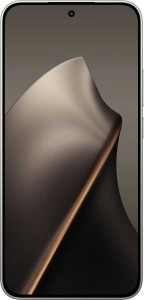
Honor 400 Pro 5G Xiaomi 15T Pro

Overview

Welcome to our in-depth comparison of the Honor 400 Pro 5G and the Xiaomi 15T Pro — two premium Android flagships that share a surprising amount of DNA yet diverge in meaningful ways. Both arrive with IP68 waterproofing, OLED displays, and flagship-tier ambitions, but they take very different paths when it comes to raw processing power, camera hardware, and battery strategy. Read on to discover which device best fits your priorities.

Common Features

  • Both phones are waterproof with an IP68 ingress protection rating.
  • Neither phone has a rugged build.
  • Neither phone can be folded.
  • Both phones feature an OLED/AMOLED display.
  • Always-On Display is available on both phones.
  • Neither phone has a secondary screen.
  • Both phones have a touchscreen.
  • Both phones come with 12GB of RAM.
  • Both phones support integrated LTE.
  • Both phones support 64-bit processing.
  • Both phones use big.LITTLE technology with 8 CPU threads and HMP support.
  • Maximum memory amount is 24GB on both phones.
  • Both phones feature a multi-lens main camera with built-in optical image stabilization.
  • Phase-detection autofocus for photos is available on both phones.
  • Continuous autofocus when recording movies is supported on both phones.
  • Both phones have clipboard warnings and location privacy options.
  • Camera and microphone privacy options are available on both phones.
  • Both phones support theme customization and can block app tracking.
  • Both phones support wireless charging at 50W, fast charging, reverse wireless charging, and include a charger in the box.
  • Neither phone has a removable battery.
  • Both phones have stereo speakers but no 3.5mm audio jack and no radio.
  • Both phones support 5G, dual SIM, NFC, USB Type-C (USB 2.0), Wi-Fi 7, and have a fingerprint scanner.
  • Neither phone supports emergency SOS via satellite.
  • Neither phone has an external memory slot.
  • Neither phone has a sapphire glass display, curved display, or e-paper display.

Main Differences

  • Weight is 205g on Honor 400 Pro 5G and 210g on Xiaomi 15T Pro.
  • Thickness is 8.1mm on Honor 400 Pro 5G and 8mm on Xiaomi 15T Pro.
  • Width is 76.1mm on Honor 400 Pro 5G and 77.9mm on Xiaomi 15T Pro.
  • Height is 156.5mm on Honor 400 Pro 5G and 162.7mm on Xiaomi 15T Pro.
  • Screen size is 6.7″ on Honor 400 Pro 5G and 6.83″ on Xiaomi 15T Pro.
  • Pixel density is 460 ppi on Honor 400 Pro 5G and 447 ppi on Xiaomi 15T Pro.
  • Display refresh rate is 120Hz on Honor 400 Pro 5G and 144Hz on Xiaomi 15T Pro.
  • Branded damage-resistant glass is present on Xiaomi 15T Pro but not available on Honor 400 Pro 5G.
  • HDR10 support is present on Xiaomi 15T Pro but not available on Honor 400 Pro 5G.
  • HDR10+ support is present on Xiaomi 15T Pro but not available on Honor 400 Pro 5G.
  • Dolby Vision support is present on Xiaomi 15T Pro but not available on Honor 400 Pro 5G.
  • Internal storage is 512GB on Honor 400 Pro 5G and 1024GB on Xiaomi 15T Pro.
  • The chipset is Qualcomm Snapdragon 8 Gen 3 on Honor 400 Pro 5G and MediaTek Dimensity 9400 Plus on Xiaomi 15T Pro.
  • AnTuTu benchmark score is 2,010,000 on Honor 400 Pro 5G and 2,718,159 on Xiaomi 15T Pro.
  • Geekbench 6 multi-core score is 7325 on Honor 400 Pro 5G and 8969 on Xiaomi 15T Pro.
  • Geekbench 6 single-core score is 2213 on Honor 400 Pro 5G and 2874 on Xiaomi 15T Pro.
  • GPU is Adreno 750 on Honor 400 Pro 5G and Immortalis G925 on Xiaomi 15T Pro.
  • GPU clock speed is 900MHz on Honor 400 Pro 5G and 1300MHz on Xiaomi 15T Pro.
  • RAM speed is 4800MHz on Honor 400 Pro 5G and 10667MHz on Xiaomi 15T Pro.
  • Semiconductor size is 4nm on Honor 400 Pro 5G and 3nm on Xiaomi 15T Pro.
  • Maximum memory bandwidth is 76.6 GB/s on Honor 400 Pro 5G and 85.3 GB/s on Xiaomi 15T Pro.
  • Main camera resolution is 200 & 50 & 12MP on Honor 400 Pro 5G and 50 & 50 & 12MP on Xiaomi 15T Pro.
  • Optical zoom is 3x on Honor 400 Pro 5G and 5x on Xiaomi 15T Pro.
  • Front camera resolution is 50 & 2MP on Honor 400 Pro 5G and 32MP on Xiaomi 15T Pro.
  • A dual-lens front camera is available on Honor 400 Pro 5G but not on Xiaomi 15T Pro.
  • HDR10 video recording support is present on Xiaomi 15T Pro but not available on Honor 400 Pro 5G.
  • Android version is Android 15 on Honor 400 Pro 5G and Android 16 on Xiaomi 15T Pro.
  • Battery capacity is 6000mAh on Honor 400 Pro 5G and 5500mAh on Xiaomi 15T Pro.
  • Wired charging speed is 100W on Honor 400 Pro 5G and 90W on Xiaomi 15T Pro.
  • aptX support is present on Xiaomi 15T Pro but not available on Honor 400 Pro 5G.
  • LDAC support is present on Xiaomi 15T Pro but not available on Honor 400 Pro 5G.
  • aptX HD support is present on Honor 400 Pro 5G but not available on Xiaomi 15T Pro.
  • Bluetooth version is 5.4 on Honor 400 Pro 5G and 6.0 on Xiaomi 15T Pro.
  • Maximum download speed is 10000 Mbit/s on Honor 400 Pro 5G and 7300 Mbit/s on Xiaomi 15T Pro.
  • A gyroscope is present on Xiaomi 15T Pro but not available on Honor 400 Pro 5G.
Specs Comparison
Honor 400 Pro 5G

Honor 400 Pro 5G

Xiaomi 15T Pro

Xiaomi 15T Pro

Design:
water resistance Waterproof Waterproof
weight 205 g 210 g
thickness 8.1 mm 8 mm
width 76.1 mm 77.9 mm
height 156.5 mm 162.7 mm
volume 96.468165 cm³ 101.39464 cm³
Ingress Protection (IP) rating IP68 IP68
has a rugged build
can be folded

Both the Honor 400 Pro 5G and the Xiaomi 15T Pro share a strong foundation in design protection: both carry an IP68 rating, meaning full dust resistance and water submersion protection. For everyday users, this translates to confidence in the rain, near water, or in dusty environments — neither phone compromises on this front.

Where the two diverge is in physical footprint and feel in hand. The Honor 400 Pro is the more compact device, measuring 156.5 × 76.1 mm with a volume of 96.5 cm³, versus the Xiaomi 15T Pro's 162.7 × 77.9 mm frame and 101.4 cm³ volume. That 6.2 mm height difference is noticeable in daily use — the Xiaomi is decidedly a larger phone, which can make one-handed operation harder. The Honor also comes in 5 g lighter at 205 g compared to 210 g, a small but perceptible difference over a long day of use. Interestingly, the Xiaomi is marginally thinner at 8.0 mm versus the Honor's 8.1 mm, though this single-tenth difference is imperceptible in practice.

Overall, the Honor 400 Pro 5G has a clear edge in ergonomics: it is more compact, lighter, and easier to handle without sacrificing any protection parity. Users who prioritize a more pocketable, manageable device will prefer it. Those who don't mind a larger form factor — often associated with bigger screens or batteries — may find the Xiaomi 15T Pro's size an acceptable trade-off depending on other spec groups.

Display:
Display type OLED/AMOLED OLED/AMOLED
screen size 6.7" 6.83"
pixel density 460 ppi 447 ppi
resolution 1280 x 2800 px 1280 x 2772 px
refresh rate 120Hz 144Hz
has branded damage-resistant glass
supports HDR10
supports HDR10+
Always-On Display
supports Dolby Vision
Has a secondary screen
has a touch screen

On the surface, these two displays look nearly identical — both are OLED/AMOLED panels with similar screen sizes (6.7″ for the Honor 400 Pro vs 6.83″ for the Xiaomi 15T Pro) and comparable resolutions. Sharpness is a virtual tie: the Honor edges ahead at 460 ppi versus the Xiaomi's 447 ppi, a difference too small to perceive with the naked eye. Both also offer an Always-On Display, which is a genuine convenience for glanceable notifications without waking the screen.

The meaningful gaps emerge in refresh rate and HDR support. The Xiaomi 15T Pro runs at 144Hz compared to the Honor's 120Hz — in fast-scrolling or gaming scenarios, the Xiaomi's screen will feel incrementally smoother. More significantly, the Xiaomi supports HDR10, HDR10+, and Dolby Vision, while the Honor supports none of these standards. In practice, this means streaming content from platforms like Netflix or Amazon Prime will render with richer contrast, deeper blacks, and more vibrant highlights on the Xiaomi when HDR-mastered content is played — the Honor simply cannot unlock those visual tiers.

The Xiaomi 15T Pro also includes branded damage-resistant glass, adding a layer of real-world durability assurance that the Honor lacks. Taken together, the Xiaomi holds a clear display advantage: its higher refresh rate, comprehensive HDR ecosystem, and screen protection make it the stronger panel for media consumption and longevity, even if the Honor's pixel density is technically a hair sharper.

Performance:
internal storage 512GB 1024GB
RAM 12GB 12GB
AnTuTu benchmark score 2010000 2718159
Chipset (SoC) name Qualcomm Snapdragon 8 Gen 3 MediaTek Dimensity 9400 Plus
GPU name Adreno 750 Immortalis G925
CPU speed 3 x 3.15 & 2 x 2.96 & 2 x 2.26 & 1 x 3.3 GHz 1 x 3.73 & 4 x 3.3 & 3 x 2.4 GHz
Geekbench 6 result (multi) 7325 8969
Geekbench 6 result (single) 2213 2874
GPU clock speed 900 MHz 1300 MHz
Has integrated LTE
RAM speed 4800 MHz 10667 MHz
semiconductor size 4 nm 3 nm
Supports 64-bit
Has integrated graphics
Uses big.LITTLE technology
CPU threads 8 threads 8 threads
Uses HMP
maximum memory bandwidth 76.6 GB/s 85.3 GB/s
maximum memory amount 24GB 24GB
uses multithreading
DDR memory version 5 5
L3 cache 12 MB 12 MB

This is one of the most lopsided spec groups in the comparison. The Xiaomi 15T Pro runs on the MediaTek Dimensity 9400 Plus built on a 3 nm process, while the Honor 400 Pro 5G uses the Qualcomm Snapdragon 8 Gen 3 at 4 nm. The newer fabrication node alone hints at greater efficiency, but the benchmark results make the performance gap undeniable: the Xiaomi scores 2,718,159 on AnTuTu versus the Honor's 2,010,000 — roughly a 35% lead. Geekbench 6 tells the same story, with the Xiaomi pulling ahead in both single-core (2874 vs 2213) and multi-core (8969 vs 7325) tests. These aren't marginal wins; they reflect a genuine generational chip advantage.

The memory subsystem gap is equally striking. Both phones ship with 12 GB of RAM and DDR5, but the Xiaomi's RAM operates at 10,667 MHz compared to the Honor's 4,800 MHz — more than double the speed. Combined with a higher memory bandwidth of 85.3 GB/s vs 76.6 GB/s, the Xiaomi can feed its CPU and GPU data far faster, which translates to snappier app launches, smoother multitasking, and better sustained performance under load. The Xiaomi also ships with 1 TB of internal storage as a base, versus the Honor's 512 GB — a practical advantage for power users.

The Xiaomi 15T Pro wins this category decisively across every meaningful performance metric — chipset generation, benchmark scores, GPU clock speed, and memory throughput. The Honor 400 Pro is no slouch with a still-capable Snapdragon 8 Gen 3, but users prioritizing raw performance and future-proofing have a clear answer here.

Cameras:
megapixels (main camera) 200 & 50 & 12 MP 50 & 50 & 12 MP
wide aperture (main camera) 1.9 & 2.4 & 2.2f 1.6 & 3 & 2.2f
Has a dual-lens (or multi-lens) main camera
megapixels (front camera) 50 & 2MP 32MP
has built-in optical image stabilization
Has a dual-tone LED flash
number of flash LEDs 1 1
has a BSI sensor
has a CMOS sensor
has continuous autofocus when recording movies
Has phase-detection autofocus for photos
supports slow-motion video recording
has a built-in HDR mode
has manual exposure
has a flash
optical zoom 3x 5x
has manual ISO
has a serial shot mode
has manual focus
has a front camera
Has laser autofocus
Shoots 360° panorama
has manual white balance
has touch autofocus
has manual shutter speed
can create panoramas in-camera
Has timelapse function
Has a front-facing LED flash
has a dual-lens (or multi-lens) front camera
supports HDR10 recording
supports Dolby Vision recording
has a front-facing camera under the display
Has a RGB LED flash
has 3D photo/video recording capabilities

The rear camera systems take genuinely different approaches. The Honor 400 Pro leads with a headline 200 MP main sensor, offering extreme detail capture and flexible cropping — useful for pulling tight shots from a distance without optical zoom. The Xiaomi 15T Pro counters with a 50 MP main shooter but pairs it with a wider f/1.6 aperture versus the Honor's f/1.9. A wider aperture admits significantly more light, which typically yields better low-light and indoor performance. Neither approach is objectively superior — it depends on whether the user values resolution ceiling or light-gathering ability more.

Where the Xiaomi pulls a clear, unambiguous lead is in telephoto reach: it offers 5x optical zoom compared to the Honor's 3x. For wildlife, sports, or any distant subject, optical zoom is far preferable to digital cropping, making the Xiaomi the stronger choice for versatile shooting distances. The Xiaomi also supports HDR10 video recording, which the Honor lacks — meaningful for users who shoot footage intended for HDR-capable displays or professional workflows. On the front, the Honor flips the script with a dual 50 + 2 MP selfie system versus the Xiaomi's single 32 MP lens, giving it a depth-sensing advantage for portrait selfies.

On balance, this category is competitive but leans toward the Xiaomi 15T Pro for most users: its superior optical zoom range, wider main aperture, and HDR10 video support give it a more well-rounded real-world camera toolkit. The Honor's 200 MP sensor is an impressive spec on paper and genuinely useful in specific scenarios, but the Xiaomi's advantages span more common shooting situations.

Operating system:
Android version Android 15 Android 16
has clipboard warnings
has location privacy options
has camera/microphone privacy options
has Mail Privacy Protection
has theme customization
can block app tracking
blocks cross-site tracking
has on-device machine learning
has notification permissions
has media picker
Can play games while they download
has dark mode
has Wi-Fi password sharing
has battery health check
has an extra dim mode
has focus modes
has dynamic theming
can offload apps
Has customizable notifications
has Live Text
has full-page screenshots
supports split screen
gets direct OS updates
has PiP
Can be used as a PC
Has sharing intents
has a child lock
Supports widgets
Is free and open source
Has offline voice recognition
has voice commands
Tracks the current position of a mobile device
is a multi-user system
has Quick Start

Strip away the single differentiating data point here and these two phones are running an identical software feature set — every privacy control, customization option, multitasking capability, and accessibility feature listed is shared between them. That alone signals that both devices offer a mature, fully-equipped Android experience with no meaningful gaps in day-to-day functionality.

The one distinction that does matter is the Android version: the Xiaomi 15T Pro ships on Android 16 while the Honor 400 Pro 5G launches on Android 15. A newer OS version means the Xiaomi starts its lifecycle one step ahead in terms of security patches, platform APIs, and any behavioral or UI refinements introduced in Android 16. For users who keep their phones for two or more years, starting on a newer baseline extends the window before the device falls behind on OS support — a practical long-term consideration, even if the day-one experience feels nearly identical.

The Xiaomi 15T Pro holds a narrow but real advantage in this category purely by virtue of its newer Android version. Neither phone receives direct OS updates according to the provided data, which puts the onus on each manufacturer's update cadence — but launching on Android 16 gives the Xiaomi a head start that the Honor will need time to close.

Battery:
battery power 6000 mAh 5500 mAh
has wireless charging
Supports fast charging
charging speed 100W 90W
wireless charging speed 50W 50W
has reverse wireless charging
comes with a charger
has a removable battery
has a battery level indicator
has a rechargeable battery

Battery capacity is where the Honor 400 Pro 5G reclaims ground lost in other categories. Its 6000 mAh cell outpaces the Xiaomi 15T Pro's 5500 mAh by a meaningful 500 mAh — roughly an 9% larger reserve. In practical terms, that gap can translate to an extra hour or more of screen-on time depending on usage, making the Honor the more compelling option for heavy users who regularly push through a full day and into the evening.

Charging speeds are close but again favor the Honor: it tops out at 100W wired versus the Xiaomi's 90W. While both phones will replenish quickly by any standard, the Honor's higher wattage means it can recover that larger battery in a comparable or shorter time window — a combination that is genuinely useful rather than just a spec on paper. Wireless charging is identical on both at 50W, and both support reverse wireless charging, meaning either phone can top up accessories like earbuds or a smartwatch.

With a larger battery, faster wired charging, and no disadvantages anywhere else in this category, the Honor 400 Pro 5G wins the battery round clearly. For users who prioritize endurance and charging convenience, this is one of the Honor's strongest arguments in the overall comparison.

Audio:
has a socket for a 3.5 mm audio jack
has stereo speakers
has aptX
has LDAC
has aptX HD
has aptX Adaptive
has aptX Lossless
Has a radio

Neither phone includes a 3.5 mm headphone jack, so wireless audio quality comes down to Bluetooth codec support — and the two devices take notably different paths. The Honor 400 Pro 5G supports aptX HD, which delivers high-resolution wireless audio at up to 576 kbps, targeting audiophiles using compatible over-ear headphones. The Xiaomi 15T Pro instead supports LDAC, Sony's high-quality codec capable of transmitting up to 990 kbps — the highest bitrate of any codec listed across both phones — along with standard aptX for broader device compatibility.

For users with LDAC-compatible headphones (a growing category including Sony, Bose, and many others), the Xiaomi's codec support represents a meaningfully higher audio ceiling. LDAC's bitrate advantage over aptX HD is substantial enough that the difference can be perceptible on quality audio hardware. The Honor's aptX HD is a solid choice in its own right, but its compatible device ecosystem is narrower. Both phones share stereo speakers and neither carries a radio, so those features create no differentiation.

The Xiaomi 15T Pro edges ahead in audio for wireless listening enthusiasts, primarily due to LDAC support offering the highest available transmission quality. The Honor's aptX HD is a capable alternative, but users invested in Sony's audio ecosystem or high-end LDAC headphones will find the Xiaomi the more future-proof pairing.

Connectivity & Features:
release date May 2025 September 2025
has 5G support
Wi-Fi version Wi-Fi 4 (802.11n), Wi-Fi 5 (802.11ac), Wi-Fi 6 (802.11ax), Wi-Fi 6E (802.11ax), Wi-Fi 7 (802.11be) Wi-Fi 4 (802.11n), Wi-Fi 6E (802.11ax), Wi-Fi 6 (802.11ax), Wi-Fi 5 (802.11ac), Wi-Fi 7 (802.11be)
SIM cards 2 SIM 2 SIM
Bluetooth version 5.4 6
has an external memory slot
Has USB Type-C
USB version 2 2
has NFC
download speed 10000 MBits/s 7300 MBits/s
Has a fingerprint scanner
has emergency SOS via satellite
has crash detection
is DLNA-certified
has a gyroscope
supports ANT+
Has a heart rate monitor
has GPS
has a compass
supports Wi-Fi
Has an infrared sensor
has an accelerometer
has a cellular module
Has a barometer
has an HDMI output
Uses 3D facial recognition
Has an iris scanner
Stylus included
supports Galileo
Has motion tracking
Has optical tracking
Has a built-in projector

Across most of this category, the two phones are evenly matched — both carry 5G, dual SIM, Wi-Fi 7, NFC, USB Type-C, an infrared sensor, and GPS with Galileo support. The meaningful divergences are few but worth unpacking carefully. The Xiaomi 15T Pro moves to Bluetooth 6.0 while the Honor 400 Pro 5G stays on Bluetooth 5.4. The newer version brings improvements in connection reliability, reduced latency, and more precise device positioning — benefits most noticeable when using wireless audio or peripherals in congested environments.

The Honor, however, pulls an unexpected lead in cellular throughput with a peak download speed of 10,000 Mbps versus the Xiaomi's 7,300 Mbps — a 37% higher ceiling on paper. In real-world 5G conditions, neither phone will consistently hit either limit, but the Honor's modem headroom may prove advantageous in dense network environments or as carrier infrastructure matures. Meanwhile, the Xiaomi includes a gyroscope that the Honor lacks — a sensor that underpins augmented reality apps, precise screen rotation, and gaming motion controls. Its absence on the Honor is a quiet but genuine omission for users who rely on those experiences.

This category is closely contested, with each phone holding a distinct edge: the Honor on raw cellular speed, the Xiaomi on Bluetooth generation and sensor completeness. For most users the gyroscope gap will be the more day-to-day relevant difference, giving the Xiaomi 15T Pro a slight overall edge in connectivity and features — though neither phone falls short in any critical area.

Miscellaneous:
has a video light
Has sapphire glass display
Has a curved display
Has an e-paper display

The miscellaneous specs for the Honor 400 Pro 5G and the Xiaomi 15T Pro are identical across every data point in this group. Both include a video light, and neither features a sapphire glass display, a curved screen, or an e-paper secondary panel — design choices that keep both phones firmly in the mainstream flagship tier rather than the ultra-premium or niche specialist segment.

This is a complete tie — there is no differentiator in this group that favors either device. Users looking for curved-edge aesthetics or exotic display materials will find neither phone caters to those preferences, but equally, both avoid the durability trade-offs and cost premiums those features typically introduce.

Comparison Summary & Verdict

After examining every specification, the two phones cater to distinct types of users. The Honor 400 Pro 5G stands out with its larger 6000 mAh battery, faster 100W wired charging, a higher-resolution 200 MP main camera, a dual-lens selfie setup, and a lighter, more compact body — making it the better pick for photography enthusiasts and all-day heavy users. The Xiaomi 15T Pro, on the other hand, dominates in raw performance thanks to the MediaTek Dimensity 9400 Plus chipset, a higher 144Hz refresh rate, superior HDR10+ and Dolby Vision display support, a 5x optical zoom, 1TB of storage, and the newer Android 16 out of the box — positioning it firmly as the choice for power users and multimedia lovers who demand the absolute best screen and chip experience.

Honor 400 Pro 5G
Buy Honor 400 Pro 5G if...

Buy the Honor 400 Pro 5G if you want a longer-lasting battery with faster wired charging, a higher-resolution main camera, and a more compact, lighter design.

Xiaomi 15T Pro
Buy Xiaomi 15T Pro if...

Buy the Xiaomi 15T Pro if you prioritize top-tier processing performance, a smoother 144Hz HDR display with Dolby Vision, greater optical zoom, and maximum internal storage.