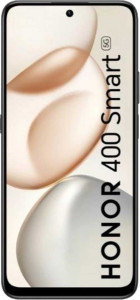
Honor 400 Smart 5G
Oppo F31 5G

Honor 400 Smart 5G Oppo F31 5G

Overview

Welcome to our in-depth specification comparison between the Honor 400 Smart 5G and the Oppo F31 5G. Both devices share a surprising amount of common ground, from their 120Hz refresh rates and Android 15 software to their 256GB storage and 5G connectivity. Yet where they differ, the contrasts are striking — particularly across display technology, battery and charging capabilities, camera performance, and build protection. Read on to find out which smartphone better suits your needs.

Common Features

  • Neither product has a rugged build.
  • Neither product can be folded.
  • Both products have a 120Hz refresh rate display.
  • HDR10 support is not available on either product.
  • HDR10+ support is not available on either product.
  • Dolby Vision support is not available on either product.
  • Neither product has a secondary screen.
  • Both products have a touch screen.
  • Both products come with 256GB of internal storage.
  • Both products have 8GB of RAM.
  • Both products have a GPU clock speed of 950 MHz.
  • Both products have integrated LTE.
  • Both products use a 6 nm semiconductor size.
  • Both products support 64-bit processing.
  • Both products support DirectX 12.
  • Both products have a main camera with 50 & 2 MP resolution.
  • Both products share the same wide aperture on the main camera lenses at 2.4f and 1.8f.
  • Both products feature a dual-lens main camera.
  • Optical image stabilization is not available on either product.
  • Neither product has a dual-tone LED flash.
  • Both products have a single LED flash.
  • Neither product has a BSI sensor.
  • Both products have a CMOS sensor.
  • Both products run Android 15.
  • Both products show clipboard warnings.
  • Both products offer location privacy options.
  • Both products offer camera and microphone privacy options.
  • Mail Privacy Protection is not available on either product.
  • Both products support theme customization.
  • Both products can block app tracking.
  • Cross-site tracking blocking is not available on either product.
  • Neither product supports wireless charging.
  • Both products support fast charging.
  • Neither product supports reverse wireless charging.
  • Both products come with a charger included.
  • Neither product has a removable battery.
  • Both products have a battery level indicator.
  • Both products have a rechargeable battery.
  • Both products have stereo speakers.
  • Both products support aptX.
  • Both products support LDAC.
  • Both products support aptX HD.
  • aptX Adaptive support is not available on either product.
  • aptX Lossless support is not available on either product.
  • Neither product has a radio.
  • Both products support 5G.
  • Both products support Wi-Fi 4 (802.11n) and Wi-Fi 5 (802.11ac).
  • Both products accommodate 2 SIM cards.
  • Neither product has an external memory slot.
  • Both products have a USB Type-C port.
  • Both products use USB version 2.
  • Both products have NFC.
  • Both products have a fingerprint scanner.
  • Both products have a video light.
  • Neither product has a sapphire glass display.
  • Neither product has a curved display.
  • Neither product has an e-paper display.

Main Differences

  • Water resistance on the Honor 400 Smart 5G is rated as water resistant, while the Oppo F31 5G is fully waterproof.
  • The IP rating is IP65 on the Honor 400 Smart 5G and IP68 on the Oppo F31 5G.
  • Weight is 189 g on the Honor 400 Smart 5G and 185 g on the Oppo F31 5G.
  • Thickness is 8.4 mm on the Honor 400 Smart 5G and 8 mm on the Oppo F31 5G.
  • Width is 76.8 mm on the Honor 400 Smart 5G and 75 mm on the Oppo F31 5G.
  • Height is 166.9 mm on the Honor 400 Smart 5G and 158.2 mm on the Oppo F31 5G.
  • Volume is 107.670528 cm³ on the Honor 400 Smart 5G and 94.92 cm³ on the Oppo F31 5G.
  • The display type is LCD IPS on the Honor 400 Smart 5G and OLED/AMOLED on the Oppo F31 5G.
  • Screen size is 6.77″ on the Honor 400 Smart 5G and 6.57″ on the Oppo F31 5G.
  • Pixel density is 261 ppi on the Honor 400 Smart 5G and 397 ppi on the Oppo F31 5G.
  • Resolution is 720 x 1610 px on the Honor 400 Smart 5G and 1080 x 2372 px on the Oppo F31 5G.
  • Damage-resistant glass is present on the Oppo F31 5G but not available on the Honor 400 Smart 5G.
  • The chipset is Qualcomm Snapdragon 6s Gen 3 on the Honor 400 Smart 5G and MediaTek Dimensity 6300 on the Oppo F31 5G.
  • The GPU is Adreno 619 on the Honor 400 Smart 5G and Arm Mali-G57 MC2 on the Oppo F31 5G.
  • CPU speed is 2 x 2.3 & 6 x 2 GHz on the Honor 400 Smart 5G and 2 x 2.4 & 6 x 2 GHz on the Oppo F31 5G.
  • Maximum memory bandwidth is 17 GB/s on the Honor 400 Smart 5G and 17.07 GB/s on the Oppo F31 5G.
  • Maximum memory amount is 8GB on the Honor 400 Smart 5G and 12GB on the Oppo F31 5G.
  • Multithreading support is present on the Oppo F31 5G but not available on the Honor 400 Smart 5G.
  • Front camera resolution is 5MP on the Honor 400 Smart 5G and 16MP on the Oppo F31 5G.
  • Main camera video recording is 1080 x 30 fps on the Honor 400 Smart 5G and 2160 x 30 fps on the Oppo F31 5G.
  • Front camera wide aperture is 2.2f on the Honor 400 Smart 5G and 2.4f on the Oppo F31 5G.
  • Battery power is 6500 mAh on the Honor 400 Smart 5G and 7000 mAh on the Oppo F31 5G.
  • Charging speed is 35W on the Honor 400 Smart 5G and 80W on the Oppo F31 5G.
  • A 3.5 mm audio jack is present on the Honor 400 Smart 5G but not available on the Oppo F31 5G.
  • Bluetooth version is 5.1 on the Honor 400 Smart 5G and 5.4 on the Oppo F31 5G.
  • Download speed is 2500 MBits/s on the Honor 400 Smart 5G and 3300 MBits/s on the Oppo F31 5G.
Specs Comparison
Honor 400 Smart 5G

Honor 400 Smart 5G

Oppo F31 5G

Oppo F31 5G

Design:
water resistance Water resistant Waterproof
weight 189 g 185 g
thickness 8.4 mm 8 mm
width 76.8 mm 75 mm
height 166.9 mm 158.2 mm
volume 107.670528 cm³ 94.92 cm³
Ingress Protection (IP) rating IP65 IP68
has a rugged build
can be folded

The most consequential difference in this group is water protection. The Honor 400 Smart 5G carries an IP65 rating, meaning it can handle sustained water jets from any direction — solid protection against rain or splashes, but not submersion. The Oppo F31 5G steps up to IP68, which adds full protection against continuous immersion in water. In practice, this means the F31 can survive an accidental drop in a sink or puddle, whereas the Honor 400 Smart cannot. For users who want peace of mind around water, the F31 holds a clear and meaningful edge.

In terms of physical form, the two phones diverge noticeably. The Oppo F31 5G is more compact in every dimension — shorter at 158.2 mm, narrower at 75 mm, and slimmer at 8 mm — resulting in a significantly smaller overall volume of 94.92 cm³ versus the Honor's 107.67 cm³. The Honor 400 Smart is also marginally heavier at 189 g compared to 185 g. While a 4-gram weight difference is barely perceptible, the larger footprint of the Honor does make it a bulkier device to pocket or use one-handed.

Neither device has a rugged build or foldable form factor, so both target the mainstream consumer segment. Overall, the Oppo F31 5G has a clear advantage in this group: it is more compact, slightly lighter, and — most importantly — offers superior water protection with its IP68 rating.

Display:
Display type LCD, IPS OLED/AMOLED
screen size 6.77" 6.57"
pixel density 261 ppi 397 ppi
resolution 720 x 1610 px 1080 x 2372 px
refresh rate 120Hz 120Hz
has branded damage-resistant glass
supports HDR10
supports HDR10+
supports Dolby Vision
Has a secondary screen
has a touch screen

Panel technology is where these two phones diverge most dramatically. The Honor 400 Smart 5G uses an LCD IPS panel, while the Oppo F31 5G is equipped with an OLED/AMOLED display. OLED panels produce true blacks by turning off individual pixels, which translates to higher contrast, more vibrant colors, and better power efficiency when rendering dark content — advantages that are immediately visible in everyday use, whether browsing, streaming, or using dark mode.

Sharpness is another area where the F31 pulls decisively ahead. Its 397 ppi pixel density at a 1080 x 2372 px resolution is substantially crisper than the Honor's 261 ppi at 720 x 1610 px. The real-world gap is significant: at 261 ppi, individual pixels can become noticeable during fine text reading or detailed image viewing, whereas 397 ppi renders content that appears sharp under virtually any normal viewing condition. The Honor does offer a slightly larger 6.77-inch screen, but the lower resolution means that extra canvas comes at a cost to visual fidelity. Both phones share a 120Hz refresh rate, ensuring equally smooth scrolling and animations on either device.

The Oppo F31 5G also includes branded damage-resistant glass, adding a layer of real-world durability the Honor lacks. Neither device supports HDR10, HDR10+, or Dolby Vision, so high-dynamic-range content is off the table for both. Taken together, the F31 holds a commanding advantage in this group — superior panel technology, meaningfully higher pixel density, and added screen protection make it the clear winner for display quality.

Performance:
internal storage 256GB 256GB
RAM 8GB 8GB
Chipset (SoC) name Qualcomm Snapdragon 6s Gen 3 MediaTek Dimensity 6300
GPU name Adreno 619 Arm Mali-G57 MC2
CPU speed 2 x 2.3 & 6 x 2 GHz 2 x 2.4 & 6 x 2 GHz
GPU clock speed 950 MHz 950 MHz
Has integrated LTE
RAM speed 2133 MHz 2133 MHz
semiconductor size 6 nm 6 nm
Supports 64-bit
DirectX version DirectX 12 DirectX 12
Has integrated graphics
Uses big.LITTLE technology
CPU threads 8 threads 8 threads
Uses HMP
maximum memory bandwidth 17 GB/s 17.07 GB/s
maximum memory amount 8GB 12GB
uses multithreading
DDR memory version 4 4

At their core, these two phones are built on remarkably similar foundations. Both run on a 6 nm process node with an 8-thread CPU, DDR4 memory at 2133 MHz, identical GPU clock speeds of 950 MHz, and virtually the same memory bandwidth. The Honor 400 Smart 5G is powered by the Qualcomm Snapdragon 6s Gen 3 with an Adreno 619 GPU, while the Oppo F31 5G runs on the MediaTek Dimensity 6300 paired with an Arm Mali-G57 MC2. For everyday tasks — app launches, social media, casual gaming — both chips perform in a similar tier, and the near-identical CPU clock speeds (2.3 GHz vs. 2.4 GHz on the performance cores) mean real-world speed differences will be negligible.

Two specs do separate them, however. The Oppo F31 5G supports multithreading, which allows the CPU to handle more parallel workloads efficiently — a meaningful advantage for users running background-heavy apps or multitasking. More practically, the F31 supports a maximum of 12 GB of RAM versus the Honor's ceiling of 8 GB. Even though both ship with 8 GB today, the F31's higher memory ceiling gives it more headroom for future configurations and better sustains performance when many apps are held in memory simultaneously.

On balance, this is a close category, but the Oppo F31 5G holds a modest edge. Its multithreading support and higher maximum memory capacity make it the more capable platform for demanding or multitasking use cases, even if the gap will be imperceptible to light users.

Cameras:
megapixels (main camera) 50 & 2 MP 50 & 2 MP
wide aperture (main camera) 2.4 & 1.8f 2.4 & 1.8f
Has a dual-lens (or multi-lens) main camera
megapixels (front camera) 5MP 16MP
has built-in optical image stabilization
video recording (main camera) 1080 x 30 fps 2160 x 30 fps
Has a dual-tone LED flash
number of flash LEDs 1 1
has a BSI sensor
has a CMOS sensor
has continuous autofocus when recording movies
Has phase-detection autofocus for photos
supports slow-motion video recording
has a built-in HDR mode
has manual exposure
has a flash
optical zoom 0x 0x
has manual ISO
has a serial shot mode
has manual focus
has a front camera
Has laser autofocus
Shoots 360° panorama
has manual white balance
shoots raw
has touch autofocus
has manual shutter speed
can create panoramas in-camera
wide aperture (front camera) 2.2f 2.4f
Has timelapse function
Has a front-facing LED flash
has a dual-lens (or multi-lens) front camera
supports HDR10 recording
supports Dolby Vision recording
has a front-facing camera under the display
Has a RGB LED flash
has 3D photo/video recording capabilities

The rear camera systems on these two phones are, for all practical purposes, identical. Both feature a dual-lens setup led by a 50 MP main sensor, share the same aperture configuration, and are equipped with phase-detection autofocus, continuous autofocus during video, HDR mode, slow-motion recording, and a comparable manual controls suite. Neither offers optical image stabilization or optical zoom, so both phones are on equal footing when it comes to still photography from the back.

Where they split is video and selfies. The Oppo F31 5G tops out at 4K (2160p) at 30 fps for main camera video, while the Honor 400 Smart 5G is capped at 1080p at 30 fps. For users who record travel clips, family moments, or content intended for large screens, 4K recording preserves significantly more detail and offers much greater flexibility for cropping or editing in post. The selfie camera gap is equally stark: the F31 packs a 16 MP front shooter versus the Honor's 5 MP, and the Honor's front aperture of f/2.2 is marginally wider than the F31's f/2.4 — though that small aperture advantage does little to compensate for the large resolution deficit in daylight conditions.

The Oppo F31 5G is the clear winner in this category. Identical rear photo hardware means neither has a stills advantage, but the F31's 4K video capability and substantially higher-resolution front camera make it a more versatile and future-proof imaging device overall.

Operating system:
Android version Android 15 Android 15
has clipboard warnings
has location privacy options
has camera/microphone privacy options
has Mail Privacy Protection
has theme customization
can block app tracking
blocks cross-site tracking
has on-device machine learning
has notification permissions
has media picker
Can play games while they download
has dark mode
has Wi-Fi password sharing
has battery health check
has an extra dim mode
has focus modes
has dynamic theming
can offload apps
Has customizable notifications
has Live Text
has full-page screenshots
supports split screen
gets direct OS updates
has PiP
Can be used as a PC
Has sharing intents
has a child lock
Supports widgets
Is free and open source
Has offline voice recognition
has voice commands
Tracks the current position of a mobile device
is a multi-user system
has Quick Start

This is a rare case of complete parity. Both the Honor 400 Smart 5G and the Oppo F31 5G run Android 15 and share an identical feature set across every tracked specification in this group — from privacy controls like location and camera/microphone permissions to usability features such as dark mode, dynamic theming, split-screen support, Picture-in-Picture, and on-device machine learning. There is not a single differentiating data point between them here.

For privacy-conscious users, both phones offer a solid and equivalent baseline: app tracking controls, clipboard warnings, and granular notification permissions are all present on each device. On the productivity side, both support widgets, full-page screenshots, offline voice recognition, and multi-user mode — a feature set that covers the needs of most mainstream Android users without compromise on either handset.

This group is a complete tie. The choice between these two phones cannot be influenced by operating system features based on the available data, and buyers should weigh the differences found in other specification groups — such as display, cameras, or design — to make their decision.

Battery:
battery power 6500 mAh 7000 mAh
has wireless charging
Supports fast charging
charging speed 35W 80W
has reverse wireless charging
comes with a charger
has a removable battery
has a battery level indicator
has a rechargeable battery

Battery life is a strength for both phones, but the Oppo F31 5G pulls ahead on both key metrics. Its 7000 mAh cell outpaces the Honor 400 Smart 5G's already generous 6500 mAh — a 500 mAh gap that, while not transformative, does translate to a meaningful extra buffer during heavy usage days or when access to a charger is limited. Both phones comfortably exceed the capacities found in most mainstream smartphones, so either should handle a full day with ease.

The more impactful difference, however, is charging speed. The Oppo F31 5G supports 80W fast charging, more than double the Honor's 35W. In practical terms, 80W can take a large battery from near-empty to a usable charge in a fraction of the time — a critical advantage for users with busy schedules who can only plug in briefly. At 35W, the Honor's charging is respectable but noticeably slower by comparison. Both phones ship with a charger in the box, so neither requires an additional purchase to take advantage of their respective speeds.

Neither device offers wireless or reverse wireless charging, keeping that aspect level. Overall, the Oppo F31 5G wins this group convincingly — it holds more capacity and recharges significantly faster, a combination that gives it a substantial real-world endurance advantage over the Honor 400 Smart 5G.

Audio:
has a socket for a 3.5 mm audio jack
has stereo speakers
has aptX
has LDAC
has aptX HD
has aptX Adaptive
has aptX Lossless
Has a radio

For wireless audio, these two phones are evenly matched. Both support aptX, aptX HD, and LDAC — a strong codec trio that covers high-quality Bluetooth audio for the vast majority of wireless headphones and earbuds on the market. Neither supports aptX Adaptive or aptX Lossless, and neither includes a radio, so that aspect of the comparison is a clean tie. Both also feature stereo speakers, ensuring a similarly immersive experience for media consumption without headphones.

The single differentiating spec here is the 3.5 mm headphone jack, which the Honor 400 Smart 5G retains and the Oppo F31 5G omits. For users with a collection of wired headphones or earphones — particularly audiophiles who prefer wired connections for their lower latency and lossless signal path — this is a genuine and practical advantage. The Oppo F31 5G's users would need to rely on a USB-C adapter or go fully wireless, adding friction and a potential point of failure.

This group goes to the Honor 400 Smart 5G by a narrow but clear margin. The wireless audio capabilities are identical across both devices, but the inclusion of a headphone jack gives the Honor a tangible real-world advantage for anyone who values wired audio flexibility.

Connectivity & Features:
release date September 2025 September 2025
has 5G support
Wi-Fi version Wi-Fi 4 (802.11n), Wi-Fi 5 (802.11ac) Wi-Fi 4 (802.11n), Wi-Fi 5 (802.11ac)
SIM cards 2 SIM 2 SIM
Bluetooth version 5.1 5.4
has an external memory slot
Has USB Type-C
USB version 2 2
has NFC
download speed 2500 MBits/s 3300 MBits/s
Has a fingerprint scanner
has emergency SOS via satellite
has crash detection
is DLNA-certified
has a gyroscope
supports ANT+
Has a heart rate monitor
has GPS
has a compass
supports Wi-Fi
Has an infrared sensor
has an accelerometer
has a cellular module
Has a barometer
has an HDMI output
Uses 3D facial recognition
Has an iris scanner
Stylus included
supports Galileo
Has motion tracking
Has optical tracking
Has a built-in projector

Much of the connectivity story here is shared ground. Both phones support 5G, dual SIM, NFC, USB Type-C (USB 2.0), identical Wi-Fi standards (Wi-Fi 5 as the ceiling), GPS with Galileo support, fingerprint scanner, and accelerometer. For most users, this common baseline covers every essential connectivity need without compromise on either device.

Two specs do create a meaningful gap. The Oppo F31 5G features Bluetooth 5.4 versus the Honor 400 Smart 5G's Bluetooth 5.1. While both versions deliver reliable wireless connections, 5.4 brings improvements to connection stability and efficiency that are particularly noticeable in environments with heavy wireless interference. More practically, the F31 also supports a significantly higher cellular download speed of 3300 Mbits/s compared to the Honor's 2500 Mbits/s. In real-world conditions — dense urban areas, stadiums, or congested networks — a higher peak throughput ceiling can translate to faster file downloads and more stable streaming when network load is high.

Neither phone includes a gyroscope, infrared sensor, or external memory slot, keeping those aspects level. On balance, the Oppo F31 5G edges ahead in this group, with its newer Bluetooth version and notably higher 5G download speed ceiling giving it a modest but tangible connectivity advantage.

Miscellaneous:
has a video light
Has sapphire glass display
Has a curved display
Has an e-paper display

The miscellaneous specifications for these two phones are identical across every tracked data point. Both include a video light, and neither features a sapphire glass display, curved display, or e-paper display — placing them squarely in the standard mainstream smartphone mold for all of these attributes.

This group is a complete tie. None of the available specs differentiate the Honor 400 Smart 5G from the Oppo F31 5G in any meaningful way, and buyers should look to other specification groups — particularly display, cameras, battery, and design — to inform their decision.

Comparison Summary & Verdict

After a thorough look at every specification, it is clear these two phones cater to different priorities. The Oppo F31 5G pulls ahead in several key areas: its OLED display with 397 ppi pixel density, superior IP68 waterproofing, 80W fast charging, larger 7000 mAh battery, 16MP front camera, and 4K video recording make it the stronger all-round performer for users who want premium visuals and rapid top-ups. The Honor 400 Smart 5G, on the other hand, offers a larger 6.77-inch screen, a 3.5mm headphone jack, and a more compact overall package that will appeal to users who value physical media connectivity. Both phones share strong audio codec support and solid connectivity features. Choose the Oppo F31 5G for a higher-quality display and faster charging, or the Honor 400 Smart 5G if a headphone jack and bigger screen are your top priorities.

Honor 400 Smart 5G
Buy Honor 400 Smart 5G if...

Buy the Honor 400 Smart 5G if you rely on a 3.5mm headphone jack for wired audio and prefer a larger screen for media consumption.

Oppo F31 5G
Buy Oppo F31 5G if...

Buy the Oppo F31 5G if you want a sharper OLED display, faster 80W charging, a bigger battery, better waterproofing, and a higher-resolution front camera.