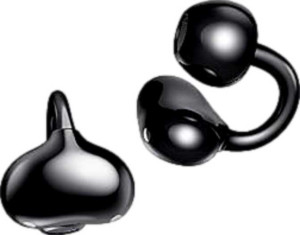
Honor Choice Earbuds Clip
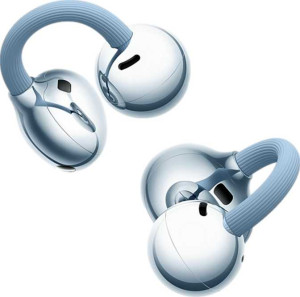
Huawei FreeClip 2

Honor Choice Earbuds Clip Huawei FreeClip 2

Overview

Welcome to our detailed spec comparison between the Honor Choice Earbuds Clip and the Huawei FreeClip 2. Both are open-ear, wire-free earbuds that share a surprising amount of common ground, yet diverge in some meaningful ways. In this head-to-head, we examine key battlegrounds including battery endurance, water resistance, Bluetooth technology, and smart features to help you decide which pair best suits your lifestyle.

Common Features

  • Both products use an open-ear fit design.
  • Both products are sweat resistant.
  • Both products weigh 10.2 g.
  • Neither product has wires or cables.
  • Neither product is a neckband earbud.
  • Neither product includes wingtips.
  • Neither product features RGB lighting.
  • Both products have stereo speakers.
  • Neither product has active noise cancellation (ANC).
  • Neither product has passive noise reduction.
  • Both products have a lowest frequency of 20 Hz and a highest frequency of 20000 Hz.
  • Neither product supports spatial audio, Dolby Atmos, or Dirac Virtuo.
  • Neither product has a neodymium magnet.
  • Neither product supports wireless charging.
  • Neither product has a solar power battery.
  • Both products have a battery level indicator.
  • Both products have a rechargeable battery.
  • Both products have a USB Type-C connection.
  • Neither product supports LDAC, LDHC, Bluetooth LE Audio, aptX Adaptive, aptX Low Latency, or aptX HD.
  • Neither product has fast pairing.
  • Both products support a find device feature.
  • Both products support fast charging.
  • Both products support multipoint connection with up to 2 devices.
  • Neither product can read notifications.
  • Both products have a mute function.
  • Both products can be used as a headset.
  • Both products have a control panel placed on the device.
  • Neither product has an ambient sound mode.
  • Both products have a noise-canceling microphone.

Main Differences

  • The Ingress Protection rating is IP54 on the Honor Choice Earbuds Clip and IP57 on the Huawei FreeClip 2.
  • Battery life is 7 hours on the Honor Choice Earbuds Clip and 8 hours on the Huawei FreeClip 2.
  • Battery life of the charging case is 29 hours on the Honor Choice Earbuds Clip and 30 hours on the Huawei FreeClip 2.
  • Battery power is 45 mAh on the Honor Choice Earbuds Clip and 60 mAh on the Huawei FreeClip 2.
  • Charging case battery power is 500 mAh on the Honor Choice Earbuds Clip and 537 mAh on the Huawei FreeClip 2.
  • Bluetooth version is 5.3 on the Honor Choice Earbuds Clip and 6 on the Huawei FreeClip 2.
  • AAC support is available on the Honor Choice Earbuds Clip but not on the Huawei FreeClip 2.
  • A built-in translator is present on the Huawei FreeClip 2 but not available on the Honor Choice Earbuds Clip.
  • The number of microphones is 4 on the Honor Choice Earbuds Clip and 6 on the Huawei FreeClip 2.
Specs Comparison
Honor Choice Earbuds Clip

Honor Choice Earbuds Clip

Huawei FreeClip 2

Huawei FreeClip 2

Design:
Fit Open-ear Open-ear
Ingress Protection (IP) rating IP54 IP57
water resistance Sweat resistant Sweat resistant
weight 10.2 g 10.2 g
has no wires or cables
are neckband earbuds
wingtips included
has RGB lighting
has stereo speakers
has UV light
Has a display

In terms of overall design philosophy, the Honor Choice Earbuds Clip and the Huawei FreeClip 2 are nearly identical twins. Both adopt an open-ear clip form factor, weigh exactly 10.2 g, are fully wireless, and share the same core feature set — stereo speakers, no RGB lighting, no display, and no neckband or wingtips. At this weight, both should feel negligible during extended wear, which is a key advantage of the clip-ear design for users who find in-ear tips uncomfortable.

The only meaningful differentiator in this category is water resistance. The Honor Choice Earbuds Clip carries an IP54 rating, meaning it is protected against dust ingress and low-pressure water splashes from any direction — adequate for workouts and light rain. The Huawei FreeClip 2, however, steps up to IP57, which adds full dust protection and the ability to withstand immersion in up to 1 meter of water for 30 minutes. In practical terms, IP57 offers a meaningfully wider safety margin — accidental drops in a sink or exposure to heavy rain are far less of a concern.

Overall, the Huawei FreeClip 2 holds a clear edge in this group solely due to its superior ingress protection rating. For users who prioritize durability in wet or dusty environments, that gap matters. In every other design dimension, these two products are effectively tied.

Sound quality:
has active noise cancellation (ANC)
has passive noise reduction
lowest frequency 20 Hz 20 Hz
highest frequency 20000 Hz 20000 Hz
supports spatial audio
has Dolby Atmos
has Dirac Virtuo
has a neodymium magnet

When it comes to sound quality specs, these two earbuds are a complete mirror image of each other. Both cover the standard 20 Hz – 20,000 Hz frequency range — the full breadth of human hearing — and neither brings any noise isolation to the table, with no active noise cancellation and no passive noise reduction. For open-ear clip designs, the absence of noise isolation is expected and by design; the goal of this form factor is situational awareness, not isolation.

What is more notable is the lack of any audio enhancement technologies on either side. No spatial audio, no Dolby Atmos, no Dirac Virtuo, and no neodymium magnet specified for either model. The absence of a neodymium magnet callout is worth flagging — neodymium drivers are the industry standard for high-efficiency, high-fidelity sound reproduction in earbuds, and the omission suggests neither manufacturer is making a premium driver claim based on the available data.

This group results in a straightforward tie. There is not a single differentiating data point between the Honor Choice Earbuds Clip and the Huawei FreeClip 2 across all sound quality specs provided. Buyers prioritizing audio features will need to look beyond this spec group to find a reason to choose one over the other.

Power:
Battery life 7 hours 8 hours
Battery life of charging case 29 hours 30 hours
battery power 45 mAh 60 mAh
battery power (charging case) 500mAh 537mAh
has wireless charging
Has a solar power battery
has a battery level indicator
has a rechargeable battery

Battery life is where the Huawei FreeClip 2 carves out a modest but consistent advantage. Its earbuds are rated for 8 hours of playback versus 7 hours for the Honor Choice Earbuds Clip — a one-hour difference that, in practice, could mean getting through a full workday without reaching for the case. The FreeClip 2's larger per-earbud cell, at 60 mAh compared to 45 mAh, directly explains this gap and suggests the extra runtime is a genuine hardware advantage rather than an optimistic marketing estimate.

The charging cases tell a similar story. The FreeClip 2's case holds 537 mAh and delivers up to 30 hours of total playback, while the Honor Choice case offers 500 mAh and 29 hours. The differences are slim — roughly one additional top-up charge — but they consistently favor the FreeClip 2 across every battery metric provided. Neither model supports wireless charging, so both require a wired connection to top up the case, which is a limitation worth noting for users accustomed to Qi charging.

The Huawei FreeClip 2 takes a clear, if not dramatic, edge in this category. Every power spec points in the same direction: more capacity in the earbuds, more capacity in the case, and one extra hour of continuous use. For commuters or athletes who push their earbuds through long stretches without access to a cable, that margin adds up to a tangible real-world advantage.

Connectivity:
has fast pairing
Has USB Type-C
Bluetooth version 5.3 6
has LDAC
has LDHC
has Bluetooth LE Audio
has aptX Adaptive
has aptX Low Latency
has aptX HD
has aptX
has aptX Lossless
has aptX Voice
has Auracast
maximum Bluetooth range 10 m 10 m
supports Bluetooth pairing using NFC
Can be used wirelessly
has AAC

Two meaningful differentiators emerge in this category, and they cut in opposite directions. The Huawei FreeClip 2 runs on Bluetooth 6, a generational step above the Bluetooth 5.3 found in the Honor Choice Earbuds Clip. Bluetooth 6 introduces improved channel sounding for more precise device positioning, lower power overhead, and better coexistence in congested wireless environments — advantages that translate to more stable connections in crowded spaces like offices or public transit, even if the rated maximum range is an identical 10 m for both.

The Honor Choice Earbuds Clip counters with AAC codec support, which the FreeClip 2 lacks entirely. AAC is the default high-quality audio codec on Apple devices and is widely used across Android as well. Without AAC, the FreeClip 2 is limited to SBC — the baseline Bluetooth audio codec — when paired with most smartphones, which can result in lower audio fidelity and slightly higher latency compared to AAC streams. For users in the Apple ecosystem especially, this is a notable gap. Neither earbud supports any of the higher-tier codecs such as LDAC or aptX, so the AAC distinction is the ceiling of the audio transmission quality debate here.

This group ends in a genuine trade-off rather than a clear winner. The FreeClip 2 holds the edge in raw wireless technology with its newer Bluetooth version, while the Honor Choice Earbuds Clip is the stronger choice for audio codec compatibility, particularly for Apple users or anyone whose device leverages AAC. Which advantage matters more depends entirely on the buyer's ecosystem and priorities.

Features:
release date July 2025 September 2025
has ambient sound mode
has find device feature
Supports fast charging
multipoint count 2 2
can read notifications
Has a built-in translator
has a mute function
can be used as a headset
control panel placed on a device
Has voice prompts
travel bag is included
Has an in-line control panel
Has a temperature sensor
Has a built-in camera remote control function

Across the broad features landscape, these two earbuds are remarkably well-matched. Both support multipoint connectivity for up to 2 devices simultaneously, fast charging, on-device controls, voice prompts, a mute function, headset use, a find-device feature, and even include a travel bag. For everyday usability, this shared foundation means neither product is at a disadvantage in the core feature set that most buyers will actually rely on day to day.

The sole differentiator in this group is the built-in translator found on the Huawei FreeClip 2, which the Honor Choice Earbuds Clip does not offer. A real-time translation feature built directly into the earbuds removes the need for a separate app or device during cross-language conversations — a genuinely useful capability for frequent travelers or multilingual work environments. Its practical value hinges on implementation quality and language support, but as a hardware-level spec distinction, it is the only meaningful dividing line in this category.

The Huawei FreeClip 2 takes the edge here on the strength of that single addition. For users who have no need for live translation, this group is effectively a tie — every other feature is identical. But for those who do travel internationally or work across language barriers, the FreeClip 2 offers a tangible functional advantage that the Honor Choice Earbuds Clip simply cannot match.

Microphone:
number of microphones 4 6
has a noise-canceling microphone

Microphone hardware is sparse but telling in this comparison. Both earbuds feature noise-canceling microphones, meaning call quality in moderately noisy environments should be acceptable on either pair. The critical difference, however, lies in microphone count: the Huawei FreeClip 2 is equipped with 6 microphones versus 4 microphones on the Honor Choice Earbuds Clip.

More microphones enable more sophisticated beamforming and noise suppression algorithms. With additional pickup points, the device can more accurately isolate the speaker's voice, reject wind noise, and suppress ambient sound during calls. For an open-ear design — where there is no physical seal to passively block environmental noise from reaching the mics — this hardware advantage is particularly relevant. The FreeClip 2's two extra microphones give its noise-canceling system more raw data to work with, which generally translates to cleaner call audio in challenging conditions such as busy streets or windy outdoor settings.

The Huawei FreeClip 2 holds a clear edge in this category. While both earbuds clear the baseline bar with noise-canceling mic support, the FreeClip 2's higher microphone count represents a meaningful hardware advantage for anyone who frequently takes calls in noisy environments — a common use case for the open-ear form factor these earbuds share.

Comparison Summary & Verdict

After examining every specification, the Huawei FreeClip 2 edges ahead in several technical areas: it carries a superior IP57 water resistance rating, offers an extra hour of playback thanks to its larger 60 mAh battery, steps up to Bluetooth 6, adds two additional microphones for a total of six, and uniquely includes a built-in translator — making it the stronger choice for frequent travellers and power users who want the most capable open-ear experience available. The Honor Choice Earbuds Clip, on the other hand, holds its own by supporting AAC audio codec, which can deliver higher-quality wireless audio on compatible devices, and it still provides a very competitive 29-hour total battery life. If your priority is audio codec compatibility and solid everyday performance at a likely lower price point, the Honor Choice Earbuds Clip remains a well-rounded option worth considering.

Honor Choice Earbuds Clip
Buy Honor Choice Earbuds Clip if...

Buy the Honor Choice Earbuds Clip if you use AAC-compatible devices and want reliable open-ear audio performance with solid battery life at what is likely a more accessible price point.

Huawei FreeClip 2
Buy Huawei FreeClip 2 if...

Buy the Huawei FreeClip 2 if you want stronger water resistance (IP57), longer battery life, the latest Bluetooth 6 connectivity, more microphones, and a built-in translator for on-the-go use.