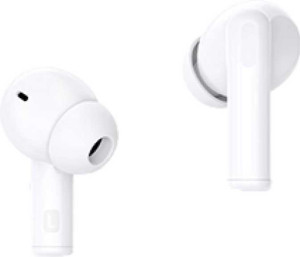
Honor Choice Earbuds X7 Lite
Huawei FreeBuds SE 4

Honor Choice Earbuds X7 Lite Huawei FreeBuds SE 4

Overview

Welcome to our detailed spec comparison between the Honor Choice Earbuds X7 Lite and the Huawei FreeBuds SE 4. Both are wireless, in-ear earbuds sharing the same Bluetooth 5.4 standard and IP54 water resistance, yet they take notably different approaches when it comes to noise cancellation, battery endurance, and microphone configuration. Read on to discover how these two earbuds stack up across every key specification.

Common Features

  • Both products use an in-ear fit.
  • Both products have an IP54 ingress protection rating.
  • Both products are sweat resistant.
  • Neither product has wires or cables.
  • Neither product is a neckband earbud.
  • Neither product includes wingtips.
  • Neither product has RGB lighting.
  • Both products have stereo speakers.
  • Both products offer passive noise reduction.
  • Both products use a 10 mm driver unit.
  • Both products have a frequency range of 20 Hz to 20000 Hz.
  • Neither product supports Dolby Atmos.
  • Neither product supports Dirac Virtuo.
  • Neither product has a neodymium magnet.
  • Neither product supports wireless charging.
  • Neither product has a solar power battery.
  • Both products have a battery level indicator.
  • Both products have a rechargeable battery.
  • Neither product supports fast pairing.
  • Both products have a USB Type-C connector.
  • Both products use Bluetooth version 5.4.
  • Neither product supports LDAC, LDHC, Bluetooth LE Audio, aptX Adaptive, or aptX Low Latency.
  • Both products support fast charging.
  • Neither product has in/on-ear detection.
  • Neither product can read notifications.
  • Neither product has a built-in translator.
  • Both products have a mute function.
  • Both products can be used as a headset.
  • Both products have a control panel placed on the device.
  • Both products have voice prompts.
  • Both products have a noise-canceling microphone.

Main Differences

  • Weight is 8.4 g on Honor Choice Earbuds X7 Lite and 8.6 g on Huawei FreeBuds SE 4.
  • Active noise cancellation (ANC) is present on Huawei FreeBuds SE 4 but not available on Honor Choice Earbuds X7 Lite.
  • Spatial audio support is available on Honor Choice Earbuds X7 Lite but not on Huawei FreeBuds SE 4.
  • Battery life is 7 hours on Honor Choice Earbuds X7 Lite and 10 hours on Huawei FreeBuds SE 4.
  • Battery life of the charging case is 31 hours on Honor Choice Earbuds X7 Lite and 40 hours on Huawei FreeBuds SE 4.
  • Charge time is 1.5 hours on Honor Choice Earbuds X7 Lite and 1 hour on Huawei FreeBuds SE 4.
  • Battery power is 40 mAh on Honor Choice Earbuds X7 Lite and 41 mAh on Huawei FreeBuds SE 4.
  • Charging case battery power is 500 mAh on Honor Choice Earbuds X7 Lite and 510 mAh on Huawei FreeBuds SE 4.
  • Ambient sound mode is available on Huawei FreeBuds SE 4 but not on Honor Choice Earbuds X7 Lite.
  • The number of microphones is 0 on Honor Choice Earbuds X7 Lite and 6 on Huawei FreeBuds SE 4.
Specs Comparison
Honor Choice Earbuds X7 Lite

Honor Choice Earbuds X7 Lite

Huawei FreeBuds SE 4

Huawei FreeBuds SE 4

Design:
Fit In-ear In-ear
Ingress Protection (IP) rating IP54 IP54
water resistance Sweat resistant Sweat resistant
weight 8.4 g 8.6 g
has no wires or cables
are neckband earbuds
wingtips included
has RGB lighting
has stereo speakers
has UV light
Has a display

From a design standpoint, the Honor Choice Earbuds X7 Lite and the Huawei FreeBuds SE 4 are remarkably alike. Both adopt a standard in-ear fit, forgo neckband or wingtip designs, and are fully wireless — making them direct, no-compromise competitors in the same ergonomic category.

The only measurable difference in this group is weight: the X7 Lite comes in at 8.4 g per earbud versus 8.6 g for the FreeBuds SE 4. While a 0.2 g gap is essentially imperceptible during casual use, it is worth noting for users who are extremely sensitive to long-session fatigue. Neither product includes wingtips, so both rely solely on the eartip seal for retention during movement. Both share an IP54 rating, meaning they offer equivalent protection against sweat and light splashing — suitable for workouts but not submersion.

In terms of design, these two earbuds are effectively tied. The marginal weight edge goes to the X7 Lite, but it carries no practical significance for the vast majority of users. Buyers should look to other specification groups — such as audio performance or battery life — to differentiate between these two products.

Sound quality:
has active noise cancellation (ANC)
has passive noise reduction
driver unit size 10 mm 10 mm
lowest frequency 20 Hz 20 Hz
highest frequency 20000 Hz 20000 Hz
supports spatial audio
has Dolby Atmos
has Dirac Virtuo
has a neodymium magnet

Both earbuds share the same 10 mm dynamic driver and an identical frequency range of 20 Hz to 20,000 Hz, covering the full spectrum of human hearing. On paper, this puts them on equal footing for raw audio reproduction — though driver tuning, which is not captured in these specs alone, ultimately shapes the listening experience.

Where they diverge significantly is in noise management and immersion features. The Huawei FreeBuds SE 4 adds Active Noise Cancellation (ANC) on top of the passive noise reduction both earbuds share — a meaningful real-world advantage for commuters, office workers, or anyone in noisy environments, since ANC electronically suppresses low-frequency background noise that physical eartips alone cannot block. The Honor Choice Earbuds X7 Lite, lacking ANC, counters with spatial audio support, which can create a wider, more three-dimensional soundstage — a perk for movie and gaming listeners who prioritize immersion over noise isolation.

The edge in this group goes to the FreeBuds SE 4 for most users. ANC is a broadly applicable, everyday advantage that benefits a wider range of listening scenarios than spatial audio, which remains situational. That said, users who primarily consume content in quiet environments and value immersive playback may find the X7 Lite's spatial audio support more relevant to their needs.

Power:
Battery life 7 hours 10 hours
Battery life of charging case 31 hours 40 hours
charge time 1.5 hours 1 hours
battery power 40 mAh 41 mAh
battery power (charging case) 500mAh 510mAh
has wireless charging
Has a solar power battery
has a battery level indicator
has a rechargeable battery

Battery performance is where the Huawei FreeBuds SE 4 pulls ahead most decisively. It delivers 10 hours of continuous playback per charge compared to 7 hours for the Honor Choice Earbuds X7 Lite — a 43% improvement that translates directly into fewer interruptions during long commutes, workouts, or travel days. Combined with its charging case, the FreeBuds SE 4 extends total endurance to 40 hours, versus 31 hours for the X7 Lite. For users who regularly go multiple days without access to a power outlet, that gap is genuinely meaningful.

Charging speed further reinforces the FreeBuds SE 4's advantage: it replenishes fully in 1 hour, while the X7 Lite requires 1.5 hours. A 30-minute difference may seem minor in isolation, but for users who frequently top up between uses, faster charging reduces the friction of battery management. The raw battery capacities of the earbuds themselves are nearly identical — 41 mAh vs 40 mAh — suggesting the FreeBuds SE 4's longer playback is likely a result of more efficient power management rather than a larger cell.

The FreeBuds SE 4 wins this category on every meaningful metric: longer earbud runtime, greater total case capacity, and faster charging. Neither product offers wireless charging, so that shared omission does not factor into the verdict. For power-conscious buyers, the FreeBuds SE 4 is the stronger choice here.

Connectivity:
has fast pairing
Has USB Type-C
Bluetooth version 5.4 5.4
has LDAC
has LDHC
has Bluetooth LE Audio
has aptX Adaptive
has aptX Low Latency
has aptX HD
has aptX
has aptX Lossless
has aptX Voice
has Auracast
maximum Bluetooth range 10 m 10 m
supports Bluetooth pairing using NFC
Can be used wirelessly
has AAC

Connectivity is a clean draw. The Honor Choice Earbuds X7 Lite and the Huawei FreeBuds SE 4 share an identical spec sheet in this category: both run Bluetooth 5.4, top out at a 10 m wireless range, and support AAC as their sole high-quality audio codec. USB Type-C is present on both for wired charging, and neither product supports NFC pairing or fast pairing shortcuts.

The codec situation is worth contextualizing. AAC is broadly compatible and performs well on Apple devices, but the absence of aptX, LDAC, or any other higher-fidelity codec means Android users on non-Apple hardware may not get the most efficient wireless audio transmission. That said, this is a shared limitation — neither earbud has an edge here. Bluetooth 5.4 is a current-generation standard that brings improvements in stability and efficiency over older versions, so both products benefit equally from that foundation.

With no differentiating features across any connectivity metric, this group is a tie. Buyers prioritizing codec support or extended range beyond 10 m will find both products equally limiting — and should look elsewhere in the product lineup to make their decision.

Features:
release date May 2025 August 2025
has ambient sound mode
has in/on-ear detection
Supports fast charging
can read notifications
Has a built-in translator
has a mute function
can be used as a headset
control panel placed on a device
Has voice prompts
travel bag is included
Has an in-line control panel
Has a temperature sensor
Has a built-in camera remote control function

Across most features, these two earbuds are evenly matched — both support fast charging, include a travel bag, offer on-device controls, voice prompts, mute functionality, and can double as a headset for calls. For everyday usability, this shared foundation is solid and practical.

The single differentiator in this group is ambient sound mode, which the Huawei FreeBuds SE 4 has and the Honor Choice Earbuds X7 Lite does not. Ambient mode uses the earbuds' microphones to pipe in external sounds, allowing the user to stay aware of their surroundings — conversations, announcements, traffic — without removing the earbuds. It is a feature with real safety and convenience implications, particularly for urban commuters or anyone who frequently needs to switch between focused listening and situational awareness.

The FreeBuds SE 4 takes this group on the strength of ambient sound mode alone. When combined with its ANC advantage from the sound quality category, it becomes clear that Huawei has invested more heavily in noise management flexibility overall — giving users full control over how much of the outside world they let in. The X7 Lite's feature set is competent, but it offers no equivalent capability to close that gap.

Microphone:
number of microphones 0 6
has a noise-canceling microphone

Microphone hardware is where the gap between these two products becomes difficult to ignore. The Huawei FreeBuds SE 4 is equipped with 6 microphones, while the provided data lists the Honor Choice Earbuds X7 Lite at 0 microphones — a figure that sits in notable tension with the X7 Lite's listed noise-canceling microphone capability. Users should treat the X7 Lite's microphone count with caution and verify against official product documentation before making a call-quality decision based solely on this data point.

Taking the specs at face value, the FreeBuds SE 4's 6-microphone array is a substantial hardware investment. More microphones enable more sophisticated beamforming — the technique that isolates a user's voice and suppresses surrounding noise from multiple directions simultaneously. This directly benefits call clarity in windy, crowded, or otherwise noisy environments. It also provides the physical foundation for the ANC and ambient sound capabilities noted in earlier categories, since those features depend on microphone inputs to function effectively.

On the data provided, the FreeBuds SE 4 holds a clear structural advantage in this group. A 6-microphone configuration is a meaningful differentiator for anyone who frequently takes calls or uses voice assistants in challenging acoustic conditions. The X7 Lite's microphone situation, as recorded, cannot be meaningfully compared — making this a category the FreeBuds SE 4 wins by default.

Comparison Summary & Verdict

After reviewing all the specifications, both earbuds share a strong foundation: identical driver size, passive noise reduction, fast charging, and Bluetooth 5.4. However, their differences reveal two distinct use-case profiles. The Huawei FreeBuds SE 4 stands out with active noise cancellation, an ambient sound mode, a superior 10-hour battery life (40 hours with the case), faster 1-hour charge time, and 6 microphones — making it the stronger choice for calls, commutes, and immersive listening. The Honor Choice Earbuds X7 Lite, on the other hand, offers spatial audio support and is otherwise comparable in core audio specs, appealing to listeners who value that feature over ANC. Neither product supports wireless charging or LDAC, keeping both firmly in the budget-friendly tier.

Honor Choice Earbuds X7 Lite
Buy Honor Choice Earbuds X7 Lite if...

Buy the Honor Choice Earbuds X7 Lite if spatial audio support is a priority for you and you do not need active noise cancellation or an ambient sound mode.

Huawei FreeBuds SE 4
Buy Huawei FreeBuds SE 4 if...

Buy the Huawei FreeBuds SE 4 if you want active noise cancellation, longer battery life, an ambient sound mode, and a superior 6-microphone setup for clearer calls.