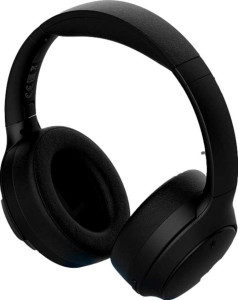
Honor Choice VZ Sport Mate
Nothing Headphone 1

Honor Choice VZ Sport Mate Nothing Headphone 1

Overview

When choosing between the Honor Choice VZ Sport Mate and the Nothing Headphone 1, headphone enthusiasts will find two over-ear models that share a surprisingly strong common foundation while diverging in meaningful ways. From audio codec support and spatial audio capabilities to battery capacity and microphone count, this head-to-head comparison examines every available specification to help you determine which of these two headphones is the right fit for your listening habits and lifestyle.

Common Features

  • Both headphones have an over-ear fit.
  • Both headphones have a detachable cable.
  • Neither headphone is designed for kids.
  • Both headphones have a tangle-free cable.
  • Neither headphone has an open-back design.
  • Both headphones have stereo speakers.
  • Both headphones support active noise cancellation (ANC).
  • Both headphones have a lowest frequency of 20 Hz.
  • Both headphones have a 40 mm driver unit size.
  • Neither headphone has a neodymium magnet.
  • Both headphones have passive noise reduction.
  • Both headphones offer 80 hours of battery life.
  • Both headphones have a charge time of 2 hours.
  • Both headphones use USB Type-C charging.
  • Both headphones have a battery level indicator.
  • Neither headphone supports wireless charging.
  • Neither headphone has a solar power battery.
  • Both headphones have a rechargeable battery.
  • Neither headphone has a removable battery.
  • Both headphones support wireless and wired connectivity.
  • Neither headphone supports aptX Adaptive, aptX, LDHC, Bluetooth LE Audio, aptX Low Latency, aptX HD, or aptX Lossless.
  • Both headphones have a noise-canceling microphone.
  • Both headphones have a control panel placed on the device.
  • Both headphones can be used as a headset.
  • Neither headphone has an in-line control panel.

Main Differences

  • The Honor Choice VZ Sport Mate has no listed weight, while the Nothing Headphone 1 weighs 329 g.
  • A travel bag is included with the Nothing Headphone 1 but not with the Honor Choice VZ Sport Mate.
  • The cable length is 1 m on the Honor Choice VZ Sport Mate and 1.2 m on the Nothing Headphone 1.
  • The highest frequency is 20000 Hz on the Honor Choice VZ Sport Mate and 40000 Hz on the Nothing Headphone 1.
  • Spatial audio support is present on the Nothing Headphone 1 but not available on the Honor Choice VZ Sport Mate.
  • Battery power is 800 mAh on the Honor Choice VZ Sport Mate and 1040 mAh on the Nothing Headphone 1.
  • The Bluetooth version is 5.4 on the Honor Choice VZ Sport Mate and 5.3 on the Nothing Headphone 1.
  • LDAC support is present on the Nothing Headphone 1 but not available on the Honor Choice VZ Sport Mate.
  • AAC support is present on the Nothing Headphone 1 but not available on the Honor Choice VZ Sport Mate.
  • Fast pairing is available on the Nothing Headphone 1 but not on the Honor Choice VZ Sport Mate.
  • In/on-ear detection is present on the Nothing Headphone 1 but not available on the Honor Choice VZ Sport Mate.
  • The number of microphones is 4 on the Honor Choice VZ Sport Mate and 6 on the Nothing Headphone 1.
Specs Comparison
Honor Choice VZ Sport Mate

Honor Choice VZ Sport Mate

Nothing Headphone 1

Nothing Headphone 1

Design:
Fit Over-ear Over-ear
weight 0 g 329 g
has a detachable cable
is designed for kids
has a tangle free cable
travel bag is included
has an open-back design
cable length 1 m 1.2 m
has stereo speakers

Both the Honor Choice VZ Sport Mate and the Nothing Headphone 1 share the same fundamental design category: over-ear, closed-back headphones with stereo drivers, not targeted at children. This common foundation means both are built for the same general use case — immersive, full-size listening for adults — so their design distinction comes down to finer but meaningful details.

One practical edge the Nothing Headphone 1 holds is the inclusion of a travel bag, which the Honor lacks. For users who commute or travel frequently, this is a real convenience — it protects the headphones and keeps accessories organized without buying a separate case. On cable length, the Nothing also offers a slightly longer cord at 1.2 m versus the Honor's 1 m, a modest but useful difference when connecting to a desktop source or seated further from a device. Both headphones feature a detachable, tangle-free cable, which is equally valuable on each — it extends the product's lifespan and simplifies cable management.

In this design category, the Nothing Headphone 1 has a clear practical advantage: the bundled travel bag and the longer cable make it the more travel- and desk-friendly package out of the box, without requiring additional accessories.

Sound quality:
has active noise cancellation (ANC)
lowest frequency 20 Hz 20 Hz
highest frequency 20000 Hz 40000 Hz
driver unit size 40 mm 40 mm
supports spatial audio
has a neodymium magnet
has passive noise reduction

At the core, both headphones share a solid common foundation: 40 mm drivers, active noise cancellation (ANC), passive noise reduction, and a frequency floor of 20 Hz — covering the full range of human hearing from the bass end upward. The shared driver size suggests similar physical transducer characteristics, meaning neither product has a raw hardware advantage in terms of driver scale.

Where the two diverge meaningfully is at the top of the frequency range. The Nothing Headphone 1 extends to 40,000 Hz, twice the 20,000 Hz ceiling of the Honor Choice VZ Sport Mate. While human hearing typically tops out around 20 kHz, a higher frequency ceiling can contribute to better rendering of harmonics and overtones that are felt rather than directly heard, and it also positions the headphone as compatible with high-resolution audio formats. The other significant differentiator is spatial audio support, which the Nothing offers and the Honor does not — this feature creates a simulated three-dimensional soundstage, particularly impactful for gaming, film, and immersive content consumption.

On sound quality, the Nothing Headphone 1 holds a clear edge. Its extended high-frequency response and spatial audio capability meaningfully expand the listening experience beyond what the Honor can deliver, especially for users who consume high-res music or immersive media.

Power:
Battery life 80 hours 80 hours
charge time 2 hours 2 hours
Has USB Type-C
has a battery level indicator
has wireless charging
battery power 800 mAh 1040 mAh
Has a solar power battery
has a rechargeable battery
has a removable battery

From a practical standpoint, the power story for these two headphones is remarkably aligned: both deliver 80 hours of battery life, recharge fully in 2 hours, use USB Type-C, and include a battery level indicator. For most users, this means identical real-world endurance — a full week of heavy daily use without reaching for a cable is achievable on either pair.

The one notable divergence lies under the hood: the Nothing Headphone 1 packs a 1,040 mAh battery versus the Honor Choice VZ Sport Mate's 800 mAh. That is a 30% larger cell, yet both headphones arrive at the same rated battery life. This suggests the Nothing's larger battery is working harder — likely powering more energy-intensive features such as its spatial audio processing — while the Honor achieves equivalent endurance with a leaner power draw. In terms of longevity over the product's lifespan, a larger battery can sometimes degrade more gracefully, though no data here directly supports that conclusion.

For this group, the two headphones are effectively tied on user-facing power performance. The identical runtime and charge time mean neither offers a practical daily advantage, making this a draw for most buyers.

Connectivity:
connectivity Wireless & wired Wireless & wired
Bluetooth version 5.4 5.3
has aptX Adaptive
has aptX
has LDAC
has LDHC
has Bluetooth LE Audio
has aptX Low Latency
has aptX HD
has aptX Lossless
has AAC
has Auracast
maximum Bluetooth range 10 m 10 m
has fast pairing
supports Bluetooth pairing using NFC

Wireless connectivity tells an interesting story here. The Honor Choice VZ Sport Mate runs on the newer Bluetooth 5.4, while the Nothing Headphone 1 uses Bluetooth 5.3 — a generational step behind. In isolation, 5.4 can offer modest improvements in connection efficiency and stability. However, Bluetooth version alone is rarely the deciding factor in real-world audio quality; codec support matters far more for what you actually hear.

On that front, the Nothing Headphone 1 pulls ahead decisively. It supports both LDAC and AAC — codecs the Honor entirely lacks. LDAC is particularly significant: developed by Sony, it transmits up to three times the data of standard SBC, enabling near-lossless wireless audio quality when paired with a compatible source. AAC adds compatibility with Apple devices at higher quality than the baseline. The Honor, with no listed codec support beyond implied SBC, is limited in the audio fidelity it can deliver wirelessly, regardless of its newer Bluetooth version. The Nothing also includes fast pairing, a convenience the Honor omits, reducing the friction of switching between devices.

The Nothing Headphone 1 holds a clear connectivity edge. Its codec support — especially LDAC — is a substantive audio quality advantage that the Honor's marginally newer Bluetooth version cannot compensate for. Audiophiles and high-res streaming users will find the Nothing the stronger choice in this category.

Features:
release date June 2025 July 2025
has a noise-canceling microphone
has in/on-ear detection
number of microphones 4 6
control panel placed on a device
can be used as a headset
Has an in-line control panel

Both headphones cover the essential feature bases well: noise-canceling microphones, on-device controls, and headset capability are present on each, making either a functional choice for calls and voice communication. The similarities end there, however, as the microphone arrays tell meaningfully different stories.

The Nothing Headphone 1 is equipped with 6 microphones compared to the Honor Choice VZ Sport Mate's 4. More microphones generally allow for more sophisticated beamforming and noise isolation algorithms — capturing your voice more cleanly while rejecting background noise more effectively, which matters in loud environments like offices or commutes. Additionally, the Nothing includes in/on-ear detection, a quality-of-life feature the Honor lacks. This sensor automatically pauses playback when the headphones are removed and resumes when they are put back on, reducing friction during everyday use and preventing battery drain from forgotten playback.

The Nothing Headphone 1 takes the edge in this category. Its larger microphone array improves call and voice capture performance, and in/on-ear detection adds a layer of smart usability that the Honor simply does not offer.

Comparison Summary & Verdict

After a thorough review of all available specifications, both headphones offer a compelling shared baseline: 80 hours of battery life, active noise cancellation, passive noise reduction, a 40 mm driver, USB-C charging, and a noise-canceling microphone — making either a capable everyday companion. That said, the differences draw a clear line between them. The Nothing Headphone 1 stands out with spatial audio support, LDAC and AAC codec compatibility, fast pairing, in/on-ear detection, a larger 1040 mAh battery, six microphones, and an included travel bag, making it the stronger choice for audiophiles and feature-conscious users. The Honor Choice VZ Sport Mate, meanwhile, holds an edge with the slightly newer Bluetooth 5.4 standard, which may appeal to users who place a premium on cutting-edge wireless protocol support.

Honor Choice VZ Sport Mate
Buy Honor Choice VZ Sport Mate if...

Buy the Honor Choice VZ Sport Mate if the latest Bluetooth 5.4 standard is your top priority for wireless connectivity and the core ANC and battery features meet your needs.

Nothing Headphone 1
Buy Nothing Headphone 1 if...

Buy the Nothing Headphone 1 if you want a richer feature set including spatial audio, LDAC and AAC codec support, fast pairing, in/on-ear detection, a larger battery, and more microphones all in one package.