Honor Earbuds 4
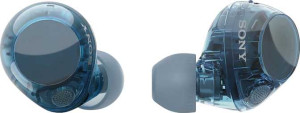
Sony WF-C710N

Honor Earbuds 4 Sony WF-C710N

Overview

Welcome to our in-depth spec comparison between the Honor Earbuds 4 and the Sony WF-C710N — two compact, fully wireless earbuds that share a surprising amount of common ground. Both deliver active noise cancellation, passive noise reduction, and a full 20 Hz to 20000 Hz frequency range, yet they diverge in meaningful ways across battery performance, driver hardware, and connectivity features. Read on to see how these two earbuds stack up across every major specification category.

Common Features

  • Both products use an in-ear fit.
  • Both products are sweat resistant.
  • Both products are fully wireless with no cables.
  • Neither product is a neckband-style earbud.
  • Neither product includes wingtips.
  • Neither product features RGB lighting.
  • Both products have stereo speakers.
  • Neither product includes a UV light.
  • Both products support active noise cancellation (ANC).
  • Both products offer passive noise reduction.
  • Both products share the same frequency range of 20 Hz to 20000 Hz.
  • Neither product supports Dolby Atmos.
  • Neither product supports Dirac Virtuo.
  • Neither product uses a neodymium magnet.
  • Neither product supports wireless charging.
  • Neither product has a solar power battery.
  • Both products include a battery level indicator.
  • Both products have a rechargeable battery.
  • Both products use USB Type-C for charging.
  • Both products have Bluetooth version 5.3.
  • Neither product supports LDAC, LDHC, Bluetooth LE Audio, aptX Adaptive, aptX Low Latency, or aptX HD.
  • Both products include an ambient sound mode.
  • Both products feature in/on-ear detection.
  • Both products include a find device feature.
  • Both products support fast charging.
  • Neither product can read notifications aloud.
  • Both products include a mute function.
  • Both products can be used as a headset.
  • Both products have touch or physical controls placed on the device.
  • Both products include a noise-canceling microphone.

Main Differences

  • The Ingress Protection rating is IP54 on Honor Earbuds 4 and IPX4 on Sony WF-C710N.
  • The weight is 10.6 g on Honor Earbuds 4 and 10.4 g on Sony WF-C710N.
  • The driver unit size is 11 mm on Honor Earbuds 4 and 5 mm on Sony WF-C710N.
  • Spatial audio support is available on Honor Earbuds 4 but not on Sony WF-C710N.
  • Battery life is 9 hours on Honor Earbuds 4 and 12 hours on Sony WF-C710N.
  • Battery life of the charging case is 57 hours on Honor Earbuds 4 and 21.5 hours on Sony WF-C710N.
  • Battery life with ANC enabled is 5 hours on Honor Earbuds 4 and 8.5 hours on Sony WF-C710N.
  • Charge time is 1 hour on Honor Earbuds 4 and 1.5 hours on Sony WF-C710N.
  • Fast pairing is available on Sony WF-C710N but not on Honor Earbuds 4.
Specs Comparison
Honor Earbuds 4

Honor Earbuds 4

Sony WF-C710N

Sony WF-C710N

Design:
Fit In-ear In-ear
Ingress Protection (IP) rating IP54 IPX4
water resistance Sweat resistant Sweat resistant
weight 10.6 g 10.4 g
has no wires or cables
are neckband earbuds
wingtips included
has RGB lighting
has stereo speakers
has UV light
Has a display

In terms of design, the Honor Earbuds 4 and Sony WF-C710N are remarkably similar. Both are true wireless, in-ear earbuds without neckbands, wingtips, RGB lighting, or displays, and both deliver stereo sound. Their weights are virtually identical — 10.6 g versus 10.4 g — a difference so negligible it will never be perceptible during real-world use.

The one meaningful distinction lies in their water resistance ratings. The Honor Earbuds 4 carry an IP54 certification, while the Sony WF-C710N is rated IPX4. Both protect against sweat and light splashes equally, but IP54 adds a layer of dust resistance that IPX4 entirely lacks. For most gym or commute scenarios this won't matter, but users in dusty or outdoor environments gain a practical edge with the Honor.

Overall, these two earbuds are essentially tied on design. The Sony's fractionally lower weight is inconsequential, and the Honor's dust resistance is a modest but real advantage for a specific subset of users. For the vast majority of buyers, design should not be a deciding factor between these two products.

Sound quality:
has active noise cancellation (ANC)
has passive noise reduction
driver unit size 11 mm 5 mm
lowest frequency 20 Hz 20 Hz
highest frequency 20000 Hz 20000 Hz
supports spatial audio
has Dolby Atmos
has Dirac Virtuo
has a neodymium magnet

Both earbuds share a solid foundation: active noise cancellation, passive noise reduction, and a full 20 Hz–20,000 Hz frequency range covering the entire spectrum of human hearing. Where they diverge meaningfully is driver size and spatial audio support. The Honor Earbuds 4 uses an 11 mm driver compared to the Sony WF-C710N's 5 mm unit — a substantial difference. Larger drivers generally move more air, which tends to translate into fuller bass response and a more expansive soundstage, though driver size alone does not guarantee superior tuning.

The second differentiator is spatial audio. The Honor supports it; the Sony does not. Spatial audio creates a three-dimensional listening experience particularly valued when watching video content or playing games, making it a meaningful feature for users who consume media beyond just music.

The Honor Earbuds 4 holds a clear edge in this category. Its significantly larger driver and exclusive spatial audio support give it a tangible advantage in both sonic headroom and versatility, while the Sony matches it only on the baseline specs both share.

Power:
Battery life 9 hours 12 hours
Battery life of charging case 57 hours 21.5 hours
Battery life (ANC) 5 hours 8.5 hours
charge time 1 hours 1.5 hours
has wireless charging
Has a solar power battery
has a battery level indicator
has a rechargeable battery

Battery performance here tells two contrasting stories depending on how you use your earbuds. The Sony WF-C710N lasts 12 hours per charge — versus 9 hours for the Honor Earbuds 4 — and the gap widens with ANC enabled: 8.5 hours for the Sony against just 5 hours for the Honor. For users who rely heavily on noise cancellation during long flights or extended work sessions, Sony's stamina is a genuine day-to-day advantage.

Flip the lens to total system endurance, though, and the picture reverses dramatically. The Honor's charging case extends total playback to 57 hours, nearly three times the Sony's 21.5 hours. That means Honor users can go significantly longer between wall-outlet visits — a compelling edge for travelers or anyone who forgets to charge regularly. The Honor also recharges faster at 1 hour versus the Sony's 1.5 hours, a useful convenience advantage.

There is no single winner here — the right call depends on usage pattern. Frequent ANC users who charge nightly will prefer the Sony's superior per-session stamina. Those who charge less often or travel for extended periods without easy access to power will find the Honor's enormous case reserve far more practical.

Connectivity:
has fast pairing
Has USB Type-C
Bluetooth version 5.3 5.3
has LDAC
has LDHC
has Bluetooth LE Audio
has aptX Adaptive
has aptX Low Latency
has aptX HD
has aptX
has aptX Lossless
has aptX Voice
has Auracast
maximum Bluetooth range 10 m 10 m
supports Bluetooth pairing using NFC
Can be used wirelessly
has AAC

Connectivity between these two earbuds is almost entirely identical. Both run Bluetooth 5.3, cap out at a 10 m wireless range, support AAC as their highest-quality audio codec, and charge via USB-C. Neither offers advanced codecs like LDAC or aptX, meaning audiophiles chasing lossless wireless transmission will find both options equally limited in that regard.

The sole differentiator is fast pairing, which the Sony WF-C710N supports and the Honor Earbuds 4 does not. Fast pairing streamlines the initial Bluetooth handshake — particularly on compatible Android devices — reducing setup friction to a single tap rather than navigating into system settings. It is a convenience feature rather than a performance one, but for users who frequently switch between devices or set up their earbuds on new phones, the absence of it on the Honor is a minor but noticeable omission.

Sony holds a slim edge here solely due to fast pairing. Beyond that single feature, the two products are functionally equivalent in connectivity, and neither distinguishes itself with premium codec support or extended range.

Features:
release date October 2025 March 2025
has ambient sound mode
has in/on-ear detection
has find device feature
Supports fast charging
can read notifications
has a mute function
can be used as a headset
control panel placed on a device
Has voice prompts
travel bag is included
Has an in-line control panel
Has a temperature sensor
Has a built-in camera remote control function

Across every feature in this category, the Honor Earbuds 4 and Sony WF-C710N are a perfect match. Both offer ambient sound mode, in-ear detection, a find-device function, fast charging, mute, headset capability, on-device touch controls, voice prompts, and an included travel bag. This is a notably well-rounded shared feature set for earbuds at this tier — particularly the inclusion of ear detection, which automatically pauses playback when an earbud is removed, and ambient mode, which lets environmental sound through without taking the earbuds out.

There is not a single differentiating data point in this group. Every feature present on one is present on the other, and every feature absent on one is equally absent on the other. This is a genuine dead heat.

Buyers who prioritize features specifically should not use this category to choose between the two products — the decision will need to rest entirely on the differences identified in other spec groups such as sound quality, battery, or connectivity.

Microphone:
has a noise-canceling microphone

The microphone category comes down to a single shared specification: both the Honor Earbuds 4 and Sony WF-C710N include a noise-canceling microphone. This is an important baseline feature for call quality, ensuring that background noise — wind, traffic, office chatter — is filtered out before your voice reaches the other end of a call.

With only one data point available and both products matching on it exactly, there is no basis for differentiation here. This is a complete tie, and as with the Features category, buyers will need to look to other spec groups to separate these two earbuds.

Comparison Summary & Verdict

Both the Honor Earbuds 4 and the Sony WF-C710N are well-rounded wireless earbuds offering ANC, passive noise reduction, ambient sound mode, and in-ear detection in similarly lightweight builds. However, their key differences point toward different ideal users. The Honor Earbuds 4 stands out with its significantly larger 11 mm driver, spatial audio support, a much larger combined case battery of 57 hours, and a faster 1-hour charge time — making it a strong pick for listeners who value audio immersion and extended away-from-home endurance. The Sony WF-C710N, on the other hand, delivers superior per-charge battery life of 12 hours (and 8.5 hours with ANC active), plus the convenience of fast pairing, making it the better choice for everyday commuters who need reliable all-day performance without frequently reaching for the case.

Honor Earbuds 4
Buy Honor Earbuds 4 if...

Buy the Honor Earbuds 4 if you want spatial audio support, a much larger charging case battery for extended trips, and a faster 1-hour charge time.

Sony WF-C710N
Buy Sony WF-C710N if...

Buy the Sony WF-C710N if you prioritize longer per-charge battery life, better ANC endurance on a single charge, and the convenience of fast pairing.