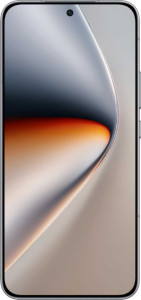
Camera system architecture tells very different stories here. The GT Pro deploys a triple 50 MP setup — almost certainly covering wide, main, and telephoto focal lengths — paired with 3x optical zoom. Optical zoom uses physical lens movement to magnify a scene without degrading image quality, making the GT Pro genuinely versatile across shooting distances. The Magic V Flip 2, by contrast, offers a dual camera with a 200 MP main sensor and 0x optical zoom, meaning any zoom is purely digital — a crop of the sensor that sacrifices detail. The Flip 2's headline megapixel count is impressive on paper, but without optical zoom, distant subjects will look noticeably softer than they would through the GT Pro's telephoto lens.
A few other differentiators favor the GT Pro. It supports RAW capture, which is a significant advantage for photographers who post-process their images, as RAW files retain far more tonal and color data than compressed JPEGs. The Flip 2 lacks this entirely. The GT Pro also sports a 3-LED dual-tone flash versus the Flip 2's 2-LED unit, offering better color accuracy and light coverage in low-light flash scenarios. On the other hand, the Flip 2's main lens carries a slightly wider f/1.9 aperture compared to the GT Pro's f/2, which allows marginally more light in — a modest but real advantage in dim conditions for unzoomed shots.
Both cameras share a solid common foundation: OIS, phase-detection autofocus, continuous autofocus during video, slow-motion recording, HDR mode, and a matching 50 MP front camera. Overall though, the GT Pro holds a clear edge in camera versatility — its three-lens system with optical zoom and RAW support will satisfy a broader range of shooting scenarios and more demanding users, while the Flip 2's 200 MP sensor, though capable, is constrained by the absence of any optical zoom capability.