Honor GT Pro
Motorola Razr 60 Ultra 512GB

Honor GT Pro Motorola Razr 60 Ultra 512GB

Overview

Welcome to our in-depth comparison between the Honor GT Pro and the Motorola Razr 60 Ultra 512GB — two powerful Android flagships that take remarkably different approaches to mobile design and everyday performance. Both pack the same Snapdragon 8 Elite chipset and share a strong camera foundation, yet they diverge sharply when it comes to form factor, battery capacity, and overall feature priorities. Read on to discover which device best suits your needs.

Common Features

  • Both products are waterproof with no rugged build.
  • Both phones feature an OLED/AMOLED display.
  • Both displays include branded damage-resistant glass.
  • HDR10 support is available on both products.
  • HDR10+ support is available on both products.
  • Both products have a touchscreen display.
  • Both phones are powered by the Qualcomm Snapdragon 8 Elite chipset with 16GB of RAM.
  • Both products use the Adreno 830 GPU.
  • Both phones feature integrated LTE and 5G support.
  • Both products are built on a 3 nm semiconductor process.
  • Both cameras include optical image stabilization and phase-detection autofocus.
  • Both phones have a 50MP front camera.
  • Both products have a CMOS sensor without a BSI sensor.
  • Both phones support slow-motion video recording and continuous autofocus during video.
  • Both products run Android 15 with theme customization and app tracking controls.
  • Fast charging is supported on both products.
  • Neither phone has a removable battery.
  • Both phones have stereo speakers and no 3.5mm audio jack.
  • Both products support aptX, aptX HD, and aptX Adaptive, but not LDAC.
  • Both phones support Bluetooth 5.4, NFC, USB Type-C (USB 2.0), and Wi-Fi 7.

Main Differences

  • Weight is 212g on Honor GT Pro and 199g on Motorola Razr 60 Ultra 512GB.
  • Thickness is 8.6mm on Honor GT Pro and 7.2mm on Motorola Razr 60 Ultra 512GB.
  • The Honor GT Pro cannot be folded, while the Motorola Razr 60 Ultra 512GB is a foldable device.
  • IP rating is IP68 on Honor GT Pro and IPX8 on Motorola Razr 60 Ultra 512GB.
  • Screen size is 6.78″ on Honor GT Pro and 7″ on Motorola Razr 60 Ultra 512GB.
  • Pixel density is 453 ppi on Honor GT Pro and 417 ppi on Motorola Razr 60 Ultra 512GB.
  • Refresh rate is 144Hz on Honor GT Pro and 165Hz on Motorola Razr 60 Ultra 512GB.
  • Dolby Vision support is present on Motorola Razr 60 Ultra 512GB but not available on Honor GT Pro.
  • A secondary screen is present on Motorola Razr 60 Ultra 512GB but not on Honor GT Pro.
  • Internal storage is 1024GB on Honor GT Pro and 512GB on Motorola Razr 60 Ultra 512GB.
  • AnTuTu benchmark score is 2,920,000 on Honor GT Pro and 1,831,212 on Motorola Razr 60 Ultra 512GB.
  • Geekbench 6 multi-core score is 10,059 on Honor GT Pro and 6,796 on Motorola Razr 60 Ultra 512GB.
  • The Honor GT Pro has a triple-lens main camera (50 & 50 & 50 MP) while the Motorola Razr 60 Ultra 512GB has a dual-lens main camera (50 & 50 MP).
  • Optical zoom is 3x on Honor GT Pro and not available on Motorola Razr 60 Ultra 512GB.
  • RAW photo capture is supported on Honor GT Pro but not on Motorola Razr 60 Ultra 512GB.
  • Video recording reaches 2160p at 60fps on Honor GT Pro and 4320p at 30fps on Motorola Razr 60 Ultra 512GB.
  • Dolby Vision video recording is supported on Motorola Razr 60 Ultra 512GB but not on Honor GT Pro.
  • Battery capacity is 7200 mAh on Honor GT Pro and 4700 mAh on Motorola Razr 60 Ultra 512GB.
  • Wireless charging is supported on Motorola Razr 60 Ultra 512GB but not available on Honor GT Pro.
  • Charging speed is 90W on Honor GT Pro and 68W on Motorola Razr 60 Ultra 512GB.
  • aptX Lossless support is present on Motorola Razr 60 Ultra 512GB but not available on Honor GT Pro.
  • An infrared sensor is present on Honor GT Pro but not on Motorola Razr 60 Ultra 512GB.
  • A barometer is present on Motorola Razr 60 Ultra 512GB but not on Honor GT Pro.
  • SIM support is dual physical SIM on Honor GT Pro and one physical SIM plus one eSIM on Motorola Razr 60 Ultra 512GB.
  • Wi-Fi 6E support is available on Motorola Razr 60 Ultra 512GB but not on Honor GT Pro.
Specs Comparison
Honor GT Pro

Honor GT Pro

Motorola Razr 60 Ultra 512GB

Motorola Razr 60 Ultra 512GB

Design:
water resistance Waterproof Waterproof
weight 212 g 199 g
thickness 8.6 mm 7.2 mm
width 75.7 mm 74 mm
height 162.1 mm 171.5 mm
volume 105.530342 cm³ 91.3752 cm³
Ingress Protection (IP) rating IP68 IPX8
has a rugged build
can be folded

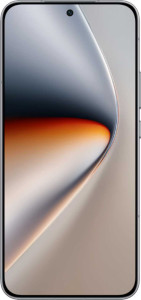
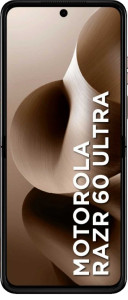
The most fundamental design difference here is that the Razr 60 Ultra folds while the Honor GT Pro does not. This single fact shapes the entire physical experience: unfolded, the Razr is actually taller (171.5 mm vs 162.1 mm), but its ability to clam-shell in half makes it dramatically more pocketable in practice. Its smaller overall volume (91.4 cm³ vs 105.5 cm³) and lighter weight (199 g vs 212 g) further reinforce that the Razr is the more carry-friendly device — especially once folded.

On thickness, the Razr also wins when unfolded at 7.2 mm versus the GT Pro's 8.6 mm, though it is worth noting that a folded flip phone is roughly twice that thickness at the hinge, so this advantage is most relevant when the phone is open and in use. The GT Pro, being a conventional candy-bar slab, offers a more uniform and predictable form factor with no moving parts to wear over time.

On water resistance, both carry a Waterproof rating, but the GT Pro holds a meaningful edge with a full IP68 certification — covering both dust and water ingress — while the Razr is rated IPX8, meaning it has no official dust-resistance rating. For users in dusty or outdoor environments, this distinction matters. Overall, the Razr 60 Ultra wins on portability and modern form factor, while the Honor GT Pro offers a more complete environmental protection rating and a simpler, hinge-free build.

Display:
Display type OLED/AMOLED OLED/AMOLED
screen size 6.78" 7"
pixel density 453 ppi 417 ppi
resolution 1224 x 2800 px 1224 x 2912 px
refresh rate 144Hz 165Hz
has branded damage-resistant glass
supports HDR10
supports HDR10+
supports Dolby Vision
Has a secondary screen
has a touch screen

Both screens are OLED/AMOLED panels with branded damage-resistant glass and full HDR10+ support, so the baseline visual quality is strong on either device. Where they diverge is in the details. The Honor GT Pro's 6.78″ panel packs its pixels into a smaller area, yielding a noticeably sharper 453 ppi density compared to the Razr's 417 ppi — a difference that is perceptible when reading fine text or viewing detailed images up close. The Razr's larger 7″ screen offers more real estate, but that advantage is partially offset by the slightly lower pixel density inherent to spreading the same resolution across a bigger panel.

On refresh rate, the Razr edges ahead with 165Hz versus the GT Pro's 144Hz. Both are well above the threshold where most users notice smoothness in scrolling and animation, but the Razr's higher ceiling can translate to marginally more fluid motion in games and fast-paced UI interactions. More meaningfully, the Razr also supports Dolby Vision — a dynamic HDR format that the GT Pro lacks — which matters for streaming content from platforms that serve Dolby Vision masters, delivering better tone-mapping and color accuracy scene by scene rather than relying on static HDR metadata.

The Razr further distinguishes itself with a secondary screen, which provides glanceable information and quick interactions without unfolding the device — a genuine usability advantage with no equivalent on the GT Pro. Taken together, the Razr 60 Ultra holds a clear edge in this category: it wins on refresh rate, HDR format support, and functional versatility, while the Honor GT Pro's only concrete lead is its higher pixel density, which benefits users who prioritize sharpness above all else.

Performance:
internal storage 1024GB 512GB
RAM 16GB 16GB
AnTuTu benchmark score 2920000 1831212
Chipset (SoC) name Qualcomm Snapdragon 8 Elite Qualcomm Snapdragon 8 Elite
GPU name Adreno 830 Adreno 830
CPU speed 2 x 4.47 & 6 x 3.53 GHz 2 x 4.32 & 6 x 3.53 GHz
Geekbench 6 result (multi) 10059 6796
Geekbench 6 result (single) 3234 1753
GPU clock speed 1200 MHz 1100 MHz
Has integrated LTE
RAM speed 5300 MHz 5300 MHz
semiconductor size 3 nm 3 nm
Supports 64-bit
DirectX version DirectX 12 DirectX 12
Has integrated graphics
OpenGL version 3.2 3.2
OpenGL ES version 3.2 3.2
Uses big.LITTLE technology
CPU threads 8 threads 8 threads
Uses HMP
Has TrustZone
maximum memory bandwidth 85.1 GB/s 85.1 GB/s
OpenCL version 3 3
memory channels 2 2
L2 cache 12 MB 12 MB
Supports ECC memory
L1 cache 192 KB 192 KB
maximum memory amount 24GB 24GB
uses multithreading
GPU turbo 1100 MHz 1100 MHz
Thermal Design Power (TDP) 8.2W 8.2W
DDR memory version 5 5
shading units 1536 1536
supported displays 2 2
L3 cache 8 MB 8 MB

At first glance, these two phones appear to be performance equals — both run the Qualcomm Snapdragon 8 Elite on a 3 nm process with 16 GB of DDR5 RAM and the Adreno 830 GPU. But the benchmark results tell a strikingly different story. The Honor GT Pro scores 2,920,000 on AnTuTu against the Razr's 1,831,212 — a gap of nearly 60% — while the Geekbench 6 single-core result is 3,234 versus 1,753, and multi-core is 10,059 versus 6,796. These are not marginal differences; they suggest the GT Pro is sustaining significantly higher performance under load.

The root cause is visible in the clock speeds. The GT Pro's prime CPU cores run at 4.47 GHz compared to the Razr's 4.32 GHz, and its GPU clock is higher at 1,200 MHz versus 1,100 MHz. While these differences seem modest on paper, the same 8.2W TDP on both devices implies the Razr's foldable chassis — with its more constrained thermal management space — is likely throttling the chip more aggressively under sustained loads to protect heat-sensitive components, preventing it from maintaining peak clocks. The GT Pro, as a conventional slab, has more room to dissipate heat and keep the silicon running at its ceiling.

Storage is the other concrete differentiator: the GT Pro ships with 1 TB of internal storage versus the Razr's 512 GB. For power users, heavy gamers, or anyone who shoots a lot of video, this is a meaningful practical advantage. The Honor GT Pro takes a decisive win in this category — not because it has fundamentally different hardware, but because its form factor allows that shared hardware to perform closer to its full potential.
Cameras:
megapixels (main camera) 50 & 50 & 50 MP 50 & 50 MP
wide aperture (main camera) 2 & 2 & 2.4f 2 & 1.8f
Has a dual-lens (or multi-lens) main camera
megapixels (front camera) 50MP 50MP
has built-in optical image stabilization
video recording (main camera) 2160 x 60 fps 4320 x 30 fps
Has a dual-tone LED flash
number of flash LEDs 3 1
has a BSI sensor
has a CMOS sensor
has continuous autofocus when recording movies
Has phase-detection autofocus for photos
supports slow-motion video recording
has a built-in HDR mode
has manual exposure
has a flash
optical zoom 3x 0x
has manual ISO
has a serial shot mode
has manual focus
has a front camera
Has laser autofocus
Shoots 360° panorama
has manual white balance
shoots raw
has touch autofocus
has manual shutter speed
can create panoramas in-camera
wide aperture (front camera) 2f 2f
Has timelapse function
Has a front-facing LED flash
has a dual-lens (or multi-lens) front camera
supports HDR10 recording
supports Dolby Vision recording
has a front-facing camera under the display
Has a RGB LED flash
has 3D photo/video recording capabilities

The camera hardware gap opens immediately with lens count: the Honor GT Pro fields a triple 50 MP system while the Razr makes do with a dual 50 MP setup. More consequentially, the GT Pro includes 3x optical zoom — the Razr lists zero optical zoom, meaning any telephoto reach on the Razr is achieved digitally, with the quality degradation that entails. For users who regularly photograph subjects at a distance, this is a tangible, everyday limitation. The GT Pro also supports RAW shooting, which the Razr does not, giving photographers full post-processing control over image data — a feature that matters greatly to enthusiasts but is irrelevant to casual shooters.

Video is where the Razr makes its most dramatic counterpunch. It captures up to 8K at 30 fps (4320p) versus the GT Pro's ceiling of 4K at 60 fps (2160p). These represent different trade-offs: the Razr delivers higher maximum resolution for future-proofing and cropping flexibility, while the GT Pro's 4K60 is smoother and more practical for action or fast-moving subjects. Critically, the Razr also records in both HDR10 and Dolby Vision — formats the GT Pro does not support at all — which means video footage from the Razr will look significantly more dynamic and color-accurate on compatible displays and streaming platforms.

This category does not have a single clean winner — it depends heavily on use case. The Honor GT Pro is the stronger photography platform, thanks to its third lens, optical zoom, and RAW support. The Razr 60 Ultra is the stronger videography device, offering 8K capture and professional HDR format recording. Shooters who split time evenly between photos and video will find this a genuine toss-up, but anyone with a clear primary use case should weight accordingly.

Operating system:
Android version Android 15 Android 15
has clipboard warnings
has location privacy options
has camera/microphone privacy options
has Mail Privacy Protection
has theme customization
can block app tracking
blocks cross-site tracking
has on-device machine learning
has notification permissions
has media picker
Can play games while they download
has dark mode
has Wi-Fi password sharing
has battery health check
has an extra dim mode
has focus modes
has dynamic theming
can offload apps
Has customizable notifications
has Live Text
has full-page screenshots
supports split screen
gets direct OS updates
has PiP
Can be used as a PC
Has sharing intents
has a child lock
Supports widgets
Is free and open source
Has offline voice recognition
has voice commands
Tracks the current position of a mobile device
is a multi-user system
has Quick Start

Rarely does a spec group produce such a clear-cut result: the Honor GT Pro and Motorola Razr 60 Ultra are in complete parity across every single operating system data point provided. Both ship with Android 15, share the same privacy controls — including location, camera, and microphone permissions — and support the same set of productivity and usability features, from split-screen and Picture-in-Picture to dynamic theming, widgets, and offline voice recognition. Neither device receives direct OS updates from Google, meaning both depend on their respective manufacturers for software maintenance, which is a consideration worth tracking over a multi-year ownership period.

This is a draw in every meaningful sense. No spec in this group differentiates one device from the other, and any attempt to declare a winner here would go beyond what the data supports. Users making a decision on software experience alone will need to look outside this spec sheet — to factors such as manufacturer update cadence, skin-level UI differences, or pre-installed software — none of which are reflected in the provided data.

Battery:
battery power 7200 mAh 4700 mAh
has wireless charging
Supports fast charging
charging speed 90W 68W
has a removable battery
has a battery level indicator
has a rechargeable battery

The battery gap here is enormous. The Honor GT Pro carries a 7200 mAh cell against the Razr's 4700 mAh — a difference of over 50% in raw capacity. In practice, this translates directly to time away from a charger: where the Razr may comfortably cover a full day of moderate use, the GT Pro is positioned to push well into a second day for many users. For heavy users — mobile gamers, travelers, or anyone without reliable access to an outlet — this capacity advantage is one of the most consequential spec differences in the entire comparison.

On charging, the GT Pro also leads with 90W wired fast charging versus the Razr's 68W. The faster the charger, the shorter the time needed to recover from a low battery — and given the GT Pro's larger cell, a higher wattage is practically necessary to keep top-up times reasonable. The Razr's one meaningful counterpoint in this category is wireless charging, which the GT Pro entirely lacks. Wireless charging is a genuine convenience for users with Qi pads at their desk or nightstand, allowing passive top-ups without hunting for a cable.

Overall, the Honor GT Pro wins this category decisively on the metrics that matter most to the widest range of users — raw endurance and charging speed. The Razr's wireless charging is a real-world convenience that some users will value highly, but it does not offset a 2500 mAh capacity deficit for anyone who prioritizes longevity between charges.

Audio:
has a socket for a 3.5 mm audio jack
has stereo speakers
has aptX
has LDAC
has aptX HD
has aptX Adaptive
has aptX Lossless
Has a radio

Audio is nearly a wash between these two devices, with both sharing stereo speakers, no 3.5mm headphone jack, and an identical Bluetooth codec stack up to aptX Adaptive — a high-quality, low-latency codec that already represents the practical ceiling for most wireless listening scenarios. Neither supports LDAC, Sony's competing high-res wireless format, which keeps them on equal footing there as well.

The sole differentiator is the Razr's additional support for aptX Lossless, a codec capable of transmitting CD-quality audio at truly lossless bitrates over Bluetooth when paired with compatible hardware. In real-world terms, this only matters if the user owns aptX Lossless-certified earphones or headphones — a still-limited ecosystem — but for audiophiles who do, it represents a genuine qualitative ceiling that the Honor GT Pro simply cannot reach.

The Razr 60 Ultra earns a narrow edge here on the strength of aptX Lossless alone. For the vast majority of users, both phones will sound indistinguishable through wireless audio — but the Razr leaves the door open for a higher-fidelity wireless experience as compatible accessories become more widespread.

Connectivity & Features:
release date April 2025 April 2025
has 5G support
Wi-Fi version Wi-Fi 4 (802.11n), Wi-Fi 6 (802.11ax), Wi-Fi 5 (802.11ac), Wi-Fi 7 (802.11be) Wi-Fi 4 (802.11n), Wi-Fi 6E (802.11ax), Wi-Fi 6 (802.11ax), Wi-Fi 5 (802.11ac), Wi-Fi 7 (802.11be)
SIM cards 2 SIM 1 SIM, 1 eSIM
Bluetooth version 5.4 5.4
has an external memory slot
Has USB Type-C
USB version 2 2
has NFC
download speed 10000 MBits/s 10000 MBits/s
upload speed 3500 MBits/s 3500 MBits/s
Has a fingerprint scanner
has emergency SOS via satellite
has crash detection
is DLNA-certified
has a gyroscope
supports ANT+
Has a heart rate monitor
has GPS
has a compass
supports Wi-Fi
Has an infrared sensor
has an accelerometer
has a cellular module
Has a barometer
has an HDMI output
Uses 3D facial recognition
Has an iris scanner
Stylus included
supports Galileo
Has motion tracking
Has optical tracking
Has a built-in projector

Connectivity fundamentals are essentially matched: both devices support 5G, Wi-Fi 7, Bluetooth 5.4, NFC, and identical peak download and upload speeds. The differences that do exist are specific and worth unpacking. The Razr adds Wi-Fi 6E support, which unlocks access to the uncongested 6 GHz band — a meaningful advantage in dense environments like apartments or offices where the 5 GHz band is heavily contested, delivering more consistent throughput with lower latency. The GT Pro tops out at Wi-Fi 6 on the standard bands, which is still fast, but misses that extra headroom.

SIM configuration splits along different philosophies. The GT Pro offers dual physical SIM slots — the preferred choice for users who travel internationally and swap local carrier cards, or anyone who wants to run two active numbers simultaneously without relying on carrier eSIM support. The Razr opts for 1 physical SIM plus 1 eSIM, which is more flexible for users whose carriers support eSIM provisioning but may be limiting in regions where eSIM adoption is still thin. On sensors, the GT Pro includes an infrared sensor — useful for controlling TVs and appliances — while the Razr carries a barometer instead, enabling more accurate altitude readings and faster GPS lock, which is relevant for outdoor navigation and fitness tracking.

This category is closely contested, with each device holding advantages that appeal to different user profiles. The Razr edges ahead for most users thanks to Wi-Fi 6E, while the GT Pro's dual physical SIM and infrared blaster serve a more specific but loyal audience. Neither device has a sweeping, across-the-board connectivity lead.

Miscellaneous:
has a video light
Has sapphire glass display
Has a curved display
Has an e-paper display

The miscellaneous spec group offers nothing to separate these two devices. Both have a video light, neither uses sapphire glass, curved displays, or e-paper technology — every data point is identical. This is a complete tie, and no conclusion beyond that is supported by the provided data.

Comparison Summary & Verdict

After examining every specification, it is clear that these two phones serve distinct audiences. The Honor GT Pro stands out as the powerhouse choice for users who demand raw performance, a massive 7200 mAh battery, a triple-camera system with 3x optical zoom, and up to 1TB of storage — all at a competitive charging speed of 90W. It is the ideal pick for heavy users and photography enthusiasts who never want to run out of power or storage. The Motorola Razr 60 Ultra 512GB, on the other hand, is purpose-built for those who value style, portability, and versatility — its foldable design, secondary cover screen, 165Hz display, wireless charging, and 4K 8K-equivalent 30fps video recording make it a premium lifestyle device. Choose the Honor GT Pro for endurance and performance; choose the Razr 60 Ultra if you want a cutting-edge foldable experience with Dolby Vision support.

Honor GT Pro
Buy Honor GT Pro if...

Buy the Honor GT Pro if you want maximum battery life, a triple-camera setup with optical zoom, and top-tier benchmark performance with double the storage.

Motorola Razr 60 Ultra 512GB
Buy Motorola Razr 60 Ultra 512GB if...

Buy the Motorola Razr 60 Ultra 512GB if you prefer a compact foldable design with a secondary screen, wireless charging, and Dolby Vision display and video recording support.