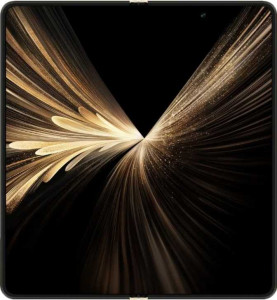
At the silicon level, these two phones are not as equal as a surface glance might suggest. Both use a Qualcomm Snapdragon platform built on a 3 nm process with an Adreno 830 GPU, but the Magic 8 Pro runs the Snapdragon 8 Elite Gen 5 — a newer iteration — with peak CPU clocks of 4.6 GHz versus the Magic V5's 4.32 GHz, and a GPU running at 1200 MHz compared to the V5's 1100 MHz. These clock speed advantages compound into a striking real-world performance gap: the 8 Pro's AnTuTu score of 4,027,702 is over 50% higher than the V5's 2,640,100. AnTuTu is a composite benchmark covering CPU, GPU, memory, and I/O — a gap of this magnitude is not marginal and points to meaningfully faster sustained performance in GPU-intensive tasks like gaming and video rendering.
Curiously, both devices return identical Geekbench 6 scores — 10,059 multi-core and 3,234 single-core — suggesting the underlying CPU architecture and efficiency cores behave similarly in pure compute workloads. The AnTuTu divergence therefore likely reflects the GPU clock and system-level optimizations where the Gen 5 variant pulls ahead. The V5 counters with 16 GB of RAM versus the 8 Pro's 12 GB, which benefits heavy multitasking and keeping more apps resident in memory simultaneously.
On balance, the Magic 8 Pro holds a clear performance edge. The AnTuTu gap is too large to dismiss, and the faster GPU clock will translate into higher, more stable frame rates in demanding games and faster processing of computational photography tasks. The V5's extra RAM is a practical advantage for multitaskers, but it does not close the raw performance deficit. For users who prioritize peak processing power, the 8 Pro is the stronger choice in this category.