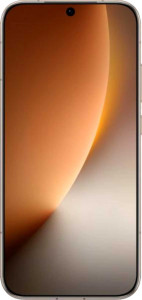
On paper, these two phones share a striking amount of silicon DNA: identical 12 GB RAM at 5300 MHz, the same Adreno 830 GPU, matched memory bandwidth, cache hierarchy, and a 3 nm fabrication process. The key divergence is the specific chipset variant. The Honor Magic 8 Pro runs the Snapdragon 8 Elite Gen 5, while the S25 Ultra uses the Snapdragon 8 Elite — a generational step separating the two. The Honor's CPU peaks at 4.6 GHz on its performance cores versus 4.47 GHz on the Samsung's, a modest clock advantage that compounds meaningfully at scale.
The benchmark data makes the real-world gap concrete. In Geekbench 6, the Magic 8 Pro leads in both single-core (3234 vs. 3057) and multi-core (10059 vs. 9846) results — a consistent but relatively modest margin. The AnTuTu scores, however, tell a more dramatic story: the Magic 8 Pro scores 4,027,702 compared to the S25 Ultra's 2,207,809, nearly double. AnTuTu is a composite benchmark that weights GPU and memory subsystem performance heavily, suggesting the newer Elite Gen 5 delivers substantially greater throughput in sustained, mixed workloads — the kind that matter for gaming, AI processing, and video rendering.
For everyday tasks, app launches, and even demanding productivity use, both chips will feel virtually indistinguishable. But for users who push their device hard — extended gaming sessions, on-device AI inference, or heavy video editing — the Magic 8 Pro's newer silicon gives it a clear performance edge, particularly in GPU-intensive and sustained-load scenarios where the AnTuTu gap is most telling.